Share
Sonic Acts
Touched by Sound: Re-imagining the Legacy of Michel Waisvisz (Part 1)
Tune in for episodes two and three of Sonic Trax, Sonic Acts' new podcast series, where we explore the organization's rich archive. Join us as we uncover the captivating stories behind the evolution of sound art and its lasting impact, bringing these insights closer to you!
In the two-part podcast Touched by Sound: Re-imagining the Legacy of Michel Waisvisz, hosts Sève I.V. Janssen and Flavien Gillié explore the profound impact of artist, performer, and instrument maker Michel Waisvisz (1949–2008). Through personal archives, interviews with collaborators, and sounds from the Sonic Acts Archive, the duo reimagines the sonic legacy of this key figure in Amsterdam’s experimental music scene and the international arts community (notably as the director of STEIM). Waisvisz was a true trailblazer in technological art, electronic sound art, and performance!
From the moment digital technology became available, he constructed experimental instruments and software activated by bodily movements such as The Hands (1984) and Crackle Synth (1974), both pressure-sensitive, touchable devices. This podcast features his sound archives, combining personal reflections from Waisvisz and his close collaborators, testimonials from those inspired by his work today, performance fragments, and radio archives spanning the 1970s to the 2000s. This exploration highlights Waisvisz' transformative approach to turning circuits into instruments of expression and vernacular moments into timeless artworks. In this process, voices, instruments, and the environmental context converge as equals, conducting a conversation where each responds with equal significance.
The first episode centres around Michel Waisvisz as a composer of the present and combines personal recordings with an interview with the artist and researcher Kristina Andersen, the caretaker of his archives today. The episode explores Michel Waisvisz’ distinctive spirit through the textures of his archives, where every crackle and hum becomes a tactile reminder, and Kristina Andersen talks about how materiality can connect generations and offer a sense of continuity, even between those who have never met.
Please note:
Some of the archival sounds featured in this episode include Michel Waisvisz speaking in Dutch and French. In the first excerpt (Dutch, >6:40), Michel discusses his practice, describing it as musical theatre, though acknowledging that the term does not fully capture its essence. In the second excerpt (French, >9:15), a reporter and Michel highlight how his electronic music devices generate new, futuristic, and otherworldly sounds. In the final excerpt (Dutch, >15:15), we hear Michel reflecting on an analogy between striving for a climax in music performance and the myth of Tantalus.
Credit:
The sound archives of Touched by Sound (Part 1) originate from the archives of Michel Waisvisz: Bologna 16-07-1982; Lisboa 14/15-02-1987; Bimhuis Amsterdam solo 08-09-1978; France Culture June 1987; Cologne 24-11-1978; Toklos Zurich 08-2-1986; Hands Houston 13-04-1986; various minidiscs, and excerpts of an interview with Kristina Andersen at the Bimhuis, Amsterdam, conducted on 2 March 2024.
Artistic development: Sève I.V. Janssen
Editing and mixing: Flavien Gillié
Voiceover: Leon Rogissart
Sonic Acts Archive projects are supported by the Mondriaan Fonds and Cultuurloket DigitALL. Realised by Paradiso and Sonic Acts as part of New Perspectives for Action, a project by Re-Imagine Europe, co-funded by the European Union.
More episodes
View all episodes

Flavia Dzodan, 'Affective Logistics'
30:54|Sonic Acts Biennial 2026SymposiumStedelijk Museum Amsterdam, 28 February 2026Writer and theorist Flavia Dzodan presents Affective Logistics, a research project examining how computational infrastructures precondition, capture, and route emotion as logistical matter. Tracing genealogies from military command systems and Taylorist models of efficiency to domestic technologies of optimisation, she reveals how contemporary architectures turn affect into data for circulation and control. Through writing, video, and sound, Dzodan treats latency as a signal of deferred presence that speaks to diasporic experience and to forms of feeling that cannot be fully measured or contained.In Affective Logistics, Dzodan explores how infrastructures not only register emotion, but increasingly shape and anticipate it. From Cold War military interfaces to the like button, AI companions, and domestic spaces, she traces how systems designed for efficiency and frictionless interaction turn affect into something that can be measured, classified, and routed. Against this drive towards seamlessness, Dzodan turns to latency – delay, drift, and deferred presence – as a way of making room for ambiguity and forms of feeling that cannot be easily measured or contained. These interruptions connect the technical experience of delayed signals to longing, mourning, and diasporic experience.-Sonic Acts Biennial 2026 was a citywide arts manifestation taking place from 5 February to 29 March across 23 locations in Amsterdam. Titled Melted for Love, the programme was visited by more than 21.000 people and featured cutting-edge performances, contemporary sound experiments, and multidisciplinary art by over 200 international artists.The Symposium, which took place at Stedelijk Museum Amsterdam on 28 February and 1 March 2026, brought together performances and lectures by Yuk Hui, Flavia Dzodan, Steve Goodman (Kode9), Eleni Ikoniadou, Salomé Voegelin, Ayesha Hameed & Aimée Theriot, Margarida Mendes, Yazan Khalili, pantea, Lawrence Abu Hamdan, Busher Kanj, Amr Mdah & Fabio Cervi, and ILYICH.→ Continue reading about the Sonic Acts Biennial 2026 at 2026.sonicacts.comCREDITSProduction: Sonic ActsCamera, editing, sound: Engage! TVIntro sound: KMRU & Aho SsanDesign: Knoth & Renner with Anja KaiserThis video is realised as part of New Perspectives for Action, a project by Re-Imagine Europe, co-funded by the European Union.
pantea, 'Maram-Nameh'
28:31|Sonic Acts Biennial 2026SymposiumStedelijk Museum Amsterdam, 1 March 2026How can we understand speech and sound as situated? And how might we speak, write, and listen across our mother tongues?In her talk, pantea (Pantea Armanfar) shares a process of developing Maram-Nameh – an evolving, multilingual guide and living archive that partially traces silences across histories and geographies, engaging endangered and suppressed languages and the fragile worlds they hold. Through fragments, words, and collective storytelling, the work explores how sound carries memory, loss, and cultural persistence, inviting restoration as resonance rather than reconstruction. An inquiry into relation, care, and ethical attunement, Maram-Nameh was partly developed in February 2026 during The Walls Have Ears, a sound studies writing residency organised by Sonic Acts and De Ateliers/Woonhuis in Amsterdam. It is a living written-and-sonic work that is being developed within Khamoosh – a collective archiving Iranian sonic heritage through everyday sounds.pantea is a cultural worker, artist, and writer from Iran whose practice explores how sound translates ecological connection, collaborative survival, and the unheard. Her work spans listening, walking, writing, cooking, and making – gestures that nurture relationships and forms of hospitality. -Sonic Acts Biennial 2026 was a citywide arts manifestation taking place from 5 February to 29 March across 23 locations in Amsterdam. Titled Melted for Love, the programme was visited by more than 21.000 people and featured cutting-edge performances, contemporary sound experiments, and multidisciplinary art by over 200 international artists.The Symposium, which took place at Stedelijk Museum Amsterdam on 28 February and 1 March 2026, brought together performances and lectures by Yuk Hui, Flavia Dzodan, Steve Goodman (Kode9), Eleni Ikoniadou, Salomé Voegelin, Ayesha Hameed & Aimée Theriot, Margarida Mendes, Yazan Khalili, pantea, Lawrence Abu Hamdan, Busher Kanj, Amr Mdah & Fabio Cervi, and ILYICH.→ Continue reading at 2026.sonicacts.comCREDITSProduction: Sonic ActsCamera, editing, sound: Engage! TVIntro sound: KMRU & Aho SsanDesign: Knoth & Renner with Anja KaiserThis video is realised as part of New Perspectives for Action, a project by Re-Imagine Europe, co-funded by the European Union.
Salomé Voegelin, 'Politics and Desire, Violence and a Governance of Love'
29:28|Sonic Acts Biennial 2026SymposiumStedelijk Museum Amsterdam, 28 February 2026In the performance lecture Politics and Desire, Violence and a Governance of Love, Salomé Voegelin asks whether love and political leadership can coexist, or whether political desire is always drawn toward violence and control. Taking the rise of contemporary authoritarian figures as a starting point, she questions why firm and unambiguous leadership feels so persuasive, and whether this desire inevitably pulls us towards ‘voluntary servitude’ and, ultimately, fascism. Drawing on the work of bell hooks, Hannah Arendt, David Graeber, and others, Voegelin considers how desire might be understood not as a force driven by lack and competition, but as a relational flow between bodies, communities, and the world.Through readings and sound, Voegelin stages ideas and their counters, testing whether a sonic sensibility – attentive, relational, and fluid – might shift political desire away from domination and separation, towards forms of leadership grounded in relation. Against the desire for authoritarian certainty and political servitude, Voegelin proposes a sonorous politics of love: one grounded in reciprocity, incompleteness, and the possibility of imagining new forms of collective life.-Sonic Acts Biennial 2026 was a citywide arts manifestation taking place from 5 February to 29 March across 23 locations in Amsterdam. Titled Melted for Love, the programme was visited by more than 21.000 people and featured cutting-edge performances, contemporary sound experiments, and multidisciplinary art by over 200 international artists.The Symposium, which took place at Stedelijk Museum Amsterdam on 28 February and 1 March 2026, brought together performances and lectures by Yuk Hui, Flavia Dzodan, Steve Goodman (Kode9), Eleni Ikoniadou, Salomé Voegelin, Ayesha Hameed & Aimée Theriot, Margarida Mendes, Yazan Khalili, pantea, Lawrence Abu Hamdan, Busher Kanj, Amr Mdah & Fabio Cervi, and ILYICH.→ Continue reading at 2026.sonicacts.comCREDITSProduction: Sonic ActsCamera, editing, sound: Engage! TVIntro sound: KMRU & Aho SsanDesign: Knoth & Renner with Anja KaiserThis video is realised as part of New Perspectives for Action, a project by Re-Imagine Europe, co-funded by the European Union.
Eleni Ikoniadou, 'Sonic Acts for the End of the World'
29:29|In the lecture Sonic Acts for the End of the World, theorist and writer Eleni Ikoniadou confronts a world in which state authoritarianism, fascist policing, ecological devastation, and live-streamed genocide have become normalised and legitimised as governing principles. Faced with forms of violence that are not only enacted but also mediated, aestheticised, and absorbed into the systems of power that produce them, art’s political promise to generate counter-narratives appears increasingly exhausted. For nearly three decades, fiction, speculation, and sonic thought and practice have been pursued for their potential to escape Western anthropocentric frameworks and (re)imagine cosmic kinships and futures beyond colonial spacetime. But what happens to these possibilities when the liberal arts and academic institutions that sustain them are themselves exposed as instruments of capitalist violence?Drawing from sonic theory, Black radical thought, and Indigenous and Afro-diasporic perspectives, Ikoniadou insists that the aesthetic act – to paraphrase Toni Morrison – must become dangerous again. In doing so, she challenges philosophical abstraction and the art world’s ability to absorb dissent, turn it into style, and ensure that nothing really changes. At stake is a more radical proposition: that the world shaped by colonialism, capitalism, and Western modernity must not simply be reimagined, but brought to an end, making space for other temporalities, lifeworlds, and modes of existence already operating beyond its terms.-Sonic Acts Biennial 2026 was a citywide arts manifestation taking place from 5 February to 29 March across 23 locations in Amsterdam. Titled Melted for Love, the programme was visited by more than 21.000 people and featured cutting-edge performances, contemporary sound experiments, and multidisciplinary art by over 200 international artists.The Symposium, which took place at Stedelijk Museum Amsterdam on 28 February and 1 March 2026, brought together performances and lectures by Yuk Hui, Flavia Dzodan, Steve Goodman (Kode9), Eleni Ikoniadou, Salomé Voegelin, Ayesha Hameed & Aimée Theriot, Margarida Mendes, Yazan Khalili, pantea, Lawrence Abu Hamdan, Busher Kanj, Amr Mdah & Fabio Cervi, and ILYICH.→ Continue reading at 2026.sonicacts.comCREDITSProduction: Sonic ActsCamera, editing, sound: Engage! TVIntro sound: KMRU & Aho SsanDesign: Knoth & Renner with Anja KaiserThis video is realised as part of New Perspectives for Action, a project by Re-Imagine Europe, co-funded by the European Union.
ILYICH, 'Listening Hymns: Sonic Antifascism'
29:16|Listening Hymns: Sonic Antifascism by ILYICH (Anton Kats) is a performative spoken-word archive. The project is the residue of the artist's multi-year research exploring sound and listening as generative practices within the research trajectory of Sonic Antifascism, and asks: how can sonic practice articulate antifascist cultural work?Tracing ways of listening through the words of artists, musicians, poets, writers, cultural practitioners, meditators and activists, among others, the ever-growing selection of voices follows listening as both a performative and a sonic practice. The archive draws on themes of anti-racism and intersectional feminism, sonic and somatic practices, critical theory and abolitionism, spirit and ritual, allyship, community building, education, sound studies and politics.-Sonic Acts Biennial 2026 was a citywide arts manifestation taking place from 5 February to 29 March across 23 locations in Amsterdam. Titled Melted for Love, the programme was visited by more than 21.000 people and featured cutting-edge performances, contemporary sound experiments, and multidisciplinary art by over 200 international artists.The Symposium, which took place at Stedelijk Museum Amsterdam on 28 February and 1 March 2026, brought together performances and lectures by Yuk Hui, Flavia Dzodan, Steve Goodman (Kode9), Eleni Ikoniadou, Salomé Voegelin, Ayesha Hameed & Aimée Theriot, Margarida Mendes, Yazan Khalili, pantea, Lawrence Abu Hamdan, Busher Kanj, Amr Mdah & Fabio Cervi, and ILYICH.→ Continue reading at 2026.sonicacts.comCREDITSConcept, performance, modular synthesis: ILYICH Voices (in order of appearance): James Baldwin and Nikki Giovanni, Rae Johnson, Dylan Robinson, Vaginal Davis, Paul Kivel, Ligia Lewis and Anton Kats, Busta Rhymes, Sister Tue Nghiem, Col. Bruce Hampton, Candice Hopkins Production: Sonic ActsCamera, editing, sound: Engage! TVIntro sound: KMRU & Aho SsanDesign: Knoth & Renner with Anja KaiserThis video is realised as part of New Perspectives for Action, a project by Re-Imagine Europe, co-funded by the European Union.
Touched by Sound: Re-imagining the Legacy of Michel Waisvisz (Part 2)
32:16|Tune in for episodes two and three of Sonic Trax, Sonic Acts' new podcast series, where we explore the organization's rich archive. Join us as we uncover the captivating stories behind the evolution of sound art and its lasting impact, bringing these insights closer to you! In the two-part podcast Touched by Sound: Re-imagining the Legacy of Michel Waisvisz, hosts Sève I.V. Janssen and Flavien Gillié explore the profound impact of artist, performer, and instrument maker Michel Waisvisz (1949–2008). Through personal archives, interviews with collaborators, and sounds from the Sonic Acts Archive, the duo reimagines the sonic legacy of this key figure in Amsterdam’s experimental music scene and the international arts community (notably as the director of STEIM). Waisvisz was a true trailblazer in technological art, electronic sound art, and performance!From the moment digital technology became available, he constructed experimental instruments and software activated by bodily movements such as The Hands (1984) and Crackle Synth (1974), both pressure-sensitive, touchable devices. This podcast features his sound archives, combining personal reflections from Waisvisz and his close collaborators, testimonials from those inspired by his work today, performance fragments, and radio archives spanning the 1970s to the 2000s. This exploration highlights Waisvisz' transformative approach to turning circuits into instruments of expression and vernacular moments into timeless artworks. In this process, voices, instruments, and the environmental context converge as equals, conducting a conversation where each responds with equal significance.The second episode continues the playful dimension in Michel Waisvisz’s work, questioning how a legacy can shape new generations, through the force of transmission, performance, and education, re-issuing key instruments, ideas or sets up by Waisvisz. The episode features interviews and recordings with collaborators and emerging artists such as Tarek Atoui, Takuro Mizuta Lippit, Ji Youn Kang, Julia Giertz, Boris Shershenkov and Görkem Arıkan.Credit:The Sound Archives of Touched by Sound (Part 2) originate from the archives of Michel Waisvisz, with excerpts of interviews with Kristina Andersen, Tarek Atoui, Takuro Mizuta Lippit, Ji Youn Kang, Julia Giertz, Boris Shershenkov, with recordings from rehearsals, concerts and workshops as part of Touched by Sound, Sonic Acts Biennial in March 2024. Artistic development: Sève I.V. JanssenMontage and mix: Flavien GilliéVoiceover: Leon RogissartSpecial thanks to Kristina Andersen, Tarek Atoui, Görkem Arıkan, Maud Seuntjens (Sonic Acts) and the participants of the workshop.Sonic Acts Archive projects are supported by the Mondriaan Fonds and Cultuurloket DigitALL. Realised by Paradiso and Sonic Acts as part of New Perspectives for Action, a project by Re-Imagine Europe, co-funded by the European Union.www.sonicacts.com
Sonic Trax: DJing with the Sonic Acts Archive
51:21|What does it mean to DJ an archive? In the debut instalment of a new podcast series by Sonic Acts, junior curator Hannah Pezzack interviews Ruben Verkuylen (The Social Lover) about his DJ set from the 2024 Biennial, where he reimagined Sonic Acts archival material through turntablist techniques, sample pads, and effects. Recorded live at Het HEM and later broadcast by NTS Radio, his set drew upon a rich array of concerts, lectures, and conversations from 2003 to 2006 – a transformative era for electronic music, computing cultures, and digital art.Discussing his process, Verkuylen reflects on pivotal technological shifts, from the work of early computer art pioneer Lillian Schwartz to the artistic possibilities of AI in the present day. Featuring snippets from his deep dive, the podcast explores what it means to remix archives as a form of collage – reinterpreting and layering history, and connecting to contemporary sound practices.📖 – Visit our website for the show notes of this episode.Sonic Trax: Remixing the History of Sound Art is a podcast by Sonic Acts exploring the institution's archive, which dates back to the mid-1990s. Examining creative approaches and interventions, the series reveals broader narratives about the lineage of sound art, tracing its evolution and enduring resonance.Sonic Acts Archive projects are supported by the Mondriaan Fonds and Cultuurloket DigitALL, and realised by Paradiso and Sonic Acts as part of New Perspectives for Action, a project by Re-Imagine Europe, co-funded by the European Union.Credit:Recorded at Erik's house, AmsterdamSound design and editing by Tobias Witherswww.sonicacts.com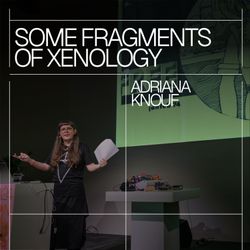
Adriana Knouf – Some Fragments of Xenology
57:25|Accompanied by her modular synthesiser, xenologist scholar and artist Adriana Knouf's presentation is proposed as a love letter. Eschewing the binary logic that pervades Western thinking, Knouf argues that all beings – trans*, cis, and xeno – are in a constant process of flux and transformation, always already more-than-human. From syringes of oestrogen to the trajectories of satellites orbiting the Earth, she investigates ongoing and future processes of ‘xenomogrifications’ – the becoming of something else.Following her talk, Adriana Knouf also sat down with Hannah Pezzack to talk about everything from Elon Musk and SpaceX, to fungi and making synth parts. Find the interview in the Sonic Acts Podcast series.→ Explore more of the Sonic Acts Biennial 2024 programmeCredit:Production: Sonic ActsCamera: Engage! TVIntro sound: Jessica EkomaneIntro design: Knoth & Renner with Anja KaiserPart of New Perspectives for Action. A project by Re-Imagine Europe, a collaboration between Paradiso and Sonic Acts (NL), funded by Creative Europe.www.sonicacts.com