Share
Degrees of Health
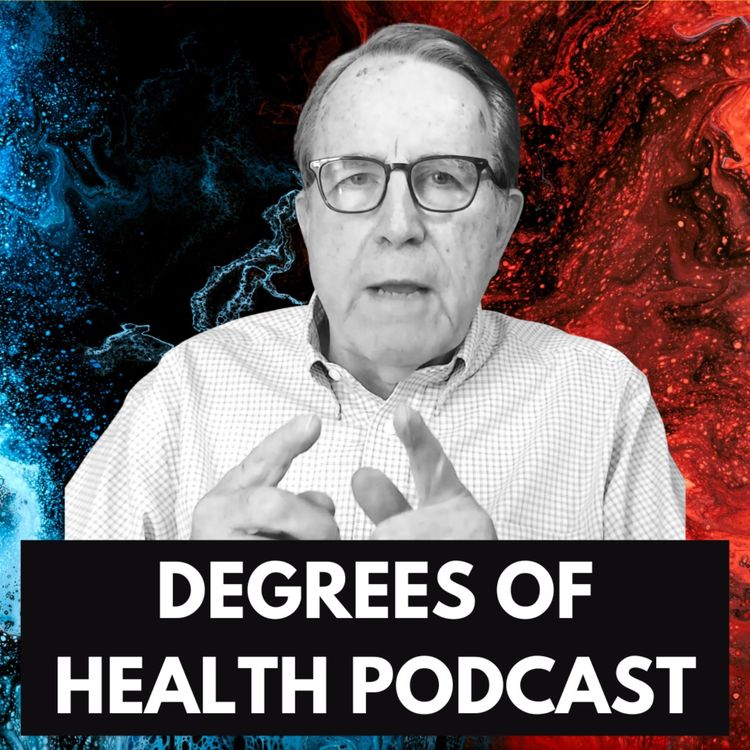
Dr Martin Moore-Ede | Why Your Health Hinges on the Light You See
The light we see is as crucial as the food we eat, the water we drink, and the air we breathe. Former Harvard Medical School professor and 40-year leading expert in circadian clocks and human health, Dr. Moore-Ede speaks on why our health hinges on getting the right sort of light at the right time.
In this episode, he reveals the dangers of modern LED lighting, which often emits bright but unhealthy "junk light." Just as junk food wreaks havoc on our body, junk light disrupts our circadian rhythms, suppresses melatonin, and contributes to chronic diseases.
We cover:
💤 The Health Risks of LED Lighting: "junk light" disrupts circadian rhythms, suppresses melatonin, and contributes to chronic diseases
💡 Junk Light and Lumens - modern lighting regulations prioritise energy efficiency over human health
🕒 Circadian Clocks and Longevity: light is essential for disease prevention and healing
👓 Rise of Myopia in Children: indoor living and reduced exposure to natural light are fueling skyrocketing rates of myopia
🌈 Blue light blocking glasses - do you have the right sort?
🛠️ Practical Solutions for Healthier Lighting: simple changes you can make in your home and your life
Backed by decades of evidence, Dr Martin Moore-Ede shares the science behind why we must prioritise light in our health, and how to optimise our exposure for immediate benefits, and a longer, healthier life.
Find Dr Martin:
Book: https://thelightdoctor.com/
Mentioned in this episode:
Health and Light by John Ott
SORAA - light bulbs
The Body Electric by Robert Becker and Gary Seldon
Avoidance of sun exposure is a risk factor for all-cause mortality: results from the Melanoma in Southern Sweden cohort
Want to watch this on video? Subscribe on YouTube
Instagram @degreesofhealth
More episodes
View all episodes
109. Rethinking Modern Medicine: Metabolic Health and Why Calories Don’t Work | Dr. Adrian Soto-Mota
01:09:00||Ep. 109Why is modern medicine so slow to adapt to new science? In this episode, we sit down with physician and physiologist Dr. Adrian Soto-Mota to challenge some of the most deeply entrenched dogmas in healthcare and nutrition.Dr. Soto-Mota explains why he shifted gears from traditional internal medicine to metabolic research, sharing a fascinating look into the slow evolution of science—often progressing "one funeral at a time." We dive deep into the remarkable real-world success of using carbohydrate restriction and carnivore diets to treat Inflammatory Bowel Disease (IBD), the biological flaws of the "calorie" model, and why the textbook definition of hormones is completely outdated.Finally, we break down his recent Keto CTA study on Lean Mass Hyper-Responders (LMHR) and what the data actually says about high LDL cholesterol and heart disease plaque progression in metabolically healthy individuals.If you've ever felt like the standard medical advice on diet, metabolism, and cholesterol isn't telling the whole story, this deep dive into physiology is for you.If you enjoyed this episode, please hit the Like button, Subscribe to the channel, and share your thoughts in the comments below!⏱️ TIMESTAMPS00:00 – Introduction & Dr. Adrian Soto-Mota's background00:34 – Internal Medicine vs. Biomedical Science: Why medicine isn't a science03:57 – Are we on the edge of a massive paradigm shift in healthcare?07:50 – "Science progresses one funeral at a time"09:21 – The shocking success of Carnivore & Low-Carb diets for IBD patients13:33 – Epilepsy, IBD, and treating disease when we don't know the mechanism16:52 – Are ketone bodies actually hormones?21:42 – The biological flaw of the "Calorie" and the Energy Balance Model37:13 – The Keto CTA Study: Does high LDL cause plaque in Lean Mass Hyper-Responders?42:43 – The biggest surprise from the data🔗 RESOURCES & LINKSFollow Dr. Adrian Soto-Mota on Twitter/X: [Insert Link]Read the Keto CTA Study: [Insert Link]Subscribe to the Podcast: [Insert Link]Disclaimer: The information provided in this video is for educational and informational purposes only and should not be construed as medical advice. Always consult with a qualified healthcare professional before making changes to your diet, lifestyle, or medical treatment.--------------------------------------------------------------------------------------------------------------------------Exploring the benefits of red and infra light therapy? Our community receive 10% off via this linkWant to watch this on video? Subscribe on YouTubeInstagram @degreesofhealthDisclaimer
108. The Hidden Dangers of Plant Toxins | Dr Anthony Chaffee
01:14:16||Ep. 108Some people find health through green smoothies. Others find it in 3 kilos of steak cooked in ghee.Dr Anthony Chaffee is a neurosurgical registrar and ex-professional rugby player who’s been running on nothing but animal products for years. No salads. No supplements. No exceptions. In this conversation, we get into the weeds of his theory, that many modern illnesses (autoimmune conditions, metabolic disorders, mental health struggles) are not mysterious at all, they are the result of eating the wrong fuel.🥩 Why plants aren’t as innocent as they look🧬 Autoimmunity, inflammation & symptom reversals🍳 What a carnivore diet looks like day-to-day📉 Why most nutrition advice is upside down📚 The history of meat-based medicine (it’s older than you think)🧠 What brain fog, bloating, and back pain have in commonTake a listen as he lays out the logic, science and experience behind a radical return to meat and see if it changes your perspective.Find Dr Anthony:Website - https://www.howtocarnivore.com/YouTube @anthonychaffeemd Mentioned in this episode:The Relation of Alimentation and Disease by Dr James SalisburyStrong Medicine by Dr Blake DonaldsonNutrition and Physical Degeneration by Dr Weston PriceBruce Ames research on naturally occurring plant carcinogensJAMA (2016) Sugar industry’s influence on dietary fat recommendationsDr. Paul Saladino @Paulsaladinomd Dr. Shawn BakerThomas Seyfried - https://youtu.be/JMCaNcvPu3I?si=BsROlO5qR6c9GQeuDr. Dominic D’Agostino - https://youtu.be/kYl7ow_-01E?si=CoCijlouXDe7z72_--------------------------------------------------------------------------------------------------------------------------Exploring the benefits of red and infra light therapy? Our community receive 10% off via this linkWant to watch this on video? Subscribe on YouTubeInstagram @degreesofhealthDisclaimer
107. Mitochondria: The Key to Mental Health | Dr Ana Andreazza
57:43||Ep. 107What if the root of mental illness isn’t all in your head but in your cells?Dr. Ana Andreazza is leading one of the most exciting shifts in psychiatric science: away from neurotransmitters and towards the mighty mitochondria. In this episode, she and Ben explore the metabolic foundations of mood disorders, how lactate and ketones impact the brain and why most psychiatric medications only form part of the picture.From bipolar disorder and inflammation to mitochondrial transplants and brain organoids, Ana is at the forefront of rethinking how we treat, prevent and understand mental illness.We cover:🧬 Why mitochondria might be the missing link in mental illness🔥 How lactate and inflammation can trigger mania and mood swings🥦 Why nutrition is still missing from most psychiatric care⚡ The link between energy metabolism and neurotransmitters🥼 What mitochondrial transplants could mean for brain health🥑 The promise of ketones in bipolar and mood regulation💊 Why we need both meds and metabolic interventionsFind Ana: More about Ana's work - https://mito2i.caPapers & Research: https://www.researchgate.net/profile/Ana-Andreazza--------------------------------------------------------------------------------------------------------------------------Exploring the benefits of red and infra light therapy? Our community receive 10% off via this linkWant to watch this on video? Subscribe on YouTubeInstagram @degreesofhealthDisclaimer
106. The Fertility Factors: Blood Sugar, Protein, and Nutrient Density | Lily Nichols
59:42||Ep. 106This episode's information revealed just how much of our 'regulated' nutritional information is either completely outdated or incorrect. Here with Lily Nichols, a renowned dietitian and author who is not afraid to speak on the controversial dietary topics, we discuss where current nutritional guidelines on protein and micronutrients impact overall health and hold us back, particularly for those looking to optimise fertility and metabolic health.Tune in to get the latest on:🤰 Nutritional foundations for maternal and child health - pre-pregnancy, pre-natal, and post natal🍩 Blood sugar regulation and nutrient-dense diets for prospective parentsℹ️ The actually essential roles of non-essential amino acids👶🏻 A protein-forward, nutrient dense intake for maternal health and fetal development🌾 Supplementing vs real foods - the synergies🧬 How nutrients (like choline, vitamin D, and B12) influence genetic expression from the womb onwardThis conversation is a must for prospective parents, and anyone seeking to understand how optimal nutrition intersects with fertility, energy, and lifelong health.Find Lily:Website, Blog Posts and Books lilynickelsrdn.comFree 1st Book Chapter - Real Food for Pregnancy https://lilynicholsrdn.com/free-chapter/Instagram / lilynicholsrdn Exploring the benefits of red and infra light therapy? Our community receive 10% off via this linkWant to watch this on video? Subscribe on YouTubeInstagram @degreesofhealthDisclaimer
105. Dr Thomas Seager, PhD |The Metabolic Theory of Cancer: Mitochondrial Defects, Cold Water and Ketosis
57:02||Ep. 105Explore cheeky petes here https://www.amazon.co.uk/Cheeky-Petes-Kids-Breakfast-Cereal/dp/B0GNCQWCC9/ref=sr_1_1?crid=360KB906ZLHPO&dib=eyJ2IjoiMSJ9.pKMapNxuhSrnD7bbtxuCHXTqDd52QkzVUUOgV8O52v1IMIUYsCaRVoxo29T7ZYrrCy6gxf_7plmscfKhz9U3M5pdiByZJXVkO1HJ6HlTq4MJahSHEHkbALrklvWZcJBdXbYZNOWmvaUasCVaONgiig.5ZUUpMWog4gVQoTBYbvdSWCqUXONHXgGr1tv0QrOBEE&dib_tag=se&keywords=cheeky+pete%27s+cereal&qid=1776801101&sprefix=cheeky+pete%2Caps%2C117&sr=8-1 Thomas Seager joins us again for a conversation challenging the conventional understanding of cancer. Thomas argues that the war on cancer, launched over 50 years ago, has failed to make significant strides in combatting the disease due to a fundamental misunderstanding of its origins.With scientific clarity, Dr. Seager explains:🔬the theory of cancer as a metabolic disease, beginning with defects in mitochondrial DNA, rather than the previously believed nuclear DNA🍯 how glucose metabolism plays a crucial role in cancer growth💧 ketosis and cold exposure therapies in inhibiting tumour growth🏆 inspiring case studies using cold water to combat cancer (see episode with Dean Hall)⚠️ the limitations of traditional cancer treatments (chemotherapy and radiation) and the need for more research and openness towards alternative and/or adjunct therapies focused on metabolic health, mitochondrial function, and lifestyle choices.If you know of someone with cancer at the moment, share this with them. Or better yet, read the papers and books mentioned below and entertain the possibility that there may be additional things you can do to revolutionise their cancer care and improve the prognosis for a loved one. Surely that's worth a read.Find Thomas:Substack - https://seagertp.substack.com/Twitter & Instagram: @seagertp Email: thomas.seager@asu.eduMentioned in this episode:Book: Uncommon Cold by Thomas Seager - https://www.morozkoforge.com/product-...Ice Bath and Cancer Science - https://www.morozkoforge.com/ice-bath... Study - Cancer as a metabolic disease: implications for novel therapeutics - https://www.ncbi.nlm.nih.gov/pmc/arti... Study - Can the Mitochondrial Metabolic Theory Explain Better the Origin and Management of Cancer than Can the Somatic Mutation Theory? - https://www.ncbi.nlm.nih.gov/pmc/arti...Book - Cancer As A Metabolic Disease by Thomas Seyfried - https://www.amazon.co.uk/Revised-Tran... Study - Brown-fat-mediated tumour suppression by cold-altered global metabolism - https://www.ncbi.nlm.nih.gov/pmc/arti...DNA repair and anti-cancer mechanisms in the longest-living mammal: the bowhead whale - https://www.biorxiv.org/content/10.11...Exploring the benefits of red and infra light therapy? Our community receive 10% off via this linkWant to watch this on video? Subscribe on YouTubeInstagram @degreesofhealthDisclaimer
104. Why Most Chronic Disease Starts with Metabolic Health | Dr Campbell Murdoch
45:56||Ep. 104Why are so many people sick and why does so much of modern medicine still miss the root cause?In this episode, Dr Campbell Murdoch shares why metabolic health may sit at the centre of today’s chronic disease epidemic.From insulin resistance and type 2 diabetes to fatty liver, high blood pressure, inflammation, kidney dysfunction, and energy crashes, this conversation explores how the body starts to break down when it loses metabolic flexibility and how quickly things can improve when the right levers are pulled.We cover:metabolic health explained simplyinsulin resistance and blood sugar regulationreversing type 2 diabeteswhy mainstream medicine has been slow to changepractical lifestyle interventions that actually move the needlewhy better health can happen faster than people thinkA grounded and eye-opening conversation on root causes, real change, and what healthcare should be focusing on.If you want, I can also turn this into short reel captions and thumbnail quotes pulled from the strongest clips in the episode.Exploring the benefits of red and infra light therapy? Our community receive 10% off via this linkWant to watch this on video? Subscribe on YouTubeInstagram @degreesofhealthDisclaimer
103. The Science of Ultra Endurance Fueling | Paul Booth on Carbs, Caffeine & Performance
53:19||Ep. 103What separates elite ultra endurance athletes from everyone else?In this episode, Paul Booth breaks down the reality of fueling for performance — including carbohydrate intake, hydration, caffeine, gut training, race-day strategy, and recovery.This conversation explores both the science and the practical side of endurance nutrition, including what athletes get wrong, what actually works, and how small decisions can make a huge difference over long distances.We cover:• ultra endurance fueling strategies• caffeine and performance• hydration and electrolytes• gut training for racing• carbs, GI distress, and race-day mistakes• elite athlete preparation behind the scenesA great episode for anyone interested in endurance, performance, and how to get more out of training and racing.Exploring the benefits of red and infra light therapy? Our community receive 10% off via this linkWant to watch this on video? Subscribe on YouTubeInstagram @degreesofhealthDisclaimer
102. Bipolar, keto, and a second chance | Dyane Harwood
50:10||Ep. 102What happens when a ketogenic approach doesn’t just change your diet but changes your quality of life?In this episode, Dyane Harwood shares her deeply personal story of living with bipolar disorder, navigating postpartum bipolar onset, and discovering ketogenic therapy as part of her path toward greater stability and resilience.We talk about the nuance often missing from online conversations around keto and mental health, including medication, sleep, metabolic psychiatry, and why this approach is not about simplistic “cure” narratives, but about finding tools that genuinely help.We also explore:bipolar disorder and postpartum onsetketogenic therapy for mental healthvegan keto and practical implementationsleep, CPAP, and quality of lifehope, nuance, and second chances through metabolic psychiatryA thoughtful and honest conversation about mental health, metabolism, and what it means to find something that truly helps.Exploring the benefits of red and infra light therapy? Our community receive 10% off via this linkWant to watch this on video? Subscribe on YouTubeInstagram @degreesofhealthDisclaimer
101. Have We Been Wrong About Sunlight? | Pelle Lindqvist
38:57||Ep. 101Is sunlight really as harmful as we’ve been told?In this episode, Pelle Lindqvist explores the nuanced science of sun exposure, challenging conventional narratives around skin cancer and health.We discuss:Sunlight and all-cause mortalityThe role of vitamin D and nitric oxideWhy location and skin type matterSun exposure vs modern public health adviceThe difference between overexposure and avoidanceThis is a conversation about rethinking sunlight, not as something to fear, but something to better understand.Exploring the benefits of red and infra light therapy? Our community receive 10% off via this linkWant to watch this on video? Subscribe on YouTubeInstagram @degreesofhealthDisclaimer