Degrees of Health
All Episodes
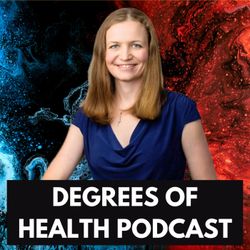
139. Metabolic Health, Metabolic Psychiatry and more | Rachel Frase RD
40:23||Ep. 139Can changing what you eat change how you think and feel? In this episode, Ben Hopkins sits down with registered dietitian Rachel Frase to explore metabolic psychiatry, the fast-growing field using ketogenic therapy to support depression, anxiety, bipolar disorder and more. Rachel shares how her own gut health struggles led her into low-carb nutrition, then into a psychiatric practice where she spent three years working with patients using personalised ketogenic diets alongside or instead of medication.Together they unpack why ketones give the brain more energy than glucose, why mental and metabolic conditions should never be treated in silos, what “more mental bandwidth” really means, how ketogenic therapy is being explored for anorexia, and the simple steps to start a ketogenic diet without the dreaded keto flu.If you’ve ever wondered whether diet can be a serious tool for mental health, this one’s for you.MILESTONE MOMENTS Why intervening early after a first episode of psychosis can change the rest of someone’s lifeMore ATP, more mitochondria: why ketones fuel the brain better than glucose Depression, diabetes and bipolar disorder: one spectrum, not separate buckets The myth that ketosis is dangerous in pregnancy, and the weak data behind 175g of carbsMetabolic flexibility, BDNF and the science of mental capacity How a ketogenic diet can bring food freedom to people with anorexia The most common mistake people make when starting keto Exogenous ketones: strategic tool, not a crutch CHAPTERSWelcome Rachel Frase From gut health struggles to metabolic psychiatry What convinced Rachel that diet can transform mental health How effective is a ketogenic diet for depression? Which version of keto actually works Is it the ketones or the break from glucose? Mental health as a spectrum, not silos: Stress, pregnancy and gestational diabetes Ketogenic therapy during pregnancy The next frontier: education Mental bandwidth and capacity explained Ketogenic therapy and anorexia Keto in a calorie surplus Carnivore and ketone levels How to start a ketogenic diet the right way: What a continuous ketone monitor might reveal Dietary fat and burning body fatExogenous ketones: help or hindrance? The Sugar Summit and where to find RachelLINKS The Quit Sugar Summit (free virtual event, October 21 to 25, focused on metabolic psychiatry): Follow Rachel on Instagram Connect with Rachel on LinkedIn Subscribe to Degrees of Health: youtube.com/@degreesofhealth ------------------------------------------------------------------------------------------------------------------------🌈 Exploring the benefits of red and infra light therapy? Our community receive 10% off the FlexBeam from Recharge Health via this link: ⬇️ https://rechargehealthas.sjv.io/DyJ3mn (learn more about the benefits of healing with light in our 'Light as Medicine' Playlist). 🤝 Join the community - by subscribing, you are self-selecting as a health nerd. We like you. We applaud you. You are shaping the future of health information in real time. As a thank you, we pledge to bring you the best we can, where we are, with the tools we have.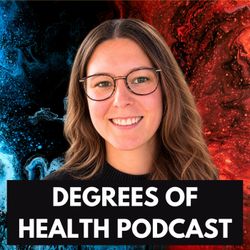
138. A Deep Dive On Fisetin | Dr Juliette Tavenier
22:24||Ep. 138Could removing damaged cells help us age better and reduce the risk of age-related diseases? In this episode, Ben Hopkins sits down with researcher **Juliette Taverner** to explore the science of cellular senescence, senolytics, and the potential of compounds like fisetin in the field of longevity research. As we age, some damaged cells stop dividing but remain active, releasing inflammatory signals that can affect surrounding tissues. These are known as *senescent cells*, sometimes nicknamed “zombie cells”. Scientists are investigating whether senolytics, compounds designed to selectively eliminate these cells, could help reduce their harmful effects and improve health as we age.🧬 What You'll Learn **Cellular senescence:** What happens when damaged cells stop dividing but continue to release inflammatory signals.**Senolytics vs. senomorphics:** How these two approaches differ in targeting senescent cells and their effects.**Fisetin and longevity:** Why this plant-derived compound has attracted interest in ageing research, and what we still don't know about its effects in humans.**Clinical trials:** How researchers are investigating fisetin in older adults and exploring different treatment approaches.**Measuring biological ageing:** Why identifying and quantifying senescent cells in living humans remains a major scientific challenge.**SUPAR as a biomarker:** How this blood-based marker may help researchers investigate chronic inflammation and biological ageing.**Immune system decline:** How immunosenescence may contribute to the accumulation of senescent cells as we age.**Safety and supplementation:** Potential risks, drug interactions, bioavailability challenges and why high-dose fisetin should not be assumed to be safe or effective. ⏱️ Chapters 00:00 – Introduction to Juliette Taverner 00:26 – What is cellular senescence? 03:58 – Fisetin and the science of senolytics 04:16 – How fisetin works 05:54 – Why senolytics may be taken intermittently 06:29 – Inside the fisetin clinical trials 08:08 – How do researchers measure senescence? 09:41 – SUPAR: A potential biomarker of biological ageing 11:39 – Understanding fisetin dosing 12:18 – What do we know from current research? 14:27 – Can diet provide enough fisetin? 15:10 – Should you take fisetin supplements? 16:17 – Fisetin, caffeine and potential drug interactions 17:39 – Is fisetin the best senolytic candidate? 18:40 – Do senolytics have a future in longevity? 19:45 – Are anti-ageing supplement claims justified? 21:35 – Designing better senolytic clinical trials 22:14 – The future of cellular senescence research 22:40 – Where to follow Juliette's research Juliette discusses research into senolytic and senomorphic approaches, including clinical studies investigating fisetin, safety, pharmacokinetics and potential changes in markers of inflammation and ageing.A central challenge remains: researchers need to determine who might benefit from these therapies, how to measure senescent cell burden reliably, and whether changes in biomarkers translate into meaningful improvements in health, physical function and cognition.Do you think senolytics could become an important part of the future of longevity medicine? What evidence would you want to see before considering a treatment designed to target senescent cells? -------------------------------------------------------------------------------------------------------------------------🌈 Exploring the benefits of red and infra light therapy? Our community receive 10% off the FlexBeam from Recharge Health via this link: ⬇️ https://rechargehealthas.sjv.io/DyJ3mn (learn more about the benefits of healing with light in our 'Light as Medicine' Playlist). 🤝 Join the community - by subscribing, you are self-selecting as a health nerd. We like you. We applaud you. You are shaping the future of health information in real time. As a thank you, we pledge to bring you the best we can, where we are, with the tools we have.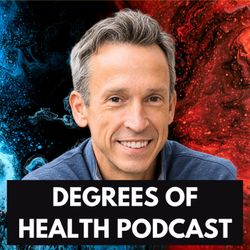
137. The Neuroscience Of Unlocking Human Potential | Dr Josh Turknett
01:07:10||Ep. 137Dr Josh Turknett: The Genius and the Impostor | Degrees of HealthIn my early twenties, I read everything I could get my hands on, because I’d picked up the idea that my brain would basically stop changing at 25. That turns out to be completely false. It also worked, because it made me take learning seriously. Which is sort of the whole point of this conversation.Dr Josh Turknett is a neurologist, and his new book The Genius and the Impostor takes apart what he calls the special brain story: the idea that you’re born with a maths brain or a music brain and a fixed amount of “smart juice”, and your job is to work out which one you got. He thinks it’s wrong and doing real damage. Beliefs shape outcomes, from the placebo and nocebo effects to the Pygmalion effect in classrooms, and Josh argues the special brain story is the nocebo effect at scale.The book centres on two characters. The genius is the unconscious learning engine that taught you to walk, talk and socialise from nothing, and it never goes away. The impostor turns up in adolescence. It’s the narrative voice in your head, a module in the language cortex found in split-brain research, whose job is to explain your behaviour with total confidence and no real insight. It really cares about status, which is why it’s so keen to tell you you’re not a maths person.We get into why plasticity is about need rather than age (there’s an owl study involving inverted goggles), why curiosity is the signal to follow, why you should give your impostor a name, and why Josh calls the online world “purified impostor”. We also cover the minimum effective dose for learning, somewhere between five and twenty minutes, which he worked out teaching himself banjo while working ninety-hour weeks as a neurology resident. Plus why brain training apps only make you good at brain training apps, why rest is where the growth happens, and the idea that plasticity itself is plastic: the more you learn, the better you get at learning.Josh’s closing line stuck with me. We built our whole theory of intelligence before we understood the brain, which is like building a theory of digestion without knowing about the stomach. And we’re still using it.LINKS🧠 The Genius and the Impostor: geniusandtheimpostor.com🎧 Better Brain Fitness podcast, with Dr Tommy Wood 🎙️ Josh’s performance neurology podcast 📬 Substack-------------------------------------------------------------------------------------------------------------------------🌈 Exploring the benefits of red and infra light therapy? Our community receive 10% off the FlexBeam from Recharge Health via this link: ⬇️ https://rechargehealthas.sjv.io/DyJ3mn (learn more about the benefits of healing with light in our 'Light as Medicine' Playlist). 🤝 Join the community - by subscribing, you are self-selecting as a health nerd. We like you. We applaud you. You are shaping the future of health information in real time. As a thank you, we pledge to bring you the best we can, where we are, with the tools we have.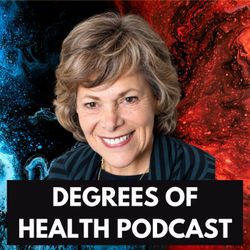
136. Your perception is your reality | Dr Ellen Langer
52:32||Ep. 136How much of what you think you know is actually true?In this episode of Degrees of Health, Ben Hopkins sits down with Dr Ellen Langer, the first woman to be tenured in psychology at Harvard and the researcher who has spent fifty years studying mindfulness, almost none of it involving meditation.Ellen makes a simple case with enormous consequences. Mindfulness isn’t something you sit cross-legged to achieve. It’s just noticing. And the moment you decide you know something, you stop noticing it entirely. Her definition of the opposite state is one of the best lines in the episode: frequently in error, but rarely in doubt.From there, the conversation moves through five decades of research that keeps arriving at the same conclusion, which is that our beliefs shape our bodies far more directly than most of us are willing to accept.They discuss:Why mindfulness has almost nothing to do with meditation The one plus one question that catches almost everyone outThe horse that ate a hot dog, and why it changed the direction of a career Why knowing something can be the thing that causes the bad outcomeThe counterclockwise study, where elderly men lived as though it were twenty years earlier The chambermaids who lost weight after being told their work already counted as exerciseThe rigged clock experiments, where blood sugar followed perceived time rather than real time Why Ellen thinks mind and body connection doesn’t go far enough; learning things conditionally, and the single word that changes what you can do with an idea Why stress requires you to predict a future you’re demonstrably bad at predicting Why every negative word we use about behaviour has an equally true positive version: attention to symptom variability, and how to run it yourself with a phone alarm What chronic actually means, and why it isn’t what most people assume Why the more different you are from whoever wrote the rule, the less you should follow it One of the biggest takeaways is that uncertainty isn’t the problem. Being certain is. The more fixed your view of something, the fewer options you leave yourself, and Ellen’s argument is that most of our suffering traces back to exactly that.A genuinely fun conversation with someone who has spent a lifetime questioning things the rest of us stopped looking at years ago. She’s 79, by the way, which makes her thoughts on healing and ageing land rather differently.Find out more about Ellen Langer and her work:Book: The Mindful Body by Dr Ellen LangerInstagram, where the paintings, fairy tales and songs appear first ellenlanger.com If you enjoyed the episode, subscribe to Degrees of Health and let us know in the comments: What’s one thing you’re completely certain about? -------------------------------------------------------------------------------------------------------------------------🌈 Exploring the benefits of red and infra light therapy? Our community receive 10% off the FlexBeam from Recharge Health via this link: ⬇️ https://rechargehealthas.sjv.io/DyJ3mn (learn more about the benefits of healing with light in our 'Light as Medicine' Playlist). 🤝 Join the community - by subscribing, you are self-selecting as a health nerd. We like you. We applaud you. You are shaping the future of health information in real time. As a thank you, we pledge to bring you the best we can, where we are, with the tools we have.
135. I Followed Mentzer For 2 Years. It Nearly Ruined Me | Dr Nash Jocic
01:06:44||Ep. 135Dr Nash Jocic: Philosophy, Bodybuilding and the Golden Era | Degrees of Health Every so often, a conversation goes somewhere you didn’t expect. This was one of them. Dr Nash Jocic came to bodybuilding through philosophy, not the other way round. He started with Hermann Hesse, arrived at a view that a person exists as three entities physical, intellectual and spiritual — and realised philosophy was only giving him two of them. Bodybuilding was the only thing he could find that was challenging enough for the third. That was forty years ago. He’s 64 now, trains five times a week, does zero cardio, and has eaten broadly the same way for decades.The interesting part is the wrong turn he took on the way there. In his early twenties, he followed Mike Mentzer’s heavy-duty system religiously for two years, hit 112kg, and couldn’t find the line between his chest and his shoulders. Then he went to his first bodybuilding show, looked at the men on stage, and had the thought that changes everything for anyone who’s had it: if those are bodybuilders, what am I?Ben and Nash get into high volume and what it really means, why copying Serge Nubret won’t make you Nubret, rep ranges and time under tension, rest periods, and his hormonal case against eating six times a day. His most contrarian position is about the word “cardio” itself, and he goes after it hard. Underneath it all: Nietzsche, Spinoza, Sartre, Hobbes and the Buddha, deployed to make one point. Methods are many, principles are few. Stop looking for the recipe. Worth your time whether you lift or not. MILESTONE MOMENTS ⚡ Seventies lifters had two machines and protein powder that made you sick. By every measure, we should be producing better physiques now. We aren’t.⚡ Mentzer won Mr Universe training like everyone else. The system he sold came later, after his shape went. ⚡ From 112kg to 82kg on stage. “I had to lose 30 kilos to see my six pack.” ⚡ The Buddha: “Do not rely on my stick, make your own one.” ⚡ Hobbes: roll thirty severed heads down a hill and every man runs for his own. Ego, encapsulated. ⚡ “Deeds talk.” Why what you’ve done is the only thing that makes you special. ⚡ Nothing magic about twelve reps — what matters is three to four seconds per rep. ⚡ “Each set should step on the tail of the next one.” ⚡ 64 years old, zero cardio, shredded. “I eat like this for decades.” LINKS 💪 Nash Fit Training — nashfittraining.com 📚 14 ebooks on nutrition, training systems and fat loss 🎥 The Bodybuilding Blueprint course ▶️ Dr Nash Jocic on YouTube -------------------------------------------------------------------------------------------------------------------------🌈 Exploring the benefits of red and infra light therapy? Our community receive 10% off the FlexBeam from Recharge Health via this link: ⬇️ https://rechargehealthas.sjv.io/DyJ3mn (learn more about the benefits of healing with light in our 'Light as Medicine' Playlist). 🤝 Join the community - by subscribing, you are self-selecting as a health nerd. We like you. We applaud you. You are shaping the future of health information in real time. As a thank you, we pledge to bring you the best we can, where we are, with the tools we have.
134. 100 Years of Keto… So Why Don’t More Doctors Use It? | Dr Eric Kossoff
40:23||Ep. 134Can changing what you eat really help control seizures?In this episode of Degrees of Health, Ben Hopkins sits down with Dr. Eric Kossoff, a leading neurologist at Johns Hopkins who has spent decades researching ketogenic diet therapies for epilepsy.The ketogenic diet has been used to treat epilepsy for over 100 years, but there’s still a lot people don’t know about how it works. And it turns out, it might not just be about ketones.Eric explains why ketogenic diet therapy can be effective for children and adults with epilepsy, how it’s become an established treatment in modern medicine, and why he believes we should be looking at using it earlier in the treatment process.They also get into the five different types of ketogenic diet therapy, the surprising role blood glucose stability could play in controlling seizures, and the possibility that the diet may have benefits that last even after someone stops following it.In this episode, we discuss:• How effective ketogenic diet therapy really is for epilepsy• Why it can work even when ketone levels are low• The five different ketogenic diets used in clinical practice• What blood glucose stability might have to do with seizure control• Why the medical world has been slow to embrace dietary therapies• Whether starting the ketogenic diet earlier could improve outcomes• How long children and adults typically stay on the diet• Whether ketogenic diet therapy can have lasting effects after stopping• What we know (and don’t know) about exogenous ketones for epilepsy• The role of parents and families in shaping epilepsy researchOne of the most interesting takeaways is that ketones may be only part of the story. Different ketogenic diets may work through different mechanisms, including changes in glucose regulation and the gut microbiome, and researchers are still working to understand exactly how it all fits together.If you're interested in metabolic health, the brain, or the science behind using nutrition as a medical therapy, this is a fascinating conversation.Useful resources mentioned in the episode:Charlie Foundation: https://charliefoundation.org/Matthews Friends: https://www.matthewsfriends.org/International Neurological Ketogenic Society: https://neuroketo.org/Dr. Kossoff and his colleagues also discuss their book, Ketogenic Diet Therapies, written for patients, parents and caregivers.Important: Ketogenic diet therapy for epilepsy should be undertaken with appropriate medical supervision, including guidance from a neurologist and specialist dietitian.If you enjoyed the episode, subscribe to Degrees of Health and let us know in the comments: Do you think dietary therapies deserve a bigger role in modern medicine?#DegreesOfHealth #KetogenicDiet #Epilepsy #MetabolicHealth #Keto #Neurology #BrainHealth #NutritionScience------------------------------------------------------------------------------------------------------------------------- 🌈 Exploring the benefits of red and infra light therapy? Our community receive 10% off the FlexBeam from Recharge Health via this link: ⬇️ https://rechargehealthas.sjv.io/DyJ3mn (learn more about the benefits of healing with light in our 'Light as Medicine' Playlist). 🤝 Join the community - by subscribing, you are self-selecting as a health nerd. We like you. We applaud you. You are shaping the future of health information in real time. As a thank you, we pledge to bring you the best we can, where we are, with the tools we have.
133. We’re Getting Longevity All Wrong | Professor Colen Murphy
33:50||Ep. 133How much do we actually know about living longer?In this episode of Degrees of Health, Ben Hopkins sits down with Professor Coleen Murphy, a leading researcher in aging and longevity at Princeton University, to talk about what the science really tells us about how we age.They get into some of the biggest ideas in longevity right now, from calorie restriction and exercise to GLP-1s, peptides, vaccines, AI and the possibility that viruses could play a role in age-related disease.Coleen also explains why she thinks we shouldn't be obsessed with simply living as long as possible. The bigger goal might be staying healthy, active and cognitively sharp for as long as we can.They discuss:Why we still have so much to learn about agingThe science behind calorie restriction and whether it's actually worth itWhy Coleen is much more interested in exerciseThe idea of "longevity escape velocity"Where AI could speed up longevity researchWhy prevention may be more important than trying to fix problems later in lifeThe surprising connection between vaccines and dementia riskWhat we really know about GLP-1 drugs and longevityThe risks and hype around longevity peptidesWhy women and reproductive aging could hold important clues about longevityHow sleep and wearables could help us understand our own agingWhy the brain and the rest of the body are much more connected than we once thoughtThe role of optimism, mindset and purpose in healthy agingWhy simply measuring and tracking what you do might be more useful than extreme longevity protocolsOne of the biggest takeaways from the conversation is that longevity isn't necessarily about finding one magic pill or living an incredibly restrictive lifestyle. It's about understanding the biology of aging and figuring out how we can stay healthier for longer.A fascinating conversation with someone who has spent decades studying the science behind how we age.Find out more about Coleen Murphy and her research:Princeton University / Murphy LabBook: How We Age: The Science of Longevity by Coleen MurphyIf you enjoyed the episode, subscribe to Degrees of Health and let us know in the comments:Would you rather live longer, or simply stay healthier for longer?-------------------------------------------------------------------------------------------------------------------------🌈 Exploring the benefits of red and infra light therapy? Our community receive 10% off the FlexBeam from Recharge Health via this link: ⬇️ https://rechargehealthas.sjv.io/DyJ3mn (learn more about the benefits of healing with light in our 'Light as Medicine' Playlist). 🤝 Join the community - by subscribing, you are self-selecting as a health nerd. We like you. We applaud you. You are shaping the future of health information in real time. As a thank you, we pledge to bring you the best we can, where we are, with the tools we have.
132. Keto vs Mediterranean And The Different Health Outcomes | Dr Max Petersen
29:15||Ep. 132What actually matters when it comes to improving metabolic health, losing weight, or the diet you use to lose it?In this episode of Degrees of Health, Ben sits down with Dr Max Petersen to unpack his research comparing three very different diets: a true ketogenic diet, a Mediterranean diet, and a very low-fat plant-forward diet. The study was designed to answer a fascinating question: if people lose the same amount of weight, do different diets produce different effects on metabolic health? Max explains how the study controlled weight loss by providing participants with all of their food, allowing the researchers to compare the diets while keeping weight loss broadly the same. Participants achieved around 10% weight loss, with more than 95% adherence to the provided diets.The results were particularly interesting for insulin sensitivity.All three diets produced roughly a 50% improvement in skeletal muscle insulin sensitivity. But the ketogenic diet produced a much greater improvement in liver insulin sensitivity — around two to three times greater than the other two diets.We dig into what that actually means, why muscle and liver insulin sensitivity are different, and how the body handles glucose after a meal.Ben and Max also explore the role of ketones, whether the benefits of the ketogenic diet can actually be attributed to ketosis itself, and why Max thinks the dramatic reduction in insulin levels may be more important than ketones acting as signalling molecules.The conversation also covers one of the more surprising findings from the study: the ketogenic group did not experience the expected rise in LDL cholesterol. Max explains why metabolic context may be an important factor when looking at how people respond to different diets.We also get into:Calories in vs calories outWhy energy balance is more complicated than it soundsKeto vs Mediterranean vs very low-fat dietsWhat insulin sensitivity actually tells us about metabolic healthThe difference between liver and muscle insulin sensitivityWhy exercise can increase glucose uptake independently of insulinWhat ketones actually do in the bodyWhether ketosis itself is responsible for the benefits of a ketogenic dietThe importance of metabolic contextWhy a true ketogenic diet is different from simply eating low carbWhether protein could explain some of the differences between dietsWhat Max would study nextThe potential role of GLP-1 medicines in metabolic healthImportantly, Max also explains why these findings shouldn't simply be turned into a recommendation that everyone should follow a ketogenic diet. The study looked specifically at people with obesity, insulin resistance and metabolic dysfunction, and he emphasises that the effects of diet can depend heavily on the metabolic context and the individual.A fascinating conversation about nutrition science, metabolic health and why the answer to “which diet is best?” may be far more complicated than we think.Subscribe to Degrees of Health for more conversations with researchers, scientists and health experts exploring what the evidence actually tells us.-------------------------------------------------------------------------------------------------------------------------🌈 Exploring the benefits of red and infra light therapy? Our community receive 10% off the FlexBeam from Recharge Health via this link: ⬇️ https://rechargehealthas.sjv.io/DyJ3mn (learn more about the benefits of healing with light in our 'Light as Medicine' Playlist). 🤝 Join the community - by subscribing, you are self-selecting as a health nerd. We like you. We applaud you. You are shaping the future of health information in real time. As a thank you, we pledge to bring you the best we can, where we are, with the tools we have.
131. Exercise Snacks Deep Dive | Prof. Jonathan Little
37:26||Ep. 131What if you didn’t need a full workout to get meaningful health benefits from exercise?In this episode of Degrees of Health, Ben sits down with Professor Jonathan Little to explore the science behind exercise snacks short bursts of vigorous exercise that can be sprinkled throughout your day.Jonathan explains where the idea came from, what the research actually shows, and whether a few minutes of exercise here and there can really make a difference to fitness, blood sugar and metabolic health.We get into what counts as an exercise snack, why intensity matters, how exercise snacks could help people who are currently inactive, and whether they can be useful alongside a more traditional training programme. We also talk about the best time to exercise if you're trying to improve glucose control, including why exercising 30–60 minutes after a meal may be particularly useful. Jonathan shares some of the most practical exercise snacks from his research, from high-knee marching and running on the spot to squats and stair climbing. But there’s still a lot we don't know.How much exercise is actually enough?Does one minute work as well as two or four?Can exercise snacks meaningfully add to an existing training programme?And what are the mechanisms inside the muscle that explain the benefits?Jonathan also explains why the research is still in its early stages and why properly understanding the dose-response relationship could be the next big step for the field.In this episode:* What exactly is an “exercise snack”?* Can short bursts of exercise improve VO₂ max?* The effects on glucose control and insulin sensitivity* Why going from nothing to something may have the biggest impact* How vigorous does an exercise snack need to be?* The best exercises to use* Why exercising after meals could help blood glucose* Exercise snacks for people who already train* Whether exercise snacks can complement HIIT and endurance training* What we still don't know about the ideal dose* The future of exercise snack research.If you spend most of your day sitting at a desk but still want to move more, this is a fascinating look at how small changes could fit into everyday life without necessarily feeling like another workout.Subscribe to Degrees of Health for more conversations with researchers, scientists and health experts exploring what the evidence actually tells us.-------------------------------------------------------------------------------------------------------------------------🌈 Exploring the benefits of red and infra light therapy? Our community receive 10% off the FlexBeam from Recharge Health via this link: ⬇️ https://rechargehealthas.sjv.io/DyJ3mn (learn more about the benefits of healing with light in our 'Light as Medicine' Playlist). 🤝 Join the community - by subscribing, you are self-selecting as a health nerd. We like you. We applaud you. You are shaping the future of health information in real time. As a thank you, we pledge to bring you the best we can, where we are, with the tools we have.
loading...