Share
Degrees of Health
Annie vs. Aging: Atomic Longevity Habits From The Longevity Leaderboard
🧬 What does it take to age slower than more than 99.9% of the population?
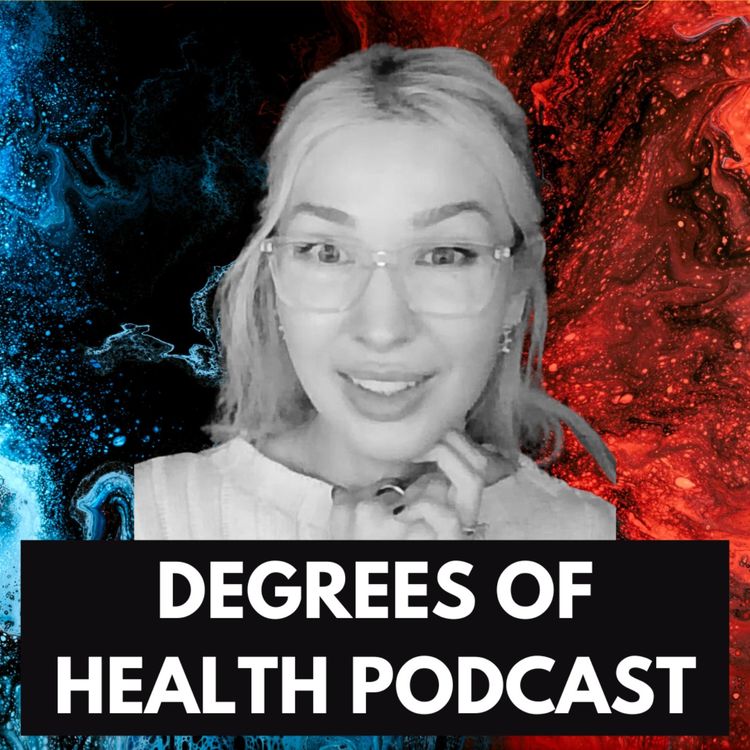
Meet Annie who is currently ranked #2 in the Rejuvenation Olympics, measuring the slowest biological aging in the world (second only to Bryan Johnson). But Annie’s not a billionaire with a team of scientists. She’s a self-experimenting New Yorker who figured out what works for her and it’s more simple (and more joyful) than you’d think.
In this episode, Ben and Annie explore her full protocol (yes, including a Kind Bar and red light therapy), the wild (and sometimes worrying) world of longevity culture and how the simplest shifts - walking more, laughing nightly, cutting alcohol - helped Annie feel better and slow her aging to 0.46x the typical rate.
We cover:
🧠 Annie's supplement stack & skin protocol
🥦 How diet impacts pace of aging and why Annie is not anti-meat
🧪 Senolytics, grounding mats, liposomal vitamins & NOVOS
🧨 The supplement that lowered her skin age by 7 years
🧘♀️ Why overtraining raised her aging score
📉 What didn’t work: PEMF, metformin & too much “juice”
A refreshingly human conversation in a space that too often forgets what health really means.
Find Annie:
Instagram @annienosh
Mentioned in this episode:
DunedinPACE Test via TrueDiagnostics
Rejuvenation Olympics leaderboard
Exploring the benefits of red and infra light therapy? Our community receive 10% off via this link
Want to watch this on video? Subscribe on YouTube
Instagram @degreesofhealth
More episodes
View all episodes
125. We Banned The Only Healthy Light Bulb | Dr Martin Moore-Ede
46:25||Ep. 125Part one with Dr Martin Moore-Ede passed half a million views, so he's back with the revised edition of The Light Doctor, and this time the conversation goes beyond the visible spectrum entirely.Dr Moore-Ede led the Harvard team that located the human body's master circadian clock. In this episode, he makes the case that the light entering your eyes matters as much to your health as the food you eat, the water you drink and the air you breathe and that modern LED lighting has quietly stripped out most of the spectrum our biology evolved to expect.Ben and Martin cover the ultraviolet and near-infrared wavelengths missing from the first edition, why melatonin isn't a sleep hormone, how infrared light fuels your mitochondria, the deep violet wavelength linked to childhood myopia (and blocked by your own windows), and why the lighting design industry has been so slow to catch up.MILESTONE MOMENTS⚡ 08:32 — Point a spectrophotometer at daylight and you get the full rainbow, evenly balanced. Point it at your living room and you get a blue spike and a yellow-green hump. Nothing else.⚡ ~15:20 — The 20-year-old study almost nobody talks about: blood drawn from women in darkness suppresses human tumour growth in rats. Blood drawn from women under light at night doesn't.⚡ 17:03 — Ben shares his mother's cancer journey, stage four to all clear, and the role light hygiene played in her protocol.⚡ ~21:00 — Circadian lighting in elderly care homes: better memory, better sleep, and around 40% fewer falls.⚡ ~25:30 — Add a single incandescent desk lamp to a windowless basement office and people's colour vision measurably improves.⚡ ~26:40 — We've had infrared in our evenings for half a million years, from fire and candlelight. Then we banned the bulbs that provided it.⚡ ~36:30 — Deep violet light at 380nm appears to protect against myopia — and energy-efficient window glass filters it out.⚡ 32:20 — How healthy lighting actually got adopted: skip the lighting designers, go to the people managing the workforce. 65 Fortune 500 companies followed.CHAPTERS00:00 — Welcome back: half a million views on Part One01:44 — Why a revised edition? The science that moved04:23 — The problem: what your eyes see vs what your body detects08:32 — Sunlight vs your living room, measured10:43 — Melatonin explained (and why it's not a sleep hormone)15:20 — Light at night, melatonin and cancer: the evidence17:03 — Ben's mother's cancer journey and the light protocol17:50 — Blindness, breast cancer risk and the "light diet"19:37 — Is modern oncology overlooking the light environment?21:00 — Hospitals, ICUs, care homes and circadian lighting trials23:30 — Near-infrared and your mitochondria25:30 — The incandescent bulb experiment at UCL27:31 — Are we solar-powered? Educating policy makers28:19 — Why lighting designers are the bottleneck30:33 — What will the inflection point be?30:59 — Red light panels vs healthy ambient light32:56 — Making the economic case for circadian lighting34:51 — Green light: migraines, pain and calm35:36 — Yellow, and then deep violet36:30 — Violet light, myopia and why windows block it38:10 — Could doctors prescribe light instead of drugs?40:15 — Light, mood, ADHD and children's classrooms41:55 — Designing buildings for dynamic light44:39 — Where the next breakthroughs will come from46:07 — Where to find the bookLINKS📕 The Light Doctor (revised edition) — thelightdoctor.comAvailable now in the UK, US and Canada. Ebook September, audiobook October.-------------------------------------------------------------------------------------------------------------------------🌈 Exploring the benefits of red and infra light therapy? Our community receive 10% off the FlexBeam from Recharge Health via this link: ⬇️https://rechargehealthas.sjv.io/DyJ3mn (learn more about the benefits of healing with light in our 'Light as Medicine' Playlist).
124. Is Alzheimer’s Really a Disease of the Mitochondria? | Dr. Russell Swerdlow
46:57||Ep. 124What if one of the biggest clues to Alzheimer’s disease lies inside our mitochondria?In this episode of Degrees of Health, Ben Hopkins is joined by Dr. Russell Swerdlow to explore the mitochondrial cascade hypothesis of Alzheimer’s — and why mitochondrial dysfunction could be playing a much bigger role in the disease than we once thought.Russell talks through the research that led him to this hypothesis, including his early cybrid experiments, which found that mitochondrial DNA from Alzheimer’s patients could transfer reduced cytochrome oxidase activity into cell models. From there, the research uncovered a number of other changes, including increased oxidative stress, abnormal mitochondria, problems with calcium handling and changes in APP biology.The conversation then gets into the metabolic side of Alzheimer’s. Why does the brain become less able to use glucose? What does “type 3 diabetes” actually mean? And why might mitochondrial dysfunction sit upstream of some of these changes?They also discuss ketones, redox balance and the importance of keeping the brain’s “carbon rivers” flowing — and why targeting mitochondrial function could potentially be a more upstream approach than simply targeting amyloid plaques.Russell also shares his thoughts on exercise, lifestyle and where future treatments could come from, including the possibility of using what we learn from lifestyle interventions to develop new pharmaceutical approaches.And ultimately, there’s a much bigger question: could solving Alzheimer’s mean solving brain ageing itself?-------------------------------------------------------------------------------------------------------------------------🌈 Exploring the benefits of red and infra light therapy? Our community receive 10% off the FlexBeam from Recharge Health via this link: ⬇️https://rechargehealthas.sjv.io/DyJ3mn (learn more about the benefits of healing with light in our 'Light as Medicine' Playlist).🤝 Join the community - by subscribing, you are self-selecting as a health nerd. We like you. We applaud you. You are shaping in real time the future of health information. As a thank you, we pledge to bring you the best we can, where we are, with the tools we have.🎧 Listen to us on-the-go! Available wherever you listen to your favourite podcasts. New episode every Wednesday!
123. Glycation, Blood Sugar & Healthy Ageing | Professor Paul Reynolds
49:27||Ep. 123Could something as simple as the way our bodies handle sugar play a bigger role in ageing and chronic disease than we realise?In this episode, Ben Hopkins sits down with Professor Paul Reynolds for a fascinating conversation about glycation, what it is, why it happens, and why it might be something we should all know a little more about.Glycation is essentially what happens when sugar sticks to things in our bodies that it shouldn't. While some of this happens naturally, Paul explains why frequent blood sugar spikes may increase the amount of damage over time.They explore how this could affect different parts of the body, including the **heart, brain, eyes, skin and kidneys**, and why glycation may be an important part of the bigger picture when it comes to ageing and chronic disease.The good news is that there are things we can do.Paul shares some practical ideas around food, movement, fasting, exercise and supporting the body's natural clean-up systems**. They also discuss blood sugar monitoring, HbA1c, continuous glucose monitors and what the future of tracking our metabolic health could look like.This is a really interesting conversation for anyone who wants to understand more about **healthy ageing, blood sugar, metabolic health and how small changes might help us stay healthier for longer.**In this episode, we talk about: • What glycation actually is and why it matters• Why blood sugar spikes may be more important than we think• How glycation could affect the heart and blood vessels• What it might mean for brain health and Alzheimer's• Why our eyes and skin can show signs of ageing• The connection between glycation and kidney health• How food and lifestyle can influence glycation• Why movement after meals could be helpful• The potential benefits of fasting and giving the body time to recover• How the body naturally deals with some of the damage• What HbA1c can tell us about blood sugar• Why continuous glucose monitors could be useful• What the future of health and ageing monitoring might look like• Simple ways to think about keeping blood sugar under controlChapters00:00 Introduction to Glycation and Its Impact on Health02:02 Inflammation as a Central Cause of Disease03:26 What is Glycation and How Does It Occur?06:05 The Connection Between Glycation and Metabolic Diseases09:05 Managing Glycation Through Lifestyle and Diet12:14 Glycation's Role in Heart Disease and Vascular Damage17:58 Glycation and Its Effects on Brain Health and Alzheimer's23:11 Early Signs and Measurement of Glycation29:09 Strategies to Slow Down Glycation and Aging34:03 The Role of Autophagy and Fasting in Glycation Prevention40:02 Future Technologies and Monitoring for GlycationGlycation is something that happens naturally, so the goal isn't to completely eliminate it. As Paul explains, the focus is really on slowing things down, reducing unnecessary blood sugar spikes and giving the body the best chance to keep up with the damage and repair process. Ben and Paul also discuss the idea that what we do consistently over many years may matter far more than what we do occasionally.#Glycation #MetabolicHealth #HealthyAgeing #Longevity #BloodSugar #Healthspan #Fasting #Glucose #Inflammation #aging -------------------------------------------------------------------------------------------------------------------------🌈 Exploring the benefits of red and infra light therapy? Our community receive 10% off the FlexBeam from Recharge Health via this link: ⬇️https://rechargehealthas.sjv.io/DyJ3mn (learn more about the benefits of healing with light in our 'Light as Medicine' Playlist).🤝 Join the community - by subscribing, you are self-selecting as a health nerd. We like you. We applaud you. You are shaping in real time the future of health information. As a thank you, we pledge to bring you the best we can, where we are, with the tools we have.🎧 Listen to us on-the-go! Available wherever you listen to your favourite podcasts. New episode every Wednesday!
122. Everything You've Been Told About Anxiety Is Wrong | Dr. Nicole Cain
01:09:00||Ep. 122Anxiety affects millions of people, but what if everything we have been taught about it is wrong?In this episode, Dr. Nicole Cain shares a completely different way of thinking about anxiety, panic attacks, and healing. Drawing from her own experience and years of clinical practice, she explains why anxiety is not the problem but a signal from your body that something needs attention.We talk about trauma, the nervous system, neuroplasticity, gut health, mitochondria, natural ways to support anxiety, and the practical steps you can take to feel calm again. This conversation is packed with insights that could change the way you think about your mental and physical health.If you have ever struggled with anxiety, panic attacks, or constant stress, this episode is for you.**Chapters**00:00 Introduction00:31 Why anxiety is not the problem02:42 Dr Nicole Cain's story with anxiety and panic10:54 The difference between fear and anxiety15:45 Understanding panic attacks17:07 Why panic attacks are not dangerous21:24 What happens in the brain during anxiety22:50 Why panic can feel like a heart attack24:58 How neuroplasticity helps you heal29:45 The connection between mitochondria and mental health34:20 The four step process to becoming panic proof39:42 Why accepting anxiety changes everything43:23 The best natural supplements for anxiety45:44 Treating the root cause instead of the symptoms49:41 The role of spirituality in healing53:16 The one message everyone needs to hear about anxiety53:54 Can anxiety really be healed?54:32 Where to find Dr Nicole CainIf you enjoyed this conversation, make sure to like the video, subscribe to the channel, and let us know your biggest takeaway in the comments.-------------------------------------------------------------------------------------------------------------------------🌈 Exploring the benefits of red and infra light therapy? Our community receive 10% off the FlexBeam from Recharge Health via this link: ⬇️https://rechargehealthas.sjv.io/DyJ3mn (learn more about the benefits of healing with light in our 'Light as Medicine' Playlist).🤝 Join the community - by subscribing, you are self-selecting as a health nerd. We like you. We applaud you. You are shaping in real time the future of health information. As a thank you, we pledge to bring you the best we can, where we are, with the tools we have.🎧 Listen to us on-the-go! Available wherever you listen to your favourite podcasts. New episode every Wednesday!#Anxiety #PanicAttacks #MentalHealth #Neuroplasticity #Trauma #GutHealth #Wellness #HealthPodcast #DrNicoleCain
121. How Ketones Boost Brain and Body Health | Dr Mark Mattson
51:52||Ep. 121Dr. Mark Madsen discusses the science behind intermittent fasting, ketosis, and their effects on health, aging, and brain function. He explores mechanisms like BDNF, autophagy, and evolutionary perspectives on stress responses.Key Topics- Mechanisms of fasting benefits: calorie restriction, glycation, inflammation- Role of ketones as signaling molecules and energy sources- BDNF and brain plasticity- Exogenous ketones and athletic performance- Evolutionary perspective on stress and adaptationChapters00:00 Introduction and guest introduction00:11 Ben's fasting experiments and Ori Hoffmeckler influence01:13 Are fasting benefits due to calorie restriction or other mechanisms?01:31 Experimental evidence on fasting and lifespan extension in mice02:30 Human study on 5-2 fasting and metabolic health05:27 Benefits of fasting beyond calorie restriction07:11 Fasting, ketosis, and athletic performance08:10 Second wind phenomenon and metabolic flexibility09:16 Fasting and metabolic health in athletes like Matthew Pinson10:25 Exogenous ketones and their role in health and performance16:02 BDNF, brain health, and the effects of ketones19:10 Evolutionary perspective on brain and body adaptation20:23 Stress response, autophagy, and cellular health25:47 Exercise, challenge, and brain resilience27:50 Lifestyle, obesity, and cognitive health28:34 The importance of stress and challenge in evolution43:31 Impact of media and public awareness on fasting science45:28 Clinical trials and health benefits of intermittent fasting46:26 Healthcare system, prevention, and societal challenges48:23 Barriers to healthy lifestyle and socioeconomic factors49:10 Diet, supplements, and natural chemicals in health53:22 Neuroendocrinology and brain development54:30 Neurotransmitters, glutamate, and neural wiring56:26 Excitotoxicity and neural damage in disease58:00 Dietary chemicals and adaptive stress response01:02:59 Evolutionary mechanisms of plant chemicals and human health01:04:58 Dose, duration, and frequency of stressors01:06:06 Optimal intermittent fasting patterns and research challenges01:07:41 Connecting lifestyle, stress, and evolutionary biologyMark Madsen's Institute - https://matsonianinstitute.orgBrain Ponderings Podcast - https://matsonianinstitute.org/podcastWebsite - https://matsonianinstitute.orgPodcast - https://matsonianinstitute.org/podcast-------------------------------------------------------------------------------------------------------------------------🌈 Exploring the benefits of red and infra light therapy? Our community receive 10% off the FlexBeam from Recharge Health via this link: ⬇️https://rechargehealthas.sjv.io/DyJ3mn (learn more about the benefits of healing with light in our 'Light as Medicine' Playlist).🤝 Join the community - by subscribing, you are self-selecting as a health nerd. We like you. We applaud you. You are shaping in real time the future of health information. As a thank you, we pledge to bring you the best we can, where we are, with the tools we have.🎧 Listen to us on-the-go! Available wherever you listen to your favourite podcasts. New episode every Wednesday!
120. Catching Up with Dr Mary Newport | Ketosis, Cholesterol and Brain Health
46:31||Ep. 120In this episode, Dr. Mary Newport discusses the latest insights on cholesterol, the benefits of coconut oil, and the role of ketones in brain health and metabolic diseases. Discover how dietary fats influence health and the potential of ketogenic strategies for longevity and disease management.KEY TOPICSCholesterol controversy and the cholesterol code documentaryImpact of statins on brain cholesterol and confusion in elderlyTypes of LDL particles and their role in artery invasionCoconut oil studies and its effects on cholesterol levelsThe role of medium-chain triglycerides (MCTs) in ketosisBreast milk's MCT content and implications for infant healthKetone production from coconut oil and exogenous sourcesThe relationship between insulin levels, ketosis, and agingPotential of ketogenic diets in managing Alzheimer's and diabetesFuture directions in metabolic health and disease preventionChapters00:00 Introduction and weather update00:25 The cholesterol code documentary and its implications00:39 Controversies around statins and brain cholesterol02:06 Cholesterol in the brain and neuronal function03:04 Types of LDL particles and cardiovascular risk04:14 Coconut oil studies and myth-busting05:10 Effects of coconut oil on lipid profiles06:36 Long-term coconut oil research in Asia07:30 Study on coconut oil vs sunflower oil in heart disease patients08:29 Most viewed article in Nutrients journal 202509:04 Fats, ketosis, and brain health10:08 Why coconut oil enhances brain boost with ketones12:01 Ketone levels from coconut oil and self-measurement14:37 Medium-chain triglycerides and brain energy16:31 Sustaining ketones with MCTs and exogenous supplements17:12 Ketones and reaction time in sports19:35 Diet, ketosis, and natural biology21:29 Dietary patterns, sugar, and chronic disease23:25 Combining diet and exogenous ketones for health27:25 Breast milk, ketosis, and infant development30:48 Ketones as building blocks for brain fats33:28 Ketones, insulin, and brain processing speed35:11 Current projects and future research37:35 Recipe: Greek salad with ketogenic oils52:01 Closing remarks and contact infoCoconut Ketones Website - https://coconutketones.comDr. Mary Newport on Twitter - https://twitter.com/DrMaryNewportWebsite - https://coconutketones.comTwitter - https://twitter.com/DrMaryNewport-------------------------------------------------------------------------------------------------------------------------🌈 Exploring the benefits of red and infra light therapy? Our community receive 10% off the FlexBeam from Recharge Health via this link: ⬇️https://rechargehealthas.sjv.io/DyJ3mn (learn more about the benefits of healing with light in our 'Light as Medicine' Playlist).🤝 Join the community - by subscribing, you are self-selecting as a health nerd. We like you. We applaud you. You are shaping in real time the future of health information. As a thank you, we pledge to bring you the best we can, where we are, with the tools we have.🎧 Listen to us on-the-go! Available wherever you listen to your favourite podcasts. New episode every Wednesday!#MetabolicHealth #WomensHealth #PCOS #KetogenicDiet #Nutrition #Hormones #PostpartumDepression #Metabolism #Fasting #HealthPodcast
119. Rethinking Biology: Energy and Information | Dr Nirosha Murugan
50:31||Ep. 119In this conversation, Dr Nirosha Murugan discusses the evolving understanding of biology through the lens of energy dynamics and information transfer. She emphasises the importance of viewing health and disease not just through chemical interactions but as a complex interplay of energetic signals. The discussion covers the implications of energy resistance in health, the role of light in cancer treatment, and the need for a multidisciplinary approach in scientific research. Dr Murugan also explores the concept of consciousness as an emergent property of energy interactions, advocating for a new perspective on how we understand life and health.Chapters00:00 Exploring New Paradigms in Biology05:31 Energy Dynamics and Human Health11:12 Understanding the Energy Resistance Principle16:30 The Role of Light in Cancer and Health21:43 Consciousness and Energy: A New Perspective27:03 The Intersection of Science and Multidisciplinary Approaches32:25 Future Directions in Health Tech and ResearchTakeaways- Scientific theories are rough approximations of reality.- Energy is the capacity to do work in biological systems.- Homeostasis may not be the right term for biological stability.- Life can be viewed through the lens of energy dynamics.- Patterns in energy can communicate information within biological systems.- Cancer may arise from dysregulated energy resistance.- Light plays a crucial role in health and disease.- Consciousness may emerge from energetic interactions.- A multidisciplinary approach can enhance our understanding of health.- The future of health tech lies in understanding bioelectric and photonic signals.-------------------------------------------------------------------------------------------------------------------------🌈 Exploring the benefits of red and infra light therapy? Our community receive 10% off the FlexBeam from Recharge Health via this link: ⬇️ https://rechargehealthas.sjv.io/DyJ3mn (learn more about the benefits of healing with light in our 'Light as Medicine' Playlist). 🤝 Join the community - by subscribing, you are self selecting as a health nerd. We like you. We applaud you. You are shaping in real time the future of health information. As a thank you, we pledge to bring you the best we can, where we are, with the tools we have.🎧 Listen to us on-the-go! Available wherever you listen to your favourite podcasts. New episode every Wednesday!#MetabolicHealth #WomensHealth #PCOS #KetogenicDiet #Nutrition #Hormones #PostpartumDepression #Metabolism #Fasting #HealthPodcast
116. The Surprising Lack of Breakthroughs in Life Extension Science Over 40 Years | Siim Land
48:05||Ep. 116Uncover the surprising truths about longevity with Siim Land, a leading voice in the emerging world of life extension. Despite decades of research, the biggest breakthroughs in drastically extending lifespan remain elusive, with the strongest evidence pointing towards fundamental factors like calorie restriction and genetics. Siim reveals how current science shows us what not to do and why that matters more than ever if we're serious about living longer, healthier lives.This episode dives deep into the concept of longevity escape velocity, where science might one day enable us to outpace ageing itself and why genetics could be the key unlocking exponential lifespan growth. Siim discusses the latest insights on genetic traits from long-lived species like hydras and bowhead whales, and how future pharmaceuticals could make a 100-year-old feel as vibrant as someone fifty years younger. You'll discover the critical balance between gaining muscle and maintaining longevity, and how cyclic strategies of stimulating and resting mTOR pathways optimise health span.We also explore practical strategies Siim employs today: from personalised fasting routines to balancing resistance training, and how circadian rhythms influence ageing. Curious about the most undervalued supplements? Siim shares why omega-3s and glycine could be your secret weapons, and why some popular interventions, like NMN or NAD boosters, may be overhyped. Plus, get insights on how to interpret biological age clocks and use them as feedback tools to fine-tune your longevity plan.With the stakes higher than ever and the window to act narrowing, this episode is essential listening for anyone committed to healthspan, ageing gracefully, and pushing the boundaries of human potential. Whether you're a longevity enthusiast or just starting your health journey, Siim's evidence-based approach helps you understand the science's real potential and how to turn it into everyday practice.Siim Land is a longevity researcher and biohacker known for blending cutting-edge science with practical lifestyle strategies. His work bridges the gap between the lab and real life, helping you implement longevity principles today.This episode leaves you with compelling questions about the future of human lifespan and tangible actions to improve your health today. Are you ready to maximise your biological age and extend your healthspan? Hit play and start rewriting your ageing story.-------------------------------------------------------------------------------------------------------------------------🌈 Exploring the benefits of red and infra light therapy? Our community receive 10% off the FlexBeam from Recharge Health via this link: ⬇️ https://rechargehealthas.sjv.io/DyJ3mn (learn more about the benefits of healing with light in our 'Light as Medicine' Playlist).
115. The Truth About Aging Clocks and Biomarkers | Dr. Matt Kaeberlein
01:01:06||Ep. 115In this episode, Ben Hopkins sits down with longevity scientist Professor Matt Kaeberlein to unpack the biggest questions in aging, health span, and the science of living longer.They cover the promise and pitfalls of biological age clocks, why resveratrol failed to live up to the hype, how to think about aging as entropy and resilience, and which interventions actually look promising today. Matt also explains where lifestyle, hormones, and medications like rapamycin, SGLT2 inhibitors, GLP-1 agonists, and more fit into a practical longevity strategy.If you’re interested in evidence-based longevity, proactive health, and the future of aging research, this conversation is packed with insights.00:00 Intro00:37 Are biological age clocks a breakthrough or a gimmick?06:04 What is aging, really?11:25 Resveratrol: signal or noise?21:58 The biggest proven levers for health and lifespan27:25 SGLT2 inhibitors, GLP-1s, and proactive medicine38:28 Testosterone, hormones, and aging51:01 Why rapamycin has been so misunderstood55:13 Compound bets: what’s most promising?60:50 What surprised Matt most in longevity science?63:58 The Dog Aging Project and longevity research in dogsLearn more about Matt’s work on the Dog Aging Project and Dog Aging Institute, and check out his podcast and research updates for more on the science of longevity.If you enjoyed this conversation, please like, subscribe, and share it with someone who would benefit from learning more about women's metabolic health.-------------------------------------------------------------------------------------------------------------------------Exploring the benefits of red and infra light therapy? Our community receive 10% off via this linkWant to watch this on video? Subscribe on YouTubeInstagram @degreesofhealthDisclaimer