Share

Smarty Pants
The Linguistics of Brain Rot
Language is always changing, but these days it seems to be moving at warp speed. Whether it's the shift from 😂 to 💀 or the rise of “brain rot,” internet slang is taking over, and if you want to keep up with what's cool (another slang word, from another century), you need to be online. But if you aren’t keen on spending hours scrolling through TikTok, etymology nerd Adam Aleksic is more than happy to explain how social media is making new words go viral. In his new book, Algospeak, Aleksic expands on the ways the algorithm is shifting speech from the perspective of both a linguist and an insider: he scrutinizes influencer accents, memes, in-group slang, censorship evasion, subtweeting, and attention-grabbing morphology. And though these newfangled words and phrases may astonish you, what's most surprising is how fundamentally old the story of language change really is.
Go beyond the episode:
- Adam Aleksic's Algospeak: How Social Media Is Transforming the Future of Language
- Follow @EtymologyNerd on Instagram or TikTok
- Listen to our interviews with Gretchen McCulloch on how the internet changed language and Don Kulick on how a language dies
- For two different takes on how the kids these days are handling social media, watch Adolescence (fiction) and/or Social Studies (documentary)
Tune in every (other) week to catch interviews with the liveliest voices from literature, the arts, sciences, history, and public affairs; reports on cutting-edge works in progress; long-form narratives; and compelling excerpts from new books. Hosted by Stephanie Bastek and sponsored by the Phi Beta Kappa Society.
Subscribe: iTunes/Apple • Amazon • Google • Acast • Pandora • RSS Feed
Have suggestions for projects you’d like us to catch up on, or writers you want to hear from? Send us a note: podcast [at] theamericanscholar [dot] org. And rate us on iTunes!
More episodes
View all episodes
The Industrial Revolution of Bees
37:30|It’s Pollinator Week, and the bugs need us more than ever. Not just bees: butterflies, moths, wasps, flies, beetles, midges, hummingbirds … Around 90 percent of the world's flowering plants and 75 percent of our major food crops rely on pollinators, and they’re dying. Nowhere is insect decline more intimately entwined with our own than with honeybees, 2.7 million colonies of which are hauled around the country to pollinate American crops—most often, California almond trees. Since 2012, Jennie Durant has been studying the social and environmental drivers of bee decline, and her new book, Bitter Honey, combines her research with dozens of interviews with beekeepers, conservationists, scientists, and farmers.There’s no single answer to what’s killing the bees—pesticides, monoculture crops, overwork, parasites, viruses, competition for decreasing forage, the list goes on, and climate change exacerbates all of it—but that also means there are many ways we can still save them.Jennie Durant is a writer, researcher, and author whose work explores why bees and other pollinators are declining, and what it will take to build a more just and sustainable food system.Go beyond the episode:Jennie Durant’s Bitter Honey: Big Ag's Threat to Bees and the Fight to Save ThemIt’s not too late to celebrate Pollinator Week!Learn to identify some of the 4,000-odd bee species in North AmericaSave the Beltsville Bee Lab!Tune in every other week to catch interviews with the liveliest voices from literature, the arts, sciences, history, and public affairs; reports on cutting-edge works in progress; long-form narratives; and compelling excerpts from new books. Hosted by Stephanie Bastek.Subscribe: iTunes/Apple • Amazon • Google • Acast • PandoraHave suggestions for projects you’d like us to catch up on, or writers you want to hear from? Send us a note: podcast [at] theamericanscholar [dot] org. And rate us on iTunes!
The Geek Squad
20:06|Were you a geek? A nerd? Did you play Magic: The Gathering, paint Warhammer miniatures, learn to speak Klingon or Elvish, or memorize whole scenes from Star Trek? If so, then good news: it might have taken a few broken eyeglasses and shoves in high school, but geek culture has finally triumphed. Dragons are cool, Star Wars has never had more fans, and everyone is geeking out over the latest sci-fi release on Netflix. How did this happen? And how have the changing demographics of geekdom affected it, for better or worse? Lifelong nerd and critic A. D. Jameson, whose geek cred is stronger than the Force itself, joins us to figure it out. This episode originally aired in 2018.Go beyond the episode:A. D. Jameson’s I Find Your Lack of Faith Disturbing: Star Wars and the Triumph of Geek CultureRead A. D. Jameson and Justin Roman’s article on sexism in gaming, “If Magic: The Gathering Cares About Women, Why Can’t They Hire Any?”For more on how franchises have changed Hollywood’s structure, check out Stephen Metcalf’s article, “How Superheroes Made Movies Expendable”If you’re looking for an escape this holiday weekend, please binge watch Marvel’s Jessica Jones (reading a book would be fine, too)Listen to the queer history of comics in our second ever podcast episode, “Superheroes Are So Gay!”Tune in every other week to catch interviews with the liveliest voices from literature, the arts, sciences, history, and public affairs; reports on cutting-edge works in progress; long-form narratives; and compelling excerpts from new books. Hosted by Stephanie Bastek.Subscribe: iTunes/Apple • Amazon • Google • Acast • PandoraHave suggestions for projects you’d like us to catch up on, or writers you want to hear from? Send us a note: podcast [at] theamericanscholar [dot] org. And rate us on iTunes!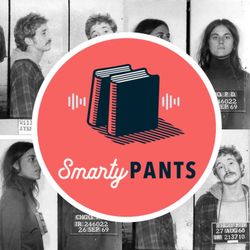
Weather Kids and Panther Cubs
39:04|Zayd Ayers Dohrn was born underground, the son of Bernardine Dohrn and Bill Ayers, two cofounders of the Weather Underground, a militant, radical leftist group of the 1970s that used tactics like the after-hours bombings of government buildings—including the Capitol, the State Department, and the Pentagon—to protest the Vietnam War and racial injustice. “When I was just 3 years old, I learned to recognize plainclothes police officers and undercover agents in a crowd,” Dohrn writes, “It was a bit like playing a game—a grown-up version of dress-up or make believe—that only my family was good at or knew all the rules.” By the time Dohrn was born in 1977, his parents had been hiding from the FBI for close to a decade, working cash jobs from San Francisco to Harlem using assumed names and forged papers. Their decision to have a family while on the run is just one of the tangled contradictions that Dohrn writes about his new book, Dangerous, Dirty, Violent, and Young, which is both a family memoir and a social history of a forgotten chapter of American activism. An acclaimed playwright and screenwriter, Zayd Ayers Dohrn is a professor at Northwestern University and director of the MFA in Writing for Screen and Stage at Northwestern University. He is the creator of the narrative podcast Mother Country Radicals and the rock protest musical Revolution(s).Go beyond the episode:Zayd Ayers Dohrn’s Dangerous, Dirty, Violent, and Young: A Fugitive Family in the Revolutionary UndergroundListen to Mother Country RadicalsIn 2022, we interviewed another member of the underground: Laura Kaplan, a member of the Jane collective that provided abortions before Roe v. WadeTune in every other week to catch interviews with the liveliest voices from literature, the arts, sciences, history, and public affairs; reports on cutting-edge works in progress; long-form narratives; and compelling excerpts from new books. Hosted by Stephanie Bastek.Subscribe: iTunes/Apple • Amazon • Google • Acast • PandoraHave suggestions for projects you’d like us to catch up on, or writers you want to hear from? Send us a note: podcast [at] theamericanscholar [dot] org. And rate us on iTunes!
For Better or for Wurst
22:47|Summer cometh: the grills get scraped clean, the buns are split, and hungry Americans get set to boil or broil their wursts, wieners, and sausages. In the summer of 2021, Jamie Loftus drove from coast to coast, tasting the vast array of hot dogs that America has to offer, consuming as many as four a day—and in one notable (or regrettable) instance, five. Chicago-style and the Coney Island special; drive-through and deli; chili and chile: Loftus devoured them all. Her ensuing book, Raw Dog: The Naked Truth About Hot Dogs, brings the glory and the gory. It may be the first to detail not only the different genders of pickle jars one can buy at a gas station, but also the horrific treatment of animals and workers at slaughterhouses, conditions that got distinctly worse during the pandemic. Loftus—stand-up comedian, TV writer, and creator of such illustrious one-season podcasts as “My Year in Mensa” and “Ghost Church”—joins us to talk about the wild world of that iconic American food.This episode originally aired in 2023.Go beyond the episode:Jamie Loftus’s Raw Dog: The Naked Truth About Hot DogsProPublica’s exposé of the meatpacking industry during Covid revealed awful conditions, and government collusionDelight your senses with PBS’s classic A Hot Dog ProgramA few of the varieties mentioned in this episode:The Texas Tavern (not in Texas)Hungarian hot dogs … in ToledoThe baloney-wrapped hot dogs at Attman’sWhat’ll ya have at the Varsity?Ben’s Chili Bowl, where half-smokes and chili dogs reignThe Sonoran hot dogBut Loftus’s top five are:Rutt’s Hut in Clifton, New JerseyHot Dog Ruiz Los Chipilones in Tucson, ArizonaKing Jong Grillin in Portland, OregonThe hot dog carts across the street from the Crypto.com Arena, or near Union Station in Los Angeles, CaliforniaTexas Tavern in Roanoke, VirginiaTune in every other week to catch interviews with the liveliest voices from literature, the arts, sciences, history, and public affairs; reports on cutting-edge works in progress; long-form narratives; and compelling excerpts from new books. Hosted by Stephanie Bastek.Subscribe: iTunes • Feedburner • Stitcher • Google Play • AcastHave suggestions for projects you’d like us to catch up on, or writers you want to hear from? Send us a note: podcast [at] theamericanscholar [dot] org. And rate us on iTunes!
Learn the Ropes of Estate Sailing
24:25|No place is better suited to those with a taste for champagne but a beer budget than the humble estate sale. Its various guises—be they church rummage sales, yard sales, or online auctions—offer a variety of ways to acquire quality pieces and a little bit of history, with the bonus of saving grandma’s treasures from the landfill. For several years, vintage enthusiast Kate Davis has been writing a popular weekly newsletter, Midwestern Estate Sailing, that not only spotlights upcoming sales of note but offers a guide for the uninitiated. Her new book, Bring Cash, distills those lessons (the first one is in the title) along with essays about favorite finds and what to look for: dovetail joints in furniture, finished seams in clothing, the sign-in sheet at the front of the line so you’re not the last one admitted into the designer’s midcentury bungalow. Davis joins the podcast this week to talk about what she’s learned from estate sailing, her term for the ritual of trekking out to someone’s house and wandering its halls for treasure—which is almost always sure to include at least one inexplicable maritime tchotchke.Go beyond the episode:Kate Davis’s Bring Cash: A Guide to Estate Sales in the Midwest and BeyondHer newsletter, Midwestern Estate SailingFor more on the afterlives of secondhand stuff, listen to our interviews with Adam Minter (on global thrifting) and Dana Thomas (on fast fashion)Tune in every (other) week to catch interviews with the liveliest voices from literature, the arts, sciences, history, and public affairs; reports on cutting-edge works in progress; long-form narratives; and compelling excerpts from new books. Hosted by Stephanie Bastek and sponsored by the Phi Beta Kappa Society.Subscribe: iTunes/Apple • Amazon • Google • Acast • PandoraHave suggestions for projects you’d like us to catch up on, or writers you want to hear from? Send us a note: podcast [at] theamericanscholar [dot] org. And rate us on iTunes!
Safe From Sin
37:18|“Medieval psychology” might sound nearly a millennium out of date, irrelevant to modern science, with its reassurances of cognitive data and peer-reviewed studies. But we often say that Shakespeare’s 400-year old plays communicate the human condition, and that wouldn’t be possible if the Bard didn’t have a deep understanding of what makes our minds tick. Rewind the clock just 200 years further and you’ll find, with the help of a Middle English glossary, that the autobiographical writings of Julian of Norwich and Margery Kempe—not to mention Chaucer—seem achingly familiar in their yearning, their humor, and their determination. We’re not so different, mentally, from our forebears, and beyond literature, medieval writings on morality and psychology have a lot to offer us. But since cracking open a vellum manuscript to read cramped Latin text is beyond most of us, historian Peter Jones can be our guide in his new book, Self-Help from the Middle Ages. And the starting point for much medieval guidance on living a better life is quite familiar: the Seven Deadly Sins, which were less a catalog of forbidden behaviors than a path to self-knowledge. Just ask Dante. Go beyond the episode:Peter Jones’s Self-Help from the Middle Ages: What the Seven Deadly Sins Can Teach Us About LivingFor more about medieval women’s religious experience of food, you can’t do better than Caroline Walker Bynum’s Holy Feast and Holy FastGuillaume de Deguileville’s The Pilgrimage of Human Life, in scanned manuscript or translationBernard of Clairvaux’s The Steps of Humility and Pride Thomas Aquinas’s works are available online in a free side-by-side translationDon’t sleep on the early Christian mystics: Julian of Norwich, Margery Kempe, and Catherine of Siena Tune in every (other) week to catch interviews with the liveliest voices from literature, the arts, sciences, history, and public affairs; reports on cutting-edge works in progress; long-form narratives; and compelling excerpts from new books. Hosted by Stephanie Bastek and sponsored by the Phi Beta Kappa Society.Subscribe: iTunes/Apple • Amazon • Google • Acast • PandoraHave suggestions for projects you’d like us to catch up on, or writers you want to hear from? Send us a note: podcast [at] theamericanscholar [dot] org. And rate us on iTunes!
Hue and Cry
36:44|Defining words is hard, no matter what they are, but the difficulty only doubles when the word in question is a purely visual referent like color. How do you define blue? Or red, or green, or—God forbid—pink? Well, Webster’s Third New International Dictionary has this to say about teal duck, sense two, which transcends its origin as waterfowl: “a dark greenish blue that is bluer and duller than average teal, averaging teal blue, drake, or duckling.” Elegant. Fun, even, for a dictionary, whose defining characteristic is kind of to be dull as dust—which raises the question of how and why some of these colorful definitions came to be. That’s the subject of lexicographer Kory Stamper’s new book, True Color: The Strange and Spectacular Quest to Define Color–from Azure to Zinc Pink, which takes her from the pink and buff archives of Merriam-Webster’s offices to the warring color standards of the early 20th century, from the glossy pages of the Sears & Roebuck catalog to the trenches of World War I. Go beyond the episode:Kory Stamper’s True Color: The Strange and Spectacular Quest to Define Color–from Azure to Zinc PinkRead Scholar executive editor Bruce Falconer’s essay, “What Is the Perfect Color Worth?” on the inscrutable world of color forecastingTune in every (other) week to catch interviews with the liveliest voices from literature, the arts, sciences, history, and public affairs; reports on cutting-edge works in progress; long-form narratives; and compelling excerpts from new books. Hosted by Stephanie Bastek and sponsored by the Phi Beta Kappa Society.Subscribe: iTunes/Apple • Amazon • Google • Acast • PandoraHave suggestions for projects you’d like us to catch up on, or writers you want to hear from? Send us a note: podcast [at] theamericanscholar [dot] org. And rate us on iTunes!
Shotgun Ornithology
30:33|Songbirds are disappearing at an alarming rate, with some species teetering on the verge of extinction, barely clinging to their endangered habitats. Birders, not to mention scientists, are sounding the alarm. But true as these words are today, they also describe the 19th century, and the valiant—and occasionally violent—efforts to protect birds from the utter devastation of human activity. This is the subject of James H. McCommons's new book, The Feather Wars. Birds were threatened by aggressive logging, farming, hunting, sport, and the desire to put a feather in a woman's cap. But they were also imperiled by the very people who claimed to love them—ornithologists, and their kindred oologists, whose hobby consisted of killing thousands upon thousands of birds and collecting their eggs to fluff out their collections. McCommons takes us behind the battle lines of the first American effort to save the birds, in the hopes that some lessons might apply to our current circumstances.Go beyond the episode:James H. McCommons’s The Feather Wars: And the Great Crusade to Save America’s BirdsGet to know the birds in your back yard with eBird from the Cornell Lab of OrnithologyLearn how to garden for wildlifeRead this viral essay about keeping your cat indoors: “The Domestic Cat: Bird Killer, Mouser and Destroyer of Wild Life; Means of Utilizing and Controlling It” (1916)Tune in every (other) week to catch interviews with the liveliest voices from literature, the arts, sciences, history, and public affairs; reports on cutting-edge works in progress; long-form narratives; and compelling excerpts from new books. Hosted by Stephanie Bastek and sponsored by the Phi Beta Kappa Society.Subscribe: iTunes/Apple • Amazon • Google • Acast • PandoraHave suggestions for projects you’d like us to catch up on, or writers you want to hear from? Send us a note: podcast [at] theamericanscholar [dot] org. And rate us on iTunes!
Eulogy for a Yenta
29:01|In a cramped rent-controlled apartment on the lousy end of the Upper East Side, a dying woman in a diaper writes the story of her life. She is Barbara Rosenberg, high on OxyContin and determined to explain herself, if not exactly apologize, to the two people she loved most: her estranged trans son and her best friend, Sugar Becker, whose betrayals she has yet to forgive. This delirious monologue is the heart of Jordy Rosenberg’s new novel, Night Night Fawn, which gives voice to Barbara’s deepest disappointments about her friends, her family, her in-laws, and maybe, if she’s being honest, her own silver-screen aspirations. But Barbara’s most unhinged thoughts—about serving cold cuts at a funeral or the lesbian perils of a corduroy jacket; the schmucks of 1960s Flatbush or bad 1980s nose jobs; Karl Marx or yenta science—reach a crescendo with the unexpected reappearance of her long-lost loves.Mentioned in this episode:Jordy Rosenberg’s Night Night FawnGillian Rose’s Mourning Becomes the LawMichelle de Kretser’s Theory & PracticeSophie Lewis’s Enemy FeminismsRoberto Bolano’s By Night in Chile, translated by Chris AndrewsAdania Shibli’s Minor Detail, translated by Elisabeth JaquetteJordy Rosenberg’s Confessions of the Fox (listen to our 2018 interview here)Amy Kaplan’s Our American IsraelGretchen Felker-Martin’s ManhuntGrace Byron’s HerculineZefyr Lisowksi’s Uncanny Valley GirlsTorrey Peters’s Stag Dance and Detransition, BabyAnd, of course, Karl Marx’s Capital (best read with an introduction)Tune in every (other) week to catch interviews with the liveliest voices from literature, the arts, sciences, history, and public affairs; reports on cutting-edge works in progress; long-form narratives; and compelling excerpts from new books. Hosted by Stephanie Bastek and sponsored by the Phi Beta Kappa Society.Subscribe: iTunes/Apple • Amazon • Google • Acast • PandoraHave suggestions for projects you’d like us to catch up on, or writers you want to hear from? Send us a note: podcast [at] theamericanscholar [dot] org. And rate us on iTunes!