Share
Sidequests
Disneyland's Opening Day Was a Complete Disaster
•
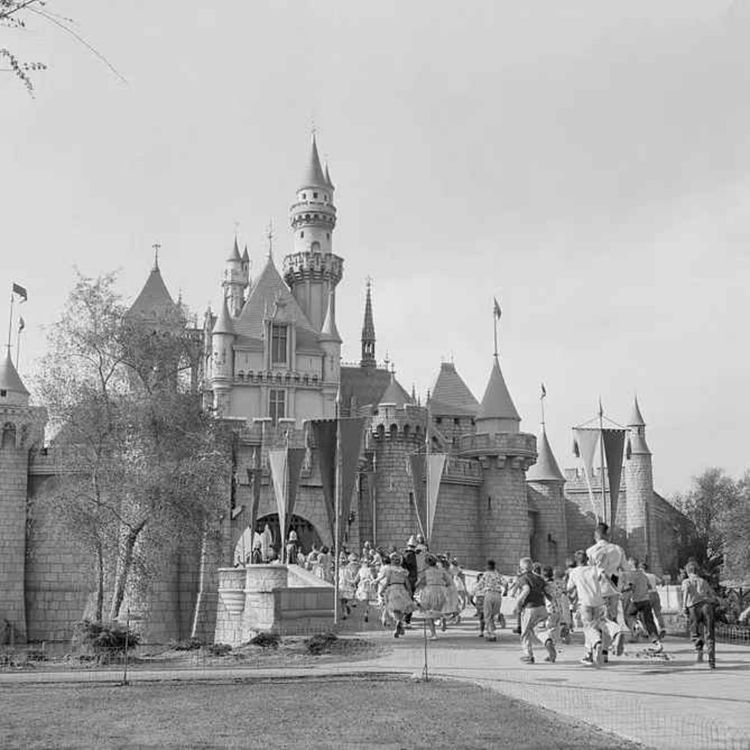
On July 17, 1955, Disneyland opened to roughly twice as many people as invited — thanks to counterfeit tickets, forged credentials, and guests literally climbing fences. The fresh asphalt melted in the Southern California heat, sinking women's heels. The drinking fountains didn't work. A gas leak closed entire sections of the park. Rides broke down. Food ran out. ABC broadcast all of it live to millions of viewers. Employees called it "Black Sunday." This episode of Sidequests covers the full disaster of Disneyland's opening day — and the more interesting story of what Walt Disney did with the failure, and why the worst opening day in theme park history became the foundation for every well-run theme park that followed.
More episodes
View all episodes
The Night the Sky Dropped Rocks on Arizona
13:16|On July 19, 1912, a fireball brighter than the full Moon crossed the evening sky over northeastern Arizona, followed by an explosion that rattled windows for miles — and then thousands of meteorites rained down on the town of Holbrook. Over 14,000 fragments would eventually be recovered, making it one of the largest documented meteorite falls in history. This episode of Sidequests covers what actually happened that night, why Earth's atmosphere is a far more effective shield than most people realize, why nobody died despite thousands of space rocks falling from the sky, and why the Holbrook meteorites — chunks of rock that formed 4.5 billion years ago — are still being actively studied today.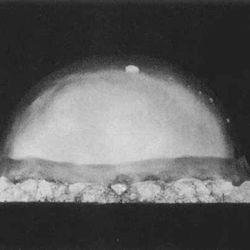
The Day the Atomic Age Began
09:20|On July 16, 1945, at 5:29 and 45 seconds in the morning, a flash brighter than several suns lit up a remote New Mexico desert called Jornada del Muerto — the Journey of the Dead Man. A mushroom cloud climbed seven miles into the sky. Windows shattered more than a hundred miles away. And humanity crossed a threshold from which it could never return.The free episode covers the essential arc: how Einstein's famous letter to Roosevelt set the Manhattan Project in motion, how thousands of scientists solved three seemingly impossible problems in record time, what actually happened at the Trinity test site on July 16, and what followed when Truman received the coded message — "the baby was born" — at the Potsdam Conference. Ten minutes that take you from E = mc² to the atomic age in a single sitting.The full premium episode tells the complete story — the science, the people, the moral reckoning, and eighty years of consequences.
How NASA Got from Orbit to the Moon in Nine Months
17:46|On July 16, 1969, Apollo 11 launched for the Moon. What most people don't know is that less than nine months earlier, NASA had never flown a crewed Apollo spacecraft. This episode of Sidequests marks the anniversary of the launch by tracing the five missions in 281 days that made the Moon landing possible: Apollo 7's first crewed test of the redesigned Command Module, Apollo 8's audacious decision to go to the Moon when the Lunar Module wasn't ready, Apollo 9's first crewed test of the Lunar Module, Apollo 10's full dress rehearsal that descended to nine miles above the surface. Five missions. Five firsts. No margin for failure. The pace that got us to the Moon in nine months — and why it's almost certainly unrepeatable.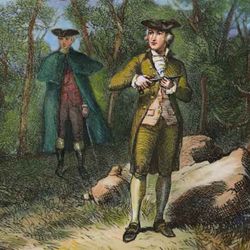
Burr vs. Hamilton: When Politics Was Literally Deadly
16:46|On July 11, 1804, Vice President Aaron Burr shot and killed Alexander Hamilton in a duel on the cliffs above the Hudson River — over political insults. Hamilton was the architect of America's financial system. Burr was the sitting second-in-command of the United States. He finished his term as a wanted man in two states and never held office again. This episode of Sidequests tells the full story of the Burr-Hamilton rivalry, the political backstabbing that turned fatal, and what the duel actually reveals about American polarization: not that it's worse than ever, but that the Founders were far more willing to kill each other over political disputes than we tend to remember — and that building institutions capable of managing that fury without violence was a genuine achievement.
Why Aliens Almost Certainly Can't Find Us... Even If They're Looking
17:09|Even if advanced alien civilizations exist and are actively searching for other life, finding Earth would be extraordinarily difficult — not because we're hidden, but because space is almost incomprehensibly vast. This episode of Sidequests walks through the actual physics and astronomy: why detecting a rocky planet around a distant star is like spotting a firefly next to a stadium spotlight, why our 100 years of radio broadcasts cover only 0.2% of the galaxy's diameter before fading into cosmic noise, why most alien observers would never be geometrically positioned to see Earth at all, and why the time dimension means no one in the galaxy sees us as we are right now. The universe probably isn't empty. But finding each other across it might be nearly impossible regardless.
What Actually Happened at Roswell (And Why It Doesn't Matter)
19:04|Around July 1, 1947, a New Mexico rancher found strange debris on his property. The military announced they'd recovered a "flying disc." Then, within 24 hours, they changed the story to "weather balloon" and the incident faded — until it came roaring back thirty years later as the most famous UFO story in the world. This episode of Sidequests covers what Project Mogul actually was, why the military couldn't tell the truth in 1947, what the physics of interstellar travel actually suggest about alien visitation, and why the real question Roswell raises — are we alone in a universe this vast? — is far more interesting than anything that may or may not have crashed in southeastern New Mexico.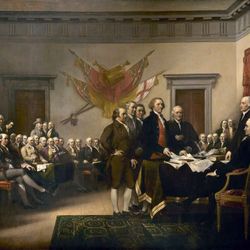
Almost Everything You Picture About the Signing of the Declaration of Independence Is Wrong
16:35|On the 250th anniversary of the Declaration of Independence, Sidequests corrects one of American history's most persistent myths: the famous image of all 56 delegates signing the Declaration together on July 4, 1776 is almost entirely fictional. Congress voted for independence on July 2. They approved the final text on July 4. The actual signing happened primarily on August 2 — and then continued for months, with some delegates signing in the fall and one not signing until 1781. The famous Trumbull painting everyone associates with the signing isn't even depicting the signing. The real story is messier, quieter, more complicated — and considerably more interesting than the legend.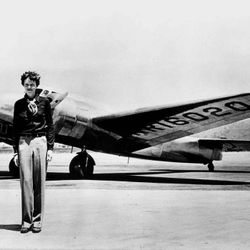
Amelia Earhart's Disappearance Isn't the Interesting Part
17:07|On July 2, 1937, Amelia Earhart and navigator Fred Noonan disappeared over the Pacific during the final leg of an attempted circumnavigation of the globe, sparking one of aviation's most enduring mysteries. This episode of Sidequests, marking the anniversary, argues that the disappearance is the least interesting part of her story — and tells the one that actually matters: how a Kansas-born woman became the first to fly solo across the Atlantic, set records across nearly every category in aviation, founded an organization for female pilots that still exists today, and redefined what the world believed women could accomplish, years before the mystery that made her a legend.