Share
Sidequests
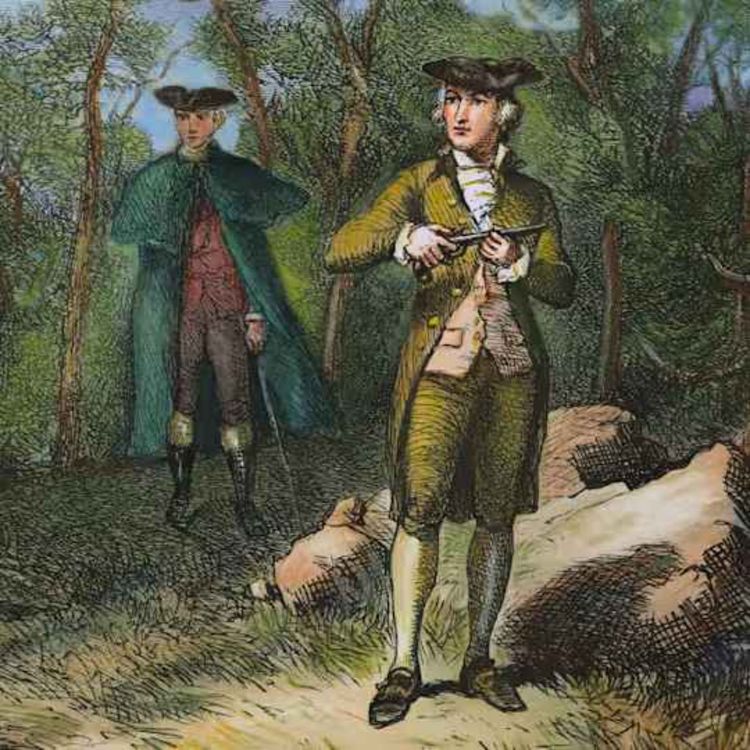
Burr vs. Hamilton: When Politics Was Literally Deadly
On July 11, 1804, Vice President Aaron Burr shot and killed Alexander Hamilton in a duel on the cliffs above the Hudson River — over political insults. Hamilton was the architect of America's financial system. Burr was the sitting second-in-command of the United States. He finished his term as a wanted man in two states and never held office again. This episode of Sidequests tells the full story of the Burr-Hamilton rivalry, the political backstabbing that turned fatal, and what the duel actually reveals about American polarization: not that it's worse than ever, but that the Founders were far more willing to kill each other over political disputes than we tend to remember — and that building institutions capable of managing that fury without violence was a genuine achievement.
More episodes
View all episodes

Why Aliens Almost Certainly Can't Find Us... Even If They're Looking
17:09|Even if advanced alien civilizations exist and are actively searching for other life, finding Earth would be extraordinarily difficult — not because we're hidden, but because space is almost incomprehensibly vast. This episode of Sidequests walks through the actual physics and astronomy: why detecting a rocky planet around a distant star is like spotting a firefly next to a stadium spotlight, why our 100 years of radio broadcasts cover only 0.2% of the galaxy's diameter before fading into cosmic noise, why most alien observers would never be geometrically positioned to see Earth at all, and why the time dimension means no one in the galaxy sees us as we are right now. The universe probably isn't empty. But finding each other across it might be nearly impossible regardless.
What Actually Happened at Roswell (And Why It Doesn't Matter)
19:04|Around July 1, 1947, a New Mexico rancher found strange debris on his property. The military announced they'd recovered a "flying disc." Then, within 24 hours, they changed the story to "weather balloon" and the incident faded — until it came roaring back thirty years later as the most famous UFO story in the world. This episode of Sidequests covers what Project Mogul actually was, why the military couldn't tell the truth in 1947, what the physics of interstellar travel actually suggest about alien visitation, and why the real question Roswell raises — are we alone in a universe this vast? — is far more interesting than anything that may or may not have crashed in southeastern New Mexico.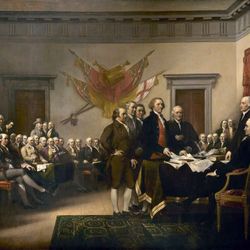
Almost Everything You Picture About the Signing of the Declaration of Independence Is Wrong
16:35|On the 250th anniversary of the Declaration of Independence, Sidequests corrects one of American history's most persistent myths: the famous image of all 56 delegates signing the Declaration together on July 4, 1776 is almost entirely fictional. Congress voted for independence on July 2. They approved the final text on July 4. The actual signing happened primarily on August 2 — and then continued for months, with some delegates signing in the fall and one not signing until 1781. The famous Trumbull painting everyone associates with the signing isn't even depicting the signing. The real story is messier, quieter, more complicated — and considerably more interesting than the legend.
Amelia Earhart's Disappearance Isn't the Interesting Part
17:07|On July 2, 1937, Amelia Earhart and navigator Fred Noonan disappeared over the Pacific during the final leg of an attempted circumnavigation of the globe, sparking one of aviation's most enduring mysteries. This episode of Sidequests, marking the anniversary, argues that the disappearance is the least interesting part of her story — and tells the one that actually matters: how a Kansas-born woman became the first to fly solo across the Atlantic, set records across nearly every category in aviation, founded an organization for female pilots that still exists today, and redefined what the world believed women could accomplish, years before the mystery that made her a legend.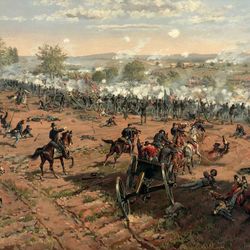
Gettysburg: The Bloodiest Battle in American History
18:15|The bloodiest battle ever fought on American soil began almost by accident — a Confederate division wandering into a Pennsylvania crossroads town in search of shoes, triggering an unplanned collision between two massive armies. This episode of Sidequests, marking the anniversary of the Battle of Gettysburg, covers the three days of fighting that turned the tide of the Civil War: the cavalry officer who recognized the high ground in time, the college professor who led a desperate bayonet charge down Little Round Top, and the catastrophic failure of Pickett's Charge that ended Lee's invasion of the North for good. Plus: how Lincoln's two-minute address four months later transformed the meaning of the entire war.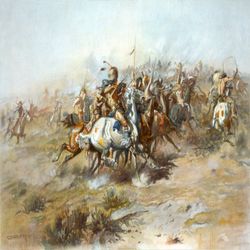
Custer's Last Stand Wasn't a Last Stand. It Was a Defeat
16:54|On June 25, 1876, George Armstrong Custer split his cavalry regiment, ignored his scouts' warnings, and led roughly 200 men into a Native encampment far larger than he understood. Every one of them died within the hour. This episode of Sidequests, marking the anniversary of the Battle of the Little Bighorn, takes apart the "Custer's Last Stand" myth and tells the real story: a genuine military triumph for Sitting Bull, Crazy Horse, and the Lakota, Northern Cheyenne, and Arapaho warriors who defeated a professional army — and the swift, crushing response that followed within two years and ended Plains Native independence for good.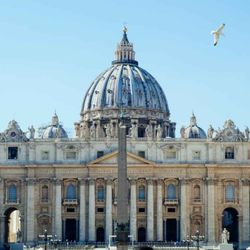
Galileo and the Vatican
20:04|On June 22, 1633, Galileo Galilei knelt before the Roman Inquisition and renounced the truth he'd discovered with his own telescope: that the Earth orbits the Sun. The Church sentenced him to house arrest for life. Nearly 360 years later, the Vatican formally acknowledged it had been wrong. Today it runs its own astronomical observatory — and the current Pope holds a mathematics degree. This episode of Sidequests traces the full journey from Galileo's trial to the modern Vatican's embrace of science, marking the anniversary of one of history's most consequential — and most reversed — institutional judgments.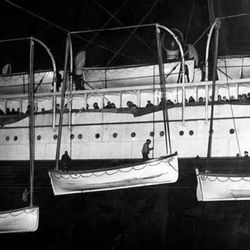
The Sinking of the RMS Titanic: Part Ten - Aftermath
17:58|Episode 10 closes out the Titanic series. Carpathia arrives at Pier 54 with 706 survivors and thirty thousand people waiting in the rain. The inquiries begin almost immediately — eighteen days in Washington, thirty-six in London, J. Bruce Ismay and Captain Stanley Lord both put through public crucifixions that would define the rest of their lives. The free episode covers the arrival, the reunions and the devastating non-reunions, the survival statistics broken down by class and gender and age, and the regulatory overhaul that followed within a year: lifeboats for everyone aboard, mandatory drills, 24-hour wireless watch, the International Ice Patrol that still operates today and has never had a ship struck by ice while heeding its warnings.The premium episode goes deeper on the individual lives destroyed or transformed by survival, and on the cultural reckoning that turned one disaster into the defining symbol of an entire era.