Share
Secret Life of Books
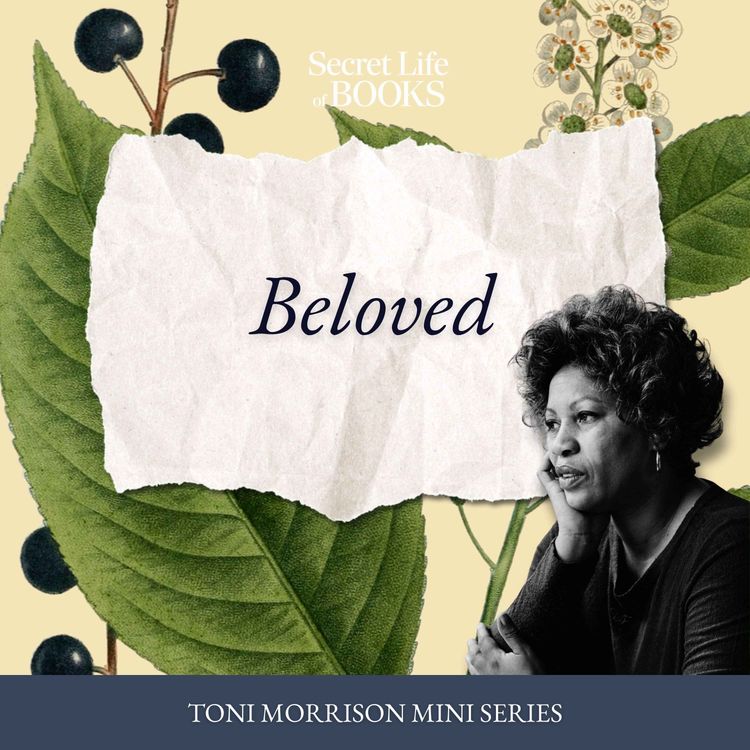
Toni Morrison 3: Beloved
Beloved, published in 1987, was Toni Morrison’s fifth novel and instantly seen to be an all-time landmark of American literature, winning the Pulitzer Prize for fiction. Sophie and Jonty continue their Morrison series by asking what makes Beloved so original, how the novel sets out to depict Black experience as never before, and - a favourite topics on SLOB – what, really, is the ‘ghost’ that haunts the household in this novel?
Beloved was inspired by the true story of the Margaret Garner, a woman who escaped slavery in 1857. On being captured, Garner killed her young daughter to save her from a life of enslavement. At the time the story was a mainstream media sensation, used by abolitionists and pro-slavery voices alike. But in Morrison’s extraordinary retelling it becomes a deep, rich, hard to decipher tale of African-American lives and inner experiences of love, grief, pain and joy from the Middle Passage into the late nineteenth century.
Set mostly in 1873, with numerous flashbacks, Beloved tells the stories of the inhabitants of 124 Bluestone Road in Cincinnati, Ohio. A mother, her lover, her daughter, a ghost and a mysterious woman called Beloved who appears in the home of the protagonist Sethe and her daughter Denver. Through the novel we piece together the backstories of the characters and the impact of slavery on their lives. Morrison wrote that one intention in the book was to ‘make the slave experience intimate’. To achieve this she reinvents literary Modernism and African-American autobiography, with a novel that is uncompromising, frequently horrifying, and very beautiful.
Readings referred to in this episode:
Toni Morrison, "Unspeakable Things Unspoken: The Afro-American Presence in American Literature."
___ "The Site of Memory."
Namwali Serpell, On Morrison, Hogarth Press, 2026.
Become a subscriber by signing up at Apple: http://apple.co/slob
Or join our Patreon community here: https://www.patreon.com/c/secretlifeofbookspodcast
More episodes
View all episodes
172. Secret Life of the British Museum
01:00:22||Ep. 172Viriginia Woolf hated it and Karl Marx loved it. Woolf starts her iconic A Room of One’s Own by skewering it as a monument to British patriarchy and toxic masculinity.The inevitable sequel to lunching and dining at Oxbridge seemed, unfortunately, to be a visit to the British Museum, she wrote.Friend of the show George Eliot, author of Middlemarch, wholeheartedly agreed, and usually sent her husband to do her research for her, in order to avoid the British Museum's oppressive vibes. These women were describing their allergic reaction to the Reading Room, which is now the British Library building near Kings Cross. But the vast collection of global antiquities, including the Rosetta Stone, the Elgin Marbles and the Sutton Hoo treasure, have always been, like the Reading Room itself, matters of divided opinion, polarizing controversy and simmering international tensions.Is the British Museum a treasure hoard stolen almost entirely from other nations’ riches (Lord Byron thought so)? Or in bringing these objects together, in a self-conscious display of the power and fallibility of human empires, does the British Museum show something truly profound and sobering about the nature of human endeavor (its founder, Hans Sloane, took this view). Almost every London writer had opinions on the matter, and in this episode Sophie and Jonty retrace their steps and visit a handful of the most controversial treasures in the collection. Love it or hate it, the British Museum has catalyzed some of English iiterature’s greatest moments.With thanks to the Ponder & See Foundation for their support.Become a subscriber by signing up at Apple: http://apple.co/slobOr join our Patreon community here: https://www.patreon.com/c/secretlifeofbookspodcastHosted on Acast. See acast.com/privacy for more information
170. Secret Life of Reading (with Maggie O'Farrell and Ben Alderson-Day)
54:18||Ep. 170This episode was recorded at the Edinburgh International Book Festival, with literary superstar Maggie O'Farrell and one of Britain's leading psychologists, Ben Alderson-Day.On the Secret Life of Books, we talk about classic books and the life and times of the people who wrote them. In this conversation we talk about you - the readers. What happens when we read a book? What is going on our minds? Why can the experience of staring at words on a page be so intense, life-changing even? Is it just a case of impressions and ideas transferring from an author’s words into our imagination, or is there something more mystical, nay uncanny, at work too? Maggie and Ben reflect on the experience of being readers, and how that can transform being a writer. Maggie is the author of 10 novels, including the acclaimed and recently adapted Hamnet, and her newest book, Land. Ben is a Professor of Psychology at Durham University, author of Presence: The Strange Science of the Unseen Other, and Director of the Readerbank project - a collaborative research project with the Edinburgh Book Festival into how we read, imagine and understand stories. With thanks to the Ponder & See Foundation for their support.Become a subscriber by signing up at Apple: http://apple.co/slobOr join our Patreon community here: https://www.patreon.com/c/secretlifeofbookspodcastHosted on Acast. See acast.com/privacy for more information
169. Secret Life of Edinburgh
59:19||Ep. 169SLOB is in Edinburgh for the International Book Festival. Join us on a walking tour of literary Edinburgh. From Mary Queen of Scots and James VI of Scotland, obsessed with witch hunts and an early anti-tobacco campaigner, to Muriel Spark and slum tourism in The Prime of Miss Jean Brodie. We walk from the gentrified streets of Marchmont and Bruntsfield, across the Meadows, and into the rough and tumble of the Old Town, a maze of cobbled streets and old buildings crowded on the hillside below the Edinburgh Castle. Cameos from Ian Rankin and Kate Atkinson, William Shakespeare, Samuel Johnson and James Boswell, and of course, Sir Walter Scott. Come through Edinburgh with SLOB and relish its very pungent history in a world before modern sanitation.Mr. Johnson and I walked arm-in-arm up the High-street, to my house in James’s court: it was a dusky night: I could not prevent his being assailed by the evening effluvia of Edinburgh. … As we marched slowly along, he grumbled in my ear, ‘I smell you in the dark!’ But he acknowledged that the breadth of the street, and the loftiness of the buildings on each side, made a noble appearance.With thanks to the Ponder & See Foundation for their support.Become a subscriber by signing up at Apple: http://apple.co/slobOr join our Patreon community here: https://www.patreon.com/c/secretlifeofbookspodcastHosted on Acast. See acast.com/privacy for more information
168. Secret Life of Trains 2 (Choo choo!)
37:06||Ep. 168This week SLOB went full steam ahead from London to Edinburgh, to appear live at the Edinburgh International Book Festival. We love classic books, and we love trains, so what better way to while away the 6 hour slow-train to Edinburgh than to record our second episode about literary railway journeys. Join Sophie and Jonty as they choose sandwiches at Euston Station, board the 12:40 to Scotland via Wigan and Penrith, and talk about their favorite train lit. Savor the authenticity of the train-talk, while wedged in the gangway between the toilets and the trash bin, periodically interrupted by skeptical passengers en route to the snacks carriage. Choo choo!!A fun bonus - just because.Become a subscriber by signing up at Apple: http://apple.co/slobOr join our Patreon community here: https://www.patreon.com/c/secretlifeofbookspodcastHosted on Acast. See acast.com/privacy for more information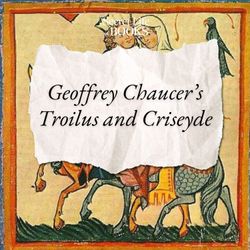
166. Chaucer's Troilus and Criseyde
01:23:44||Ep. 166We’re aware that Chaucer’s epic poem Troilus and Criseyde written in the 1380s might be a tough sell to even the most devoted SLoB listener, but bear with us. Troilus and Criseyde is not a novel, but it bears a lot of features that we associate with novels and reading this novel-length poem takes you into the world and minds of medieval England - albeit transposed to Ancient Troy - by someone who was living there. It has action, betrayal and a racy sex scene. It gives us a new kind of access to characters' inner lives, and it reveals that inwardly people are wildly different from the way they appear. This is a love story that doesn't conform to any of our expectations about medieval love, and a war story that doesn't comply with our expectations of war. There are so many firsts here. We see the invention of the famous British sense of humour captured in real-time by Chaucer, the very guy who invented it. It features the first reconstructed male concerned with consent in literary history and the first dumping by text message - although obviously there’s no phone involved. Become a subscriber by signing up at Apple: http://apple.co/slobOr join our Patreon community here: https://www.patreon.com/c/secretlifeofbookspodcastHosted on Acast. See acast.com/privacy for more information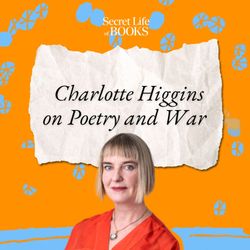
165. Charlotte Higgins on Ukrainian Lessons: Art in a Time of War
50:46||Ep. 165Charlotte Higgins talks to Jonty about her new book, Ukrainian Lessons, which recounts her experiences the last four years reporting on the cultural life of a nation at war. Culture is never far from the front-line in time of conflict, but rarely more so than in Ukraine. Part of Putin’s attempts to legitimise the war lies in an age-old argument that Ukraine is simply an extension, or part of, Russia itself. He has personally written essays explaining his view that Ukrainian language and culture is simply part of a Greater Russia story. Not surprisingly, Ukrainians are proving him wrong with the current flourishing of poetry, writing and art that speaks to the uniqueness and separateness of their culture.Charlotte talks about how she went to Ukraine, what she found and why her belief in the power of poetry and art has never been greater.Charlotte is Chief Culture Writer for The Guardian, a classicist and host of Instant Classics podcast.Content warning: as you might expect from an episode about a contemporary war, some of the stories and experiences that Charlotte recounts are confronting.Become a subscriber by signing up at Apple: http://apple.co/slobOr join our Patreon community here: https://www.patreon.com/c/secretlifeofbookspodcastHosted on Acast. See acast.com/privacy for more information
164. James Joyce 3: Ulysses
01:09:13||Ep. 164Ulysses is a vast novel - over a quarter of a million words. Yet it follows the action of less than 24 hours. To be fair, Joyce packs a lot into that 24 hours. Although our old friend Stephen Daedalus and Leopold Bloom dominate the action, there are over 200 named characters. And, as ever, the most important character is Dublin itself. The story and structure is loosely modelled on The Odyssey with the different chapters named after episodes in Homer’s poem. The first section follows Stephen Daedalus, just as The Odyssey begins with Odysseus’ son Telemachus. Then Leopold Bloom, a 38 year old Jewish advertising canvasser, takes centre stage with Odysseus’ various adventures given modern-day, satirical equivalents. At the climax, Leopold and Stephen are united and return home, where Molly Bloom - the Penelope of the story - has the final word. The word is ‘yes’, although this is one of the rare occasions where one hearkens after a curmudgeonly ‘no’. So… like Odysseus finally reaching Ithaca, we have finally reached Ulysses after referring to it, usually in disparaging terms, over the life of this podcast. And the question is, how are we going to approach it? Are we going to fall to our knees and kiss the shores? Or will we grab bow and arrow and lay waste to the palace? And if you’re concerned we’re sounding just a little too flip, it’s worth remembering that Joyce himself said that Ulysses ‘is fundamentally a humorous work’, filled with word-play, toilet humour and irreverence.Become a subscriber by signing up at Apple: http://apple.co/slobOr join our Patreon community here: https://www.patreon.com/c/secretlifeofbookspodcastHosted on Acast. See acast.com/privacy for more information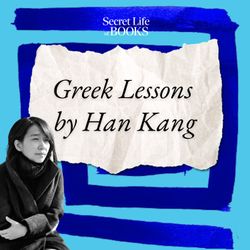
164. Greek Lessons by Han Kang
01:08:47||Ep. 164This week we take a – somewhat unplanned – detour from our James Joyce sequence, which we put on pause while we finished reading the book! We're taking the chance to include in our series on modern Odysseys an episode we recorded a while ago on the 2024 Nobel Prize winner Han Kang’s masterly short novel Greek Lessons.Written in Korean and set in Seoul, Greek Lessons is another moment in which a modern writer takes on the characters and preoccupations of the Odyssey and reinvents them to tell a story about Korea's complex history. Greek Lessons is about an Ancient Greek teacher in Seoul who is losing his sight, and a Korean student who has lost her capacity to speak.The title and opening sentences of Greek Lessons take us directly to big, epic stories about prophecy, blindness and insight, referring among others to the blinded prophet Tiresias, who gives Odysseus predictions about what awaits him in his attempt to return to Ithaca. The novel starts with a reference to the great Argentinian writer Jeorg Luis Borges. As his dying wish, Borges requested the epitaph ‘He took the sword and laid the naked metal between them.’ What Han Kang doesn’t tell us (we’re meant to figure it out) is that Borges went blind in his 50s he became Argentina’s national librarian and learned Old English so he could read Beowulf and other Norse sagas. Across all her novels Kang tells stories of pain, loss and suffering as pathways to unexpected transformation and freedom. She connects her themes directly to the long histories of violence in North and South Korea and she also wants readers to know she’s talking about all suffering and violence over human history, including in the archaic Greek past.Become a subscriber by signing up at Apple: http://apple.co/slobOr join our Patreon community here: https://www.patreon.com/c/secretlifeofbookspodcastHosted on Acast. See acast.com/privacy for more information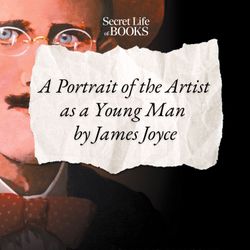
163. James Joyce 2: Portrait of the Artist as a Young Man
59:05||Ep. 163One evening in 1898, the 16-year-old James Joyce lost his virginity with a sex worker on a canal bank in Dublin. The event would become the main event in his autobiographical novel A Portrait of the Artist as a Young Man, published the same year as Dubliners in 1914.Joyce’s sexual awakening prompted both a spiritual crisis and a renewed determination to be a great writer. Portrait tells the story of Joyce’s avatar, Stephen Daedalus, from childhood to graduation. Ultimately, it is about Daedalus’ hard-won rejection of all the baggage of late 19th Century Irish society - religion, morality, English intellectual colonization, and the social stagnation of Dubliners (discussed last week). Daedalus, of course, was the inventor of Greek myth who made himself wings to escape his prison - and the book ends with Stephen escaping the prison of his childhood by turning to the supposed intellectual freedom of Europe. While being well known for its treatment of sexual awakening, the book is also famous for Joyce’s enthusiastic adoption of the stream-of-consciousness technique emerging in European literature, in which the narrative follows the trajectory of the characters thoughts.In this episode, we look at the intellectual journey Joyce took between 1907 - when he started writing Portrait - and 1914, when Ezra Pound had it published.Become a subscriber by signing up at Apple: http://apple.co/slobOr join our Patreon community here: https://www.patreon.com/c/secretlifeofbookspodcastHosted on Acast. See acast.com/privacy for more information