Share
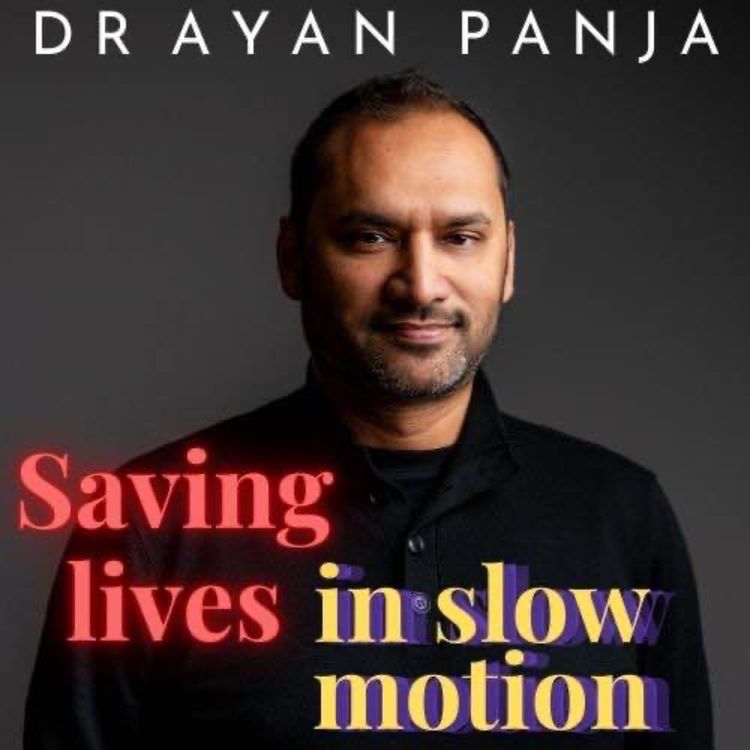
Saving Lives In Slow Motion
Who should you trust with your health?
The amount of health information and practitioners are constantly growing and we have a choice about where we search for this information and advice.
But how do you know who is reliable? How do you decide who to trust?
I explore this and more in the episode.
Gen Z and their health: https://www.healthline.com/health-news/tiktok-main-source-health-information-gen-z#56%25-of-Gen-Z-users-turn-to-TikTok-for-health-and-wellness-advice
Good cheap and fast - 2 out of 3: https://audioinsurgent.substack.com/p/fast-cheap-goodpick-two
Debates around vaccines: https://pmc.ncbi.nlm.nih.gov/articles/PMC10070776/
What health means in a digital society: https://pmc.ncbi.nlm.nih.gov/articles/PMC5778676/#:~:text=Definitions
Youtube Health: https://health.youtube/
Trust in health - sources: https://www.bbc.co.uk/news/health-48663843
Conflicts of interest: https://jamanetwork.com/journals/jama/fullarticle/2623608
The role of influencers: https://www.tandfonline.com/doi/full/10.1080/1553118X.2022.2042694
Covid vaccine injuries: https://www.nytimes.com/2024/05/03/health/covid-vaccines-side-effects.html
Save your life in slow motion and those of others by subscribing now and sharing. Thank you for listening and for your support. It means a lot to me.
More episodes
View all episodes
235. Your Typical Day - what it says about your health
16:45||Season 1, Ep. 235It’s so simple yet really powerful to map what you do each day and howit could secretly be affecting your health.In this episode I give you an example how this tool works and how you can use it.Links: Buy THE HEALTH FIX - now on special offer: https://www.amazon.co.uk/Health-Fix-Dr-Ayan-Panja/dp/1914239326/ref=tmm_pap_swatch_0Stress and IBS: https://www.sciencedirect.com/science/article/pii/S1542356526003599Magnesium and IBS: https://www.healthline.com/health/irritable-bowel-syndrome/magnesium-for-ibsLarge review on Magnesium and stress/sleep: https://pmc.ncbi.nlm.nih.gov/articles/PMC11136869/#sec3234. 5 ways to feel better in the morning
14:05||Season 1, Ep. 234In this episode I give you my tips on how to set yourself up for the day by doing 5 simple things.Morning light: https://www.bbc.co.uk/news/health-48268110Movement: https://www.vogue.in/content/i-tried-5-minutes-a-day-of-lymphatic-jumping-was-it-worth-itBreakfast: https://www.health.harvard.edu/healthy-aging-and-longevity/extra-protein-at-breakfast-helps-control-hungerOne minute recharge: https://drayanpanja.substack.com/p/the-one-minute-health-tip-that-everyoneLooking forward to something: https://www.psychologytoday.com/gb/blog/how-to-do-life/202202/the-power-of-having-something-to-look-forward-to233. Doctors Questions - dementia prevention, muscle pain, bad backs, constipation and more
15:37||Season 1, Ep. 233In this episode I cover questions that have come in the consulting roomover the last few months. Muscle pain, palpitations, dementia prevention, constipation, reflux and more.Links: Sarcopenia: https://my.clevelandclinic.org/health/diseases/23167-sarcopeniaMagnesium: https://pmc.ncbi.nlm.nih.gov/articles/PMC12655508/Psoas and back pain: https://my.clevelandclinic.org/health/diseases/15721-psoas-syndromeConstipation: https://www.medicalnewstoday.com/articles/elderly-and-constipationBrain health and Omega 3: https://pmc.ncbi.nlm.nih.gov/articles/PMC9641984/Leisure sickness: https://www.bbc.co.uk/future/article/20150216-the-truth-about-holiday-illnesses232. Being a doctor - what it’s really like and how it has changed in the last 25 years.
15:51||Season 1, Ep. 232I became a doctor in 1999 after many grapples with whether it was the right thing for me to do with my life.Over 27 years later In reflect in this episode about what it means to be a doctor to give you some insight into the role, its highs and lows and ultimately its essence.Links: Working time directives: https://www.bma.org.uk/pay-and-contracts/working-hours/european-working-time-directive-ewtd/doctors-and-the-european-working-time-directiveContinuity matters: https://qualitysafety.bmj.com/content/35/6/370The year I started: https://www.theguardian.com/society/1999/dec/17/futureofthenhs.health231. The Arts as Medicine: the healing powers of music, dance and drama
14:52||Season 1, Ep. 231I am a huge lover of the arts and feel they are not valued enough when it comes to their health benefits. In this episode I look at some benefits to our health and why it is important to support the arts in general.Links:Singing: https://podcasts.apple.com/gb/podcast/saving-lives-in-slow-motion/id1573742958?i=1000570759791Dance for Parkinsons Disease: https://www.bbc.co.uk/news/av/health-21767149Study on Dance and Parkinsons: https://pubmed.ncbi.nlm.nih.gov/33038925/Music for Dementia: https://www.musicfordementia.org.uk/Melodic Intonation Therapy: https://pmc.ncbi.nlm.nih.gov/articles/PMC2780359/Music and depression: https://www.cochrane.org/evidence/CD004517_music-therapy-depression?utm_source=chatgpt.comSocial connections: https://www.who.int/news/item/30-06-2025-social-connection-linked-to-improved-heath-and-reduced-risk-of-early-deathCampaign for the arts: https://www.campaignforthearts.org/More from me: https://drayan.co.uk/230. People can be the best medicine
14:45||Season 1, Ep. 230In this episode I look at the power of others in the role of our health. With a move towards AI in medicine the role of human connection, the role that others play in our health and wellbeing. Back Pain book by Art Brownstein: https://www.amazon.co.uk/Healing-Back-Pain-Naturally-Mind-body/dp/0936197390Wellbeing and actitivies: https://www.health.harvard.edu/mind-and-mood/having-a-hobby-tied-to-happiness-and-well-beingLoneliness: https://pmc.ncbi.nlm.nih.gov/articles/PMC10121112/Group medical care - the evidence: https://pmc.ncbi.nlm.nih.gov/articles/PMC8657170/Eating together: https://www.bbc.co.uk/future/article/20241126-why-humans-feel-the-need-to-feast-togetherNeal Shah and carers: https://www.instagram.com/nealkshah/?hl=enHarvard Study of adult development: https://www.adultdevelopmentstudy.org/229. Hot weather, climate change and our health - what can we do about it?
15:22||Season 1, Ep. 229In this episode I look at the effects of climate change and also the recent hot weather from the level of the individual to the state of the planet.Links: Understanding climate change and its impacts: https://pmc.ncbi.nlm.nih.gov/articles/PMC11998295/Climate anxiety: https://mentalhealth-uk.org/news-and-insights/what-is-climate-anxiety-and-what-can-we-do-about-it/Lancet study on climate anxiety: https://papers.ssrn.com/sol3/papers.cfm?abstract_id=3918955Hope in the climate crisis: https://www.youtube.com/watch?v=XZQMVYSD9EMThirst and dehydration: https://www.nhs.uk/conditions/dehydration/Mosquitoes: https://www.cdc.gov/mosquitoes/about/where-mosquitoes-live_1.htmlClimate summits: https://www.un.org/en/climatechange/un-climate-conferences228. Mindset - its importance in health
15:35||Season 1, Ep. 228We have all heard of the word mindset but does it affect our health?In this episode I look at examples of how our thoughts and attitude affect health and well-being. Mindset and long term illness: https://www.psychologytoday.com/gb/blog/chronically-me/202408/mindset-and-chronic-illnessToxic positivity: https://www.bbc.co.uk/bitesize/articles/z64yn9qListening to your body: https://www.counselling-directory.org.uk/articles/why-your-body-speaks-and-how-to-listenCarol Dweck and growth mindsets: https://www.youtube.com/watch?v=hiiEeMN7vbQMindset and mortality: https://en.azvision.az/news/84635/how-your-mindset-determines-your-health.htmlEllen Langer - chambermaid study: https://health.yahoo.com/wellness/fitness/exercise/articles/harvard-study-suggests-mindset-boosts-213051697.html227. Why Some Diagnoses Take Years - a challenge for both patient and doctor
14:47||Season 1, Ep. 227Mystery symptoms can be frustrating but what if they are a sign of an actual condtion? In this episode I look at Endometriosis, Primary Biliary Cholangitis, Lupus and Parkinsons Disease as examples of conditions that can be hard to diagnose and why.Endometriosis info: https://www.endometriosis-uk.org/Endometriosis: https://www.bbc.co.uk/news/articles/cdj9d1pzl8noLupus (SLE): https://lupusuk.org.uk/Lupus in Africa: https://www.sciencedirect.com/science/article/pii/S2772829324000845PBC: https://britishlivertrust.org.uk/information-and-support/liver-conditions/primary-biliary-cholangitis/Parkinsons body vs brain first: https://parkinsonsnewstoday.com/news/researchers-parkinsons-origin-explained-brain-first-body-first-model/