Share
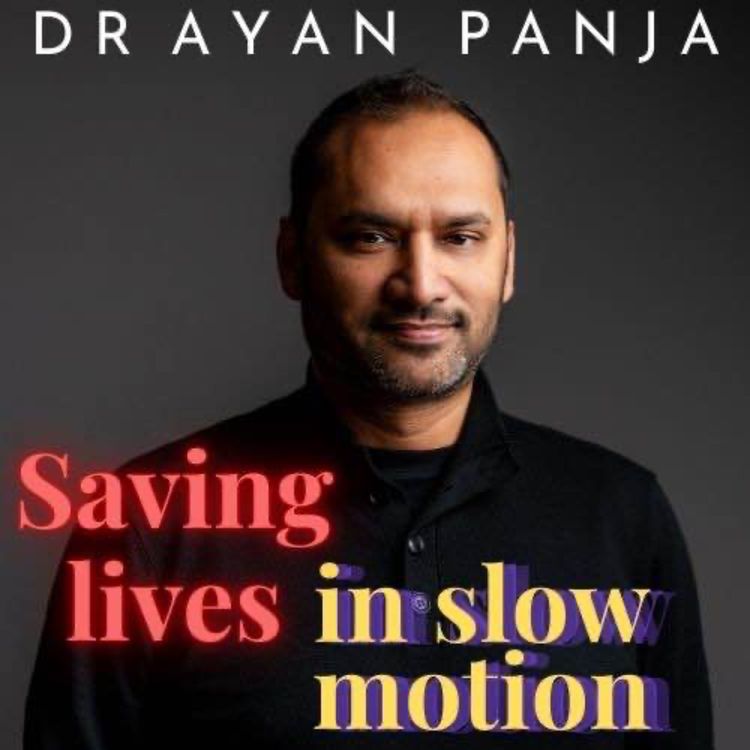
Saving Lives In Slow Motion
Trauma - how our emotional responses to life events can shape our entire health journey
TW: This episode mentions PTSD.
We all know what trauma means but how and why does it affect our physical health as well as our mental health?
In this episode I look at the reasons behind trauma being a trigger for illness and what we can do to prevent its effects over the years in terms of maintenance.
Links:
Trauma informed care: https://www.gov.uk/government/publications/working-definition-of-trauma-informed-practice/working-definition-of-trauma-informed-practice
Dr Gabor Maté: https://drgabormate.com/
“Negative thinking”: Gabor Maté’s thoughts on this: https://www.reflecttherapies.com/post/the-power-of-negative-thinking
Suppressed anger and illness: https://www.frontiersin.org/articles/10.3389/fpsyt.2021.637029/full
Empaths: If empathy is about stepping into someone’s shoes, compassion is instead “a feeling of concern for another person’s suffering which is accompanied by the motivation to help”: https://www.bbc.com/future/article/20200930-can-empathy-be-bad-for-you
Dr Nicole Le Pera: https://theholisticpsychologist.com/how-to-do-the-work/
The Hoffman Process: https://www.hoffmaninstitute.co.uk/about-the-process/
The seven A’s of healing: https://taliand.com/2012/05/04/the-seven-as-of-healing/
EMDR for PTSD: https://www.ptsduk.org/treatment-help/eye-movement-desensitisation-reprocessing-emdr/
For healthcare professionals: Gabor Maté live in London: https://www.tickettailor.com/events/practiceunbound/940200
Save your life in slow motion and those of others by subscribing now and sharing. Thank you for listening and for your support. It means a lot to me.
More episodes
View all episodes
250. The Science of Hope: can hope make us healthier?
15:36||Season 1, Ep. 250In this episode I look at the role of hope in health and medicine.Can it be of benefit to us? I explore the science and human factors involved in hope.Links:Snyder’s hope theory: https://positivepsychology.com/hope-theory/Placebo: https://www.manchester.ac.uk/about/news/placebo-effect-could-treat-pain/Language in medicine: https://blog.thisinstitute.cam.ac.uk/the-power-of-language-in-the-clinical-settingLearned helplessness: https://www.simplypsychology.org/learned-helplessness.htmlHope in older age: https://pubmed.ncbi.nlm.nih.gov/36951616/Optimism and heart disease: https://pubmed.ncbi.nlm.nih.gov/31560385/246. Boundaries: why they are important and how to set them.
20:33||Season 1, Ep. 246In this episode I look at boundaries - the different types and how to set them. Nothaving appropriate boundaries increase stress levels and could potentially affect one’s health.Links:Set Boundaries, Find Peace: https://www.amazon.co.uk/Set-Boundaries-Find-Peace-Reclaiming/dp/0349426953Gabor Mate: https://www.amazon.co.uk/When-Body-Says-No-Hidden/dp/178504222X/?th=1Useful tips on boundary setting: https://wellnesscenter.uic.edu/news-stories/boundaries-what-are-they-and-how-to-create-them/245. 5 Tips For Better Posture - (without just sitting up straight)!
16:17||Season 1, Ep. 245In this episode I look at posture which is something that doesn’t get a lot of attentionin health care and can have multiple impacts on our health over time.Links:Static loading - https://ergoglobal.com/what-is-static-loading-ergonomics/Proprioception - https://my.clevelandclinic.org/health/articles/proprioceptionThoracic mobility - https://www.healthline.com/health/fitness/thoracic-mobility-exercisesSquats - https://www.healthline.com/health/exercise-fitness/squats-benefits244. What Happens After We Die?
17:24||Season 1, Ep. 244In this episode I look at a question that is pondered by many people andsits at the cross section of both science and humanity. (TW: covers topics related to death)Links: Ho’oponoono prayer: https://www.inwardboundnetwork.com/meditation-blog/hooponopono-mantraThe medical take on death: https://my.clevelandclinic.org/health/articles/23144-what-happens-when-you-dieThe neuroscience of consciousness: https://www.scientificamerican.com/article/what-is-consciousness/Near Death Experiences: https://www.sciencefocus.com/the-human-body/what-is-it-like-to-die-the-reassuring-science-of-near-death-experiencesDr Christopher Kerr TEDx talk: https://www.youtube.com/watch?v=rbnBe-vXGQMInterview with Dr Kerr: https://www.youtube.com/watch?v=GlaSnROMqRY243. Are Pets Good For Our Health?
17:14||Season 1, Ep. 243In this episode I look at the potential benefits of pet ownership and whether there are any effects on health or our lives in general. Links: The power of pets: https://newsinhealth.nih.gov/2018/02/power-petsCortisol and pet stroking: https://journals.sagepub.com/doi/10.1177/2332858419852592The biology of pet ownership and oxytocin: https://www.open.edu/openlearn/science-maths-technology/biology/the-biology-loving-our-petsPets and mirror neurons: https://www.psychologytoday.com/gb/blog/your-personal-renaissance/202609/new-research-shows-why-dogs-are-good-for-our-healthPets and depression: https://pubmed.ncbi.nlm.nih.gov/41194144/Dogs and students: https://pubmed.ncbi.nlm.nih.gov/29528189/Pets and heart disease: https://pubmed.ncbi.nlm.nih.gov/31815850/242. Consumer Medicine - where and how do we draw the line?
15:52||Season 1, Ep. 242In this episode I look at the rise of consumer medicine with increasing requests for tests or interventions driven by people themselves. It has boomed in recent years andI want to look at how we can draw the line between consumer healthcare and retail. Cortisol: https://my.clevelandclinic.org/health/articles/22187-cortisolSIBO: https://my.clevelandclinic.org/health/diseases/21820-small-intestinal-bacterial-overgrowth-siboMCAS info: https://www.mastcellaction.org/Rationing in the NHS: https://www.bmj.com/content/394/bmj-2026-100765?__cf_chl_tk=uuJmA7dbhxE43HI9RQLpTvgHCLNftcClYbNGxOydJXA-1791977808-1.0.1.1-9e6v98b4Up72vzAkwWPVhO5SOqdZIHpORi8_LUdAFJABuying medication abroad - an example: https://www.discoverbkk.com/what-to-do-in-an-emergency/where-can-i-buy-medicine-in-bangkokOrigins and harms of consumer medicine: https://pmc.ncbi.nlm.nih.gov/articles/PMC9297484/241. The Future of Health and Evidence Based Prevention - P4 Medicine
18:56||Season 1, Ep. 241In this episode I look at the concept of P4 Medicine: predictive, preventive, personalised and participatory and howit will change the way we look proactively at our health.Leroy Hood is seen as the thought leader of this model of medicine as a visionary doctor and scientist. I passionately believe in the concept if health systems can afford it.Links: Leroy Hood lecture: https://www.youtube.com/watch?v=sinVPvW_ikEP4 medicine a 2013 paper: https://pmc.ncbi.nlm.nih.gov/articles/PMC4204402/Alzheimer’s Disease modifiable risk factors: https://pubmed.ncbi.nlm.nih.gov/34101789/SCORE2 and QRISK3: https://www.gptools.org/2023/01/13/qrisk3-whats-has-changed/Predictive medicine articles in Nature: https://www.nature.com/subjects/predictive-medicineEvidence for health coaching: https://pmc.ncbi.nlm.nih.gov/articles/PMC11954133/THE HEALTH FIX: https://www.amazon.co.uk/Health-Fix-Dr-Ayan-Panja/dp/1914239326/240. When Life Doesn’t Go To Plan - what we can do to navigate it
15:30||Season 1, Ep. 240Every week I meet people whose lives are changed by illness or events which make theirlife go in a direction they were not expecting. In this episode I look at what we can do toprepare for the unexpected.Links:The life of Mike Tetley MBE: https://www.bigredbook.info/mike_tetley.htmlAdjusting to long term conditions: https://pmc.ncbi.nlm.nih.gov/articles/PMC10237456/Eckhart Tolle - The Power of Now: https://eckharttolle.com/power-of-now-excerpt/Hedonic adaptation: https://www.youtube.com/watch?v=MJr-43grEzwAffective forecasting: https://www.psychologytoday.com/gb/basics/affective-forecasting239. Workplace Wellbeing - getting it right isn’t always easy
16:40||Season 1, Ep. 239It means different things to different people and in this episode I look at what makes for good workplace wellbeing.Links: Wellbeing at work: https://pmc.ncbi.nlm.nih.gov/articles/PMC12579173/#section8-11786329251387227Belonging at work: https://www.forbes.com/sites/biancabarratt/2024/02/27/why-feeling-a-sense-of-belonging-at-work-matters-and-how-to-cultivate-it/Psychological safety: https://www.mckinsey.com/featured-insights/mckinsey-explainers/what-is-psychological-safetyMaking mistakes at work: https://uk.indeed.com/career-advice/career-development/making-mistakes-at-workHybrid working: https://www.circles.com/resources/blurred-work-life-balance-why-hybrid-employees-struggle-to-switch-off