Share
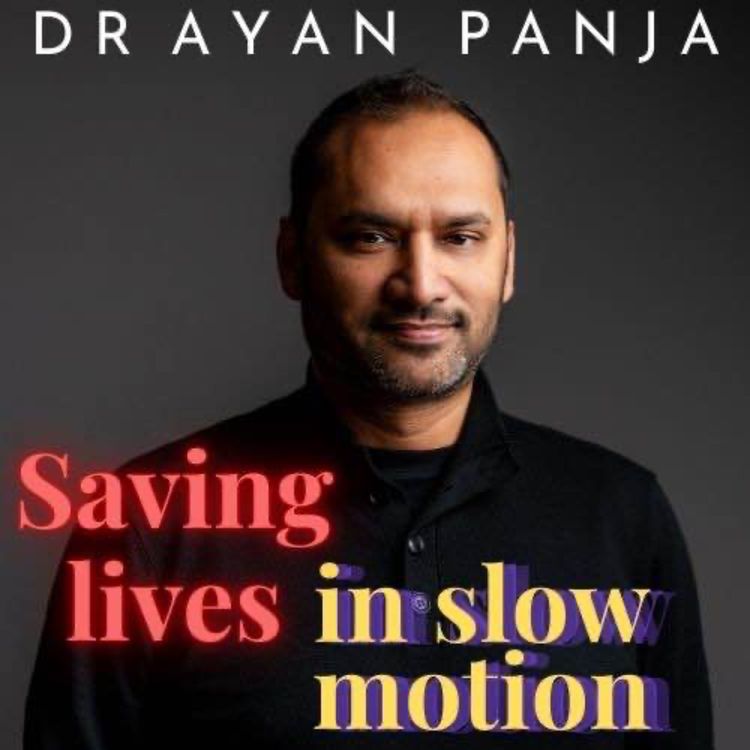
Saving Lives In Slow Motion
Consumer Medicine - where and how do we draw the line?
In this episode I look at the rise of consumer medicine with increasing requests
for tests or interventions driven by people themselves. It has boomed in recent years and
I want to look at how we can draw the line between consumer healthcare and retail.
Cortisol: https://my.clevelandclinic.org/health/articles/22187-cortisol
SIBO: https://my.clevelandclinic.org/health/diseases/21820-small-intestinal-bacterial-overgrowth-sibo
MCAS info: https://www.mastcellaction.org/
Rationing in the NHS: https://www.bmj.com/content/394/bmj-2026-100765?__cf_chl_tk=uuJmA7dbhxE43HI9RQLpTvgHCLNftcClYbNGxOydJXA-1791977808-1.0.1.1-9e6v98b4Up72vzAkwWPVhO5SOqdZIHpORi8_LUdAFJA
Buying medication abroad - an example: https://www.discoverbkk.com/what-to-do-in-an-emergency/where-can-i-buy-medicine-in-bangkok
Origins and harms of consumer medicine: https://pmc.ncbi.nlm.nih.gov/articles/PMC9297484/
Save your life in slow motion and those of others by subscribing now and sharing. Thank you for listening and for your support. It means a lot to me.
More episodes
View all episodes
245. 5 Tips For Better Posture - (without just sitting up straight)!
16:17||Season 1, Ep. 245In this episode I look at posture which is something that doesn’t get a lot of attentionin health care and can have multiple impacts on our health over time.Links:Static loading - https://ergoglobal.com/what-is-static-loading-ergonomics/Proprioception - https://my.clevelandclinic.org/health/articles/proprioceptionThoracic mobility - https://www.healthline.com/health/fitness/thoracic-mobility-exercisesSquats - https://www.healthline.com/health/exercise-fitness/squats-benefits244. What Happens After We Die?
17:24||Season 1, Ep. 244In this episode I look at a question that is pondered by many people andsits at the cross section of both science and humanity. (TW: covers topics related to death)Links: Ho’oponoono prayer: https://www.inwardboundnetwork.com/meditation-blog/hooponopono-mantraThe medical take on death: https://my.clevelandclinic.org/health/articles/23144-what-happens-when-you-dieThe neuroscience of consciousness: https://www.scientificamerican.com/article/what-is-consciousness/Near Death Experiences: https://www.sciencefocus.com/the-human-body/what-is-it-like-to-die-the-reassuring-science-of-near-death-experiencesDr Christopher Kerr TEDx talk: https://www.youtube.com/watch?v=rbnBe-vXGQMInterview with Dr Kerr: https://www.youtube.com/watch?v=GlaSnROMqRY243. Are Pets Good For Our Health?
17:14||Season 1, Ep. 243In this episode I look at the potential benefits of pet ownership and whether there are any effects on health or our lives in general. Links: The power of pets: https://newsinhealth.nih.gov/2018/02/power-petsCortisol and pet stroking: https://journals.sagepub.com/doi/10.1177/2332858419852592The biology of pet ownership and oxytocin: https://www.open.edu/openlearn/science-maths-technology/biology/the-biology-loving-our-petsPets and mirror neurons: https://www.psychologytoday.com/gb/blog/your-personal-renaissance/202609/new-research-shows-why-dogs-are-good-for-our-healthPets and depression: https://pubmed.ncbi.nlm.nih.gov/41194144/Dogs and students: https://pubmed.ncbi.nlm.nih.gov/29528189/Pets and heart disease: https://pubmed.ncbi.nlm.nih.gov/31815850/241. The Future of Health and Evidence Based Prevention - P4 Medicine
18:56||Season 1, Ep. 241In this episode I look at the concept of P4 Medicine: predictive, preventive, personalised and participatory and howit will change the way we look proactively at our health.Leroy Hood is seen as the thought leader of this model of medicine as a visionary doctor and scientist. I passionately believe in the concept if health systems can afford it.Links: Leroy Hood lecture: https://www.youtube.com/watch?v=sinVPvW_ikEP4 medicine a 2013 paper: https://pmc.ncbi.nlm.nih.gov/articles/PMC4204402/Alzheimer’s Disease modifiable risk factors: https://pubmed.ncbi.nlm.nih.gov/34101789/SCORE2 and QRISK3: https://www.gptools.org/2023/01/13/qrisk3-whats-has-changed/Predictive medicine articles in Nature: https://www.nature.com/subjects/predictive-medicineEvidence for health coaching: https://pmc.ncbi.nlm.nih.gov/articles/PMC11954133/THE HEALTH FIX: https://www.amazon.co.uk/Health-Fix-Dr-Ayan-Panja/dp/1914239326/240. When Life Doesn’t Go To Plan - what we can do to navigate it
15:30||Season 1, Ep. 240Every week I meet people whose lives are changed by illness or events which make theirlife go in a direction they were not expecting. In this episode I look at what we can do toprepare for the unexpected.Links:The life of Mike Tetley MBE: https://www.bigredbook.info/mike_tetley.htmlAdjusting to long term conditions: https://pmc.ncbi.nlm.nih.gov/articles/PMC10237456/Eckhart Tolle - The Power of Now: https://eckharttolle.com/power-of-now-excerpt/Hedonic adaptation: https://www.youtube.com/watch?v=MJr-43grEzwAffective forecasting: https://www.psychologytoday.com/gb/basics/affective-forecasting239. Workplace Wellbeing - getting it right isn’t always easy
16:40||Season 1, Ep. 239It means different things to different people and in this episode I look at what makes for good workplace wellbeing.Links: Wellbeing at work: https://pmc.ncbi.nlm.nih.gov/articles/PMC12579173/#section8-11786329251387227Belonging at work: https://www.forbes.com/sites/biancabarratt/2024/02/27/why-feeling-a-sense-of-belonging-at-work-matters-and-how-to-cultivate-it/Psychological safety: https://www.mckinsey.com/featured-insights/mckinsey-explainers/what-is-psychological-safetyMaking mistakes at work: https://uk.indeed.com/career-advice/career-development/making-mistakes-at-workHybrid working: https://www.circles.com/resources/blurred-work-life-balance-why-hybrid-employees-struggle-to-switch-off238. Medicine in 2100 - the end of disease?
15:21||Season 1, Ep. 238In this episode I look t the possibility that most disease might be curable by 2100.It sounds great but there are multiple knock on effects from this possible reality. Yamanaka factors: https://iscrm.uw.edu/what-is-cell-reprogramming/Stem cells: https://www.mayoclinic.org/tests-procedures/bone-marrow-transplant/in-depth/stem-cells/art-20048117Predictive medicine: https://www.sciencedirect.com/science/article/pii/S2590098625000223Population growth: https://ourworldindata.org/population-growth237. 10 Lifestyle Medicine Hacks - evidence-based medicine vs biohacking and their common ground.
22:38||Season 1, Ep. 237They are often at loggerheads but in this episode I discuss how lifestyle medicine encapsulateselements of both and how we can incorporate them into everyday life.Links to studiesWalking after meals: https://pubmed.ncbi.nlm.nih.gov/36715875/Interrupting sitting for long periods: https://pubmed.ncbi.nlm.nih.gov/42070794/Resistance training and weights: https://pubmed.ncbi.nlm.nih.gov/35599175/Sleep regularity: https://pubmed.ncbi.nlm.nih.gov/41259946/Timing and eating: https://pubmed.ncbi.nlm.nih.gov/41586347/Benefits of the great outdoors: https://pubmed.ncbi.nlm.nih.gov/29982151/Breathing: https://pubmed.ncbi.nlm.nih.gov/35623448/Saunas: https://pubmed.ncbi.nlm.nih.gov/30077204/Cold exposure and wellbeing: https://pmc.ncbi.nlm.nih.gov/articles/PMC11778651/Learning something new: https://pubmed.ncbi.nlm.nih.gov/31020777/