Share
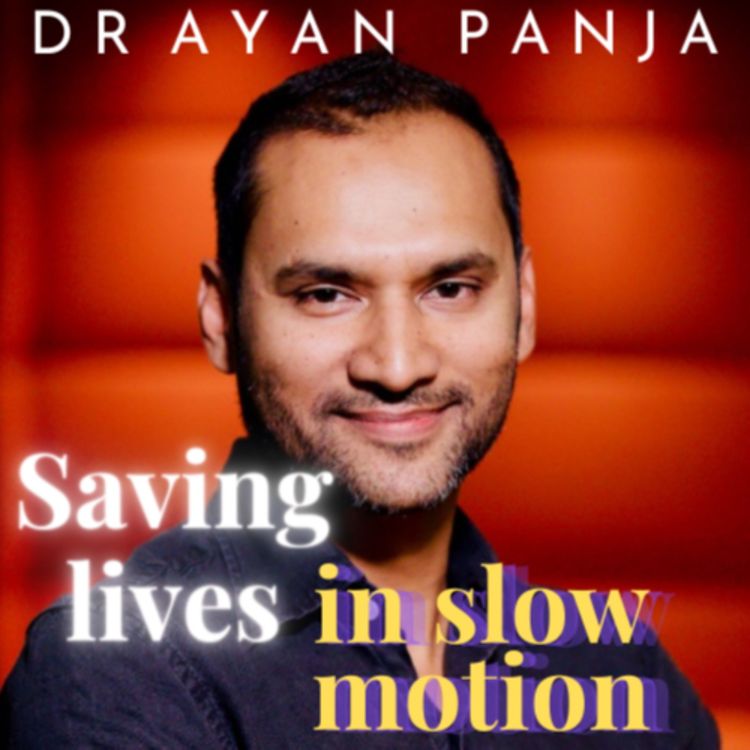
Saving Lives In Slow Motion
Circadian Rhythm - the rhythm of life and why mastering our body clock can help prevent illness
Our body clock is something most of us have heard of but is more important than we might think, as it can literally make or break our health.
It can be easy to take for granted and in this episode I look at some of the science and tips to change ‘timings’ of activities in our lives to our advantage.
Links:
Satchin Panda TEDx talk: https://youtu.be/erBJuxVR7IE
Russell Foster’s work: https://www.ndcn.ox.ac.uk/team/russell-foster
Stephanie Romiszewski’s work: https://www.sleepyheadclinic.co.uk/stephanie-romiszewski-sleep-expert/
Nobel Prize on molecular mechanisms in circadian rhythm:
The Nobel Prize in Physiology or Medicine 2017
nobelprize.org
Responding to light: https://www.npr.org/sections/health-shots/2022/12/17/1139780998/light-brain-circadian-rhythms-blind
Shift work and the WHO: https://www.iarc.who.int/news-events/iarc-monographs-volume-124-night-shift-work/
Chronotypes: https://www.healthline.com/health/chronotype
Save your life in slow motion and those of others by subscribing now and sharing. Thank you for listening and for your support. It means a lot to me.
More episodes
View all episodes
222. Making Health Fun - could it be as important as any other aspect of health?
15:42||Season 1, Ep. 222In this episode I look at how we can make health fun. Many people find it hard to get going with healthy habits andI look at ways we can make them easier to access without thinking of them as ‘health’.Monkey brain and bad habits: https://podcasts.apple.com/gb/podcast/saving-lives-in-slow-motion/id1573742958?i=1000597803315Nushu circles: https://digitize.library.ubc.ca/2025/04/10/nushu-chinas-secret-language-of-women-in-our-open-collection/Padel benefits: https://www.ltapadel.org.uk/play/benefits-of-playing-padel/Queens College Step Test: https://www.youtube.com/watch?v=ySQ5bawZpMoDancing benefits: https://www.bbc.co.uk/programmes/articles/1Hpr6R1f4M7f8Qc6fPGH2hg/why-dancing-is-the-best-way-to-enhance-your-brain-and-fitnessKeep dancing: https://www.uclahealth.org/news/article/keep-dancing-preserve-memoryThe IDEAL framework from my book: https://www.glamourmagazine.co.uk/article/the-health-fix-dr-ayan-panja-new-years-resolutions221. Peptides: what’s all the fuss about?
13:01||Season 1, Ep. 221In this episode I look at peptides - what they are, how they work and why everyone seems to talk about them these days.Links:BPC-157 research: https://pmc.ncbi.nlm.nih.gov/articles/PMC8504390/Musculoskeletal healing with BPC-157: https://pmc.ncbi.nlm.nih.gov/articles/PMC12446177/A website promoting benefits despite poor evidence in humans: https://www.hubmeded.com/blog/bpc-157-peptide-benefitsWADA: https://www.wada-ama.org/en/news/wadas-2022-prohibited-list-now-forceGLP-1 drugs - evidence: https://pmc.ncbi.nlm.nih.gov/articles/PMC12303005/Healthy High Protein book: https://www.amazon.co.uk/Doctors-Kitchen-Healthy-Supercharge-stronger/dp/1529148847220. Walking - our most underrated health intervention?
15:05||Season 1, Ep. 220In this episode I look at the myriad benefits of walking, why it is often overlooked and the benefits in terms of how it makes us feel and what It does for us.Links:Bill Bowerman’s Jogging: https://www.sneakerfreaker.com/performance/features/how-the-co-founder-of-nike-invented-jogging-bill-bowermanStephen Fry’s story: https://www.diabetes.co.uk/news/2019/aug/stephen-fry-proud-and-relieved-over-five-stone-weight-loss-92021820.html#google_vignetteWalking and mental health: https://pmc.ncbi.nlm.nih.gov/articles/PMC6064756/The leg power and brain health link: https://www.frontiersin.org/news/2018/06/07/neuroscience-leg-exercise-brain-nervous-system-healthZone 2 training: https://www.healthline.com/health/heart-health/heart-rate-zones-workoutRecovery: https://www.healthline.com/health/active-recoveryRamblers: https://www.ramblers.org.uk/10000 steps: https://www.bbc.co.uk/news/health-42864061Walking speed: https://www.scientificamerican.com/article/walking-speed-survival/23 and a half hours: https://www.youtube.com/watch?v=aUaInS6HIGoWalk Yourself Happy: https://amzn.eu/d/0ifCGKpV219. Things I get asked most as a doctor in 2026
15:46||Season 1, Ep. 219This is an episode based on what I get asked online and in the consulting room by patients. Hopefully you will find it useful and helpful.THE HEALTH FIX: https://www.amazon.co.uk/Health-Fix-Dr-Ayan-Panja/dp/1914239326/ref=tmm_pap_swatch_0Tiredness: https://podcasts.apple.com/gb/podcast/saving-lives-in-slow-motion/id1573742958?i=1000714723319Vitamin D: https://podcasts.apple.com/gb/podcast/saving-lives-in-slow-motion/id1573742958?i=1000702121829Kidney cysts: https://www.mayoclinic.org/diseases-conditions/kidney-cysts/symptoms-causes/syc-20374134Cholesterol: https://podcasts.apple.com/gb/podcast/saving-lives-in-slow-motion/id1573742958?i=1000649268967Supplements: https://podcasts.apple.com/gb/podcast/saving-lives-in-slow-motion/id1573742958?i=1000562693449Magnesium: https://podcasts.apple.com/gb/podcast/saving-lives-in-slow-motion/id1573742958?i=1000689788093Food intolerances: https://podcasts.apple.com/gb/podcast/saving-lives-in-slow-motion/id1573742958?i=1000650788957Elimination diets: https://www.healthline.com/nutrition/elimination-diet218. Lung Health - an essential 101
17:01||Season 1, Ep. 218I feel that our lungs more than other organs are taken for granted. In this episode I look at how to keep them healthy and hazards that can affect them. Air hunger: https://my.clevelandclinic.org/health/symptoms/16942-dyspnea FVC - lung capacity: https://www.verywellhealth.com/forced-expiratory-capacity-measurement-914900Workings of the lungs - https://www.mayoclinic.org/diseases-conditions/bronchiolitis/multimedia/bronchioles-and-alveoli/img-20008702Muttley’s wheezy laugh: https://www.youtube.com/watch?v=KuxDBX1ogmsAsthma and Lung UK Charity: https://www.asthmaandlung.org.uk/Quit Smoking now: https://www.nhs.uk/better-health/quit-smoking/Royal Castle Foundation: https://roycastle.org/Yul Brynner advert: https://www.youtube.com/watch?v=JNjunlWUJJIAir pollution: https://www.nature.com/articles/s41416-025-02999-2Dr Louise Oliver: https://www.drlouiseolivertherapeuticlifecoaching.com/Douglas Heel activation therapy: https://douglasheel.com/ My book THE HEALTH FIX: https://www.amazon.co.uk/Health-Fix-Dr-Ayan-Panja/dp/1914239326/ref=tmm_pap_swatch_0217. 5 Simple Tests To Try at Home This Week - what your body can tell you
15:35||Season 1, Ep. 217In this episode I look at some fun free tests you can do at home to take stock of your health and improve it at the same time.VO2 max: https://www.health.harvard.edu/healthy-aging-and-longevity/vo2-max-what-is-it-and-how-can-you-improve-itQueens College Step Test - how to do it: https://www.youtube.com/watch?v=ySQ5bawZpMoSit to Stand test: https://www.bbc.co.uk/future/article/20250404-sit-to-stand-the-simple-test-that-reveals-how-youre-ageingButeyko breathing test (control pause): https://buteykoclinic.com/blogs/start-your-breathing-test/start-your-breathing-testReaction time test: https://www.bbc.co.uk/bitesize/guides/zpkhcj6/revision/3Stand on one leg with eyes closed: https://www.bbc.co.uk/programmes/articles/35QytBYmkXJ4JnDYl9zYngb/why-you-should-stand-on-one-leg216. Miscarriage - pregnancy loss and its impact
15:36||Season 1, Ep. 216(TW: Sensitive topic). In this episode I look at the juxtaposition of the human and clinical side of this topic which is not talked about enough.Links: Babies drama on BBC: https://www.bbc.co.uk/programmes/m002qkqtTommy's Research and support: https://www.tommys.org/our-research/our-research-centres/tommys-national-centre-miscarriage-researchSANDS: https://www.sands.org.uk/Early Pregnancy Units: https://aepu.org.uk/units/Hughes Syndrome: https://www.nhs.uk/conditions/antiphospholipid-syndrome/NHS miscarriage information: https://www.nhs.uk/conditions/miscarriage/Folic acid in pregnancy and MTHFR genes: https://pmc.ncbi.nlm.nih.gov/articles/PMC7776832/Short and basic explanation of methylation: https://www.nutritionist-resource.org.uk/articles/what-is-methylation-and-why-does-it-matter215. Rare Diseases - when medicine meets the uncommon
14:41||Season 1, Ep. 215I thought in this episode I would acknowledge people living with rare diseases as they can be hard to diagnose and live with.Links:Batten Disease: https://my.clevelandclinic.org/health/diseases/6018-batten-diseaseLorenzo's Oil: https://www.healthline.com/health/neurological-health/lorenzos-oil-does-it-workMoya Moya Syndrome: https://www.mayoclinic.org/diseases-conditions/moyamoya-disease/symptoms-causes/syc-20355586CRISPR gene technology: https://www.broadinstitute.org/what-broad/areas-focus/project-spotlight/questions-and-answers-about-crisprHuntington’s Disease therapy: https://www.bbc.co.uk/news/articles/cevz13xkxpro214. Personalised Medicine - using the codes within us to stay well and beat disease
16:32||Season 1, Ep. 214It’s the future of medicine but how does it work, what are its origins and how can we benefit from it? In this episode I look at the way medicine can be tailored to our health.The work of Leroy Hood and P4 Medicine paper: https://pmc.ncbi.nlm.nih.gov/articles/PMC4204402/The Human Genome Project: https://wellcome.org/insights/articles/human-genome-project-new-era-scientific-progressNHS personalised medicine page: https://www.england.nhs.uk/healthcare-science/personalisedmedicine/ApoB as a biomarker: https://www.nature.com/articles/s42003-024-05887-2Gut-skin links (systems biology): https://www.frontiersin.org/journals/microbiology/articles/10.3389/fmicb.2018.01459/fullLeukaemia mutations: https://pmc.ncbi.nlm.nih.gov/articles/PMC6142505/AI for healthcare: https://www.imperial.ac.uk/stories/healthcare-ai/Methylation (MTHFR gene): https://www.healthline.com/health/mthfr-geneApoE genes and Alzheimer’s risk: https://www.alzheimersresearchuk.org/news/apoe4-and-apoe3-gene-variants-linked-to-at-least-7-in-10-alzheimers-cases-study-suggests/Statins and their effect on inflammation: https://www.ahajournals.org/doi/10.1161/circresaha.116.308537My book THE HEALTH FIX: https://www.amazon.co.uk/Health-Fix-Dr-Ayan-Panja/dp/1914239326/ref=tmm_pap_swatch_0