Share
R2Kast - People in Food and Farming/All In
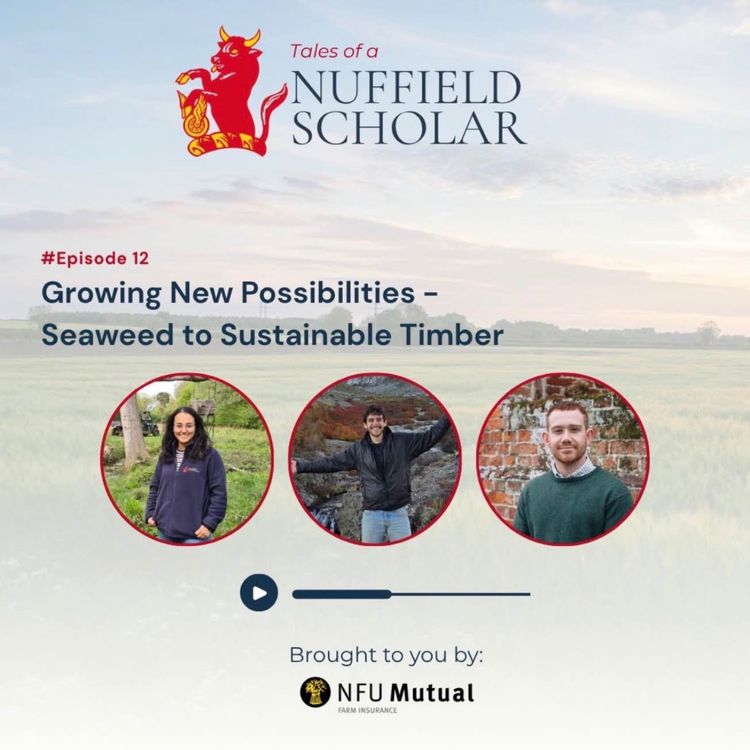
Tales of a Nuffield Scholar with Molly Gupta, Peter Rowe and Tom McVeigh
Today on series two of Tales of a Nuffield Scholar supported by NFU Mutual we continue looking ahead to the 2026 Nuffield Farming Scholarships Conference in Leeds 🎙️ Across this series we’re hearing from scholars who will feature within the conference presentation groups, giving a flavour of the conversations, ideas and experiences set to shape the event 🌍
This episode focuses on the presentation group “Growing New Possibilities: Seaweed to Sustainable Timber” with Molly Gupta, Peter Rowe and Tom McVeigh 🌱
We spoke about three very different journeys into land use and natural resource management, from seaweed farming and food systems through to commercial forestry and agroforestry. What was fascinating was how all three scholars arrived at similar questions around sustainability, resilience and how we make better use of the resources around us 🚜
Molly shared her journey from an urban upbringing in West London into the world of food systems and seaweed farming, exploring how seaweed could play a bigger role in food, feed and environmental solutions. Peter spoke about commercial forestry and the opportunities that exist to diversify timber production in the UK, while Tom discussed his search for profitable future crops, focusing on the potential for hazelnuts and tree crops within British farming systems 🌍
Across the conversation there were some brilliant discussions around innovation, resource efficiency and learning from other countries. Whether it was seaweed farming in Tanzania and Madagascar, forestry systems in South America and Europe, or nut production across North America and the continent, all three highlighted the value of stepping outside the UK to see how others are tackling similar challenges 🌾
One of the strongest themes running through the episode was curiosity. Each scholar started with a question, but all found their topics evolving as they travelled, met people and uncovered opportunities they had never originally planned to explore. It was a great reminder that some of the best discoveries happen when you leave room for the unexpected
Without giving away everything that will be shared on stage in Leeds, this episode offered another fascinating glimpse into the future opportunities emerging across farming, forestry and food systems.
Thank you to NFU Mutual for their support of this project.
Enjoy! 🙂
More episodes
View all episodes
Field to Front Door – Episode 12 on harvest, grain markets and regenerative farming
01:02:09|Today we’re back with Field to Front Door 🎙️David, Martin and Wallace catching up as harvest begins, discussing everything from grain markets and crop prices to social media and what’s happening on farm as another busy season gets underway.A big part of this episode focused on grain markets and futures trading, looking at the risks of selling crops before they’re harvested and how weather, yields and global markets can completely change the financial picture for farmers. It led into a wider conversation around food security, subsidies and why producing food profitably is becoming more challenging every year.We also spent plenty of time talking about regenerative farming, with discussions around Johnson Sue compost, compost extracts, seed treatments, soil biology and the role of farmyard manure in improving soil health. It was another fascinating insight into the practical experiments happening on farms and why there’s no single right answer.Alongside that we chatted about harvest decisions, oilseed rape, wheat, rainfall and how sharing the realities of farming on social media can help people better understand what goes on behind the scenes.We’re going to keep this going fortnightly for now and see where it takes us. If you’ve got ideas on what we should cover or who we should bring in, send them our way.Enjoy! 🙂
30. R2Kast 432 – Georgia Holt on elite cycling, veterinary medicine and taking unexpected opportunities
54:25||Season 6, Ep. 30Today I had Georgia on the R2Kast 🎙️ Georgia is a veterinary student, Commonwealth Games medallist and World Champion who has gone from competing at the highest level in para cycling to pursuing a career as a vet. 🌾We spoke about growing up around horses in rural Leicestershire, always wanting to become a vet and then unexpectedly being identified through a talent programme that led her into elite cycling. What followed was a whirlwind few years of learning to ride on the track, competing internationally and eventually representing England at the Commonwealth Games before becoming a World Champion tandem pilot. 🍎 Also! As of date of release Georgia is currently on the ground at Glasgow 2026 commentating on her summer break before 4th year! A big part of the conversation focused on resilience and adapting when plans change. Georgia shared how setbacks in sport ultimately pushed her back towards veterinary medicine, leading her to join one of the UK’s newest veterinary schools and finally pursue the career she had wanted since childhood. 🌍We also discussed veterinary education, practical learning, placements, large animal medicine and the realities of life as a vet student. It was a fascinating insight into two very different worlds that both demand huge commitment, discipline and teamwork.Enjoy! 🙂
Tales of a Nuffield Scholar with Charlotte Cole, Gregor Bruce and Ben Lowe
59:39|Today on series two of Tales of a Nuffield Scholar supported by NFU Mutual we continue looking ahead to the 2026 Nuffield Farming Scholarships Conference in Leeds 🎙️ Across this series we’re hearing from scholars who will feature within the conference presentation groups, giving a flavour of the conversations, ideas and experiences set to shape the event 🌍This episode focuses on the presentation group “From Pigs to Pullets to Insects” with Charlotte Cole, Gregor Bruce and Ben Lowe 🌱We spoke about three very different journeys into livestock production, from poultry health and pig farming through to circular farming systems. Although each scholarship has a different focus, all three are asking similar questions about how we produce food more efficiently while improving sustainability, animal welfare and long term resilience 🚜Charlotte shared her work as a poultry vet, exploring how the earliest stages of a laying hen’s life can influence health, welfare and productivity for the rest of its career. Gregor discussed his search for ways to improve productivity in pig farming without compromising animal welfare, staff wellbeing or the wider sustainability of the system. Ben spoke about building a truly circular farming business, looking at how locally produced feed, nutrients and resources can reduce waste and strengthen the resilience of mixed farming businesses 🌾One of the strongest themes throughout the conversation was that innovation is not always about producing more. It is about asking better questions, making smarter use of resources and recognising that healthier animals, healthier soils and healthier farming systems often go hand in hand. From pig genetics and poultry management to nutrient cycling and feed systems, each scholar challenged conventional thinking in their own way 🌍Without giving away everything that will be shared on stage in Leeds, this episode offered another fascinating glimpse into the future of livestock production and the practical innovations already beginning to shape the sector.Thank you to NFU Mutual for their support of this project.Enjoy! 🙂
Agroecology around Arran - Branding and Diversification Episode
01:09:43|In the final episode of the series, we explore how the island's farmers have diversified their businesses to adapt to changing markets and build resilience for the future. Along the way, we'll discover how these new enterprises are creating benefits that extend far beyond the farm gate, supporting local jobs, producing essential goods and services, creating educational opportunities, and helping people reconnect with the land and the food they eat. Episode guestsAlisa CurrieAilsa Currie set up and runs the visitor and education programme at Bellevue Farm, a family-run beef, sheep and arable farm located near Blackwaterfoot.The farm welcomes tourists, families and students to learn about farming, experience local food and build a deeper connection with Arran's landscape and natural environment.Bellevue also hosts a regular farmer's market in partnership with other local food producers.Kenny BoneKenny Bone is a mixed farmer at Glenkiln Farm who also runs a livery business, indoor riding arena, holiday lets, a hydroelectric energy scheme, and is the co-owner of The Drift Inn in Lamlash - alongside several other enterprises!Kenny is interested in caring for Arran's environment and is involved with many local organisations, including Arran Economic Group, Arran Development Trust and the local Forestry Commission panel as well as hosting the Arran Farmers Show.He was awarded Diversified Farm of the Year and the Champion of Champions award at the Scottish Agriculture Awards in 2024.Colin MackenzieColin Mackenzie successfully transitioned his family farm business away from dairy and now runs Mackenzie Logs - supplying seasoned firewood across the island. He also has a small herd of beef breeding cattle and store lambs.Alistair DobsonAlongside his role of Managing Director at Arran Dairies which he runs with his son Matthew, Alistair Dobson is Managing Director of Taste of Arran, a collaborative business that promotes, sells, and distributes food and drink from 10 SME producers on Arran to markets in the UK and abroad.Alistair is also the founding Chairman of VisitArran and a founding member of the Arran Economic Group focused on fostering community development and preserving Arran’s cultural and natural heritage.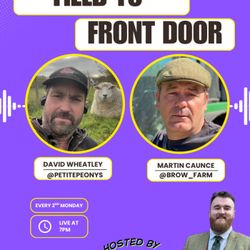
Field to Front Door – Episode 11 on regenerative farming, harvest decisions and learning from failure
59:08|Field to Front Door – Episode 11 on regenerative farming, harvest decisions and learning from failureToday we’re back with Field to Front Door 🎙️David, Martin and Wallace catching up on everything from harvest preparations and regenerative farming to football, Yorkshire Show and what’s happening on their farms right now. Field to Front Door 11.pdfA big part of this episode was a deep dive into regenerative farming. We got into soil biology, Johnson Sue compost, seed treatments, crop rotations and why changing farming systems isn’t about finding one magic answer but learning through trial and error. There was a really honest discussion around the fear of trying something different and accepting that not everything will work first time.We also chatted about harvest, with oilseed rape, wheat and linseed all coming into focus, how weather can completely change decisions in the field, and why growing crops is only half the challenge if you’re trying to add value and sell them differently.One of the most interesting conversations was around how farming has changed over generations. We talked about machinery, soil disturbance, biodiversity and how modern knowledge can be combined with older farming principles rather than simply trying to go backwards.As always there were plenty of laughs along the way, from Yorkshire versus Scotland, combine breakdowns and hats, through to planning next season before this one has even finished.We’re going to keep this going fortnightly for now and see where it takes us. If you’ve got ideas on what we should cover or who we should bring in, send them our way.Enjoy! 🙂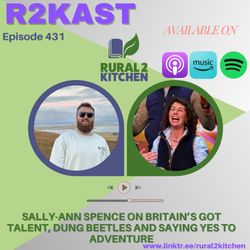
29. R2Kast 431 – Sally-Ann Spence on Britain’s Got Talent, dung beetles and saying yes to adventure
01:29:37||Season 6, Ep. 29Today I had Sally-Ann on the R2Kast 🎙️ What a conversation this was. Sally-Ann wears more hats than almost anyone I’ve had on the podcast, working across agriculture, entomology, ecology, palaeontology and education, while somehow also becoming part of the winning Hawstone Farmers Choir on Britain’s Got Talent. 🌾We started with the choir journey, from answering a social media advert looking for farmers who could hold a tune, through to filming adverts, building friendships and eventually standing on the Britain’s Got Talent stage. Sally-Ann shared what it felt like to go from an ordinary farming and science background to performing live in front of millions of people and ultimately winning the competition. 🍎 A big part of the conversation focused on dung beetles and why they matter so much. We discussed the role they play in soil health, nutrient cycling, biodiversity, pasture management and wider ecosystem function. It was a fascinating insight into a part of farming that most people never think about, despite its huge importance to both agriculture and nature. 🌍 We also spoke about curiosity, learning, Land Rovers, expeditions, mental health, finding your tribe and making the most of opportunities when they appear. It was one of those chats that could have gone on for hours because there was always another story waiting around the corner.Enjoy! 🙂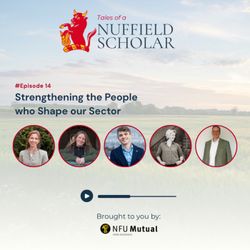
Tales of a Nuffield Scholar with Andrew Richardson, Lucia Slack, Natasha Edwards, Peter Green and Sharon May
01:22:52|Today on series two of Tales of a Nuffield Scholar supported by NFU Mutual we continue looking ahead to the 2026 Nuffield Farming Scholarships Conference in Leeds 🎙️ Across this series we’re hearing from scholars who will feature within the conference presentation groups, giving a flavour of the conversations, ideas and experiences set to shape the event 🌍This episode focuses on the presentation group “Strengthening the People Who Shape Our Sector” with Andrew Richardson, Lucia Slack, Natasha Edwards, Peter Green and Sharon May 🌱While many of the previous episodes have focused on crops, livestock, land use and natural resources, this conversation put people firmly at the centre. Across five very different scholarship topics, the common thread was understanding how we support the individuals, families and communities that underpin food, farming and aquaculture every single day 🚜We spoke about mental health, suicide prevention, family wellbeing, succession, identity, leadership and the importance of community. Lucia shared insights from her work as a mental health nurse and her research into suicide within agriculture, while Sharon explored how best to support farming families and the wider networks around them. Both highlighted the importance of trust, connection and tackling the stigma that still prevents many people from seeking support 🌾Andrew brought a completely different perspective from the aquaculture sector, looking at how young people are encouraged into food production industries and what agriculture can teach other sectors about building identity, belonging and strong peer networks. Peter explored the characteristics and behaviours that help farmers successfully navigate change, while Natasha examined how certification schemes can support farmers through transition and create opportunities for more sustainable and profitable systems 🌍One of the strongest themes throughout the conversation was that people matter just as much as policy, technology or production systems. Whether it was strengthening communities, supporting wellbeing, encouraging young people into the sector or helping businesses adapt to change, the discussion repeatedly returned to the importance of relationships and human connection.Without giving away everything that will be shared on stage in Leeds, this episode offered a powerful reminder that the future of farming is ultimately shaped by people, and supporting those people well is essential for the future success of the sector.Thank you to NFU Mutual for their support of this project.Enjoy! 🙂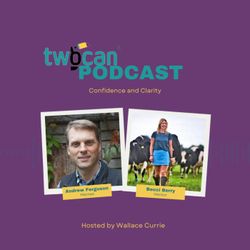
TwoCan Podcast - Becci Berry and Andrew Ferguson
46:08|Do you thrive on challenge? Or perhaps you’re looking for someone who can help bring clarity to the whirlwind of running a business and a busy life? 🌱Today on the TwoCan Mentor podcast I was joined by Becci Berry and Andrew Ferguson 🎙️Becci came into farming from a completely different background in marketing and sponsorship, taking on the family farm following the loss of her husband and learning the industry from the ground up. Andrew’s journey saw him unexpectedly return home to take on the family farm after losing his father, building a diverse rural business with everything from commercial units and a brewery to a café and indoor cricket centre. We spoke about the value of having someone independent to challenge your thinking, offer perspective and provide reassurance when running a business can feel overwhelming. Despite coming from different backgrounds, both found common ground in resilience, community and creating opportunities from difficult circumstances. 🌍 A big theme throughout the conversation was confidence. Not necessarily changing what you’re doing, but having someone help you step back, reflect on what you’ve already achieved and trust your own judgement. 💭 We also discussed the flexibility of the mentoring relationship and how some of the biggest benefits come not from technical advice, but from having honest conversations with someone who understands the challenges of building a business, leading people and navigating life’s twists and turns. 🌱 Enjoy! ☺️
Agroecology around Arran - Growing Community Episode
42:40|In this episode we meet four inspiring guests who are championing small-scale horticulture, alternative food systems and pollinator conservation on Arran. We learn how market gardens, community growing projects and foraging initiatives are helping to celebrate local produce, reconnect people with the land and strengthen social wellbeing. We also explore the important role that bees and honey production play in supporting biodiversity and food production across the island. Episode guestsSimon Ross-GillSimon is the Director and Project Coordinator of The Arran Pioneer Project CIC, a project working to regenerate Scotland’s wild and natural landscapes in a way that incorporates rural communities while securing jobs and livelihoods for young people. The Pioneer Project runs several community gardens around Arran.Simon also works as a graphic designer specialising in books, handbooks, flyers and interpretive materials focussed on landscape, environment and community. He is passionate about working with local people to build a more sustainable and self-sufficient food system.Robin GrayRobin is a chef, grower and owner of Robin Gray’s Island Gourmet, a take-away food business in Whiting Bay demonstrating how sustainably produced, seasonal ingredients can be used to celebrate the unique flavours of Arran.Zoë HughesZoë is a Wild Food Educator who runs Wild Food Arran and has been teaching foraging and wild food identification for over 4 years. She is a member of the Association of Foragers and completely obsessed with mushrooms!Andy WalkerAndy has been keeping bees on Arran for more than 20 years. He moved to the island with his family in 1999 to work for the Forestry Commission and, although now retired, continues to work part-time in timber production. Alongside producing a range of award-winning honeys, Andy also uses beeswax from his hives to create a variety of natural products sold across the island under the label of Arran Bee Products.