Share
R2Kast - People in Food and Farming/All In
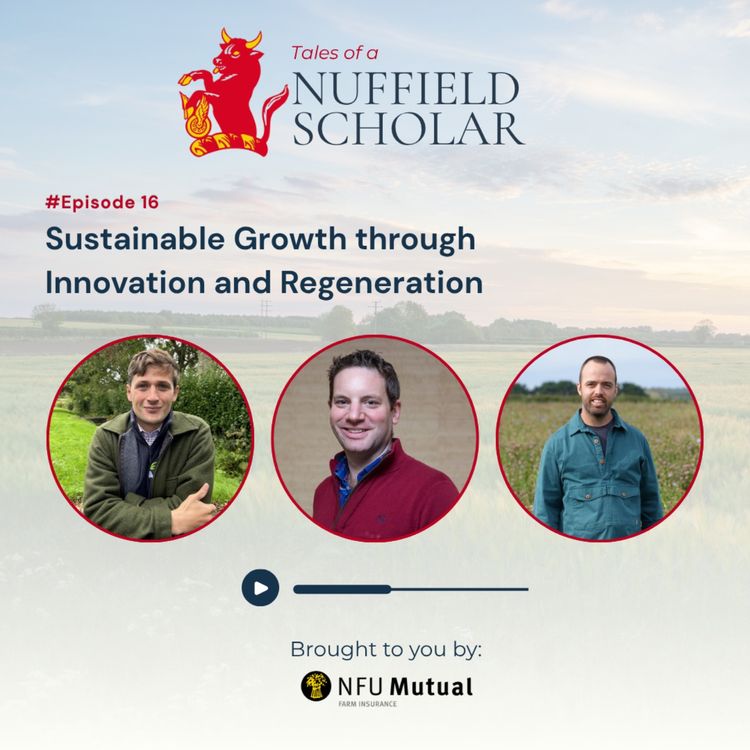
Tales of a Nuffield Scholar with Dave Oates, Edward Fane Trefusis and Sam Steggles
Today on series two of Tales of a Nuffield Scholar supported by NFU Mutual we continue looking ahead to the 2026 Nuffield Farming Scholarships Conference in Leeds 🎙️
This is the final episode of the series focusing on the main Nuffield Scholarship presentation groups before we finish series two with the Next Gen Scholars 🌍
This episode focuses on the presentation group “Sustainable Growth through Innovation and Regeneration” with Dave Oates, Edward Fane Trefusis and Sam Steggles. Martin Gott will also join the group on stage in Leeds, but unfortunately could not join us for this conversation 🌱
We spoke about three very different approaches to building resilient rural businesses. Dave explored stacking land uses and how farming, nature, energy and other uses can work together on the same land. Edward looked at managing risk in a changing environment and what businesses need in place to anticipate challenges, adapt and bounce back. Sam brought a slightly different perspective with a brilliantly simple question after years of growing and diversifying his own business, when is enough enough? 🚜
Sam’s story was particularly fascinating. His original Nuffield journey was interrupted by Covid while he was in Australia, with his cheese business losing almost all of its market almost overnight. What followed was a pop up farm shop that grew into a substantial retail and hospitality business, completely reshaping both his business and eventually the questions he wanted his Nuffield work to answer.
Dave and Edward took us around the world too, exploring everything from different approaches to land use and environmental delivery to the foundations that allow businesses to innovate and grow. A big theme throughout was context. What works brilliantly in one country, landscape or business might make absolutely no sense somewhere else, and understanding your own situation has to come before simply copying someone else’s solution 🌾
There was also a really interesting conversation around what Nuffield itself gives you. Travel is a huge part of it, but the people, networks and conversations often become even more valuable. Whether that meant learning from scholars across the UK, travelling with other scholars or simply following a conversation to an unexpected farm or business, some of the best learning was never part of the original plan 🌍
Without giving away everything that will be shared on stage in Leeds, this was a brilliant way to round off our look at the main presentation groups and another reminder of just how broad the ideas being explored through Nuffield can be.
Thank you to NFU Mutual for their support of this project.
Enjoy! 🙂
More episodes
View all episodes
Field to Front Door – Episode 15 on selling direct, SFI and low input farming
39:27|Today we’re back with Field to Front Door 🎙️David, Martin and Wallace catching up after a couple of weeks away, with harvest largely behind us and attention starting to turn towards what comes next.A big part of this one was David’s growing direct selling venture. We chatted about everything from vegetables, milk and meat through to eggs, delivery companies and whether bringing produce from multiple farmers together could create something genuinely competitive while still giving the farmer a fairer share.We also got into SFI and what it actually means for farmers. David talked through some of the options he’s considering, while Martin questioned whether schemes like this really reward the farmers who have already spent years changing how they farm.There was plenty on low input farming too. Martin shared the results from around 100 acres grown with virtually no inputs, the money saved on fertiliser and sprays, mixed cropping with peas and cereals, and why yield alone doesn’t necessarily tell you whether a crop has made money.And the Johnson Sue experiments continue, with David now treating oilseed rape seed and leaving untreated areas to see whether they can actually spot a difference as the crop develops.We’re keeping this going fortnightly, so feel free to send us any ideas or topics you’d like us to get into.Enjoy! 🙂
R2Kast 438 – Clare Otridge on farmer led research, behavioural science and better data
51:29|Today I had Clare on the R2Kast 🎙️ Clare is a farmer’s daughter, behavioural scientist and the driving force behind Grounded Research, using research and data to make sure farmers and others across the food supply chain have a genuine voice in decision making. 🌾We spoke about growing up on an arable farm in Cambridgeshire, moving into marketing and consultancy, life as a military wife and eventually finding her way back into agriculture during the pandemic. That journey also led Clare into behavioural science and understanding why people actually make the decisions they do. 🍎A big part of the conversation focused on Five Bar Gate and the communities Clare has created to make agricultural research easier, quicker and more representative. We spoke about paying farmers for their time, building robust data sets and making sure the people actually producing food are involved in the research and decisions that affect them. 🌍We also chatted about ADOPT, farmer led innovation, getting farmers engaged in research and Clare’s nomination for Woman of the Year at the British Farming Awards.Enjoy! 🙂
Tales of a Nuffield Scholar - Natalie Hepburn on the Relationship with a Nuffield Sponsor
37:25|Series three of Tales of a Nuffield Scholar is here 🎙️ Thank you for watching series two, where we looked ahead to the scholars and Next Gen Scholars presenting at the 2026 Nuffield Farming Scholarships Conference in Leeds. This time we’re changing things up and looking at some of the biggest challenges, innovations and conversations shaping agriculture today 🌾To start the series I was joined by Natalie Hepburn, a fellow scholar from my own Nuffield cohort and someone I travelled to Brazil with on our CSC. Natalie farms around Cardiff, keeping sheep and goats while producing goats milk skincare and sheep milk cheese.Natalie’s scholarship explored farm diversification and how farmers actually manage everything that comes with turning what they produce into a product. Her travels took her to Brazil, Rwanda, the Netherlands, Ireland, Northern Ireland and around the UK, with one of her biggest takeaways being the importance of networks and businesses supporting each other 🌍The main focus of this episode though was the relationship between a Nuffield Scholar and their sponsor. Natalie’s scholarship was sponsored by the NFU Mutual Charitable Trust and we spoke about how that relationship went far beyond simply providing the funding. From visiting NFU Mutual headquarters and being connected with people who could help her research, to keeping in touch throughout her travels and sharing her findings afterwards, it showed the role sponsors can play throughout the whole Nuffield journey.We also chatted about turning months of travel into a 5,000 word report and 12 minute presentation, the Nuffield moments that can completely change your thinking and why sometimes the best thing you can do while travelling is leave gaps in the diary for the opportunities you never planned for 🌱A great way to kick off series three and a chance to highlight a part of Nuffield that we probably do not speak about enough.Thank you to the NFU Mutual Charitable Trust for their support of this project.Enjoy! 🙂
34. R2Kast 437 – Frank Cannon on rural crime, farm security and the Demeter Initiative
01:05:22||Season 6, Ep. 34Today I had Frank on the R2Kast 🎙️ Frank is a Chartered Security Professional whose career has taken him from farming in Lincolnshire into the military and then security roles across the world, including a decade working in Kazakhstan. 🌾We spoke about how that career eventually brought him back towards agriculture and the creation of Rural Safeguard, using decades of experience in security to help farmers better understand and reduce their risk of rural crime. From machinery and livestock theft to hare coursing and farmyard security, we got into just how broad rural crime actually is. 🍎A big part of the conversation focused on protecting farms without turning them into fortresses. Frank explained the importance of understanding where you’re vulnerable, building sensible layers of security and having a plan for what happens if someone does enter the farm. His message of better tin than skin was a simple one, protecting yourself and your family has to come before protecting machinery. 🌍We also spoke about how rural crime is changing through technology, cyber attacks and increasingly sophisticated organised crime, alongside the Demeter Initiative and Frank’s work to bring farming, policing, government and the security sector together to tackle the problem.Enjoy! 🙂
Field to Front Door – Episode 14 on selling direct, harvest, food prices and taking back control
48:17|Field to Front Door – Episode 14 on selling direct, harvest, food prices and taking back controlToday we’re back with Field to Front Door 🎙️David, Martin and Wallace catching up as harvest continues, with plenty happening around grain, changing markets and some increasingly ambitious plans from David.We got into regenerative milling wheat, cleaning grain, mixed cropping and what Martin has learned from growing wheat and peas together. There was also plenty around harvest, from spelt and buckwheat through to linseed and how different crops are performing this year.A big part of this one was David’s latest experiment with selling food directly from farms to consumers. Potatoes, vegetables, flour, apples and even milk are already involved, with meat potentially coming next. We spoke about whether farmers can work together to create a genuinely competitive alternative that gives customers fresher food while being completely transparent about what the farmer actually gets paid.That led into a wider chat about supermarkets, postage, contracts and why the price paid to farmers can feel completely disconnected from what eventually reaches the consumer. We also got into the drought, food shortages and why farming seems to operate differently from almost every other industry when supply drops.And we finished with the British Farming Awards, with David up for Content Creator of the Year and somehow already making friends with the competition 😂We’re going to keep this going fortnightly for now and see where it takes us. If you’ve got ideas on what we should cover or who we should bring in, send them our way.Enjoy! 🙂
33. R2Kast 436 – Grace Boardman on veterinary medicine, drench resistance and taking DAGI global
01:26:02||Season 6, Ep. 33Today I had Grace on the R2Kast 🎙️ Grace is a British vet based in New Zealand, working across large animal medicine, parasite management and the development of DAGI, while also helping establish the Aotearoa Veterinarians Union. 🌾We spoke about a pretty incredible upbringing across Australia, Papua New Guinea, Africa and the Middle East, before eventually coming back to the UK to study veterinary medicine at Bristol. From there her career took her through Cornwall and South Africa before eventually settling in New Zealand and building a life and career there. 🍎A big part of the conversation focused on drench resistance and DAGI, which stands for Drench and Grazing Integration. We spoke about refugia, grazing, weather and parasite risk, and how DAGI is helping make some of those invisible decisions much easier for farmers to see. We also got into the scale of drench resistance in New Zealand and plans to bring DAGI to the UK. 🌍DAGI are currently looking for UK farmers interested in being part of the beta trial ahead of its planned launch here. Anyone interested can get in touch with Grace and the team through the DAGI website contact page or at info.dagi.nz@gmail.com.We also chatted about veterinary wellbeing, setting up the Aotearoa Veterinarians Union, biosecurity, travelling the world and why your veterinary degree doesn’t have to define everything you do for the rest of your career.Enjoy! 🙂
Tales of a Nuffield Scholar with the Next Gen Scholars
01:15:13|Today on Tales of a Nuffield Scholar supported by NFU Mutual we bring series two to a close with something slightly different 🎙️ After seven episodes looking at the presentation groups taking to the stage at the 2026 Nuffield Farming Scholarships Conference in Leeds, we finish with the Next Gen Scholars who will also be taking to that stage to share their experiences 🌱The Next Gen Scholarship gives those aged 18 to 25 the opportunity to experience Nuffield through a curated study tour, travelling together, visiting businesses and learning from some of the best people across the sector. For this episode we hear from both the Regenerative Agriculture and Dairy groups who will be presenting their experiences in Leeds 🌍First up were Regenerative Agriculture Next Gen Scholars Summer Wyatt Buchan and Jessica Walker, with Craig Alexander Byrne completing their group but unfortunately unable to join us for the episode. We heard about four weeks travelling together around farms and businesses across England and Wales, exploring soil health, resilience, livestock integration and the importance of community within regenerative systems 🚜What really stood out was how much the experience went beyond simply learning about regenerative practices. For Summer, coming from outside farming but working within climate resilience, it offered an intense introduction to practical agriculture. For Jessica, growing up on an organic beef and sheep farm in the Scottish Borders, it provided the opportunity to challenge what she already knew and learn from the journeys of people who have spent years developing their systems.For the second half we moved into dairy with Lottie Wilson, Ed Martin and Isobel Bennett 🐄 Three young dairy farmers already taking serious responsibility within their family businesses, but operating across completely different systems in Wales, Scotland and England.Their journey took them from Yorkshire through Scotland and across England before heading to the Netherlands, seeing everything from low input grazing systems to incredibly intensive automated dairies. We spoke about labour, succession, efficiency, family farming, environmental pressures and what British dairy can learn from the challenges already being faced elsewhere in Europe 🌾One of my favourite parts of both conversations was hearing how quickly strangers became friends. Weeks travelling in the same car, staying with hosts and constantly questioning what they were seeing created relationships that will undoubtedly continue long after the scholarship itself. That network has always been one of the most powerful parts of Nuffield and it was brilliant seeing it beginning so early for these six scholars.All six Next Gen Scholars will take to the stage in Leeds alongside the wider Nuffield Scholar presentations, sharing what they learned from their respective journeys and what they plan to take forward. It feels like a really fitting way to finish series two and our preview of what you can expect from the 2026 conference.Thank you to NFU Mutual for their support of this project.Enjoy! 🙂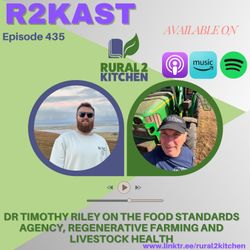
32. R2Kast 435 – Dr Timothy Riley on the Food Standards Agency, regenerative farming and livestock health
01:13:21||Season 6, Ep. 32Today I had Tim on the R2Kast 🎙️ Tim is a livestock farmer in Yorkshire, Deputy Chair of the Food Standards Agency and someone who has spent his career working across agriculture, science and public health. 🌾We spoke about farming in the South Pennines, running Beef Shorthorn cattle and sheep, and why changing weather patterns are becoming one of the biggest challenges facing upland farming. We also discussed his passion for working with nature, producing high quality food and creating a farm that leaves a positive legacy for future generations. 🍎A big part of the conversation focused on the Food Standards Agency and the role it plays in keeping food safe, tackling food fraud and assessing emerging technologies such as precision breeding and cultured proteins. We also discussed how science, evidence and independent regulation help shape public confidence in the food system and why understanding where our food comes from has never been more important. 🌍We also chatted about his journey through medical research, helping establish NICE, the relationship between agriculture and human health, and why following your passions and staying curious can lead to opportunities you never expected. It was a fascinating conversation that brought together farming, science and policy in a way that affects every one of us.Enjoy! 🙂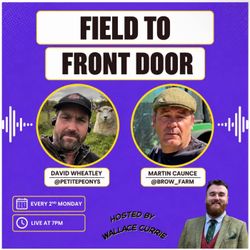
Field to Front Door – Episode 13 on heritage grains, regenerative farming and finding a market
01:02:07|Today we’re back with Field to Front Door 🎙️David, Martin and Wallace catching up as harvest continues, with plenty to chat about from heritage grains and regenerative farming through to some pretty brutal yields and what actually makes farming stack up financially.David had been exploring heritage grains and the growing market around them, which led into a really interesting conversation about older varieties, milling, sourdough and whether sometimes the future of farming might actually involve looking back at what worked in the past.We got properly into regenerative farming again too, including what regen actually means, whether reducing one spray is enough to call something regenerative, cover crops, soil biology and the challenge of changing a farming system when you still need to make money while doing it.Harvest brought some fairly stark realities as well. Some crops have performed, others really haven’t, and we spoke about the frustration of putting a year into something only to find there simply isn’t enough crop there to make it pay. That led into why finding different markets, selling direct and getting paid properly for lower input produce could be so important.We also got into saving your own seed, different varieties adapting to individual farms, soil testing, organic matter and plenty more experiments for David and Martin to try before the next one.We’re going to keep this going fortnightly for now and see where it takes us. If you’ve got ideas on what we should cover or who we should bring in, send them our way.Enjoy! 🙂