Share
R2Kast - People in Food and Farming/All In
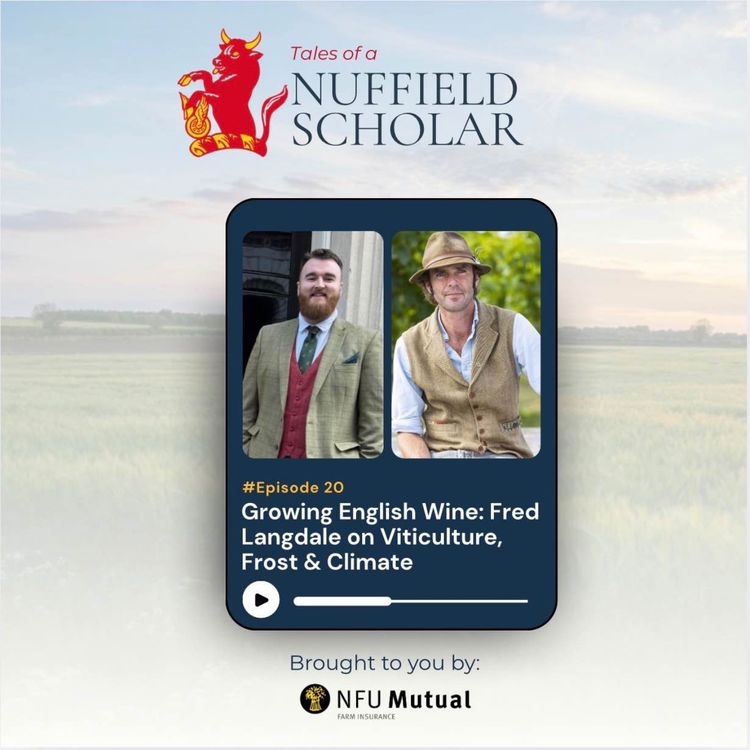
Tales of a Nuffield Scholar - Fred Langdale on UK Viticulture
Series three of Tales of a Nuffield Scholar continues 🎙️ This series is looking at some of the biggest challenges, innovations and conversations shaping agriculture today, and this time we’re exploring a sector I know far less about, UK viticulture 🍇
I was joined by Fred Langdale, who has spent around 18 years working at Exton Park Vineyard in Hampshire. Coming from a farming background, Fred developed an interest in viticulture at a young age and went on to work in vineyards across southern England, South Africa and New Zealand before building his career in the growing English wine sector.
We got right into how viticulture actually works, from managing Chardonnay, Pinot Noir and Pinot Meunier through to canopy management, cover crops, soil health and harvest. Fred explained how the vineyard uses around 60 different plant species within its cover crops and how careful management can improve soil structure, water retention and ultimately the vines themselves 🌱
We also spoke about just how quickly UK viticulture is changing. Fred remembers harvesting around the middle of October when he started, compared with the 8th of September this year. Despite the drought, he described this year’s fruit as some of the best quality he has seen, showing how a changing climate can create both opportunities and completely new challenges for this growing sector.
That leads perfectly into Fred’s Nuffield Scholarship, which focused on frost protection in cool climate viticulture. Earlier bud burst can leave vines increasingly vulnerable to spring frosts, and Fred travelled through New Zealand and Tasmania exploring how vineyards manage that risk before Covid dramatically changed his travel plans. He ultimately brought the research back home, trialling approaches in his own vineyard and finding a fan system that works well across his particular site 🌍
One of the biggest lessons was that there is no magic answer. Frost protection is incredibly site specific and sometimes the best solution starts before a vine ever goes into the ground by understanding where the frost pockets are and choosing the right site in the first place.
We also got into the wine itself, how sparkling wine gets its bubbles, why English sparkling wine can spend years ageing before release and how the industry is beginning to build an identity of its own. It was a proper learning episode for me and a fascinating look at a part of UK food production that looks set to become increasingly important.
Thank you to NFU Mutual for their support of this project.
Enjoy! 🙂
More episodes
View all episodes
R2Kast 443 – Carrie Ruxton on nutrition, ultra processed food and understanding what we eat
58:38|Today I had Carrie on the R2Kast 🎙️ Carrie is a dietitian and nutritionist whose career has spanned research, food businesses, media and consultancy, alongside sitting on the board of Quality Meat Scotland. 🌾We spoke about growing up in Scotland, initially wanting to become a doctor and finding dietetics almost by accident. That took Carrie through hospital work before realising her real interest was understanding food, nutrition and how what we eat affects our health. 🍎A big part of the conversation focused on gut health, probiotics and prebiotics, food intolerances and why nutrition research is far more complicated than a headline saying one food is good or bad. We also got into the difference between dietitians and nutritionists and why Carrie believes nutrition should become a protected profession. 🌍We also spoke about ultra processed foods and why Carrie disagrees with treating them as one blanket category. From fortified cereals and plant milks to affordability, convenience and family life, we discussed why nutrition needs to be practical and why simply making your diet a little better can be far more useful than chasing perfection.Enjoy! 🙂
the Scottish Smallholding and Countryside Festival
30:10|Ahead of the Scottish Smallholding and Countryside Festival on Saturday 17 October, Wallace chats with show secretary Martin Beard, Alice Lennox from the Rare Breeds Survival Trust and Siobhan MacDonald from the Farm Advisory Service.Martin shares what visitors can expect, from livestock shows and rural skills competitions to local producers, crafts and over 40 talks.Alice discusses protecting native breeds, while Siobhan highlights practical workshops, advice and learning opportunities for smallholders and crofters.The conversation celebrates the importance of small farms, rural communities and preserving traditional skills.Join us at the Royal Highland Centre on Saturday!
Field to Front Door – Episode 17 on SFI frustrations, farmland birds and the future of direct selling
56:57|Today we’re back with Field to Front Door 🎙️David, Martin and Wallace catching up again, with plenty happening around SFI, regenerative farming, biodiversity and David’s ever expanding direct selling business.A big part of this episode was the latest SFI debacle, with David explaining how he spent hours preparing a £51,000 application only for the funding to run out before he could submit it. We chatted about the uncertainty this creates for farmers, particularly those trying to change their farming systems while keeping their businesses afloat.We also got into Martin’s recent bird survey, which recorded 514 birds across 45 species, including eight red listed species! That led into a really interesting discussion around biodiversity, soil health, leaving fields green over winter and whether sometimes doing less can actually achieve more.David’s direct selling venture continues to grow too, with lamb boxes now joining the mix and farmers from further afield getting involved. We spoke about the power of social media, the challenges of scaling a business and why dealing directly with customers can be so much more rewarding than traditional wholesale markets.Alongside that we chatted about the Farmers Weekly Awards, growing crops with fewer inputs, grain quality, the price of lamb and why farmers need to find ways of keeping more of the value from what they produce.We’re keeping this going fortnightly, so feel free to send us any ideas or topics you’d like us to get into.Enjoy! 🙂
R2Kast 442 – George Peart on AI, regenerative agriculture and soil health
53:12|Today I had George on the R2Kast 🎙️ George works with Regeno, is a farm consultant and is currently carrying out a professional doctorate looking at soil health, grazing and the relationship between soil biology and carbon. 🌾We spoke about his route into agriculture from outside a farming background, initially studying veterinary medicine before deciding it wasn’t the right path. That decision eventually took him into livestock genetics, cattle IVF, rare breed conservation and farm consultancy before moving into the world of agricultural technology. 🍎A big part of the conversation focused on Regeno and its FarmWalk app, which is free for farmers to use. It uses AI to bring together the millions of data points generated on farms and actually turn them into something useful. We spoke about everything from rainfall and soil results to environmental schemes, image recognition and using photos to simplify farm records. 🌍We also got into regenerative agriculture, George’s research comparing rotational grazing and set stocking, native breeds, soil biology and why data could help us better understand what regenerative farming is actually achieving.Enjoy! 🙂
38. R2Kast 441 – Nick Shorter on Velcourt, farm management and developing the next generation
01:07:03||Season 6, Ep. 38Today I had Nick on the R2Kast 🎙️ Nick is CEO of Velcourt Group, overseeing a business working across farming, forestry, conservation and rural asset management throughout the UK. 🌾We spoke about growing up in Dorset with no farming background, becoming fascinated by agriculture and eventually heading to Harper Adams before joining Velcourt. That relationship has lasted his entire career, taking him from milking cows and the graduate training programme through farm management, a stint managing a huge farming operation in Hungary and eventually into the CEO role. 🍎A big part of the conversation focused on what Velcourt actually does. The farming business manages over 100 farming businesses covering around 52,000 hectares, from dairy and livestock through to arable, potatoes, fruit and fresh produce. We spoke about managing farms for everyone from farming families to large estates and institutional landowners, and how every relationship requires something slightly different. 🌍We also chatted about Velcourt’s management training programme, developing people internally, financial responsibility at farm level and how forestry and conservation are becoming increasingly important parts of the wider business. It was a really interesting look at the scale of the organisation and how it continues to evolve while keeping people and farm management at its core.Enjoy! 🙂
Field to Front Door – Episode 16 on heritage grains, no input farming and selling direct
54:12|Field to Front Door – Episode 16 on heritage grains, no input farming and selling directToday we’re back with Field to Front Door 🎙️David, Martin and Wallace catching up as plans for next season start taking shape, with plenty on heritage grains, direct selling and experimenting with different ways of growing crops.David has made another impulse purchase, this time a roller mill, which led us into naked oats, porridge and swapping grain with Martin. We also got into heritage varieties, why bakers and millers are increasingly interested in them and whether older, taller varieties could offer another route towards growing crops with fewer inputs.That brought us back to the ongoing no input experiments. We chatted about mixed varieties, soil disturbance, weed control, cover crops and the economics of reducing inputs when conventional crops can cost so much to establish before you even know what they’ll yield.The direct selling experiment has moved pretty quickly too. Just over a month in, David is now bringing together produce from loads of different farms, with vegetables, fruit, milk and meat all heading directly to customers. There have been a few casualties along the way, particularly the eggs 😂, but some weeks are already seeing thousands of pounds worth of produce going out.We also got into the bigger question of what food is actually worth, how much of that value reaches the farmer and whether becoming more efficient has really benefited producers when machinery and input costs have risen so dramatically.We’re keeping this going fortnightly, so feel free to send us any ideas or topics you’d like us to get into.Enjoy! 🙂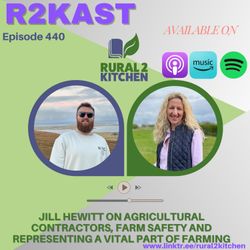
37. R2Kast 440 – Jill Hewitt on agricultural contractors, farm safety and representing a vital part of farming
01:00:17||Season 6, Ep. 37Today I had Jill on the R2Kast 🎙️ Jill runs the National Association of Agricultural Contractors and has spent much of her career representing the people and businesses providing essential services across UK agriculture. 🌾We spoke about growing up around farming, wanting to become a shepherdess and studying animal science before starting her career with the Humane Slaughter Association. That took Jill into abattoirs, animal welfare and slaughter training, alongside a Churchill Fellowship looking at the welfare of male chicks across China, Israel and the USA. 🍎A big part of the conversation focused on agricultural contractors and just how important they are to farming. Over 90% of farmers use contractors in some form, covering everything from shearing and fencing to drainage, machinery and whole farm operations. We spoke about investment, labour, red diesel and making sure contractors are properly represented when agricultural policy is being developed. 🌍We also got into farm safety, the unacceptable number of deaths and serious injuries still happening across the sector and why safety needs to become part of everyday decision making rather than simply paperwork.Enjoy! 🙂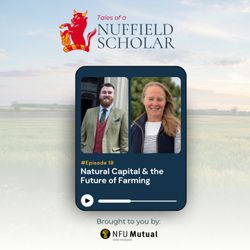
Tales of a Nuffield Scholar - Liz Warner on Natural Capital
41:37|Series three of Tales of a Nuffield Scholar continues 🎙️ This series is looking at some of the biggest challenges, innovations and conversations shaping agriculture today, and this time we’re getting into a topic that is becoming increasingly important across UK farming, natural capital 🌱I was joined by 2026 Nuffield Scholar Liz Warner, a first generation tenant farmer from Devon who farms around 200 acres of beef, arable and grassland alongside working as a farm and natural capital consultant. Liz and her husband started with rented land and a few sheep before taking on a Devon County Council farm, so there is a really interesting story behind how they found their way into farming in the first place 🌾We spoke about what natural capital actually means for farmers, from biodiversity net gain and carbon through to water management and wider environmental outcomes. One of the really interesting points was around additionality and how these markets often reward the improvement you make rather than simply what is already there, raising some big questions around how we recognise farmers who have been looking after nature for years.Liz’s Nuffield topic is “Cultivating Capital: A Farmer’s Role in a Growing Natural Capital Economy” and comes from wanting to make sure farmers have a genuine voice as these markets develop. We spoke about balancing food production with nature recovery, making natural capital commercially viable for farms of different sizes and ensuring farmers properly understand the long term commitments that can come with entering these markets 🌍Her Nuffield journey is still very much underway. After focusing heavily on the UK so far, Liz is looking towards Brazil, the US and the Netherlands, with Australia and Kazakhstan potentially on the list too. What I particularly liked was her ambition to look not only at natural capital projects that have worked, but also those that have gone wrong and understand what can be learned from both.We also chatted about her CSC in Japan, the realities of farming through another incredibly dry summer in Devon and how natural capital might eventually sit alongside food production as another part of building more resilient farm businesses.There is clearly a lot still to develop in this space, which makes following Liz’s Nuffield journey over the next year particularly interesting.Thank you to NFU Mutual for their support of this project.Enjoy! 🙂