Share
R2Kast - People in Food and Farming/All In
Agroecology around Arran - Meat and Livestock Episode
From the early days of crofting and subsistence farming to the present day, animal protein has provided an essential and highly valuable source of nutrients for Arran’s population. While sheep and beef production have always been central to Arran’s farming economy, venison is now also being embraced as a sustainable protein source that can help to combat the growing threat that the wild deer population poses to island ecosystems.
In this first episode of our new series Agroecology Around Arran, we explore how the production of meat on Arran embraces the ethos of agroecology, how farmers are working together to reduce carbon emissions from livestock farming, and what we can learn from their example.
Guests
Alistair talks to us about his livestock farm based in the Shiskine Valley. He maintains a herd of around around 30 native-breed beef cattle which are fed on pasture and home-grown silage.
Colin CurrieColin Currie is an upland hill farmer who has been farming sheep and beef at Bridge Farm with his wife Laura since the 1970s. Bridge Farm is situated within a SSSI-designated site that is home to a rich diversity of flora and fauna. Colin uses his innate knowledge of the land to create a low-input livestock system that has allowed him to reduce reliance on external markets, maximise animal welfare, and work in harmony with the surrounding ecosystem.
Zoë HughesZoë Hughes runs Wild Isle Venison with her partner Chris. Their work aims to honour the deer that are harvested alongside protecting the natural landscape on Arran and strengthening the local food chain. Zoë is passionate about sustainable, affordable meat that has a positive impact on the environment. Wild Isle Venison works to reconnect producers and consumers, processing venison in small batches and selling to local residents, chefs and businesses across the island.
Alec PirieAlec Pirie is a Senior Consultant and Area Manager for SAC Consulting. Alec works with over 120 clients across Scotland and has a particular interest in carbon, climate and conservation. He has also recently completed a Master's degree in Wildlife, Conservation and Management. Alec started the Net Zero Arran group in 2019. This aim of this group of farmers is to quantify the island's agricultural carbon footprint and take collective action to improve it.
More episodes
View all episodes
Agroecology around Arran - Branding and Diversification Episode
01:09:43|In the final episode of the series, we explore how the island's farmers have diversified their businesses to adapt to changing markets and build resilience for the future. Along the way, we'll discover how these new enterprises are creating benefits that extend far beyond the farm gate, supporting local jobs, producing essential goods and services, creating educational opportunities, and helping people reconnect with the land and the food they eat. Episode guestsAlisa CurrieAilsa Currie set up and runs the visitor and education programme at Bellevue Farm, a family-run beef, sheep and arable farm located near Blackwaterfoot.The farm welcomes tourists, families and students to learn about farming, experience local food and build a deeper connection with Arran's landscape and natural environment.Bellevue also hosts a regular farmer's market in partnership with other local food producers.Kenny BoneKenny Bone is a mixed farmer at Glenkiln Farm who also runs a livery business, indoor riding arena, holiday lets, a hydroelectric energy scheme, and is the co-owner of The Drift Inn in Lamlash - alongside several other enterprises!Kenny is interested in caring for Arran's environment and is involved with many local organisations, including Arran Economic Group, Arran Development Trust and the local Forestry Commission panel as well as hosting the Arran Farmers Show.He was awarded Diversified Farm of the Year and the Champion of Champions award at the Scottish Agriculture Awards in 2024.Colin MackenzieColin Mackenzie successfully transitioned his family farm business away from dairy and now runs Mackenzie Logs - supplying seasoned firewood across the island. He also has a small herd of beef breeding cattle and store lambs.Alistair DobsonAlongside his role of Managing Director at Arran Dairies which he runs with his son Matthew, Alistair Dobson is Managing Director of Taste of Arran, a collaborative business that promotes, sells, and distributes food and drink from 10 SME producers on Arran to markets in the UK and abroad.Alistair is also the founding Chairman of VisitArran and a founding member of the Arran Economic Group focused on fostering community development and preserving Arran’s cultural and natural heritage.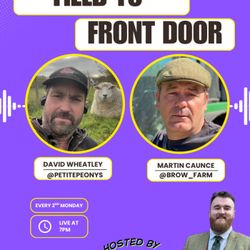
Field to Front Door – Episode 11 on regenerative farming, harvest decisions and learning from failure
59:08|Field to Front Door – Episode 11 on regenerative farming, harvest decisions and learning from failureToday we’re back with Field to Front Door 🎙️David, Martin and Wallace catching up on everything from harvest preparations and regenerative farming to football, Yorkshire Show and what’s happening on their farms right now. Field to Front Door 11.pdfA big part of this episode was a deep dive into regenerative farming. We got into soil biology, Johnson Sue compost, seed treatments, crop rotations and why changing farming systems isn’t about finding one magic answer but learning through trial and error. There was a really honest discussion around the fear of trying something different and accepting that not everything will work first time.We also chatted about harvest, with oilseed rape, wheat and linseed all coming into focus, how weather can completely change decisions in the field, and why growing crops is only half the challenge if you’re trying to add value and sell them differently.One of the most interesting conversations was around how farming has changed over generations. We talked about machinery, soil disturbance, biodiversity and how modern knowledge can be combined with older farming principles rather than simply trying to go backwards.As always there were plenty of laughs along the way, from Yorkshire versus Scotland, combine breakdowns and hats, through to planning next season before this one has even finished.We’re going to keep this going fortnightly for now and see where it takes us. If you’ve got ideas on what we should cover or who we should bring in, send them our way.Enjoy! 🙂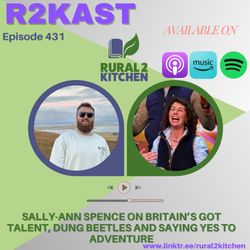
29. R2Kast 431 – Sally-Ann Spence on Britain’s Got Talent, dung beetles and saying yes to adventure
01:29:37||Season 6, Ep. 29Today I had Sally-Ann on the R2Kast 🎙️ What a conversation this was. Sally-Ann wears more hats than almost anyone I’ve had on the podcast, working across agriculture, entomology, ecology, palaeontology and education, while somehow also becoming part of the winning Hawstone Farmers Choir on Britain’s Got Talent. 🌾We started with the choir journey, from answering a social media advert looking for farmers who could hold a tune, through to filming adverts, building friendships and eventually standing on the Britain’s Got Talent stage. Sally-Ann shared what it felt like to go from an ordinary farming and science background to performing live in front of millions of people and ultimately winning the competition. 🍎 A big part of the conversation focused on dung beetles and why they matter so much. We discussed the role they play in soil health, nutrient cycling, biodiversity, pasture management and wider ecosystem function. It was a fascinating insight into a part of farming that most people never think about, despite its huge importance to both agriculture and nature. 🌍 We also spoke about curiosity, learning, Land Rovers, expeditions, mental health, finding your tribe and making the most of opportunities when they appear. It was one of those chats that could have gone on for hours because there was always another story waiting around the corner.Enjoy! 🙂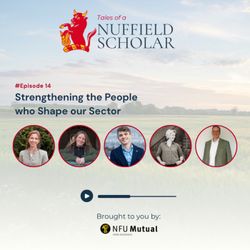
Tales of a Nuffield Scholar with Andrew Richardson, Lucia Slack, Natasha Edwards, Peter Green and Sharon May
01:22:52|Today on series two of Tales of a Nuffield Scholar supported by NFU Mutual we continue looking ahead to the 2026 Nuffield Farming Scholarships Conference in Leeds 🎙️ Across this series we’re hearing from scholars who will feature within the conference presentation groups, giving a flavour of the conversations, ideas and experiences set to shape the event 🌍This episode focuses on the presentation group “Strengthening the People Who Shape Our Sector” with Andrew Richardson, Lucia Slack, Natasha Edwards, Peter Green and Sharon May 🌱While many of the previous episodes have focused on crops, livestock, land use and natural resources, this conversation put people firmly at the centre. Across five very different scholarship topics, the common thread was understanding how we support the individuals, families and communities that underpin food, farming and aquaculture every single day 🚜We spoke about mental health, suicide prevention, family wellbeing, succession, identity, leadership and the importance of community. Lucia shared insights from her work as a mental health nurse and her research into suicide within agriculture, while Sharon explored how best to support farming families and the wider networks around them. Both highlighted the importance of trust, connection and tackling the stigma that still prevents many people from seeking support 🌾Andrew brought a completely different perspective from the aquaculture sector, looking at how young people are encouraged into food production industries and what agriculture can teach other sectors about building identity, belonging and strong peer networks. Peter explored the characteristics and behaviours that help farmers successfully navigate change, while Natasha examined how certification schemes can support farmers through transition and create opportunities for more sustainable and profitable systems 🌍One of the strongest themes throughout the conversation was that people matter just as much as policy, technology or production systems. Whether it was strengthening communities, supporting wellbeing, encouraging young people into the sector or helping businesses adapt to change, the discussion repeatedly returned to the importance of relationships and human connection.Without giving away everything that will be shared on stage in Leeds, this episode offered a powerful reminder that the future of farming is ultimately shaped by people, and supporting those people well is essential for the future success of the sector.Thank you to NFU Mutual for their support of this project.Enjoy! 🙂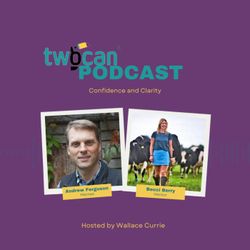
TwoCan Podcast - Becci Berry and Andrew Ferguson
46:08|Do you thrive on challenge? Or perhaps you’re looking for someone who can help bring clarity to the whirlwind of running a business and a busy life? 🌱Today on the TwoCan Mentor podcast I was joined by Becci Berry and Andrew Ferguson 🎙️Becci came into farming from a completely different background in marketing and sponsorship, taking on the family farm following the loss of her husband and learning the industry from the ground up. Andrew’s journey saw him unexpectedly return home to take on the family farm after losing his father, building a diverse rural business with everything from commercial units and a brewery to a café and indoor cricket centre. We spoke about the value of having someone independent to challenge your thinking, offer perspective and provide reassurance when running a business can feel overwhelming. Despite coming from different backgrounds, both found common ground in resilience, community and creating opportunities from difficult circumstances. 🌍 A big theme throughout the conversation was confidence. Not necessarily changing what you’re doing, but having someone help you step back, reflect on what you’ve already achieved and trust your own judgement. 💭 We also discussed the flexibility of the mentoring relationship and how some of the biggest benefits come not from technical advice, but from having honest conversations with someone who understands the challenges of building a business, leading people and navigating life’s twists and turns. 🌱 Enjoy! ☺️
Agroecology around Arran - Growing Community Episode
42:40|In this episode we meet four inspiring guests who are championing small-scale horticulture, alternative food systems and pollinator conservation on Arran. We learn how market gardens, community growing projects and foraging initiatives are helping to celebrate local produce, reconnect people with the land and strengthen social wellbeing. We also explore the important role that bees and honey production play in supporting biodiversity and food production across the island. Episode guestsSimon Ross-GillSimon is the Director and Project Coordinator of The Arran Pioneer Project CIC, a project working to regenerate Scotland’s wild and natural landscapes in a way that incorporates rural communities while securing jobs and livelihoods for young people. The Pioneer Project runs several community gardens around Arran.Simon also works as a graphic designer specialising in books, handbooks, flyers and interpretive materials focussed on landscape, environment and community. He is passionate about working with local people to build a more sustainable and self-sufficient food system.Robin GrayRobin is a chef, grower and owner of Robin Gray’s Island Gourmet, a take-away food business in Whiting Bay demonstrating how sustainably produced, seasonal ingredients can be used to celebrate the unique flavours of Arran.Zoë HughesZoë is a Wild Food Educator who runs Wild Food Arran and has been teaching foraging and wild food identification for over 4 years. She is a member of the Association of Foragers and completely obsessed with mushrooms!Andy WalkerAndy has been keeping bees on Arran for more than 20 years. He moved to the island with his family in 1999 to work for the Forestry Commission and, although now retired, continues to work part-time in timber production. Alongside producing a range of award-winning honeys, Andy also uses beeswax from his hives to create a variety of natural products sold across the island under the label of Arran Bee Products.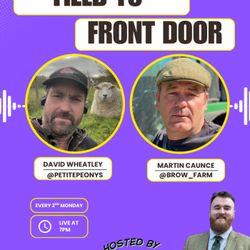
Field to Front Door – Episode 10 on Groundswell, regenerative farming and learning from each other
39:56|Today we’re back with Field to Front Door 🎙️This one was recorded live from Groundswell, with David, Martin and Wallace all together in person for the first time after months of recording remotely. We covered plenty in this episode, from the atmosphere at Groundswell and why it’s become such an important event for farmers, through to regenerative farming, cover crops, soil biology and how different approaches are changing the way people think about growing food.There was a fascinating discussion around compost, seed treatments and building healthier soils, with Martin explaining the practical side of regenerative farming while David shared what he’s learning as he starts changing parts of his own system.We also chatted about trying new ideas, learning from other farmers, the value of collaboration and why events like Groundswell give people the confidence to take something home and have a go for themselves.As always there were plenty of laughs along the way, from photography disasters and hats to tractors, peonies and the usual conversations that seem to appear whenever the three of us get together.We’re going to keep this going fortnightly for now and see where it takes us. If you’ve got ideas on what we should cover or who we should bring in, send them our way.Enjoy! 🙂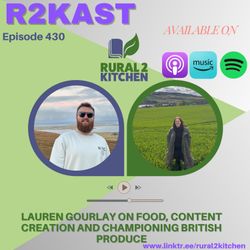
28. R2Kast 430 – Lauren Gourlay on food, content creation and championing British produce
01:07:37||Season 6, Ep. 28Today I had Lauren on the R2Kast 🎙️ A food content creator, recipe developer and social media personality who has built a huge audience around cooking, local produce and great ingredients. 🌾We spoke about growing up in Scotland, working in hospitality and then spending more than a decade with Scottish Water before eventually taking the leap into content creation full time. It was a really honest discussion about balancing a career, family life and building something from scratch online while figuring out what actually mattered to her. 🍎 A big part of the conversation focused on food. Why quality ingredients matter, supporting local producers, understanding where food comes from and the role social media can play in connecting consumers with farming. Lauren shared how her content has evolved from restaurant recommendations into something much more focused on provenance, local sourcing and telling the stories behind the food on people’s plates. 🌍We also chatted about the realities of working in social media, the pressure of creating content, dealing with criticism online and the importance of staying authentic. It was a really interesting look at how someone outside agriculture can become such a strong advocate for British food and farming simply through a genuine passion for good food.Enjoy! 🙂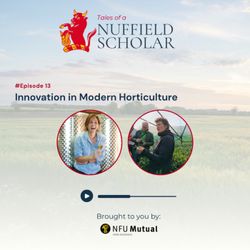
Tales of a Nuffield Scholar with Polly Hilton and Lucy George
48:52|Today on series two of Tales of a Nuffield Scholar supported by NFU Mutual we continue looking ahead to the 2026 Nuffield Farming Scholarships Conference in Leeds 🎙️ Across this series we’re hearing from scholars who will feature within the conference presentation groups, giving a flavour of the conversations, ideas and experiences set to shape the event 🌍This episode focuses on the presentation group “Innovation in Modern Horticulture” with Polly Hilton and Lucy George 🌱While the Leeds presentation group will also include Ali Warren-Walker, a change in presentation groups meant Ali had already featured in the opening episode of this series as part of “New Pathways for Land, Rivers, Carbon and Nature”, so this conversation focused on Polly and Lucy.We spoke about two very different journeys within horticulture, from premium cider production and traditional orchards through to tea growing in Wales. What linked both conversations was a willingness to challenge convention, create value from specialist crops and build businesses around products that many people would not immediately associate with British agriculture 🚜Polly shared how Fine Love Cider works with traditional orchards in the Wye Valley, helping to protect and restore these valuable landscapes while producing premium ciders. Through her travels she explored cider cultures across Europe, looking at everything from education and government support to the role local producers play in maintaining regional identity and rural economies 🌳Lucy spoke about pioneering commercial tea production in Wales after a background in soft fruit growing. Her Nuffield journey has explored how innovation from across horticulture can be adapted into the tea sector, while also questioning how we define value within food production. From consumer understanding and sustainability through to community engagement and wellbeing, her work highlighted the wider role that horticulture can play beyond simply producing a crop 🍃One of the strongest themes running throughout the episode was the importance of education and connection. Whether it was helping consumers understand where their tea comes from or encouraging support for locally grown apples and cider, both scholars highlighted the value of reconnecting people with the origins of what they eat and drink 🌾Without giving away everything that will be shared on stage in Leeds, this episode offered another fascinating glimpse into the future of horticulture, rural enterprise and innovative crop production.Thank you to NFU Mutual for their support of this project.Enjoy! 🙂