Share
Profound Conversations
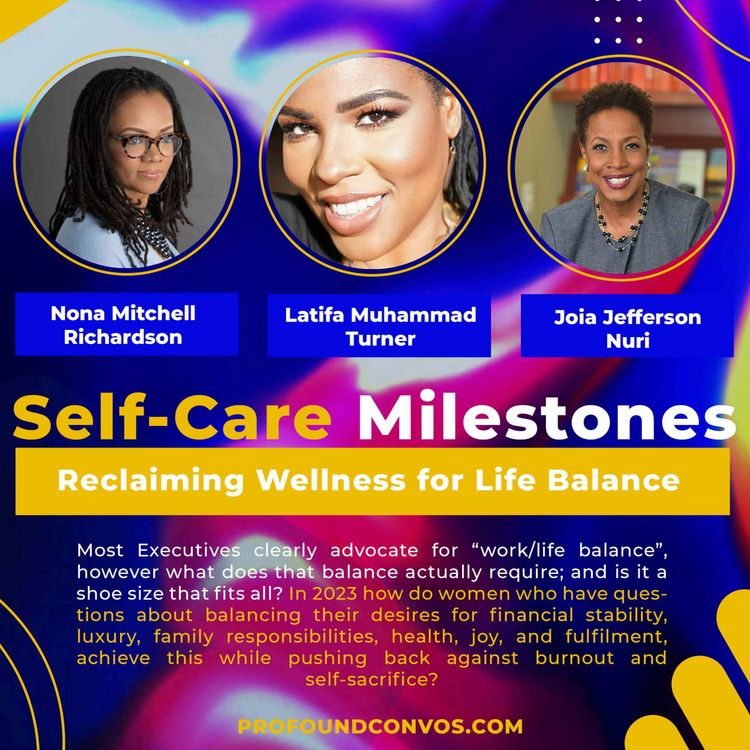
Self-Care Milestones
Most Executives clearly advocate for “work/life balance”, however what does that balance actually require; and is it a shoe size that fits all? In 2023 how do women who have questions about balancing their desires for financial stability, luxury, family responsibilities, health, joy, and fulfilment, achieve this while pushing back against burnout and self-sacrifice?
How do our diets play a role in our ability to maintain a healthy lifestyle, and what are the signs to be aware of that hint to onset mental, emotional and physical decline in our wellbeing? These and other fascinating ideas will be examined by our Conductor and guest conversationalists.
We exist in a society that supports and really actually rewards hustle culture, grind till you make it, sleep when you die, culture of high achievement, competition acquisition, that is made of just a bit worse by the fantasies that we see on social media
This construct of the 80 hour a week working until you drop, sleep when you're dead, was constructed by white men, and a aggressive drive to possess, own, and dominate. It's not something we have to take with us
Being born actually makes you equipped for every hard experience that you're ever going to have. That's why a birthing canal is so vitally important, because now you've experienced the biggest trauma and everything else is easy
You have to start to eliminate the noise. Right? We all have a very quiet space within us, every human being is given this, no matter what physical state you are in, you have this quiet space where if you go in there, there's answers to everything in there.
There are circumstances that bring you to your humble knees. And you have to take time to unfold into those spaces except where you are, and then try to develop a pathway out of those spaces.
I don't like starting over from scratch, I like to build off the heels of another. My motto is "the second mouse gets the cheese."
When I talk about cultural practices, oftentimes routine is everything. Right? Because routine will restart the clock, no matter what you're going through.
It's the inner critic, that small voice that most of us don't know is even talking. That tells us what we can't do. It says, "You're not enough, you're not enough, you're not enough, you're not enough, you haven't done enough." I teach my clients a mantra, "I Am enough, I have enough, I do enough."
You don't have to be a human doer, you can be a human being
Stop and listen to your body
There's a big movement now, thankfully, for this whole expression of like "doing the work" like doing your own work. And people think of that in the in the frame of mental health therapy.
Some things on social media are completely not beneficial to our society, in terms of the sort of the images and the messaging that that we're seeing and the attention seeking and the ways that people are rewarded for bad behavior, but there's been a surgence of positive messaging of people on social media, of people offering alternative ways of thinking and looking at things that has actually benefited a lot of people and I've seen that myself
How do you deal with your inner critic?
Profound Conversations Executive Producers are the Muslim Life Planning Institute, a national community building organization whose mission is to establish pathways to lifelong learning and healthy communities at the local, national and global level. MLPN.life
The Profound Conversations podcast is produced by Erika Christie www.ErikaChristie.com
More episodes
View all episodes
9. The future of inclusive investing
19:25||Season 6, Ep. 9The conversation on wealth creation and financial stability in marginalized communities was reframed for a new generation. The dialogue brought financial heavyweight Dyer, whose remarkable journey has taken him from creative arts to global banking and pioneering ethical finance rooted in Islamic principles. Profound Conversation is a listening & dialogue space which brings the foremost thought leaders into a conversation to grapple with the vexing challenges of our times!In an ever evolving world new ideas and transformative ways of being are the lights at the end of the tunnel. Profound Conversations uses intercultural dialogue, extensive community and organizational engagement to initiate valuable cultural, educational, economic, and policy outcomes.To find out more about our show, our mission, and our conversationalists, please go to:https://www.profoundconvos.com
8. Guardians of the Narrative: The Fate and Future of Black-Owned Media
33:05||Season 6, Ep. 8In this episode of Profound Conversations, we enter a dialogue with the stewards of two of the nation’s most enduring African American–owned media institutions—The Washington Informer and The Muslim Journal. Through their histories, struggles, and triumphs, we explore the deeper question: What does it take to sustain authentic Black storytelling in an era where truth itself is contested?Black-owned media outlets have long answered a call larger than journalism. They have stood as protectors of cultural memory, advocates for justice, and interpreters of complex social and political realities affecting Black communities. Yet these institutions operate under unique and often unforgiving pressures: financial precarity, shifting readership habits, political scrutiny, and the constant demand to serve as both chroniclers and defenders of their communities.This conversation brings together leading voices who can speak to the particular ethos, editorial courage, and community-centered missions that distinguish African American–owned outlets from mainstream media—and from one another.
7. Equitable Health by Design
26:20||Season 6, Ep. 7Equality Health Foundation Launches the Zip Code Exam Project to Drive Awareness of Health Disparities and Increase Life Expectancy in Underserved CommunitiesEquality Health Foundation is proud to launch the Zip Code Exam—a groundbreaking initiative to bring awareness to health disparities and inequities and improve overall well-being in underserved communities plagued by chronic health conditions, diminished quality of life, and decreased life expectancy.Where you live can potentially have a bigger impact on life expectancy than factors like genetics. From food security, community walkability, job availability, education, housing costs, and access to healthcare—environmental factors determined by geography play a significant role in overall health outcomes and well-being.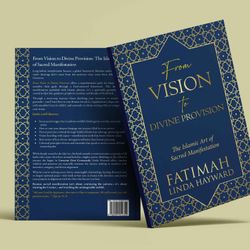
6. From Vision to Divine Provision
35:05||Season 6, Ep. 6In this transformative episode of Profound Conversations, we explore a groundbreaking approach to personal development that bridges the gap between Islamic faith and modern goal achievement. Author Fatimah Linda Howard shares how Muslims can pursue their dreams without compromising their beliefs, introducing the revolutionary concept of "Islamic manifestation" - where blessings come not from the universe, but from Allah, the Most Generous.This conversation challenges the either/or mentality that forces Muslims to choose between worldly success and spiritual devotion, revealing how our deepest ambitions can become acts of worship when approached with the right intention and framework. We'll explore why wanting more - whether in career, wealth, or personal growth - isn't "unspiritual" but rather an opportunity to demonstrate trust in Allah's abundance.
5. They Said N*ggas Don't Read
20:48||Season 6, Ep. 5New Documentary in Development Explores the Untold History—and Living Legacy—of Black Bookstores in AmericaBaltimore, MD — [October 28, 2025] — Obelisk Productions is proud to announce the development of They Said: Niggas Don’t Read – The Rise & Fall of the Black Bookstore, a feature documentary set to begin production in January 2026.The film traces the rise, cultural significance, and attempted suppression of Black bookstores across the United States—once vibrant centers of knowledge, political organizing, and community empowerment. Through the voices of former bookstore owners, writers, activists, and patrons, the project explores the Black bookstore ecosystem of readers, authors, publishers, and sellers who built these spaces—alongside those who sought to dismantle them.Directed by two Baltimore-based filmmakers, Sadiq Ali & Karim Ali, with direct ties to this movement, They Said: Niggas Don’t Read is both a deeply personal story and a national chronicle of cultural resistance and resilience.To bring this essential story to the screen, the filmmakers are inviting bibliophiles, cultural enthusiasts, and supporters of untold histories to join the movement. A crowdfunding campaign launches Thursday, November 6, 2025, in Baltimore.“This film is more than a documentary—it’s a reclamation,” says co-director Sadiq Ali. “Black bookstores weren’t just places to buy books; they were spaces of safety, imagination, and political power. Their story deserves to be remembered, honored, and shared widely.”W. Paul Coates—one of the film’s primary subjects, founder of Black Classic Press, and father of acclaimed writer Ta-Nehisi Coates—adds:“I am excited to be a part of this project and to also show folks Black bookstores actually haven't gone anywhere and this film is about that past and much more about our future.”JOIN THE MOVEMENTThis is a film built by community, for community. To make it possible, we need your support. Contribute to the campaign, share the story, and be part of preserving a vital piece of American history that still shapes our future.Follow along and join our mailing list at ndrfilm.com and on Instagram @theysaidNDR.Press Contact:Blair McQueenobeliskproductionsllc@gmail.com | 470-775-2931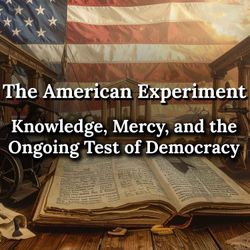
4. The American Experiment
20:14||Season 6, Ep. 4Profound Conversation invites thought leaders to explore the enduring and contested idea of the “American experiment.” Rooted in Enlightenment principles and launched in 1776, this experiment was never merely about forming a government; it was about testing whether diverse peoples could build and sustain a society on the radical premise that all are created equal and endowed with unalienable rights.Yet, from its inception, the experiment has been fraught with contradiction and doubt. Early observers, including Benjamin Franklin, acknowledged the fragility of this undertaking: “A republic, if you can keep it.” The American project has always been a wager on the capacity of ordinary people to govern themselves, and history has tested that wager—through slavery and the Civil War, through the civil rights struggle, through ongoing debates about equality, justice, and belonging.This episode grapples with the question: Is the American experiment succeeding, failing, or still unfolding in ways we have yet to grasp?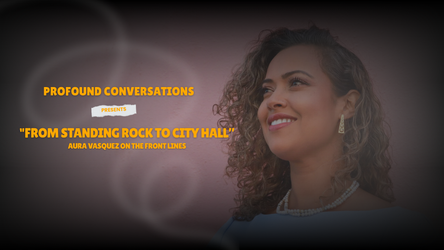
3. "From Standing Rock to City Hall"
31:50||Season 6, Ep. 3This episode of Profound Conversations’ centers Aura Vasquez’s compelling journey, connecting her work in immigration, environmental justice, and civic leadership with the rising threats of authoritarianism and the need for political engagement in Southern California and beyond. Aura is an Afro-Latina Colombian immigrant, a fearless climate justice advocate, and a rising political figure whose work challenges systemic inequities, fights back against corporate overreach, and empowers everyday people to participate in shaping their communities.At a time when authoritarian rhetoric is gaining traction and democratic norms are under threat, especially in immigrant-heavy urban centers like Los Angeles, Aura’s life story offers urgent lessons—and a call to action.
2. The American Experiment
21:16||Season 6, Ep. 2Profound Conversation invites thought leaders to explore the enduring and contested idea of the “American experiment.” Rooted in Enlightenment principles and launched in 1776, this experiment was never merely about forming a government; it was about testing whether diverse peoples could build and sustain a society on the radical premise that all are created equal and endowed with unalienable rights.Yet, from its inception, the experiment has been fraught with contradiction and doubt. Early observers, including Benjamin Franklin, acknowledged the fragility of this undertaking: “A republic, if you can keep it.” The American project has always been a wager on the capacity of ordinary people to govern themselves, and history has tested that wager—through slavery and the Civil War, through the civil rights struggle, through ongoing debates about equality, justice, and belonging.This episode grapples with the question: Is the American experiment succeeding, failing, or still unfolding in ways we have yet to grasp?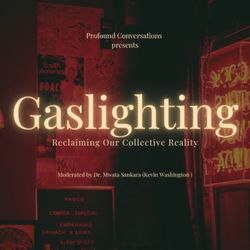
1. Gaslighting
26:37||Season 6, Ep. 1Are we being gaslit as a nation? In this urgent conversation, Dr. Kevin Washington and psychotherapist Dr. Pamela Brewer exposes how denial, distortion, and manipulation — the classic tactics of gaslighting — are shaping public discourse and decision-making in the United States. Learn how these psychological power plays impact our collective mental health and what we can do to reclaim reality, resist manipulation, and rebuild trust in one another.