Share
Profound Conversations
They Said N*ggas Don't Read
Baltimore, MD — [October 28, 2025] — Obelisk Productions is proud to announce the development of They Said: Niggas Don’t Read – The Rise & Fall of the Black Bookstore, a feature documentary set to begin production in January 2026.
The film traces the rise, cultural significance, and attempted suppression of Black bookstores across the United States—once vibrant centers of knowledge, political organizing, and community empowerment. Through the voices of former bookstore owners, writers, activists, and patrons, the project explores the Black bookstore ecosystem of readers, authors, publishers, and sellers who built these spaces—alongside those who sought to dismantle them.
Directed by two Baltimore-based filmmakers, Sadiq Ali & Karim Ali, with direct ties to this movement, They Said: Niggas Don’t Read is both a deeply personal story and a national chronicle of cultural resistance and resilience.
To bring this essential story to the screen, the filmmakers are inviting bibliophiles, cultural enthusiasts, and supporters of untold histories to join the movement. A crowdfunding campaign launches Thursday, November 6, 2025, in Baltimore.
“This film is more than a documentary—it’s a reclamation,” says co-director Sadiq Ali. “Black bookstores weren’t just places to buy books; they were spaces of safety, imagination, and political power. Their story deserves to be remembered, honored, and shared widely.”
W. Paul Coates—one of the film’s primary subjects, founder of Black Classic Press, and father of acclaimed writer Ta-Nehisi Coates—adds:
“I am excited to be a part of this project and to also show folks Black bookstores actually haven't gone anywhere and this film is about that past and much more about our future.”
JOIN THE MOVEMENTThis is a film built by community, for community. To make it possible, we need your support. Contribute to the campaign, share the story, and be part of preserving a vital piece of American history that still shapes our future.
Follow along and join our mailing list at ndrfilm.com and on Instagram @theysaidNDR.
Press Contact:
Blair McQueen
obeliskproductionsllc@gmail.com | 470-775-2931
More episodes
View all episodes
16. Erased, Remembered, Repeated:
27:54||Season 6, Ep. 16This episode of Profound Conversations undertakes a rigorous examination of two defining genocides on the African continent: the 1904–1908 genocide of the Herero and Nama peoples in Namibia under German colonial rule, and the 1994 genocide against the Tutsi in Rwanda.Through historical analysis and contemporary reflection, the discussion explores how structural violence, racial ideology, colonial administration, propaganda, and international indifference converged to produce mass atrocity. The episode also examines how these events shaped American discourse—particularly within communities of color—around race, human dignity, global solidarity, and moral responsibility.Drawing on Dr. Lamont A. Slater’s scholarship and lived experience in Namibia, the conversation reframes genocide not only as a historical tragedy but as a continuing ethical challenge. It asks how memory, erasure, and accountability influence present-day conflicts such as Sudan and other embattled regions across the continent.The episode is both historical excavation and contemporary warning.
614. Beyond the Acronym: Labor, Leadership and the Future of DEI
25:03||Season 6, Ep. 614Dr. Carey’s scholarship and public commentary, including her leadership podcast appearances and essays on intentional dialogue, emphasize that equity is less about optics than about infrastructure. Who is hired. Who is retained. Who is promoted. Who is protected when budgets tighten. The episode presses on a difficult truth: labor has always been a proxy for belonging. From enslavement to Reconstruction, from Jim Crow to corporate compliance training, the right to sell one’s labor—and to do so under conditions of dignity—has defined who counts as fully American. Follow us on: LinkedIn: https://www.linkedin.com/company/profoundconversations/ Instagram: https://www.instagram.com/profoundconversations/ Technical Producer for Profound Conversations is Erika Christie. Writer & Associate Producer Wanda Belle Executive Producer Karim Ali www.ProfoundConvos.com
Future of Inclusive Investing
34:34||Season 6This episode focuses on investment strategies that have historically been underutilized in African American communities due to limited exposure, access restrictions, or lack of culturally relevant financial guidance. Broad-Based Market Investing Here, Jameel Aalim-Johnson explains, in accessible terms: How Nasdaq Composite–level knowledge can unlock investment understanding for everyday people. Why broad index funds, sector funds, and market-weighted products provide low-cost, diversified, and high-growth potential pathways Johnson emphasizes that: Many African American investors mistakenly believe investing requires market timing or stock-picking expertise. In reality, broad composite-based investment vehicles outperform most active investors over time and require minimal technical skill. These instruments serve as an entry ramp for new investors seeking stability and long-term gains. The Profound Conversations Thoughtcast Technical Producer Erika Christie Associate Producer, Wanda Belle, Moderator is Dr. Kevin Washington. Written by Karim Ali. Executive Producer is the AALIANETWORK.
613. “Knowledge, Lineage, and Responsibility: A Browder Perspective”
35:22||Season 6, Ep. 613At a moment when information is abundant but wisdom is scarce, Browder’s work challenges audiences to reconsider how they learn, who they trust, and what they do with what they know. What does it mean to pursue knowledge outside dominant institutions—and sustain that pursuit for decades? How does Kemet function not only as history, but as a philosophical and ethical system? What responsibilities come with being part of an intellectual lineage shaped by figures like John Henrik Clarke? How do we navigate truth, power, and contradiction within liberation movements without losing clarity or commitment? These and other important questions will be answered in the enlightening conversation. Follow us on: LinkedIn: https://www.linkedin.com/company/profoundconversations/ Instagram: https://www.instagram.com/profoundconversations/ The Profound Conversations is written by Karim Ali and Wanda Belle. Our moderator is Dr. Kevin Washington (Mwata Kairi Sankara) PhD. Our Thoughtcast is produced by Erika Christie www.ErikaChristie.com
10. When Life Feels Too Heavy:
30:08||Season 6, Ep. 10In this illuminating episode of Profound Conversations, we sit down with Dana Gant, a registered nurse and intuitive healer whose practice, Radiant Healing, bridges the wisdom of medicine and the quiet intelligence of intuition. Together, we explore what happens when the weight of life feels too heavy to carry — when the mind races, the body tightens, and rest feels out of reach — and how Dana’s approach offers a gentle path back to balance.Through her signature practice, Sacred Flow, Dana introduces listeners to a simple yet powerful process: guided movement, conscious breathing, and mindful presence. Designed to calm the nervous system and quiet mental noise, Sacred Flow helps release built-up tension, restore grounding, and invite peace back into the body. Even a few minutes, Dana reminds us, can help us feel clearer, calmer, and more in control — as if giving both body and spirit permission to exhale.At the heart of Radiant Healing is Dana’s vision of becoming an effective healing partner — someone who walks alongside her clients as they rediscover their innate capacity to self-heal. Her work integrates:Medical Intuitive Insight to uncover root causes of physical and emotional discomfortEnergy Alignment & Balancing to restore natural flow and vitalityTrauma Release Modalities that gently free the body of stored stressSacred Flow Practices that empower sustainable self-careListeners will leave this conversation with renewed faith in their body’s wisdom, and a sense of hope that healing can feel both spiritual and practical — a radiant return to oneself.Connect with Dana Gant: 🌐 www.RadiantHenalingbyDana.com
9. The future of inclusive investing
19:25||Season 6, Ep. 9The conversation on wealth creation and financial stability in marginalized communities was reframed for a new generation. The dialogue brought financial heavyweight Dyer, whose remarkable journey has taken him from creative arts to global banking and pioneering ethical finance rooted in Islamic principles. Profound Conversation is a listening & dialogue space which brings the foremost thought leaders into a conversation to grapple with the vexing challenges of our times!In an ever evolving world new ideas and transformative ways of being are the lights at the end of the tunnel. Profound Conversations uses intercultural dialogue, extensive community and organizational engagement to initiate valuable cultural, educational, economic, and policy outcomes.To find out more about our show, our mission, and our conversationalists, please go to:https://www.profoundconvos.com
8. Guardians of the Narrative: The Fate and Future of Black-Owned Media
33:05||Season 6, Ep. 8In this episode of Profound Conversations, we enter a dialogue with the stewards of two of the nation’s most enduring African American–owned media institutions—The Washington Informer and The Muslim Journal. Through their histories, struggles, and triumphs, we explore the deeper question: What does it take to sustain authentic Black storytelling in an era where truth itself is contested?Black-owned media outlets have long answered a call larger than journalism. They have stood as protectors of cultural memory, advocates for justice, and interpreters of complex social and political realities affecting Black communities. Yet these institutions operate under unique and often unforgiving pressures: financial precarity, shifting readership habits, political scrutiny, and the constant demand to serve as both chroniclers and defenders of their communities.This conversation brings together leading voices who can speak to the particular ethos, editorial courage, and community-centered missions that distinguish African American–owned outlets from mainstream media—and from one another.
7. Equitable Health by Design
26:20||Season 6, Ep. 7Equality Health Foundation Launches the Zip Code Exam Project to Drive Awareness of Health Disparities and Increase Life Expectancy in Underserved CommunitiesEquality Health Foundation is proud to launch the Zip Code Exam—a groundbreaking initiative to bring awareness to health disparities and inequities and improve overall well-being in underserved communities plagued by chronic health conditions, diminished quality of life, and decreased life expectancy.Where you live can potentially have a bigger impact on life expectancy than factors like genetics. From food security, community walkability, job availability, education, housing costs, and access to healthcare—environmental factors determined by geography play a significant role in overall health outcomes and well-being.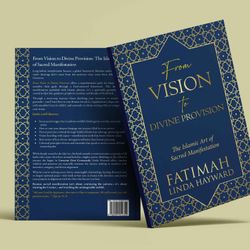
6. From Vision to Divine Provision
35:05||Season 6, Ep. 6In this transformative episode of Profound Conversations, we explore a groundbreaking approach to personal development that bridges the gap between Islamic faith and modern goal achievement. Author Fatimah Linda Howard shares how Muslims can pursue their dreams without compromising their beliefs, introducing the revolutionary concept of "Islamic manifestation" - where blessings come not from the universe, but from Allah, the Most Generous.This conversation challenges the either/or mentality that forces Muslims to choose between worldly success and spiritual devotion, revealing how our deepest ambitions can become acts of worship when approached with the right intention and framework. We'll explore why wanting more - whether in career, wealth, or personal growth - isn't "unspiritual" but rather an opportunity to demonstrate trust in Allah's abundance.