Share
ON_Discourse
Clawdbot / Moltbot / OpenClaw
Dan, Toby, and Chmiel reunite after a long January to unpack what happened when ON_Discourse members went hands-on with Moltbot (formerly Claudebot, now OpenClaw) — an open-source AI agent with full shell access to your computer, your email, your calendar, and everything else. What started as an emergency Group Chat turned into one of the most unsettling Follow My Flow sessions yet, with even the most advanced members shutting the tool down because it got too weird.
Details in the show:
- How Clawdbot makes it easy to forget completed work
- The difference between automating a defined process and giving an agent undefined access to act on your behalf
- Why Moltbot is different than previous agents
- Why the most advanced users are spending all their energy on context engineering instead of the actual work
About ON_Discourse
ON_Discourse is a private community of C-suite leaders, investors, and innovators who come together to challenge assumptions, sharpen ideas, and drive transformation through discourse.
As an experiment in modern discourse, the show’s hosts co-founders, Toby Daniels, Dan Gardner, and Head of Discourse, Matt Chmiel, explore how emerging technologies, such as AI are reshaping business, creativity, and culture, grounded in the real-world experiences that emerge from our community’s private Group Chats.
Learn more about becoming part of the community: ondiscourse.com
More episodes
View all episodes
49. AI in the Loop
30:30||Season 1, Ep. 49Dan, Toby, and Chmiel get riled by a LinkedIn post that contributes to the AI exhaustion it claims to diagnose, and use it as a jumping-off point to ask why everything in the AI conversation is starting to sound the same. They flip the "human in the loop" framing on its head, argue Anthropic's recent Claude Code throttling is just the latest in a long lineage of platform rug pulls (RIP Facebook organic reach), and stumble into Reed Hastings' line that nobody's ever going to want to watch robots play basketball — which Dan immediately tries to dismantle.Details of the show:The "AI exhaustion loop" guy and what's wrong with performing overwhelm on LinkedInWhy Toby thinks Cannes is going to offer nothing new this yearDan's three (or four) categories of AI users and the missing agentic layer of the internetThe Hollywood writer using Domain to run a virtual writers room and why "elevated use cases" matter more than agent-stacking"Slop that shit up"Toby's therapist on slowing down, and why none of them are going to do it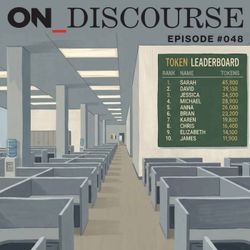
48. Tokenmaxxing
36:46||Season 1, Ep. 48Dan, Toby, and Chmiel break down the Silicon Valley flex nobody's asking enough questions about: burning tokens as a workplace KPI. Is maxing your token usage a signal of genuine AI-first thinking — or just a new way to dress up the same old productivity theater?Details of the show:Jensen Huang's "$500K in tokens or you're not doing it right" interview and why it's both a marketing stunt and a real cultural shiftWhy Meta's internal token leaderboard (they called it Clawdynamics) collapsed when employees just built bots to game itThe NBER study: 90% of firms reporting zero productivity from AI initiatives — and what it says about the gap between token burning and actual outcomes"Refounding" vs. transformation — a new word for the same old fuzzy concept, or something actually different?Why the billion-dollar one-person company is probably wrong — and the five-person version might be right
47. Can AI Make Art?
58:56||Season 1, Ep. 47Dan, Toby, and Chmiel are joined by Carlos "Mare139" Rodriguez — OG ON_Discourse member, graffiti pioneer, fine artist, and cultural theorist — to dig into the question that lit up the ON_Discourse WhatsApp group: when a member called an AI-generated Spotify track the work of "a new artist," it set off a debate about art, authorship, economics, and who gets to hold the gate. Carlos brings five decades of perspective — from NYC hip hop and Style Wars to digital sculpture and 3D-printed B-Boys — to argue that this moment is less a threat to art than the latest in a long line of tools that expand what's possible. Marcel Duchamp's latrine makes an appearance. So does Questlove.Details of the show:Why the word "artist" sparked the debateCarlos traces the lineage: from Cubism to graffiti to jumbotrons to AIThe turntable as instrument — and what that tells us about AI as a creative toolAre we heading toward more great artists, fewer, or the same? (The hosts don't agree)Why Carlos thinks young people, not institutions, will decide what happens next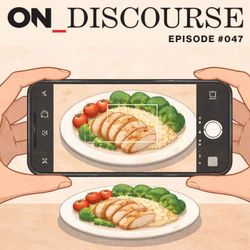
46. Vibecoding Returns
39:14||Season 1, Ep. 46In this episode, Dan, Toby, and Chmiel try to explain what it actually feels like when AI stops being a tool you use in isolation and starts being the connective tissue of how a team works together. The conversation wanders through vibe coding failures, the difference between content and context, what it means to actually be an AI-first company (spoiler: not what most people think), and why the right question isn't "how do we get more efficient?"Details of the ShowProductive vs performative vibecodingIt is very hard to describe and very easy to experienceHow MyFitnessPal vibecoded its way to success without Under ArmourThis moment in history is lacking language to adequately describe it
45. It’s Not Real, But It’s Important
39:32||Season 1, Ep. 45Dan, Toby, and Chmiel confront a hard truth: a listener reached out last week and said they were completely lost. So this week, the trio tries to strip away the gobbledygook and explain — in plain language — what OpenClaw actually means, why it matters even though it barely works, and why none of them can confidently explain what they're building anymore. Along the way, Toby uses his therapist as a test case for AI integration, Dan admits he might have been wrong about prompt engineering for three years, and Chmiel says something he never expected to say: everything feels broken.Details of the Show:The difference between talking to AI on a website and talking to your computer at the system level — and why the distinction mattersWhy Toby's therapist tried AI on their sessions and they both decided it was terribleDan's flip: after years of rejecting "direction work," he spent the last week doing nothing but promptingThe vibe-coded prototype problem — when a client shows up with something they built in two minutes and thinks the hard work is doneChmiel's confession: a lifetime of limitations trained his imagination to think small — and the last five weeks broke that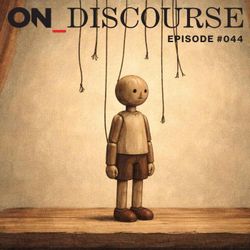
44. Skills
39:10||Season 1, Ep. 44Dan, Toby, and Chmiel pick up where last week's LSD-level excitement left off — except now they're burned out. After a frenetic week building with their AI agent DOMA, the Domain co-founders are processing what it means to develop software that isn't designed but trained, where behavior is the interface and features might be beside the point. Along the way, Toby accidentally discovers DOMA can make podcasts, Dan's own agent tells him what he learned this week, and Chmiel tries to figure out what any of this means for Stripe.Details of the show:Why Dan believes status updates kill momentum, and why his AI agent was the one who told himWhat happened when Toby asked DOMA to summarize a conversation and got a fully produced audio file backHow open-source skill marketplaces are turning into the Matrix's "I know Kung Fu" momentWhy brands may need to start thinking about agentic skills as part of their identity, not just their tech stackThe Colombo episode that would absolutely not hold up in court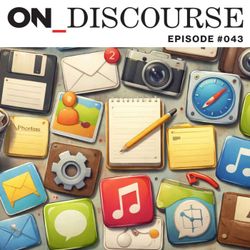
43. Agentic Experiences
35:53||Season 1, Ep. 43Dan, Toby, and Chmiel are still processing the implications of last week's conversation with Sam and the rollout of OpenClaw — and why it's changing the way they think about the web. This week, the team reveals what happened when they deployed their AI agent DOMA into the Signal group chat where they actually work, and why it felt less like a product demo and more like hiring a new teammate.Details of the show:Why Dan believes the last 40 years of GUI design was a detour — and we're back to the prompt box where we startedWhat happened when DOMA showed up in Signal and the team knew within two minutes something had shiftedThe difference between AI you go to and AI that meets you where you already areWhy the ON_Discourse emergency Group Chat drew record attendance and off-the-charts energyThe Back to the Future 3 ice machine as the perfect metaphor for where most AI workflows are right now
42. The Next Internet is Already Here
46:48||Season 1, Ep. 42Dan, Toby, and Chmiel welcome Sam Broe, career technologist and architect of (domain), to unpack why Claude Code and the open-source project Claudebot (now OpenClaw) represent something far bigger than a better coding tool. Sam makes the case that giving an AI agent root-level access to your computer fundamentally changes how the internet works — and that the platforms trying to lock down their APIs are already fighting a losing battle.Details of the show:Why Claude Code isn't a coding tool — it's a translator between humans and the raw language of computersHow Claudebot bypasses API restrictions by simply reading what's on the screen, the same way a human wouldSam's "right to delegate" concept — if you can do it yourself or hire someone to do it, your AI agent should be able to do it tooWhy Web3 and zero-knowledge proofs might finally have their "why" moment as AI's security layerThe canary in the coal mine: everyday people opening Terminal on their computers