Latest episode
BONUS CONTENT: MISSING PERSONS
09:44||Season 1By the time private investigator Jay J. Armes III gets the call, a young woman has been missing for a week. Her family knows she went out with friends in Ciudad Juárez. They still don’t know what happened to her.In this short bonus deep dive, Jay tells the story of an investigation that changed how he approaches a disappearance. It begins with a deceptively simple task: piecing together a night nobody knew they’d need to remember.Want the whole story? Listen to Season 1’s Milk Cartons and Missing Persons: Inside the Investigation for more from Jay and our other experts on what happens when someone disappears and what the people looking for them can do.About our featured expertJay J. Armes III is an international private investigator with four decades of experience. He leads Armes International Investigative Services, and his work includes missing persons investigations and undercover surveillance.Explore No One Is ComingFor full episodes, expert resources, and more:nooneiscomingpodcast.comFollow us for new episodes, bonus deep dives, and more stories about the unexpected:InstagramTikTokYouTubeLinkedInFollow No One Is Coming on your favorite podcast platform so you never miss an episode!
More episodes
View all episodes
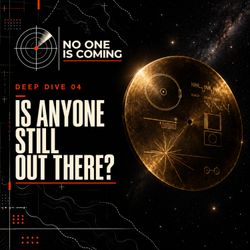
BONUS CONTENT: IS ANYONE STILL OUT THERE?
11:52||Season 1What if we find evidence of an alien civilization, but there’s no one left to answer?In this short bonus deep dive, astronomer and SETI researcher Dr. Stephen DiKerby explores a possibility the movies visit less often: first contact with something its makers left behind. A distant signal, an abandoned probe, or ancient technology could tell us we aren’t alone without offering anyone to talk to.From the Drake equation and the lifespan of technological civilizations to Voyager’s messages from Earth, we explore what might survive across cosmic time, whether the intelligence we encounter could be mechanical, and who gets to speak for humanity if we decide to introduce ourselves. Entrusting that last decision to an eccentric billionaire may deserve a little discussion.Want the whole story? Listen to Season 1, Episode 2: NOIC Goes to the Movies: Summer Alien Invasion Special for more from Stephen and our other guests on first contact, alien movies, and what those stories reveal about us.About our featured expertDr. Stephen DiKerby is an astronomer and postdoctoral researcher at Michigan State University. His work explores the high-energy universe and the search for extraterrestrial intelligence, including how we might detect technology built by other civilizations.Explore No One Is ComingFor full episodes, expert resources, and more:https://nooneiscomingpodcast.comFollow us for new episodes, bonus deep dives, and more stories about the unexpected:Instagram: https://www.instagram.com/nooneiscomingpodcast/TikTok: https://www.tiktok.com/@nooneiscomingpodYouTube: https://www.youtube.com/@NoOneIsComingPodLinkedIn: No One Is ComingFollow No One Is Coming on your favorite podcast platform so you never miss an episode!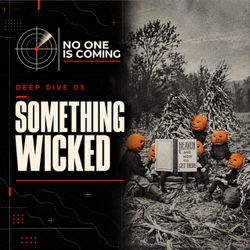
BONUS CONTENT: SOMETHING WICKED
11:10||Season 1Why do some of us love being scared, while others can't even watch a crime show before bed?Just in time for Halloween, journalist, author, and X-Ray Vision co-host Rosie Knight returns to talk about our strange relationship with horror. From the movies that frightened us as kids to the books that still keep us awake, we explore what makes horror so irresistible, why knowing how the scares work doesn't always help, and what a chainsaw-wielding maniac might have to teach us about hope.Plus, crawl spaces. Rosie has questions about crawl spaces. Frankly, so do we.Want the whole story? Listen to Season 1, Episode 10: Psychology of Fear | How Hope Can Save You for more from Rosie and our other experts on fear, courage, and hope.About our featured expertRosie Knight is a journalist, author, and pop culture critic covering film, television, comics, and genre storytelling. She co-hosts X-Ray Vision, a podcast about movies, television, comics, and pop culture.Explore No One Is ComingFor full episodes, expert resources, and more:https://nooneiscomingpodcast.comFollow us for new episodes, bonus deep dives, and more stories about the unexpected:Instagram: https://www.instagram.com/nooneiscomingpodcast/TikTok: https://www.tiktok.com/@nooneiscomingpodYouTube: https://www.youtube.com/@NoOneIsComingPodLinkedIn: https://www.linkedin.com/company/no-one-is-coming-podcast/Follow No One Is Coming on your favorite podcast platform so you never miss an episode!
BONUS CONTENT: SOCIAL ENGINEERING
11:04||Season 1A locked door is one thing. The helpful person standing beside it is where Jenny Radcliffe comes in.In this short bonus deep dive, ethical social engineer Jenny Radcliffe, known as “The People Hacker,” explains how she’s hired to get past security by understanding the humans responsible for it. With permission, considerable preparation, and enough charm to make opening the door seem like your idea, she exposes vulnerabilities before criminals can exploit them.Jenny reveals how personal interests become tailored approaches, how familiarity quietly turns into trust, and why being convinced you’re too clever to be conned gives someone an excellent place to start. It’s a funny, unsettling look at how ordinary human instincts can work against us—and why you can enjoy the compliment and still leave the door locked.Want the whole story? Listen to Season 1, Episode 5: Scams — The Urgency Trap for more from Jenny and our other experts on how scams work, why they succeed, and how to interrupt them.About our featured expertJenny Radcliffe is an ethical social engineer, speaker, and author of People Hacker. Businesses hire her to test their security using psychology, persuasion, and physical infiltration. She’s also the host of The Human Factor, a podcast exploring the human side of security.Explore No One Is ComingFor full episodes, expert resources, and more:https://nooneiscomingpodcast.comFollow us for new episodes, bonus deep dives, and more stories about the unexpected:Instagram: https://www.instagram.com/nooneiscomingpodcast/TikTok: https://www.tiktok.com/@nooneiscomingpodYouTube: https://www.youtube.com/@NoOneIsComingPodLinkedIn: No One Is ComingFollow No One Is Coming on your favorite podcast platform so you never miss an episode!
BONUS CONTENT: TITANIC – THE SHIP THAT DIDN’T COME
07:53||Season 1Another ship was close enough to see the Titanic as it sank. So why didn't it come to the rescue?In this short bonus deep dive, Titanic historian Tim Maltin reveals how extraordinary atmospheric conditions may have contributed to a catastrophic series of misunderstandings. From misjudged distances and misread distress signals to the remarkable stroke of luck that helped the Carpathia find survivors, it's a fascinating look at how perception, communication, and chance shaped one of history's most famous disasters.And amid the tragedy, one small act of kindness offers a moving reminder of what people can do for one another when everything goes wrong.Want the whole story? Listen to Season 1, Episode 4: Ship Happens | Cruises, Crime, and Contagion at Sea for our complete conversation with Tim and a deep dive into the dangers, disasters, and extraordinary stories of life at sea.About our featured expertTim Maltin is a British historian, author, and broadcaster who has spent more than 25 years researching the Titanic. His work explores the role of atmospheric conditions and optical illusions in the disaster. He is the author of Titanic: A Very Deceiving Night and presented the documentary Titanic: Case Closed for National Geographic.Explore No One Is ComingFor full episodes, expert resources, and more:https://nooneiscomingpodcast.comFollow us for new episodes, bonus deep dives, and more stories about the unexpected:Instagram: https://www.instagram.com/nooneiscomingpodcast/TikTok: https://www.tiktok.com/@nooneiscomingpodYouTube: https://www.youtube.com/@NoOneIsComingPodLinkedIn: No One Is ComingFollow No One Is Coming on your favorite podcast platform so you never miss an episode!
10. PSYCHOLOGY OF FEAR
54:06||Season 1, Ep. 10Why do we pay to be terrified by horror movies and haunted houses, yet struggle to think clearly when fear becomes real? And what if some of our most deeply held beliefs about panic, courage, and survival are wrong?In the Season One finale of No One Is Coming, Lance Still explores the psychology and neuroscience of fear: why our brains evolved to detect danger, what happens during the fight, flight, or freeze response, and how stress changes our ability to make decisions. From the strange pleasures of scary movies to the science of fear conditioning and survival instincts, we discover why fear isn't necessarily the enemy. It's a biological system designed to keep us alive, even when it occasionally gets things spectacularly wrong.But the biggest surprise may be what happens when disaster strikes. Contrary to the familiar Hollywood image of mass panic, research shows that people are remarkably likely to cooperate, help strangers, and respond to the behavior of those around them. We examine the psychology of crowds, the bystander effect, and the dangerous tendency to wait for more information when time is running out. Along the way, experts explain how mental rehearsal, situational awareness, and a few decisions made in advance can help ordinary people act more effectively under pressure.Finally, we explore the science of hope, courage, and resilience. What makes someone willing to take a worthwhile risk? Why does psychological flexibility matter more than perfect preparation? And how can hope become something more substantial than simply wishing for a good outcome? After a season exploring disasters, uncertainty, and survival, we return to the idea at the heart of the show: you don't have to be fearless to become someone who can helpFeaturing:Rosie Knight: Award-winning journalist, author, and podcast host who writes extensively about film, horror, comics, and pop culture. She co-hosts iHeart's X-Ray Vision and has written for The Hollywood Reporter, Esquire, IGN, and Nerdist. Rosie KnightDr. Michael Fanselow: Distinguished Professor of Psychology at UCLA and a leading researcher on the neuroscience of fear. His work examines how fear is learned, stored in the brain, and translated into defensive behavior. UCLA PsychologyMeghan Fitzgerald, PhD, LMHC: Licensed mental health counselor specializing in trauma and PTSD who also holds a PhD in integrative biology. Her earlier research on spider behavior informs her perspective on how protective and survival behaviors develop across species. Life Works TherapyDr. Chris Hicks: Emergency physician and trauma team leader at St. Michael's Hospital in Toronto who studies human performance under pressure. His work examines stress, situational awareness, decision-making, mental rehearsal, and training in high-stakes emergencies. Advanced PerformanceBjørn Sætrevik: Professor of psychology at the University of Bergen who studies risk, situation awareness, and decision-making in safety-critical environments, including how people interpret incomplete information and act under pressure. University of BergenDr. Kayley Estes: Psychological scientist who studies risk, uncertainty, disaster communication, and responses to threatening information. Her research examines how perception, trust, and social context shape behavior during crises. ResearchDr. Cynthia Pury: Professor of psychology at Clemson University who studies courage, fear, and what allows people to take worthwhile risks. Her research explores anxiety, threat appraisal, and the psychology of courageous action. Clemson UniversityFollow No One Is Coming:Website: nooneiscomingpodcast.comYouTube: @NoOneIsComingPodInstagram: @nooneiscomingpodcastTikTok: @nooneiscomingpodNo One Is Coming is survival for the non-camo crowd: a documentary podcast about disasters, uncertainty, and what ordinary people can do before the plan falls apart.
9. TSUNAMI
44:44||Season 1, Ep. 9Why do we picture a tsunami as a giant, cinematic wave, when the reality is far more deceptive—and far more dangerous?In this episode of No One Is Coming, Lance Still explores the terrifying physics of tsunamis and the hidden history buried right beneath our feet. From the devastating 2004 Indian Ocean tsunami to the 2011 Tōhoku disaster in Japan, we look at what happens when the sea stops behaving like the sea and becomes a fast-moving, destructive flood.The episode also uncovers how a catastrophe can disappear from living memory while its evidence remains behind—in coastal soil, ghost forests, geological records, and Indigenous oral histories. Scientists can read those traces centuries later, reconstructing disasters that entire communities once knew firsthand.From there, we turn to the human side of survival. Why do people sometimes hesitate when every minute matters? What happens when we wait for confirmation instead of trusting the warning signs in front of us? You’ll hear how a little bit of knowledge helped save an entire beach in Thailand, how a 12-year-old girl helped evacuate a Chilean village in the middle of the night, and why preparedness is less about predicting every contingency than knowing enough to recognize when something has changed.Featuring:Dr. Vasily Titov: Tsunami scientist with NOAA’s Pacific Marine Environmental Laboratory and a member of the NOAA Center for Tsunami Research. He has spent decades developing and improving operational tsunami forecasting tools and translating tsunami science into faster, more accurate warnings intended to save lives.Dr. Carrie Garrison-Laney: Coastal Hazards Specialist & PMEL Liaison, Washington Sea Grant — A skilled science communicator and trained scientist, Dr. Carrie Garrison-Laney contributes to tsunami hazard research through studies of evidence for past tsunamis and earthquakes in Washington. Her work has improved understanding of past tsunami sources and the timing of tsunami flooding, helping strengthen hazard assessments for coastal residents. She also conducts tsunami hazard outreach and works with emergency managers, maritime groups, and other stakeholders on education and preparedness.Dr. Anawat Suppasri: Associate Professor at Tohoku University’s International Research Institute of Disaster Science (IRIDeS) and its Tsunami Engineering Laboratory. His research includes tsunami numerical modeling, tsunami generation, damage surveys, vulnerability, hazard and risk assessment, disaster-prevention education, and cascading disasters.Dr. Tina Dura: Associate Professor of Natural Hazards at Virginia Tech. Her research uses coastal geology, sedimentology, microfossils, paleoseismology, modeling, and sea-level evidence to reconstruct the history of major subduction-zone earthquakes and tsunami inundation.Elyssa Tappero: Tsunami Program Manager for Washington Emergency Management Division. She works with coastal communities and partners on tsunami preparedness, public education, warning, mitigation, and response planning.Follow No One Is Coming:YouTube: @NoOneIsComingPodInstagram: @nooneiscomingpodcastTikTok: @nooneiscomingpodNo One Is Coming is survival for the non-camo crowd: a documentary podcast about disasters, uncertainty, and what ordinary people can do before the plan falls apart.