Share

Nash Holos Ukrainian Roots Radio
Ukrainian Jewish Heritage: Commemorating the 75th anniversary of the Babyn Yar tragedy in Kyiv - Nash Holos Ukrainian Roots Radio
•
Seventy-five years ago nearly 34,000 Jews were murdered at Babyn Yar over a two-day period on September 29th and 30th 1941. The location has become a poignant symbol of what is known as The Holocaust by Bullets. Some 1.5 million Jews were shot to death on the territory of what is now Ukraine in this particular aspect of the Holocaust.
The Ukrainian Jewish Encounter, or UJE, presented a very much-anticipated program commemorating this 75th anniversary of Babyn Yar.
The program, held in Kyiv from September 23rd to 29th this year, featured four distinct projects. There was a public symposium, which included the introduction of a groundbreaking book on Babyn Yar; a student conference; a landscape design competition; and a memorial concert.
The effort took years of planning and was widely applauded both in Ukraine and abroad. The UJE worked with the World Jewish Congress, Ukraine’s government, and other Ukrainian Jewish and diaspora organizations to plan and present its program.
UJE board member Paul Robert Magocsi, who along with his colleague Adrian Karatnycky spearheaded the program, noted, “Our goal was to turn the attention of Ukrainians and the world community to Babyn Yar and to show it is a very important symbol of a mass tragedy of the 20th century,”
A special feature of the public symposium was the presentation of the newly published book Babyn Yar: History and Memory. The book, published both in English and Ukrainian, presents essays written by ten authors, including several symposium participants. They looked at the treatment of Babyn Yar in art, culture, and literature.
Dr. Vladislav Hrynevych, who co-edited the book with Dr. Magocsi, said, “This book is not about death but about life, and about the battle for memory about Babyn Yar. It also raises the question of what is the future of Babyn Yar. How is it to be organized?”
Nearly two hundred young people from all over the world attended the youth conference. The conference coordinator, Dr. Ihor Shchupak of Dnipro’s Tkumah Institute for Holocaust Studies, said. “We were able to get away from national egoism. We remembered that our country was touched by three genocides: the Holodomor, the Holocaust, and the deportation of Crimean Tatars. We also talked about the Holocaust against the backdrop of the contemporary Russian-Ukrainian war. We understood there is no such thing as someone else's pain.”
Another highlight of the week was the presentation of winning entries of an international landscape competition sponsored by the UJE as a first step in the expected creation of a necropolis at Babyn Yar.
There was no first-place award as the jury did not feel any of the entries fulfilled all its requirements. However, Vitaliy Nakhmanovych, one of Ukraine’s leading Babyn Yar historians who oversaw the competition, said the two second-place winners and a third-place winner provided a promising foundation for the creation of a memorial park at Babyn Yar.
The UJE board chairman James C. Temerty presented the competition winners with awards.
The commemorative week concluded with a memorial concert, which featured the Hamburg Symphony Orchestra, the renowned Ukrainian Dumka Chorus, and international opera stars, including Pavlo Hunka of England. Ukraine native Oksana Lyniv, who currently works with the Bavarian State Opera in Munich, was conductor and the opera director Annechien Koerselman of the Netherlands staged the powerful performance.
Approximately 160 people were involved in the performances of Max Bruch’s prayful Kol Nidrei; the Kaddish-Requiem by Yevhen Stankovych, based on the poems of the Ukrainian writer Dmytro Pavlychko; and A German Requiem by Johannes Brahms.
Amidst all these events, one distinguished visitor to Kyiv was World Jewish Congress...
More episodes
View all episodes
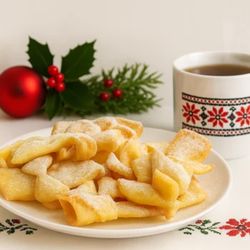
Ukrainian Khrustyky and the Art of the Rose Cookie
05:39|Sylvia Molnar takes a deep dive into the secret behind the dainty, delectable and now quite rare sweets called Khrustyky in Ukrainian, also known as "nothings" because they literally melt in your mouth. She shares the ingredients, shaping methods, and frying techniques for these traditional treats, along with the intricate process for creating the ornate rose shape for these cookies that she learned from her mother. This is one of Sylvia's collection recipes, stories, and cooking tips preserved in the Ukrainian Food Flair Cookbook, published as a tribute to her legacy.
Military Cadets in Lviv: Voices From Ukraine’s Next Generation of Officers
07:55|In 2015, before Ukraine’s armed forces became a global symbol of resilience, a group of military cadets spoke candidly with Pawlina about their hopes and motivations. Recorded inside a hallway at Ukrainian Catholic University during a conference hosted by Ukrainian Jewish Encounter, this interview captures them at the beginning of their journey—still students, still forming their professional identities, but already committed to service.Their stories reflect a mix of personal history and national responsibility: daughters of military families, first‑generation soldiers, aspiring teachers, future interpreters, and a cadet specializing in psychological operations. Each describes a different path into the military, yet all share a clear sense of purpose.Revisiting this conversation nearly a decade later adds depth to the broader story of Ukraine’s transformation. These young people were preparing for roles that would soon become critical, though none could have predicted how quickly their skills would be needed. This recording offers a rare, intimate look at the formative years of those who would go on to serve in a rapidly changing world.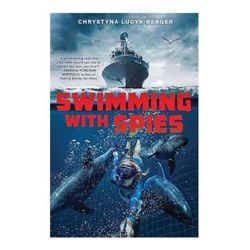
Swimming with Spies: A Knyzhka Corner Book Review
07:11|Swimming With Spies is set in 2014 Sevastopol, Crimea and is based on the true story of Ukraine’s dolphins being confiscated by Russia for military purposes. Twelve-year-old Sofiya has a close relationship with her father who is manager of a dolphinarium. Her father is dealing with his own angst because his Russian wife has abandoned the family. Sofiya also lives with her Baba, a scientist who inspires her future career choices. Sofia loves her life in Crimea, and when the Russian government under Vladimir Putin annexes Crimea from Ukraine, Sofia is devastated.As the annexation evolves, Sofia must deal with changes to the political situation in Crimea, as well as fearing that the new Russian leaders will shut down the dolphinarium. The strength of this novel is its examination of the conflict between Russia and Ukraine during the annexation of Crimea in 2014. Despite this conflict, author Chrystyna Lucyk-Berger tells a story of cooperation and friendship between young people who rise above political differences to work for a common cause.The full transcript of this Knyzhka Corner Book Review by Myra Junyk is available at the Nash Holos blog.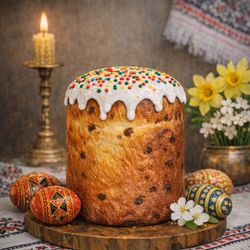
Ukrainian Babka – A Traditional Easter Bread
05:26|In this episode of Ukrainian Food Flair on Nash Holos Ukrainian Roots Radio, Sylvia shares the storied tradition of Ukrainian Easter Babka—a tall, cylindrical sweet bread that’s as demanding as it is rewarding. Babka is made from a delicate raised yeast dough and was considered one of the most important and demanding tasks of the Ukrainian homemaker during the Easter holiday season. The preparation is time‑consuming, but the end result—rich, tender, fine‑textured, spongy, and very light—is well worth the effort.This version is more manageable with modern kitchen conveniences, while maintaining the character of the original. It includes a yeast starter, enriched dough with citrus and raisins, and a simple icing of icing sugar, lemon juice, and warm water, finished with baker’s confetti.Whether you’re a seasoned baker or trying Babka for the first time, this episode offers a glimpse into the heritage behind the loaf—and why its successful rise is considered a true triumphFor the full recipe and more legacy-rich dishes, check out the cookbook Ukrainian Food Flair: Authentic Recipes from Canada's West Coast.
Home of Hope: A Canadian‑Ukrainian Lifeline for Vulnerable Young Women in Ukraine
22:54|This episode explores the work of the Sister Servants of Mary Immaculate (SSMI) through the lens of one of their most significant ministries: the Home of Hope in Ukraine. The SSMI recently opened a second Home of Hope in Chernivtsi, created in response to the large influx of internally displaced people in western Ukraine.The first Home of Hope in Lviv was created to support girls who have nowhere to go once they age out of orphanages or face circumstances that leave them without secure housing.The conversation brings together Catherine Fox and Nadiia Jarosz of the Lubov SSMI Foundation in Winnipeg, along with Sophia, a current resident of the home, to illustrate how this ministry provides stability, safety, and community for vulnerable young women.Nadiia describes the practical challenges of establishing the residence, the renovations required, and the ongoing support Lubov provides for essentials such as food, utilities, education, and medical care.Sophia offers a firsthand perspective on what the home means for students navigating university life during wartime. She speaks about arriving with nowhere to live, the daily rhythm of shared meals, prayer, study, and the psychological and art‑therapy support that has become essential as air raid alerts and uncertainty shape daily life. Her reflections highlight the emotional resilience and sense of belonging the Sisters foster.Catherine explains how the Sisters expanded their ministry to Chernivtsi, supported by donors across Canada and abroad, to meet the growing need for safe housing and community for young women.For more information visit the Lubov website.Look for the full transcript at the Nash Holos blog.
Canada and the Ukrainian Crisis: A Knyzhka Corner Book Review
07:59|First released in 2022. Reposted now for listeners exploring Canada’s enduring commitment to Ukraine.Readers who are interested in international relations, Ukrainian history, Canadian-Ukrainian relations, as well as Canadian politics will be intrigued by this analysis. Researchers will definitely appreciate the addition of a Chronology of the Harper Government’s response to the Ukrainian Crisis.Stephen Harper’s response to the Ukrainian Crisis of 2014 was robust, and his rebuke of Russian aggression was powerful. He famously told Putin to "Get out of Ukraine" when other world leaders at the time turned a blind eye.Harper argued that Putin’s actions in Ukraine would only embolden him in the future. Unfortunately, this turned out to be true when Putin invaded Ukraine in 2022.Full transcript here.Purchase the book here. (Affiliate link.)***********************Tune in to the Vancouver edition of Nash Holos Ukrainian Roots Radio—every Saturday at 6pm PST on AM1320 CHMB and streaming at www.am1320.com.And to the Nanaimo edition on Wednesdays at 11am air at 101.7FM or streaming online at CHLY Radio Malaspina.Full episode archives now on MixCloud.For transcripts, additional commentary and links to reputable Ukrainian charities visit our website here.Standing Free: A Young Filmmaker’s Journey Into Ukraine’s Front Lines
38:47|In this interview, filmmaker Maxim Khomenko talks about Standing Free, his debut documentary filmed in Ukraine during Russia’s full‑scale invasion.Born and raised in Canada into a Ukrainian family from Kyiv, Max describes returning to a country at war, seeing his family home destroyed by russian missiles, travelling alone into active combat zones, surviving nearby strikes, and filming evacuations and frontline life with Ukrainian soldiers. He reflects on the unity he witnessed, the role of humour and resilience, and the painful reality that some of the people in his film did not live to see it completed.Max also outlines the practical side of the project: building a small international crew, securing financial support, and carrying bags of medical supplies and equipment into Ukraine on each trip. Listeners will come away with a deeper sense of the film’s perspective — and the meaning behind its title, Standing Free.Full transcript at the Nash Holos website.
Beetniks: A Ukrainian Canadian Culinary Original
03:35|In this archival feature of Ukrainian Food Flair, a long‑running series on Nash Holos, you will hear the story and recipe behind beetniks — traditional Ukrainian bread rolls wrapped in beet leaves.Beetniks hold a special place in Ukrainian Canadian kitchens — a dish instantly recognized across Canada yet virtually unheard of in Ukraine itself. For Ukrainian pioneers and their descendants, these beet‑leaf‑wrapped bread rolls have long been a cherished seasonal treat, made only when the garden offers perfect young leaves.This podcast features the voice of the late Sylvia Molnar, a beloved culinary personality in Vancouver, who presented her recipes, stories, and cooking on Nash Holos in the series Ukrainian Food Flair.The recipe appears in Ukrainian Food Flair: The Cookbook, published as a tribute to her culinary legacy and now available from online booksellers (including Amazon) to home cooks everywhere.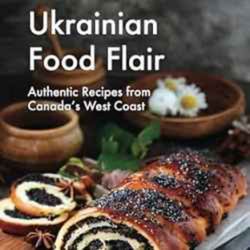
Ukrainian Food Flair: Authentic Recipes from Canada’s West Coast — A Knyzhka Corner Book Review
08:11|This Knyzhka Corner book review features Ukrainian Food Flair, a collection of more than 200 recipes by Sylvia Molnar, whose culinary life touched classrooms, home kitchens, and media studios across Vancouver. The collection captures Sylvia’s warmth, wit, West Coast Ukrainian sensibility, and her talent for making even ambitious dishes approachable.Edited and published posthumously, the cookbook draws from the archives of her long‑running segment on Nash Holos, preserving the dishes she shared over decades.If you enjoy cooking, collecting cookbooks, or discovering new takes on familiar Ukrainian flavours, this review offers a taste of what’s inside. Listen in—and you may find yourself planning your next batch of pyrizhky or eyeing the dessert chapter before the episode ends.Full review transcript at the Nash Holos website.