Share

Nash Holos Ukrainian Roots Radio
Canada and the Ukrainian Crisis: A Knyzhka Corner Book Review
First released in 2022. Reposted now for listeners exploring Canada’s enduring commitment to Ukraine.
Readers who are interested in international relations, Ukrainian history, Canadian-Ukrainian relations, as well as Canadian politics will be intrigued by this analysis.
Researchers will definitely appreciate the addition of a Chronology of the Harper Government’s response to the Ukrainian Crisis.
Stephen Harper’s response to the Ukrainian Crisis of 2014 was robust, and his rebuke of Russian aggression was powerful. He famously told Putin to "Get out of Ukraine" when other world leaders at the time turned a blind eye.
Harper argued that Putin’s actions in Ukraine would only embolden him in the future.
Unfortunately, this turned out to be true when Putin invaded Ukraine in 2022.
Full transcript here.
Purchase the book here. (Affiliate link.)
***********************
Tune in to the Vancouver edition of Nash Holos Ukrainian Roots Radio—every Saturday at 6pm PST on AM1320 CHMB and streaming at www.am1320.com.
And to the Nanaimo edition on Wednesdays at 11am air at 101.7FM or streaming online at CHLY Radio Malaspina.
Full episode archives now on MixCloud.
For transcripts, additional commentary and links to reputable Ukrainian charities visit our website here.
More episodes
View all episodes
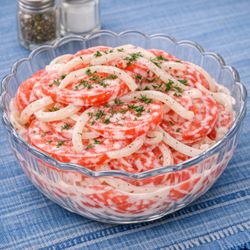
Tomato Yogurt Salad
02:46|In this episode of Ukrainian Food Flair on Nash Holos Ukrainian Roots Radio, Sylvia Molnar shares a tomato and yogurt salad made with sliced ripe tomatoes, sweet onion, yogurt mixed with sugar, salt, and pepper, and finished with fresh dill.She also reflects on the quality of Ukrainian dairy products and offers a tip for choosing sweet onions.This podcast features the voice of the late Sylvia Molnar, a beloved culinary personality in Vancouver, who presented her recipes, stories, and cooking on Nash Holos in the series Ukrainian Food Flair.The recipe appears in Ukrainian Food Flair: The Cookbook, published as a tribute to her culinary legacy and now available from online booksellers (including Amazon) to home cooks everywhere.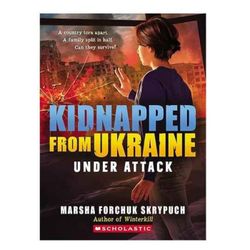
Kidnapped from Ukraine: Under Attack - A Knyzhka Corner Book Review
06:43|This Knyzka Corner Book Review features Kidnapped from Ukraine: Under Attack, Marsha Forchuk Skrypuch’s novel about 12‑year‑old twins Rada and Dariia Popkova from Mariupol and the impact of Russia’s full‑scale invasion of Ukraine on their lives. The story follows their separation during the bombing of Mariupol, the desperate search for safety, and Dariia’s ordeal in a Russian filtration camp for Ukrainian children. The novel incorporates real historical events and includes an Author’s Note and a Five Questions section that address the factual context of this period. The review also highlights Skrypuch’s background as an acclaimed Ukrainian Canadian writer whose work focuses on historical truth and the experiences of young people in wartime.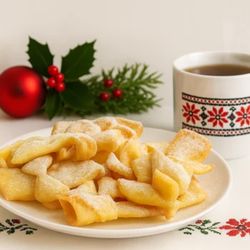
Ukrainian Khrustyky and the Art of the Rose Cookie
05:39|Sylvia Molnar takes a deep dive into the secret behind the dainty, delectable and now quite rare sweets called Khrustyky in Ukrainian, also known as "nothings" because they literally melt in your mouth. She shares the ingredients, shaping methods, and frying techniques for these traditional treats, along with the intricate process for creating the ornate rose shape for these cookies that she learned from her mother. This is one of Sylvia's collection recipes, stories, and cooking tips preserved in the Ukrainian Food Flair Cookbook, published as a tribute to her legacy.
Military Cadets in Lviv: Voices From Ukraine’s Next Generation of Officers
07:55|In 2015, before Ukraine’s armed forces became a global symbol of resilience, a group of military cadets spoke candidly with Pawlina about their hopes and motivations. Recorded inside a hallway at Ukrainian Catholic University during a conference hosted by Ukrainian Jewish Encounter, this interview captures them at the beginning of their journey—still students, still forming their professional identities, but already committed to service.Their stories reflect a mix of personal history and national responsibility: daughters of military families, first‑generation soldiers, aspiring teachers, future interpreters, and a cadet specializing in psychological operations. Each describes a different path into the military, yet all share a clear sense of purpose.Revisiting this conversation nearly a decade later adds depth to the broader story of Ukraine’s transformation. These young people were preparing for roles that would soon become critical, though none could have predicted how quickly their skills would be needed. This recording offers a rare, intimate look at the formative years of those who would go on to serve in a rapidly changing world.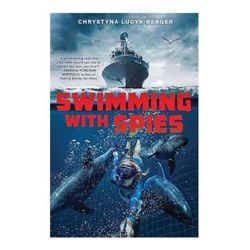
Swimming with Spies: A Knyzhka Corner Book Review
07:11|Swimming With Spies is set in 2014 Sevastopol, Crimea and is based on the true story of Ukraine’s dolphins being confiscated by Russia for military purposes. Twelve-year-old Sofiya has a close relationship with her father who is manager of a dolphinarium. Her father is dealing with his own angst because his Russian wife has abandoned the family. Sofiya also lives with her Baba, a scientist who inspires her future career choices. Sofia loves her life in Crimea, and when the Russian government under Vladimir Putin annexes Crimea from Ukraine, Sofia is devastated.As the annexation evolves, Sofia must deal with changes to the political situation in Crimea, as well as fearing that the new Russian leaders will shut down the dolphinarium. The strength of this novel is its examination of the conflict between Russia and Ukraine during the annexation of Crimea in 2014. Despite this conflict, author Chrystyna Lucyk-Berger tells a story of cooperation and friendship between young people who rise above political differences to work for a common cause.The full transcript of this Knyzhka Corner Book Review by Myra Junyk is available at the Nash Holos blog.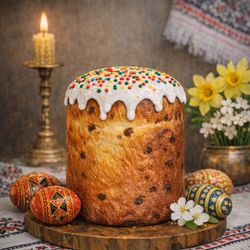
Ukrainian Babka – A Traditional Easter Bread
05:26|In this episode of Ukrainian Food Flair on Nash Holos Ukrainian Roots Radio, Sylvia shares the storied tradition of Ukrainian Easter Babka—a tall, cylindrical sweet bread that’s as demanding as it is rewarding. Babka is made from a delicate raised yeast dough and was considered one of the most important and demanding tasks of the Ukrainian homemaker during the Easter holiday season. The preparation is time‑consuming, but the end result—rich, tender, fine‑textured, spongy, and very light—is well worth the effort.This version is more manageable with modern kitchen conveniences, while maintaining the character of the original. It includes a yeast starter, enriched dough with citrus and raisins, and a simple icing of icing sugar, lemon juice, and warm water, finished with baker’s confetti.Whether you’re a seasoned baker or trying Babka for the first time, this episode offers a glimpse into the heritage behind the loaf—and why its successful rise is considered a true triumphFor the full recipe and more legacy-rich dishes, check out the cookbook Ukrainian Food Flair: Authentic Recipes from Canada's West Coast.
Home of Hope: A Canadian‑Ukrainian Lifeline for Vulnerable Young Women in Ukraine
22:54|This episode explores the work of the Sister Servants of Mary Immaculate (SSMI) through the lens of one of their most significant ministries: the Home of Hope in Ukraine. The SSMI recently opened a second Home of Hope in Chernivtsi, created in response to the large influx of internally displaced people in western Ukraine.The first Home of Hope in Lviv was created to support girls who have nowhere to go once they age out of orphanages or face circumstances that leave them without secure housing.The conversation brings together Catherine Fox and Nadiia Jarosz of the Lubov SSMI Foundation in Winnipeg, along with Sophia, a current resident of the home, to illustrate how this ministry provides stability, safety, and community for vulnerable young women.Nadiia describes the practical challenges of establishing the residence, the renovations required, and the ongoing support Lubov provides for essentials such as food, utilities, education, and medical care.Sophia offers a firsthand perspective on what the home means for students navigating university life during wartime. She speaks about arriving with nowhere to live, the daily rhythm of shared meals, prayer, study, and the psychological and art‑therapy support that has become essential as air raid alerts and uncertainty shape daily life. Her reflections highlight the emotional resilience and sense of belonging the Sisters foster.Catherine explains how the Sisters expanded their ministry to Chernivtsi, supported by donors across Canada and abroad, to meet the growing need for safe housing and community for young women.For more information visit the Lubov website.Look for the full transcript at the Nash Holos blog.
Standing Free: A Young Filmmaker’s Journey Into Ukraine’s Front Lines
38:47|In this interview, filmmaker Maxim Khomenko talks about Standing Free, his debut documentary filmed in Ukraine during Russia’s full‑scale invasion.Born and raised in Canada into a Ukrainian family from Kyiv, Max describes returning to a country at war, seeing his family home destroyed by russian missiles, travelling alone into active combat zones, surviving nearby strikes, and filming evacuations and frontline life with Ukrainian soldiers. He reflects on the unity he witnessed, the role of humour and resilience, and the painful reality that some of the people in his film did not live to see it completed.Max also outlines the practical side of the project: building a small international crew, securing financial support, and carrying bags of medical supplies and equipment into Ukraine on each trip. Listeners will come away with a deeper sense of the film’s perspective — and the meaning behind its title, Standing Free.Full transcript at the Nash Holos website.