Share
Nash Holos Ukrainian Roots Radio
Ukrainian programming in English & Ukrainian
Latest episode
Pawlina Behind the Guest Mic
29:11|In this special episode, Pawlina, producer and host of Nash Holos Ukrainian Roots Radio, is interviewed by Chrissie Cochrane for her program Monthly Feature – Voices on The Global Voice Internet Radio.Recorded via Zoom, the interview later aired on Friday October 2, 2026 at 1730UTC with a repeat on Saturday October 3, 2026 at 0630UTC and on Monday October 5, 2026 at 1630UTC.The conversation explores the history, evolution, and ongoing work of Nash Holos, along with insights into Ukrainian culture and community broadcasting.This episode presents the full audio exactly as broadcast on Monthly Feature – Voices.A companion interview—where Pawlina speaks with Chrissie about The Global Voice—is available here.
More episodes
View all episodes
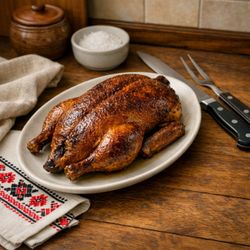
Duck the Ukrainian Way
04:37|Duck has long held a special place in Ukrainian kitchens, valued not only for its rich flavor but also for the down and feathers used in traditional pillows and wedding bedding.This episode revisits two time‑honored preparations — fried duck and roast duck — along with the practical cooking wisdom, serving ideas, and old‑world techniques that continue to resonate with home cooks today.You’ll find this recipe in the cookbook Ukrainian Food Flair — Authentic Recipes from Canada's West Coast available in bookstores and on Amazon.High Holidays in Ukraine: Dancing with the Torah
09:08|This episode explores the themes and customs that give Simchat Torah its distinctive energy in Ukrainian Jewish life. It hints at the holiday’s unusually public nature, the ways its dancing and music have carried through periods when other observances were muted, and how its expressive traditions continue in unexpected settings today, touching on the distinctive character the holiday brings to the close of the High Holidays cycle.High Holidays in Ukraine: Remembering the Desert Journey
14:35|This episode presents material on the themes and traditions of Sukkot as observed in Ukraine, the harvest festival that recalls the Jews' 40-year journey through the desert after fleeing slavery and oppression in Egypt. It includes broad historical context, notes how communities have marked the holiday across different periods, and touches on the concluding days associated with the season and its place within the wider High Holidays cycle.Chrissie Cochrane and The Global Voice: Inclusive Radio Built by Blind Broadcasters
21:15|This conversation explores how The Global Voice developed its long connection with Nash Holos and the distinctive way the station operates.Founder Chrissie Cochrane discusses the principles behind a radio platform built and run largely by blind broadcasters, where “vision” comes from design rather than sight.She shares how the station began, how its volunteer team operates across borders and time zones, and the operational adaptations that make radio production viable for blind broadcasters.Chrissie also reflects on her own path through music and radio, the diverse programming that defines the station, and the collaborative environment that has sustained it for nearly two decades. The discussion also touches on memorable moments, including a multi‑station charity broadcast for Ukraine that underscored the “global” in The Global Voice.A companion interview—featuring Chrissie’s conversation with Pawlina on The Global Voice—is also available here.High Holidays in Ukraine: From Rosh Hashana to Yom Kippur
11:38|This episode examines takes a deeper dive into the Ten Days of Awe to see how Jewish communities in Ukraine experience the most sacred days of the High Holidays.The shofar’s call, the foods that open the season, and the customs passed through generations set the tone for these days. Under tsarist rule and Soviet repression, observance moved underground; after independence, synagogues reopened and public life returned. Wartime conditions now influence how people come together.Across cities and frontline regions, Ukrainian Jews continue beloved holiday traditions with care and intention as they move through the Ten Days of Awe and into the festivals that follow.High Holidays in Ukraine: History, Memory, and Wartime Resilience
09:53|This episode explores the High Holidays in Ukraine — beginning with Rosh Hashanah, which opens the Ten Days of Awe and falls this year from September 11–13.The Jewish High Holidays are considered the holiest of the year, forming a season of celebration, reflection, devotion, and resilience. They include Rosh Hashanah, the New Year; Yom Kippur, the Day of Atonement; Sukkot, recalling the Israelites’ journey in the wilderness; and Simchat Torah, the joyful completion and restarting of the annual Torah reading cycle.This first part of a 4‑part series looks at how Jews living in Ukrainian lands endured tsarist restrictions and Soviet repression, followed by a golden era of religious freedom and growth after independence. And how today, the dark days of russian repression have returned with putin's war of aggression against Ukraine.