Share
Light Work Podcast
Justyna Badach: Land of Epic Battles
January 16 – March 2, 2018
Kathleen O. Ellis Gallery
Gallery Talk: Thursday, February 1, 6pm
Reception: Thursday, February 1, 5-7pm
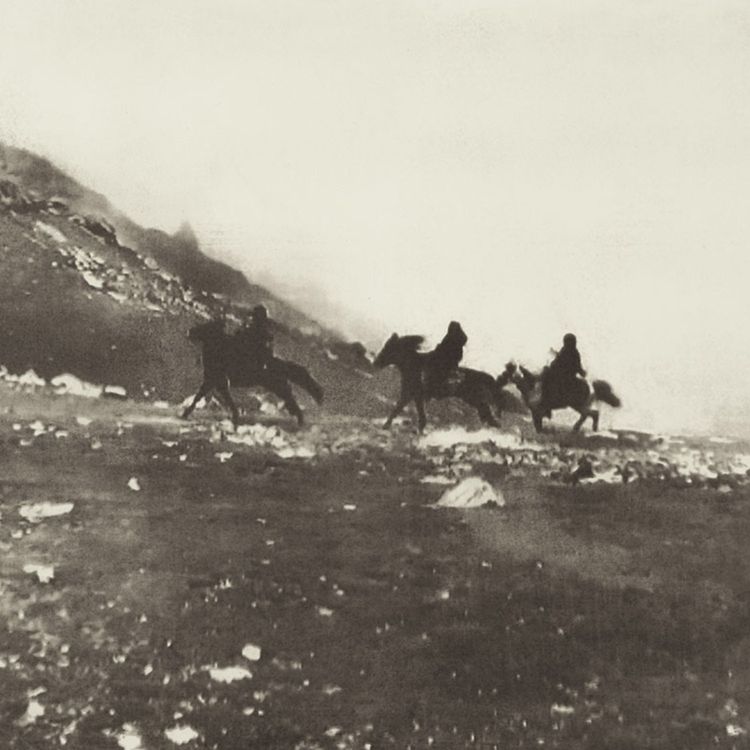
Light Work is pleased to present Land of Epic Battles a solo exhibition of prints by Philadelphia-based artist Justyna Badach. Land of Epic Battles features Badach’s new series of large, hand-made dichromate prints, made using film stills from ISIS training videos. For a year she experimented with darkroom techniques before discovering a 19th-century process that would allow her to use gunpowder as a pigment. The resulting incendiary prints initially look like antiquated documentation of Middle Eastern sites and landscapes. The texture of the heavy-weight watercolor paper needed for this process adds a layer of abstraction more akin to the language of drawing and painting than photography. Rather than using images of carnage and gore, for which ISIS videos are infamous, Badach’s edit reveals a vast, enduring, and majestic landscape that dwarfs the players in the conflict and exposes the futility of war.
Land of Epic Battles continues Badach’s ongoing interest in male culture and the machismo of Hollywood films and media. As a child, Badach emigrated from Poland and learned to speak English by watching American TV. Fascinated by the deeply coded American cinema, she later created Epic Film Stills, a project that explored how classic Westerns such as Wyatt Earp and Young Guns glorify the violence of American colonialism. In this series, Epic Film Stills, she focuses on the landscape, which echoes the romanticized version of Manifest Destiny and its violent ideology that she first recognized in American Westerns and which may, in turn, be the lens through which most Americans make sense of Middle Eastern terrorism. In describing this body of work Badach states:
“My work examines the transmutation of history and repackaging of violence through appropriation and re-contextualization of images derived from films created for a male audience. Land of Epic Battles focuses on the hyper-masculine world of ISIS recruitment videos that have grown out of the social and cultural voids that mark this moment in time.”
Besides armored vehicles, the black ISIS flag, artillery, and explosives, each ISIS cell includes a media-savvy creative, equipped with video camera, microphones, laptop, and Final Cut Pro, who carefully documents the destruction wrought by this cell and disseminates this material on encrypted websites and YouTube. Reality TV, DIY citizen-journalism, and video games (specifically Grand Theft Auto) have clearly inspired these works. ISIS videographers carefully edit the action with rousing music and linger in slow motion over point-blank gunshots, beheadings, and crucifixions. Voice-overs promise a life of respect, power, comradery, and victory for young men who have been brutally marginalized and stripped of culture.
—
Justyna Badach’s family arrived as refugees in the United States in 1980. She currently resides in Philadelphia, where she is an artist, educator, and museum professional. Her work has been exhibited extensively in the United States and abroad and is in the permanent collections of Cranbrook Art Museum, Portland Art Museum, Museet for Fotokunst Brandts, Odense, Denmark. Her artist book is in the Special Collection at the Rice University Library, Houston, TX, Temple University, Philadelphia, PA and Haverford College. Her work has been exhibited internationally, including; Queensland College of Art Griffith University in Brisbane, Art Wonderland Space in Copenhagen and the Temple of Hadrian in Rome to most notably in the US at the Corcoran Gallery, D.C., Portland Art Museum, James A. Michener Art Museum, Doylestown, PA, and Catherine Edelman Gallery, Chicago among others. Badach participated in the residency program at Light Work in 2012.
—
Special thanks to Daylight Blue Media
Light Work
Music: "Sleepers" by Sergey Cheremisinov
Music: "Vela Vela" by Blue Dot Sessions
More episodes
View all episodes
44. Sasha Phyars-Burgess: Everything Nice
09:52||Season 1, Ep. 44Sasha Phyars-Burgess: Everything NiceSeptember 8–December 5, 2025Kathleen O. Ellis GalleryReception: Thurs, Sep 18, 5-7pmSasha Phyars-Burgess’s photographic project Everything Nice traces her family history through Portugal, the Dominican Republic, Florida, and Louisiana, following the paths of sugarcane farmed on colonial plantations and the transatlantic slave trade in relation to her ancestors. The photographs are taken in various locations: Madeira, Portugal, the Dominican Republic, Florida, and Louisiana. The pictures provide clues and details that are layered into a larger story.Looking back at history and locating the present, Phyars-Burgess is thinking through the idea that we are all living in a history, whether it is acknowledged or not. Once acknowledged, and if we allow ourselves to live with the past, with choices made by and for others, we can access a wider view of the present day.Through research and picture-making, Phyars-Burgess’s ongoing project affords us a better understanding of globalization and its languages, and shows us that places which at first glance look “ethnic” can be regarded differently.The work’s title, Everything Nice, is the name of a song by Popcaan. In it, he speaks about the hardships and struggles that people are going through while also joining together in community, getting to the heart of the matter, and being present. This exhibition invites us to slowly look, ask questions, and decipher information to uncover possible and actual answers.—Sasha Phyars-Burgess.b. 1988.Scorpio.Black.Alive.sashaphyars-burgess.com—Special thanks to Daylight Blue Media daylightblue.comLight Work lightwork.org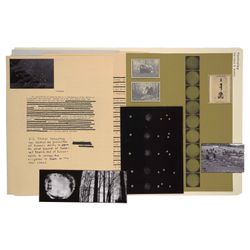
43. Aaron Turner: The Archive as Liberation
12:13||Season 1, Ep. 43Aaron Turner: The Archive as LiberationMay 12–August 29, 2025Kathleen O. Ellis GalleryReception: Friday, July 25th, 5-7pmThe Archive as Liberation is a publication and exhibition organized by Aaron Turner (Light Work artist–in-residence, 2018, and Light Work exhibiting artist, 2021). Turner has gathered a unique group of artists and writers to engage in dialogue around archival photographic methods. Contributors include Andre Bradley, calista lyon, Raymond Thompson Jr., Harrison D. Walker, and Savannah Wood, alongside writing by Chisato Hughes, Alec Kaus, Andrew Martinez, Aaron Turner, Amelia Wallin, and Wendel A. White, with a foreword by the book’s editor, Donasia Tillery. The publication was designed by Elana Schlenker. Tillery writes, “What if memory is not solely an act of recollection, but of discovery and creation? The Archive as Liberation considers this question from the perspectives of subjects who lack access to traditional modes of documentation—Black and Indigenous cultures creatively preserved despite systemic erasure, landscapes that bore witness to colonial conquests, and the lineages that continue to survive in their wake. These works prompt us to consider not just what we remember but how we remember. In doing so, they work to inspire a more authentic vision of the past and a liberated vision of the future.” To mark the launch of this publication, Light Work has mounted an exhibition highlighting many of the contributing artists. This exhibition includes work by Andre Bradley, Chisato Hughes, Alec Kaus, calista lyon, Raymond Thompson Jr., Harrison D. Walker, Wendel A. White, and Savannah Wood. The exhibition also includes a unique reading room curated by Turner with artists’ books from his personal collection and pieces from Light Work’s collection. The reading room will be in Light Work’s Lab for the duration of the exhibition.Image Credit: Harrison D. Walker, Between Two Worlds, Footnotes, 2025—Aaron Turner is a photographer, educator, and independent curator, born and raised in the Arkansas Delta. Turner holds an MA from Ohio University and an MFA from Mason Gross School of the Arts. In his studio practice, he uses the 4×5 view camera to create still-life studies on identity, history, abstraction, and archives. He has organized the following selected exhibitions and symposiums: And Let It Remain So: Women of the African Diaspora (Phoenix Art Museum, 2022), Time & Empathy: Arkansas Photographer Geleve Grice (University of Arkansas, 2021–22), and Resounding Sovereign Expressions: Resurgent Indigenuity in Ozark Arts Practice & Scholarship (University of Arkansas, 2025). He most recently joined the University of Michigan’s Penny W. Stamps School of Art & Design as an assistant professor.—Special thanks to Daylight Blue Media daylightblue.comLight Work lightwork.org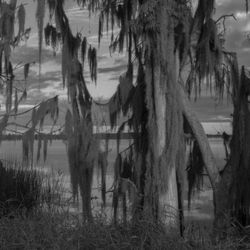
42. Nabil Harb: Mater si, magistra no
06:04||Season 1, Ep. 42Nabil Harb’s project Mater si, magistra no (a macaronic phrase that translates as “Mother yes, teacher no”) presents photographs that describe and depict moments and scenes within his hometown of Lakeland in Polk County, Florida. This Central Florida location is both the backdrop and main character of Harb’s visual narrative: a story that emits surreal qualities which twist ideas of the region through photography’s formal language into a conceptual idea—an idea of how to describe the atmosphere of a place without words. Harb writes, “The landscape is the perfect reflection of our society, our ultimate index—it holds our histories, our secrets, our failures, and our hopes for the future.” Harb uses his camera to look rather than gaze at the wily scenes and moving bodies; his images disturb the before and after of a photograph by showing a moment extended or an instant flashed with a strobe. The project title informs Harb’s reasons and choices around his subject matter with his opinions and beliefs about this landscape, the people who inhabit it and move through it, and his subjecthood. The history of land usage in Central Florida greatly influences where he goes to photograph and how he looks at his surroundings. The narratives in his work are conflicting and intermingle with one another. The overriding story is one of man versus nature, of beauty and destruction coexisting in an atmosphere that is surreal, seductive, and breathtaking. Where the conflicting notions of destruction and rebirth intersect is also the point at which Nabil Harb’s formalism and conceptual photographic practice meet, showing us the potential for beauty in destruction and foreboding rebirth. Image credit: Nabil Harb, Lake Hancock, 2024—Nabil Harb is a Palestinian American photographer born and raised in Polk County, Florida, where he still lives. Harb received his BA in anthropology from the University of South Florida and his MFA in photography from Yale University. His work has been featured in Aperture, The Atlantic, ArtReview, The Guardian, and A24. nabiljharb.com/—Special thanks to Daylight Blue Media daylightblue.comLight Work lightwork.org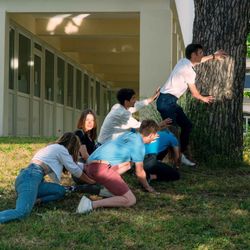
41. Nicholas Muellner: Asea
08:05||Season 1, Ep. 41In this exhibition, Nicholas Muellner offers up photographs depicting people pantomiming in a verdant landscape made complex with surreal lighting; these images are paired with an issue of Contact Sheet that serves as a guidebook to the exhibition. The text in Contact Sheet is wryly poetic and succinct, and loosely leads us from picture to picture. Asea takes us somewhere without making its destination specific, setting a tone and mood that guides our desire for meaning but refuses to precisely locate it.The exhibition conveys a type of suspended drama via an installation that divides the gallery into two rooms, creating an atmosphere in which viewers float, both in space and time. The majority of the portraits are of people connected to the maritime economy and all of the photographs were made in a landscape or setting that the subjects live in: Marseille, Odesa, Milan, Long Beach. The subjects gesture toward the camera, holding the invisible tools of their respective trades, and suggesting an estrangement from their concrete identities.With Asea, Muellner projects a state of limbo and a search for personal meaning within photography’s inevitable narrative limits. We are asked to ponder alone, in a subjective state that is not fixed but which hovers within the parameters established by the photographs and text. Ultimately, we engage with Asea because it is at once thoughtful, beautiful, and curious.—Nicholas Muellner is an artist and writer whose books include Lacuna Park: Essays and Other Adventures in Photography, The Amnesia Pavilions, and In Most Tides an Island, which was shortlisted for the Paris Photo–Aperture PhotoBook Award and named a Best Book of the Year in Artforum. In addition to solo exhibitions in the United States and Europe, his writing has been published by MACK/SPBH, Aperture, Radius, Triple Canopy, Foam, and Routledge, among others. Muellner has performed slide lectures internationally, including at MoMA PS1, Carnegie Museum, The Photographers’ Gallery, and the Museum of Contemporary Photography. His work has been supported by a 2018 Guggenheim Fellowship in Photography, a John Gutmann Fellowship, and residencies at the MacDowell and Yaddo colonies. Muellner received a BA in comparative literature from Yale University and an MFA from Temple University. He is the founding co-director of the Image Text MFA and ITI Press at Cornell University.nicholasmuellner.com—Special thanks to Daylight Blue Media daylightblue.comLight Work lightwork.org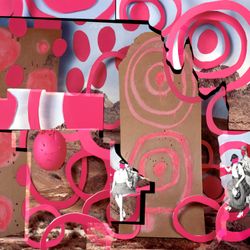
40. According to the Laws of Chance
17:02||Season 1, Ep. 40According to the Laws of Chance: Group ExhibitionMay 31–August 16, 2024Kathleen O. Ellis GalleryReception: Friday, July 26, 5-7pmAccording to the Laws of Chance is a subtitle included in many works by the Dadaist painter Jean Arp that describes his systematic yet chance-driven method of creating his simple and playful paintings. Arp would let torn pieces of paper fall to the floor to determine his painting or collage compositions. Although the outcomes are different, Arp’s ethos can be found in the work of the photographers selected for this group exhibition.The artists in this exhibition—Cheryl Miller, Claire A. Warden, Jaclyn Wright, Josh Thorson, Kyle Tata, Louis Chavez, and Will Stith, and Light Work’s collection artists, Cecil McDonald, Jr., James Welling, Peter Finnemore, and Rita Hammond—are using and defining chance as a core element of their largely divergent practices.Chance is a core tenet of photography. The image-makers in this exhibition embrace the unpredictable and find ways to amplify chance for conceptual and creative purposes. These artists interpret chance via darkroom and analog experimentation, conceptually driven exploration, daily image-making, and studio-based arranging. The results of these methods are surprising expressions of each artist’s voice. Together they showcase the wide-ranging use of chance and highlight it as a vital tool in contemporary photographic practice.Special thanks to Daylight Blue Mediadaylightblue.comLight Worklightwork.orgCover Image by Jaclyn Wright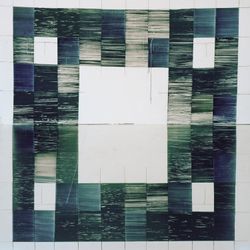
39. Sophia Chia: Character Space
07:05||Season 1, Ep. 39In 1987, Sophia Chai immigrated to New York City from South Korea as a teenager without knowing English. Looking back, she has described that experience as feeling untethered to any internal compass that she could use to navigate her place in a new country with a new language. She visually explains these experiences to us by reinterpreting the Korean language’s characters in photographs that enable us to see the contradictions of visual and verbal communication.Chai uses optics (focal length, perspective, perception, and magnification) to pin down the marks, rubbings, and paintings on her studio walls. The overall effect is a collage of ideas, with an efficient yet complicated economy of picture making with intentional gaps. These gaps can describe the moment right before the sound of a word comes out of the interior space of the mouth.sophiachai.com—Special thanks to Daylight Blue Media daylightblue.comLight Work lightwork.org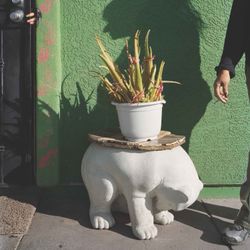
38. Eduardo L Rivera: The Sun Echoed Like A Song
05:02||Season 1, Ep. 38The Sun Echoed Like A Song is an exhibition of photographs made in Eduardo L Rivera’s childhood hometown near the Arizona/Mexico border. Taking inspiration from light and heat, he has been exploring the personal histories of family, community, and environment throughout the last decade.eduardolrivera.com—Special thanks to Daylight Blue Media daylightblue.comLight Work lightwork.org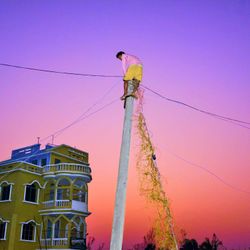
37. Arko Datto: Shunyo Raja (Kings of a Bereft Land)
06:26||Season 1, Ep. 37In Shunyo Raja (Kings of a Bereft Land), Arko Datto’s epic three-part series chronicles the lives of those living in the world’s largest delta, variously known as the Ganga-Brahmaputra-Meghna Delta. Climate change has rapidly put this immense region and its inhabitants in danger. Even as the artist summarizes the complexity and scale of the challenges confronting both, he knows his time with this landscape is fleeting.arkodatto.com—Special thanks to Daylight Blue Mediadaylightblue.comLight Worklightwork.org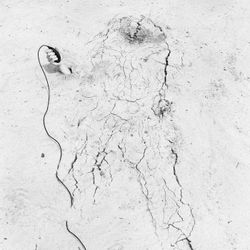
36. Jenny Calivas: Surface Thing
08:18||Season 1, Ep. 36Jenny Calivas' images breathe in photography’s liminal space between intuition and what words can only sometimes convey. Here is a photographer whose practice is consistently curious and rigorous. Her images can unexpectedly taunt us, at once generous and withholding, still and active. In so doing, Calivas wrestles and succeeds with a multitude of ideas—from the spiritual to the feminist to the ecological—and elicits moods that range from the humorous to the existential.jennifercalivas.com—Intro/Outro Music: Vela Vela by Blue Dot SessionsSpecial thanks to Daylight Blue Mediadaylightblue.comLight Worklightwork.org