Share
Financial Judgement
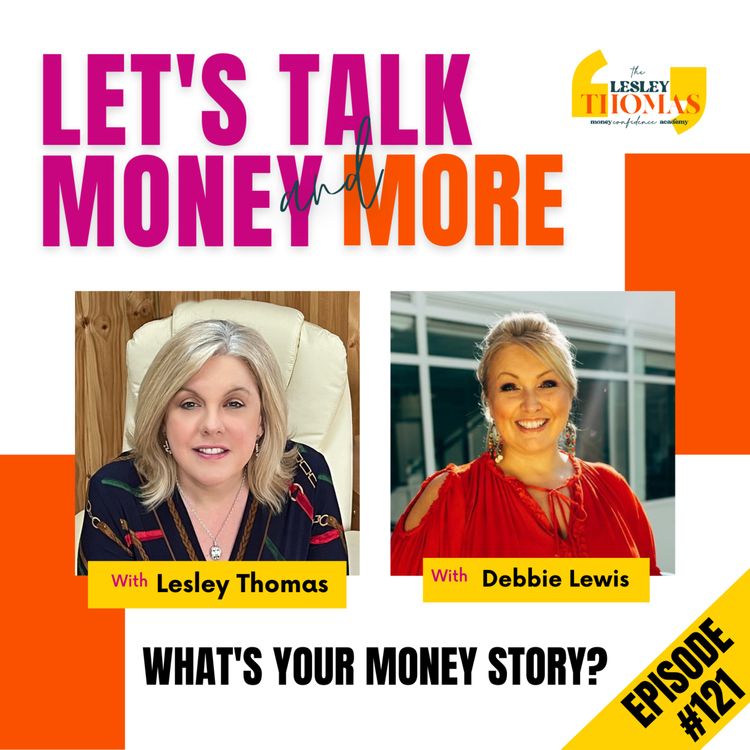
#121 Debbie Lewis – What’s Your Money Story?
In the latest episode of Let's Talk Money and More Podcast, I am joined by Debbie Lewis. Debbie is the Regional EcoSystem Manager for NatWest’s Enterprise team covering the East Midlands and East of England. Prior to this Debbie supported entrepreneurs with 121 coaching and programme delivery on the NatWest’s Accelerator– a 6 month intensive business programme to help scale-up stage (sector agnostic) business owners maximise their potential and overcome challenges. An entrepreneur herself, Debbie successfully scaled and exited a chain of Hair and Beauty Salons and is still involved in Salon Industry support organisations.
Join Debbie and I, as we unravel Debbie's inspiring money story and gain valuable perspectives on entrepreneurship, female empowerment, and meaningful contributions in business. This episode will spark your entrepreneurial spirit and leave you eager to be the change you want to see in the world of business. Enjoy tuning in!
Key Takeaways
- Debbie highlights the importance of understanding finances in business and the necessity of seeking help in managing them if needed. Financial literacy is a crucial aspect of entrepreneurship.
- Debbie emphasizes the impact of networking and learning from others at different stages of their journey. Surrounding yourself with diverse and supportive individuals can be a game-changer in business endeavors.
- Debbie's mission to support and empower women in business is truly inspiring. Her dedication to helping female founders find their voice and build their businesses is a testament to the power of collaboration and support.
Embark on a powerful journey of self-discovery, growth, and empowerment, designed to boost your money confidence and transform your relationship with money. To find out more visit https://www.themoneyconfidenceacademy.com/money-confidence-boost/
Connect with Debbie Lewis
LinkedIn www.linkedin.com/in/mrsdlewis/
Instagram www.instagram.com/mrs.d.lewis/
Facebook www.facebook.com/mrsdlewis
Connect with Lesley Thomas
Book a call with me www.calendly.com/lesley-themoneyconfidenceacademy/30mins
FREE Resources www.themoneyconfidenceacademy.com/resources/
My website www.themoneyconfidenceacademy.com/
Join my Facebook Group www.facebook.com/groups/letstalkmoneyandmore
Youtube channel www.youtube.com/@themoneyconfidenceacademy
Follow me on Instagram www.instagram.com/iamlesley_thomas/
Connect with me on LinkedIn www.linkedin.com/in/lesley-thomas
More episodes
View all episodes

214. #214 What to Look for in a Leadership Team You've Just Backed
21:52||Season 2, Ep. 214What should investors really be watching after putting money into a business?In this final episode of Series One, Lesley Thomas speaks directly to investors, private equity, growth capital, and board members about what happens to leadership decision-making once financial pressure changes the conditions around a management team. She explains why the team you assessed before the deal is not necessarily the team you have once the deal is done.Lesley explores the warning signs that can reveal hidden shifts in judgement, from decisions taking longer and items being carried between board meetings to increasing requests for analysis, compliance disguised as agreement, and bad news arriving later than it should. She also explains why investors can be both a source of the pressure and the people furthest from seeing its effects.You'll learn:Why the leadership team you assessed before a deal may behave differently once financial pressure increasesHow the conditions created by investment can quietly change leadership decision-makingThe three things management teams are unlikely to tell investors, even when they are affecting decisionsSeven warning signs investors should watch for during the first 18 monthsWhy repeated requests for more analysis can signal a change in judgement rather than a problem with the proposalsHow compliance can look like agreement when decisions are not genuinely supportedWhy bringing bad news late can cost investors the time they need to actHow hidden shifts in judgement can contribute to performance problems and unnecessary leadership changesWhy measuring leadership judgement in year one can be more valuable than replacing a management team in year threeHow portfolio-level measurement can give investors a reference point across multiple businessesResources🧮 Hidden Tax™ Calculatorhttps://lesleyathomas.kartra.com/page/hiddentaxcalculator-interest🔗 Connect with Lesley on LinkedInhttps://www.linkedin.com/in/lesley-thomas📩Emaillesley@themoneyconfidenceacademy.comIf you enjoyed this episode, be sure to follow Financial Judgement so you never miss an episode.New episodes are released weekly!
213. #213 Why this is a Money Problem, not a Training Problem
24:35||Season 2, Ep. 213What if the leadership problem you’re trying to solve is actually a money problem?In this bonus episode, Lesley Thomas explores why traditional leadership development may not address what financial pressure is doing to the decisions leaders make. While leadership programmes can improve communication, trust and collaboration, they may not touch the underlying relationship with money and risk that influences high-stakes decisions.Lesley explains how our early experiences with money can shape how we respond to risk, why two experienced leaders can look at exactly the same investment and reach completely different conclusions, and why these individual judgements can quietly shape the direction of an entire business.She also explores why leadership teams rarely examine their own relationship with money, and why measuring where each person's risk threshold sits can reveal gaps that traditional leadership assessments never see.You'll learn:Why financial pressure can appear as a leadership problemWhy traditional leadership programmes may not address decision-making under financial pressureHow early experiences with money can influence attitudes towards riskWhy two leaders can interpret the same financial information differentlyHow personal risk thresholds can shape major business decisionsWhy senior leaders are rarely asked about their relationship with moneyThe hidden commercial cost of unexamined financial judgementWhy measuring judgement can reveal gaps that leadership teams cannot see from the insideA question to help you recognise what you may be protecting against when making cautious decisionsResources🧮 Hidden Tax™ Calculatorhttps://lesleyathomas.kartra.com/page/hiddentaxcalculator-interest🔗 Connect with Lesley on LinkedInhttps://www.linkedin.com/in/lesley-thomas📩Emaillesley@themoneyconfidenceacademy.comIf you enjoyed this episode, be sure to follow Financial Judgement so you never miss an episode.New episodes are released weekly!
212. #212 The One Thing You've Never Measured in Your Business
23:41||Season 2, Ep. 212What if the one thing driving every number in your business is the one thing you have never measured?In this episode, Lesley Thomas explores why businesses measure revenue, margin, cash, pipeline and countless other outcomes, while rarely measuring the quality of the decisions that produce them. When decisions are delayed, avoided or quietly dropped, there is often no report showing what happened or what it cost.Lesley explains why leadership judgement has traditionally been treated as something too subjective to measure, and why that does not have to be the case. She explores how measuring risk thresholds, certainty levels and decision-making under financial pressure can turn something the business simply feels into something it can actually manage.As the first main series of Financial Judgement comes to a close, Lesley also shares a simple exercise to help you identify the gap between the number your leadership team says it will achieve and the number you privately believe is realistic.You'll learn:Why businesses measure the outcomes of decisions but rarely measure the decisions themselvesHow delayed, avoided and abandoned decisions can remain invisible in traditional business reportingWhy leadership judgement has often been dismissed as too subjective to measureHow risk thresholds and decision-making behaviour can be measured under financial pressureWhy putting a number on a problem makes it easier to compare, discuss and manageHow private differences in expectations can create hidden gaps across a leadership teamA simple exercise to identify the gap between your official business plan and what you privately believeWhy measuring leadership judgement can reveal costs that would otherwise remain hiddenResources🧮 Hidden Tax™ Calculatorhttps://lesleyathomas.kartra.com/page/hiddentaxcalculator-interest🔗 Connect with Lesley on LinkedInhttps://www.linkedin.com/in/lesley-thomas📩Emaillesley@themoneyconfidenceacademy.comIf you enjoyed this episode, be sure to follow Financial Judgement so you never miss an episode.New episodes are released weekly!
211. #211 Why the Finance Leader is the Most Exposed Person at the Table
26:37||Season 2, Ep. 211The finance leader is often seen as the objective voice around the leadership table, the person who brings the numbers and keeps emotion out of financial decisions. But what happens when that same person is carrying the earliest and most complete view of financial pressure, while having the least freedom to express uncertainty?In this episode, Lesley Thomas explores why finance leaders can become one of the most exposed people in a business, how their judgement can go largely unchallenged, and how financial pressure can quietly shape decisions before they ever reach a leadership meeting.She also looks at the hidden decisions that happen in corridor conversations, the risk of relying on one person's threshold for what is acceptable, and why testing financial judgement is just as important as checking the numbers.You'll learn:Why finance leaders often experience financial pressure before anyone elseThe hidden weight of being seen as the objective voiceWhy accurate numbers do not always mean sensible risk decisionsHow finance leaders can influence decisions that never reach the leadership tableThe risks of untested financial judgementHow financial pressure can quietly slow down, prevent, or eliminate good ideasPractical exercises for finance leaders and CEOs to identify hidden decision-making patternsResources🧮 Hidden Tax™ Calculatorhttps://lesleyathomas.kartra.com/page/hiddentaxcalculator-interest🔗 Connect with Lesley on LinkedInhttps://www.linkedin.com/in/lesley-thomas📩Emaillesley@themoneyconfidenceacademy.comIf you enjoyed this episode, be sure to follow Financial Judgement so you never miss an episode.New episodes are released weekly!
210. #210 The Number Nobody Round the Table Believes
27:21||Season 2, Ep. 210What happens when the leadership team quietly stops believing the plan, but nobody says so?In this episode, Lesley Thomas explores how financial pressure can create a dangerous gap between the number a business is working towards and what its leadership team privately believes is achievable.From investment decisions and recruitment to spending and strategic priorities, decisions continue to be made against a target that some leaders no longer trust. Lesley explains why challenging the plan can feel personally risky, how quiet disbelief shows up in leadership meetings, and why those small conditional phrases may reveal more than anyone realises.She also shares two practical exercises to help leadership teams identify whether they genuinely believe their plan, and where hidden gaps in judgement may be affecting the decisions they make.You'll learn:How leadership teams gradually stop believing the plan without openly acknowledging itWhy financial pressure makes challenging the plan more difficultHow conditional language can reveal private doubts about targetsThe cost of making decisions against a number leaders no longer believeWhy protecting an unrealistic plan can sacrifice future growthHow unspoken concerns often surface in conversations after the meetingTwo simple exercises to identify gaps between the plan and what leaders privately believeResources🧮 Hidden Tax™ Calculatorhttps://lesleyathomas.kartra.com/page/hiddentaxcalculator-interest🔗 Connect with Lesley on LinkedInhttps://www.linkedin.com/in/lesley-thomas📩Emaillesley@themoneyconfidenceacademy.comIf you enjoyed this episode, be sure to follow Financial Judgement so you never miss an episode.New episodes are released weekly!
209. #209 When Everyone Agrees, and Nobody Commits
23:11||Season 2, Ep. 209A decision gets discussed, everyone agrees, and it goes into the meeting notes as settled. But weeks later, nothing has happened. No one has taken ownership, the work hasn't started, and everyone has a perfectly reasonable explanation.So, was the decision ever really agreed?In this episode of Financial Judgement, Lesley Thomas explores the costly difference between agreeing with a decision and actually committing to it, particularly when a business is under financial pressure.When resources are stretched, priorities are competing, and leadership positions feel less certain, agreeing in a meeting can feel much easier than challenging a decision. But silence isn't always agreement, and a decision that sounds clear in the room can mean something entirely different to everyone around the table.Lesley explains the five different things people might mean when they agree, why vague decisions allow misunderstandings to go unnoticed, and how unspoken disagreement eventually resurfaces as operational problems, delivery failures, and lost goodwill.She also explores why false agreement can be even more expensive than a delayed decision, shares three warning signs to look out for, and offers a practical exercise to help you discover whether your leadership team really understands and owns the decisions it makes.You'll learn:Agreement vs Commitment: Understanding why saying yes in a meeting is not the same as putting your time, resources, and responsibility behind a decision.The Five Meanings of Agreement: Exploring what people might really mean when they agree, from genuine commitment to simply not wanting to object.The Problem with Vague Decisions: How broad, imprecise language allows everyone to agree while leaving the meeting with completely different interpretations.The Cost of Staying Silent: Why people avoid challenging decisions, particularly when financial pressure and uncertainty make disagreement feel risky. Hidden Disagreement: How unspoken objections resurface through resourcing, sequencing, quality, and delivery problems. When Meeting Notes Become a Problem: Why formally recording a decision can make it harder to revisit something that was never genuinely agreed in the first place.The True Cost of False Agreement: Why businesses pay twice, first for the decision not happening and then for everything built around the assumption that it would.Three Warning Signs: Recognising repeated decisions, unexplained gaps between decisions and action, and delivery failures that are actually decision failures.Testing Your Team's Understanding: A practical 30-minute exercise to discover whether three members of your leadership team share the same understanding of a recent decision.📝 The Practical ExerciseThink of a significant decision your leadership team made in the last few months. Ask three people who were in that meeting, separately:What did we agree?What did you take away as your part in it?Don't prompt them or correct their answers. Simply compare what they understood. The differences, if there are any, could reveal more than you expect.Resources🧮 Hidden Tax™ Calculatorhttps://lesleyathomas.kartra.com/page/hiddentaxcalculator-interest🔗 Connect with Lesley on LinkedInhttps://www.linkedin.com/in/lesley-thomas📩Emaillesley@themoneyconfidenceacademy.comIf you enjoyed this episode, be sure to follow Financial Judgement so you never miss an episode.New episodes are released weekly!
208. #208 The Decision that Takes Six Months Instead of Six Weeks
20:17||Season 2, Ep. 208Why can a straightforward business decision take six months when everyone involved agrees it should happen?In this episode of Financial Judgement, Lesley Thomas walks through a real-world example of a leadership team that took six months to approve an opportunity that could reasonably have been decided in six weeks. Month by month, she shows how every delay had a perfectly valid reason, yet the decision gradually shifted from an active opportunity to an item that simply remained on the agenda.Lesley explores what happens when financial pressure makes leaders slightly more likely to ask one more reasonable question and slightly less likely to push for a conclusion. The result is not disagreement or obstruction. It is a series of small delays that quietly change the outcome and ultimately cost the business more.You'll learn:How a decision can move from an active opportunity to a repeatedly delayed agenda item.Why every individual delay can be reasonable while the overall pattern becomes costly.How financial pressure makes leaders more cautious without making them openly opposed.Why better information does not always lead to a different decision.How delays can mean businesses eventually get a worse version of the decision they originally wanted to make.Why no one person in the leadership team sees the complete pattern.A simple question to ask when someone requests more analysis before making a decision.How to identify the longest-running decision on your own leadership team's agenda.📝 The Practical ExerciseTake the decision that has appeared on your leadership team's agenda for the longest.Go back through the meetings where it appeared and write down, in one line, why it wasn't decided each time. Then look at all those reasons together.Every reason will probably be real. The important thing is to look at the pattern rather than each reason individually.If you want to estimate what that delayed decision has already cost your business, use the Hidden Tax Calculator below.Resources🧮 Hidden Tax™ Calculatorhttps://lesleyathomas.kartra.com/page/hiddentaxcalculator-interest🔗 Connect with Lesley on LinkedInhttps://www.linkedin.com/in/lesley-thomas📩Emaillesley@themoneyconfidenceacademy.comIf you enjoyed this episode, be sure to follow Financial Judgement so you never miss an episode.New episodes are released weekly!
205. #205 The Hidden Tax™ of Delayed Decisions
19:54||Season 2, Ep. 205What happens when capable leaders keep delaying important decisions, not because they're avoiding them, but because every reason to wait seems perfectly reasonable?In the first episode of Financial Judgement, Lesley Thomas introduces The Hidden Tax, the unseen cost of delayed decision-making under financial pressure. Drawing on research into stress, decision-making, and leadership behaviour, she explains why even experienced leadership teams can unknowingly fall into patterns that slow progress and quietly impact business performance.Lesley explores how financial pressure changes the way leaders perceive risk, why delays often feel like the safest option, and how these seemingly sensible decisions accumulate into a significant hidden cost over time.You'll learn:Why strong leadership teams are often the most vulnerable to decision delays.The overlooked third factor that influences decision quality beyond capability and information.How financial pressure changes our perception of risk.Why "reasonable" delays can hide a much bigger organizational pattern.The four most common decision-making patterns that quietly drain business performance.What "The Hidden Tax" is and why it rarely appears in financial reports.A simple exercise to uncover delayed decisions within your own leadership team.Resources🧮 Hidden Tax™ Calculatorhttps://lesleyathomas.kartra.com/page/hiddentaxcalculator-interest🔗 Connect with Lesley on LinkedInhttps://www.linkedin.com/in/lesley-thomas📩Emaillesley@themoneyconfidenceacademy.comIf you enjoyed this episode, be sure to follow Financial Judgement so you never miss an episode. New episodes are released weekly!
206. #206 What Financial Pressure Does to Your Body
24:21||Season 2, Ep. 206Financial pressure doesn't just affect the decisions leaders make. It also changes the physical state of the people making those decisions.In this episode of Financial Judgement, Lesley Thomas explores the biological impact of sustained financial pressure and why leaders are often the last to recognize what's happening to themselves. From disrupted sleep and elevated cortisol to shifting perceptions of risk, she explains how the body's stress response quietly influences judgement, decision-making, and leadership performance.Lesley also examines why this isn't simply an individual wellbeing issue. When an entire leadership team experiences the same pressure, their collective judgement can shift in the same direction without anyone realizing it. Understanding this hidden pattern is the first step toward making better decisions under pressure.You'll learn:How financial pressure affects the body's stress response.Why disrupted sleep changes the way leaders assess risk.The difference between acute stress and sustained financial pressure.Why leaders often mistake chronic stress for simply being "busy."How the time of day can influence strategic decision-making.Why awareness alone is not enough to improve leadership judgement.A practical observation exercise to help identify patterns in your own decision-making.Resources🧮 Hidden Tax™ Calculator https://lesleyathomas.kartra.com/page/hiddentaxcalculator-interest🔗 Connect with Lesley on LinkedInhttps://www.linkedin.com/in/lesley-thomas📩Emaillesley@themoneyconfidenceacademy.comIf you enjoyed this episode, be sure to follow Financial Judgement, so you never miss an episode. New episodes are released weekly!