Share
Keep the Flow
77 Episodes In... I Thought I'd Be Further Along
I'm 77 episodes in, most of them barely get seen, and I'm not sure anymore whether that's enough of a reason to keep going... so I'm just going to tell you the truth about it.
I've been doing this podcast for a couple of years now, and lately I've been wrestling with a question I didn't expect to be asking out loud: is the response I'm getting enough to keep going?
This many episodes in, most don't get much traction, and I thought I'd be farther along by now.
So this one's different. No real lesson, no framework – just me thinking through what it means to keep making something when the numbers stay small, why I'd probably keep writing even if nobody watched, and the difference between music (which feels like it's in my DNA) and this (which I actually have to choose).
I made an episode last year about doing the work for its own sake and not obsessing over whether it matters.
Turns out I now need to take my own advice.
If you've got thoughts on what I could be doing better, I'd really like to hear them.
🎧Check out my music: https://scottmclemore.bandcamp.com/
🤟Join the Patreon community: https://patreon.com/scottmclemore
📭 The free newsletter goes deeper into ideas like these: https://ktfpod.com
More episodes
View all episodes
84. The Fear of Not Knowing What's Next (Even Aaron Sorkin Has It)
06:17||Season 3, Ep. 84Last week I listened to Aaron Sorkin's interview with The New York Times ahead of The Social Reckoning, and two things stopped me. He acts out his dialogue so physically that he once broke his nose doing it. And he lives in a constant state of panic that he'll never find another good idea. My first reaction was, come on – you're Aaron Sorkin. My second was that I know exactly that feeling. Hans Zimmer describes something similar: he accepts a film, hangs up the phone, and immediately starts looking for a way out. This episode is also my explanation for going quiet for over a month. It wasn't a lack of ideas – I had plenty. I just couldn't commit to one. What I've landed on is that creativity is mostly choosing, and you only reach the next fork in the road if you're already moving.Aaron Sorkin NYTimes interview: https://youtu.be/M6dFK4AcllA?si=3Vl45NnWj8rjBZTS🎧Check out my music: https://scottmclemore.bandcamp.com/🤟Join the Patreon community: https://patreon.com/scottmclemore📭 The free newsletter goes deeper into ideas like these: https://ktfpod.com
83. The Hacks Finale Is Really About Creative People
06:55||Season 3, Ep. 83I watched that finale and cried, which I wasn't expecting, and then immediately started trying to work out why. What I settled on is that the thing that turns Deborah Vance around isn't a person or a speech. It's an idea. She gets a joke, opens her little book, writes it down – and then has to sit with what that means about where she's going. I think that's the whole argument for a creative life. In here I get into Bill Frisell on always reaching, a Hannah Montana song my daughters wore out on road trips, and why playing big rooms matters less to me than a melody showing up at the piano back home.🎧Check out my music: https://scottmclemore.bandcamp.com/🤟Join the Patreon community: https://patreon.com/scottmclemore📭 The free newsletter goes deeper into ideas like these: https://ktfpod.com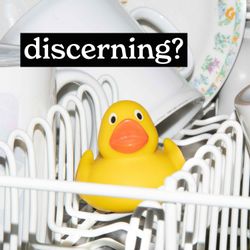
82. What if you’re better at judging than enjoying?
08:59||Season 3, Ep. 82I bought a camera a few weeks ago, and it changed how I experience a day. I started noticing sounds, smells, the air, my stepfather's ancient dishwasher in Virginia. But the second I actually noticed that dishwasher, my brain immediately asked which one was better – his or ours. That reflex is what this episode is about. Somewhere along the way we started rating everything, and when that filter runs unchecked inside your own work it stops being taste and starts being the thing that keeps you from enjoying anything, or wanting to make anything. I have some suggestions.🎧Check out my music: https://scottmclemore.bandcamp.com/🤟Join the Patreon community: https://patreon.com/scottmclemore📭 The free newsletter goes deeper into ideas like these: https://ktfpod.com
81. Is it better to think you're talented... or not?
10:24||Season 3, Ep. 81When I got my first set of drums, my parents thought I was a natural. I let them think it – it felt good.What they didn't see was the years I spent obsessed with drums before I ever sat down at a kit.This episode is about talent: why we're so drawn to the idea of it, why we quietly trust "naturals" over people who obviously worked (there's a Harvard study on exactly this that's hard to shake), and how believing my own talent cost me almost ten years of coasting.I get into Carol Dweck's fixed vs. growth mindset, the 10,000-hours idea from Anders Ericsson and Malcolm Gladwell, and the factor almost nobody names: taste.Talent, luck, and environment were handed to you. The work – and your taste – are the parts that are actually yours.🎧Check out my music: https://scottmclemore.bandcamp.com/🤟Join the Patreon community: https://patreon.com/scottmclemore📭 The free newsletter goes deeper into ideas like these: https://ktfpod.com
80. The AI Coming for Your Creative Job Can Wait
06:32||Season 3, Ep. 80I've been carrying around a tiny bit of panic lately. This sense that I need to get everything done before the AI robots turn up and make it all pointless. I don't think I'm alone in that. In this episode I talk about what happened when I heard the tortoise and the hare brought up on Rich Roll's podcast, and then spent an hour stuck in a line at the recycling center in Reykjavík with nothing to do but sit there. I get into why I tell my drum students to slow down, why boredom is doing more for your ideas than you think, and why I'm not convinced that sprinting after this week's new tool is the move. The threat is real. Panicking about it still isn't useful.🎧Check out my music: https://scottmclemore.bandcamp.com/🤟Join the Patreon community: https://patreon.com/scottmclemore📭 The free newsletter goes deeper into ideas like these: https://ktfpod.com
79. Every Creative Is Panicking About AI. He Isn't.
08:18||Season 3, Ep. 79I keep hearing the same fear on repeat: AI is going to hollow out creative work. I feel it too. I've got kids about to start college, and it keeps me up at night. Then I watched a talk by David Lee, the chief creative officer at Squarespace, who argues almost the opposite: that creativity is the only job left once the machines take the rest. Around the same time I heard the writer Dave Eggers on the Wild Card podcast say something I can't shake – that you're one of one, and handing your voice to a machine is a crime against yourself. This episode is me thinking out loud about where those two ideas meet, why I stopped leaning on AI to develop my scripts, and where I think it can still genuinely help.🎧Check out my music: https://scottmclemore.bandcamp.com/🤟Join the Patreon community: https://patreon.com/scottmclemore📭 The free newsletter goes deeper into ideas like these: https://ktfpod.com
78. Toured Iceland With My Band. Lessons Learned.
06:00||Season 3, Ep. 78I just got back from my first tour in Iceland with my own band – which, after more than 20 years of living here, was long overdue. This episode is me sitting with what the tour actually taught me. Some of it was small and practical: I left all my CDs and vinyl on a stage in Blönduós and had to drive four hours round trip to get them back. Some of it was bigger – how much a group runs on trust, why the hours you spend not playing matter as much as the ones you do, and why I don't want to stop taking small creative risks, like the night I muffled my ride cymbal with a scrap of cloth and it changed the whole band. If you've been putting something off because it felt overdue, this one's for you.🎧Check out my music: https://scottmclemore.bandcamp.com/🤟Join the Patreon community: https://patreon.com/scottmclemore📭 The free newsletter goes deeper into ideas like these: https://ktfpod.com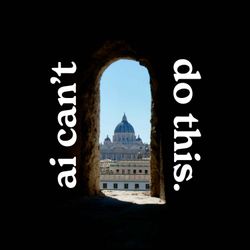
76. What the Pope Gets about AI and Creativity
06:54||Season 3, Ep. 76The Pope wrote an encyclical about AI — and the part that hit me hardest had nothing to do with technology.📭 The free newsletter goes deeper into ideas like these: https://ktfpod.com I'm not a religious person, but when Pope Leo released his encyclical on artificial intelligence, something in it stopped me cold. He wrote about "authentic encounters" – the bonds we form with each other through listening, presence, and even wasting time together. He wasn't talking about creativity, but I couldn't stop thinking about how much he was. What we do as creative people is facilitate those encounters. We make things that connect people to each other and to themselves. That's not something an algorithm can imitate, and the Pope actually says as much – AI can mimic certain functions of intelligence, but a person's future depends on freedom and relationship, not optimization. I'm not dismissing the real dangers of the technology or the legitimate fears many of us have. But this episode is about why I think those fears, while understandable, are missing the point of what creativity actually is.🎧Check out my music: https://scottmclemore.bandcamp.com/🤟Join the Patreon community: https://patreon.com/scottmclemore📭 The free newsletter goes deeper into ideas like these: https://ktfpod.com