Share
Inspired Evolution with Amrit Sandhu 🙏🏻
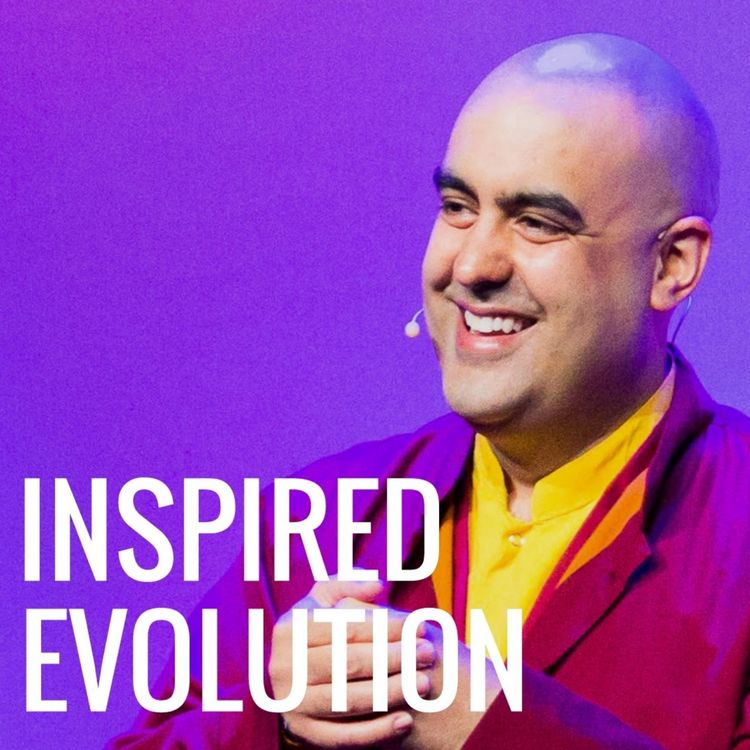
IE036 Gelong Thubten: Living Mindfully: Mastering the Art of Inner Peace
Live mindfully from the heart. In this episode of Inspired Evolution, we are inspired by Gelong Thubten. Thubten became a Buddhist monk 25 years ago at Kagyu Samye Ling in Scotland, Europe’s oldest and largest Buddhist monastery. He has spent over six years in intensive meditation retreats, the longest of which was 4 years in seclusion on a Scottish island. Thubten specializes in teaching mindfulness meditation internationally, in businesses, hospitals, schools, universities, prisons, and addiction counseling centers. He works with major clients such as Google, LinkedIn, Lloyds Bank, HSBC, Deutsche Bank, Siemens, Accenture, the NHS, Clifford Chance and Linklaters, and lectures at Facebook.
He does not get paid, all funds go to charity, for building meditation training centers to benefit many people. Thubten was the meditation consultant on the set of Marvel’s latest movie, Dr. Strange, where he trained Benedict Cumberbatch and Tilda Swinton in meditation techniques while they were filming. He has lectured on Buddhism and meditation at the universities of Oxford, Helsinki, and Cardiff, as well as for Mindvalley. He teaches in several schools and is often interviewed by the world’s media. He designs and delivers mindfulness programmes for 4th-year medical students at the National University of Ireland, and he has lectured at Parliament on the Channel Islands. He has co-authored a book on mindfulness with Ruby Wax and a neuroscientist: How To Be Human. He runs meditation centers throughout the U.K.
Gelong Thubten is a celebrated global expert on Mindfulness & Tibetan Meditation. In the episode of the Inspired Evolution, we explore Thubten’s journey to meditation. This is an especially surprising story as growing up he wasn’t really interested in meditation. In fact, he recounts that in his late teens he was actually quite wild, living the party lifestyle as an actor living in New-York. Burning the candle at both ends as he put it.
Unfortunately, his stressful lifestyle eventuated to a situation where he ended up quite ill for 6 months. It was during this time of illness that he started reading about meditation and the power of the mind. A friend of his recommended the Kagyu Samye Ling monastery in Scotland to deepen his meditation exploration for a short 12-month experience.
He was at Kagyu Samye Ling only 3 days before he become ordained as a monk. The commitment was initially for a full 12-months. However, as it would turn out, once he was there for 9 months he decided to commit to staying for longer. In his second year, he did his first 9-month isolated retreat. It was here that he decided to commit to monk-hood. A powerful decision yet an obvious one: to best serve himself and humanity. His decision being powered by the desire to live outside of his ego, which he identified as being unhealthy. Driven by compassion, he ended up taking life-vows committing to monk-hood and this way of life, for life. He joyfully remarks that his friends at this point though he’d lost the plot and that he was lucky that his family supported his decision. He’s now been a monk for over 25 years since he was 21 years old, on a life-long journey now towards perpetual growth and learning.
In this conversation, we talk about keeping mindfulness “now”, updated and modern. Specifically, how Thubten keeps mindfulness relevant for the 21st century and today’s society. How his unique approach blends ancient wisdom with modern challenges. Both Thubten and I are thrilled that neuroscience now complements ancient wisdom.
Thubten describes his passions to help people, not from a place of wanting to spread Buddhist philosophy, but to simply help people meditate and transform their minds. He started by supporting local prisons 25 years ago with mindfulness and meditation programs. Introducing mindfulness in a very pragmatic and needed situation.
He reflects on his own experience, traveling the world delivering talks, being on his phone and computer like the rest of society and how he’s living the fast-paced life with the rest of society so that his message remains relevant but also demonstrates how mindfulness can keep you calm, focused, stress-free and happy.
For Thubten, the exploration of human consciousness should remain relatable. We discuss the Mindy-Body connection and the intention and power behind isolation retreats: clearing outdated physical and mental patterns. No stranger to isolation, his longest isolation retreat experience lasted 4-years. Thubten describes how retreats are often misunderstood as leisurely. However, intensive work on the mind is actually undertaken to evolve your thoughts and emotions – the mission being to ultimately being less controlled by your thoughts and emotions. He reflects that this mission is a deep detox, one where he finds himself digesting his history and memories. An experience that he recounts is like brain surgery and ultimately both healing and transformative.
This conversation then deeply explores the theme and challenges of forgiveness and letting go. Thubten remarks that with the stresses of current society forgive is a hot topic and he shares his consultative approaches to forgiveness. Wisely, in this conversation, he eloquently describes how the process of forgiving others is the same as forgiving ourselves. He also remarks that on an international level as we’re increasingly more connected and there’s always dreadful news shared via mainstream media, it can be challenging to let go of transgressions and embrace forgiveness. He reminds us that it is consistently in our best interests to forgive in order to let go of the burden of toxic-rage and anger.
His first most important tip for Forgiveness is to stay Present. Not to deny your past or ignore it, your more present and connected to the present than the past. He poetically describes that all the cells in your body have transformed since 20 years ago, but somehow our memories continue to thrive and are connected to our consciousness which then calls us into the remembering the past – this mental phenomenon of attachment to a continuum that we are lead to believe is our Self. All our stories of Self are reinforced by our memories of the past. However, he asks us to imagine what its like to arrive fresh in every moment without the stories and the baggage of the past. Hence Gelong’s invitation to stay present as a powerful tool towards letting go and enabling forgiveness.
His second important tip for Forgiveness is to approach situations with greater Mindfulness (a more holistic/all-encompassing perspective). In this way, we can work on ‘forgiveness’ by actually thinking of the people or instances with more information and better understand, logically, the situation at hand (allowing us to subsequently free ourselves from being the victim of the situation).
A mindful perspective arriving when we surrender our ego and realize such global thoughts patterns such as “hurt people hurt people”. Implying that we are only inflicted upon by people because of their own sadness, anger, and ego. People act out of their own inner impulses and negativities, rarely, if-ever is they out to get another person, people merely end up in each other's way perhaps more due to circumstance than anything else.
Gelong invites us to reflect on when we’ve hurt people in our life and how we’ve never intended to actually hurt anyone. But only really end up hurting people as a reaction to our own own stresses, lack of mindfulness, anger, jealousy, etc. In fact, after we’ve acted out in this way, we ourselves feel that we wish we would have behaved better and that’s often the same case for our perpetrators… Extending our perspective and inviting greater mindfulness can, therefore, support us with forgiveness and letting go.
Whilst he’s definitely not advocating becoming a human door-mat, Thubten’s invitation is to accept the human condition. Softening the edges of the blame.
This conversation is then directed towards Compassion. Compassion is the center of mindfulness training. Mindfulness is not just about stress reduction and increasing focus and performance, although these are very desirable and natural side-effects. Compassion is about becoming more kind and loving to one’s Self and others.
Thubten invites us to reflect on “what is the definition of compassion?”
Especially because often compassion is confused with empathy. We may feel what other people are feeling and end up drowning in that same feeling too. However, this empathetic approach, Thubten illuminates is not the path of compassion.
Compassion is the meditation and work of freeing others from their suffering. Building that network in your brain and taking intentional action. Empathy, on the other hand, is feeling bad when someone feeling bad.
Compassion is like learning to swim, he remarks, so when someone is drowning – you may be able to support them – like a lifeguard. Empathy is synonymous with drowning with the other person – Thubten questions the good in this.
Fascinating research into the neuroscience of empathy vs. compassion has been conducted by Tanya Singer. Who explores the human brain when experiencing empathy and compassion.
Being empathetic can be very draining. Empathetic fatigue and burnout are common to those in the health sciences and healing professions. Empathy can motivate to a limited extent, however, the stress over the time of continually having to empathize fatigues and leaves people drained.
Hence, Thubten advocates compassion-based meditation practice. He calls it Unconditional Compassion with No Limits. He inspires us to reduce self-interest and open up the heart and developing the sense of Expanded Compassion that becomes more about ‘Who We Are’ rather than simply a process of feeling what comes and goes.
This process admittedly involves quite a deep process of dissolving one’s identity of and attachment to self. In fact, it is a radical process, rooted in ancient wisdom, which Thubten shares in this conversation.
Thubten admits that compassion challenges the ego and neurologically challenges our sense of self-preservation. He remarks that our minds falsely believe that if we're too kind to others and don’t uphold our boundaries – we fear that may lose some part of our self.
The fear is that if we’re totally in service we will dissolve. Cease to exist. “What about me?” asks the ego. This is a very understandable thing. But a powerful question that Thubten likes to ask is “When I come from a place of ego, does anyone really benefit?”
He remarks that the selfish side of a human is rather insatiable and that the ego is very rarely happy. Neither is the Self often happy and others are also not happy because of this insatiably demanding entity.
Thubten gives us the metaphor that being enslaved to your ego is like being enslaved to a boss that’s never happy with your work. It’s never good enough. Your ego want’s more. And it is commonplace that it is this entity that we describe as the Self.
In Buddhist philosophy the Self doesn’t even exist, its simply an illusion, Thubten joyfully remarks that Buddhist believe that we’re all interlinked and we’re all dependant on each other for existence. So let’s all help each other. Training in compassion benefits one’s self and others. It’s a win-win. And it feels the same as when we give someone a gift – so good.
This conversation then discusses the power of “Service”. Service, Thubten remarks is about living from a place of Love. He understands the fear that people have of living from a place of sacrifice, however, he remarks that you end up living a life that feels really good as your life benefits others and yourself. It’s a win-win situation.
Thubten invites us to continually live from the heart, with Love and Compassion. Modern approaches to mindfulness (and focussing on the breath) run the risk of not going deep enough (beyond scratching the surface with stress-management and achieving clarity/performance benefits). Mindfulness can really lead to greater happiness and an increased sense of purpose if you embrace it.
A simple way to implement greater compassion and love into your existing practice is simply by setting the intention to dedicate your practice (whether its meditation, music, yoga or anything similar) “to benefit yourself and others”. You can start and end your activities with this intention. So that you are directing the practice towards compassion training and cultivating greater selflessness.
Lastly, we explore what continues to inspire Thubten in carrying the potent wisdom of meditation and mindfulness across the globe. Thubten shares that he’s fuelled by the sense of a journey – of spiritual growth. Long-term spiritual development. He also has a deep sense of commitment to his vows. And is committed to others. A monk in his opinion is someone who as let go of self-interest in the service of others. He finds this way of life, serving others incredibly enriching.
He is inspired to introduce mindfulness to situations where you wouldn’t normally experience it, such as the work of the Inspired Evolution delivering Mindfulness to the Construction Industry. Thubten enjoys spreading mindfulness to places that spiritual practice is less expected such as prisons, movie sets, corporate environments, etc. Ultimately aiming, like the Inspired Evolution, to bring mindfulness to every situation. The feedback from those that have their lives enriched by mindfulness is incredibly rewarding.
The collective is awakening. Mindfulness practice is now mainstream, accepted in governments, education institutions and beyond. Thubten has been wearing his monk’s robes for over 25 years. He reflects on how many years ago he was seen somewhat as a freak, while now-a-days the attitude has completely changed. People now walk right up to him asking for help with meditation.
He believes that as the stress around the world is becoming increasingly more pronounced and diverse, the solution – meditation and mindfulness is also becoming ever more apparent, accessible and widespread.
This conversation is about peace and contentment. Gelong Thubten reminds us that everything is a choice. Especially how to feel. We can choose how we want to feel. We can choose differently about how to feel about our reality. Mindfulness activates the possibility to respond differently to our situations and circumstances. To have the ability to choose a response over a reaction is an incredibly profound aspect of meditation in my humble opinion.
We discuss the importance of mindfulness and meditation and all the ways that Gelong Thubten is actively promoting this work. Introducing his new Samten App (Meditation and Mindfulness Journey in an app). Resulting in the widespread promotion of meditation and mindfulness across the planet.
This conversation is one for the heart. It calls on us to live our most purposeful life, by being compassionate and living beyond our ideas of Self. Thubten’s story invites us to transform and cultivate a positive relationship with ourselves. In this conversation, we explore Gelong Thubten’s wisdom, habits, hacks, philosophies, and tools that have formed the threads of his success, happiness, health, and wealth. This is a story that reminds us that we are all here to live peacefully and content. Thubten inspires a life of healing, transformation, and growth. Life is a gift and it is up to us to honour it as best we can with our positive virtues greater than our self.
More episodes
View all episodes

610. Veda Austin Explains How Salt Shapeshifts with Water and Stores Information in Crystal Form
21:36||Ep. 610Watch the full episode with Veda Austin here: https://youtu.be/-PK5Ip4Rm5c
610. Veda Austin Explains How Water Acts as a Portal and the Spiral Ice Tube That Formed Between Mirrors
10:18||Ep. 610Watch the full episode with Veda Austin here: https://youtu.be/-PK5Ip4Rm5c
610. #610 Water Is Alive: Veda Austin on Hydroglyphs, Light & Telepathy
01:35:21||Ep. 610Veda Austin, crystallographer and pioneer of water consciousness research, reveals how ice and liquid crystal water serve as a living bridge between physical science, human intention, and ancient wisdom. Moving beyond standard H₂O definitions, she explains how water actively receives light, reads human potential, and projects geometric "hydroglyphs" that reflect the subtle mechanics of consciousness.From analyzing repeatable freeze patterns to collaborating with non-verbal autists who identify thought and light as primary water phases, Veda explores the multidimensional intelligence contained within frozen liquid crystals. She cautions against viewing water as an inert, unfeeling machine while demonstrating how ancient Egyptian temple floors and cosmic symbols mirror the exact geometric coding generated by modern ice experiments.Tracing her journey from intuitive crystallographer to academic researcher, Veda contrasts static laboratory views of water with dynamic, light-emitting fourth-phase plasma. She examines the sacred matrimony between salt and water, illustrating how trace minerals deliver the electrical charge required to store memory, build three-dimensional ice scaffolding, and preserve structural coherence against environmental stress.Is water merely an inert compound essential for basic biological survival, or is it a multidimensional quantum mirror explicitly designed to weave cosmic intelligence into the fabric of human existence?___🪐 BOOK YOUR PERSONAL 1-1 ASTROLOGY READINGThese collective shifts affect each of us differently.Explore how this moment is appearing in your chart, what season of life you are moving through, and how to work with your current astrology consciously and practically.Debra Silverman personally recommends booking a reading with Amrit.Still at introductory pricing...👉 BOOK YOUR 1–1 ASTROLOGY READING HERE:https://amritsandhu.com/reading___🌀 JOIN THE INSPIRED EVOLUTION CIRCLE The Inspired Evolution Circle is our private community for conscious souls who want to ground spiritual wisdom into everyday life, connect deeply/Inside the Circle:• Weekly live gatherings and guided practices• Intimate Q&As with guests like Kelly• Sharing circles and conscious community• Early invitations to retreats and live experiences• A sacred space to connect, evolve and belong👉 JOIN THE CIRCLE NOW:https://inspiredevolution.com/circle___🎬 EPISODE CHAPTERS:00:00:00 Water Hydroglyphs Reveal Ancient Cosmic Language00:01:56 Non-Verbal Autists Decipher Hidden Water Glyphs00:07:42 Scientific Studies Confirm Water Repeatability00:13:11 Consciousness Doorways Exist Within Ice Coding00:18:20 Photonic Light Allows Water to Read Future00:26:02 Liquid Crystal Ice Emits Light Information00:30:50 Mirror Portal Experiments Create Real Ice Tubes00:39:33 Neutral Observers Prevent Projection in Water00:43:59 Egyptian Temples Reveal Ancient Water Wisdom00:48:09 Astrological Cycles Shape Rainwater Ice Crystals00:57:26 Salt Infuses Water With Electrical Energy01:07:11 Quartz Crystals Alter Salt Evaporation Shapes01:11:31 Sole Solutions Stabilize Water Memory Structure01:21:43 Blue Solar Water Drops High Blood Pressure01:26:28 Multidimensional Water Crosses Time and Space01:31:58 Morning Dew Contains Healing Levity Properties___👀 FIND VEDA ONLINE✦ Website: https://www.vedaaustin.com✦ Instagram: https://www.instagram.com/vedaaustin_water\Join Veda Austin and an extraordinary lineup of voices as they reveal the mysteries of water and consciousness like never before: https://www.vedaaustin.com/service-page/water-telepathy-the-ancient-mysteries?referral=service_list_widgetGet a copy of Veda Austin's book, "The Living Language of Water" here: https://www.vedaaustin.com/vedas-book
609. Rick Strassman on DMT Realm, Genesis as Another World, and the Merkabah Vision
11:09||Ep. 609Rick Strassman on Pineal Gland, DMT, Endogenous vs Exogenous Psychedelics, and Prophecy
609. Rick Strassman on Pineal Gland, DMT, Endogenous vs Exogenous Psychedelics, and Prophecy
09:30||Ep. 609Rick Strassman on Pineal Gland, DMT, Endogenous vs Exogenous Psychedelics, and Prophecy
609. #609 Dr. Rick Strassman: DMT, Endogenous Psychedelics, and the Code of Biblical Prophecy
01:43:20||Ep. 609**SEO Title:** Dr. Rick Strassman: DMT, Endogenous Psychedelics, and the Code of Biblical ProphecyDr. Rick Strassman, pioneer of clinical DMT research, reveals how naturally occurring DMT in the human brain bridges the gap between medical science, altered states, and divine revelation. Moving beyond exogenous substances, he explains how the mammalian mind independently holds the chemical keys to unlock realms far beyond everyday reality.From evaluating early safety data to detailing how endogenous DMT mediates near-death experiences and mystical visions, Rick explores the biological mechanics of spiritual contact. He cautions against modern psychedelic commercialization while demonstrating how the biblical world of Genesis may have operated as a parallel, DMT-like dimension that bled into human history.Tracing his evolution from Zen Buddhism to ancient Hebrew scholarship, Rick contrasts the formless state of classical enlightenment with the specific, verbal downloads of biblical prophecy. He examines the pineal gland, fetal development, and divine *shefa*, illustrating how natural neurochemistry enables higher communication without dogmatic rituals.Is endogenous DMT merely a biological buffer for extreme physical stress, or is the human brain explicitly engineered to receive divine communication?___🪐 BOOK YOUR PERSONAL 1-1 ASTROLOGY READINGThese collective shifts affect each of us differently.Explore how this moment is appearing in your chart, what season of life you are moving through, and how to work with your current astrology consciously and practically.Debra Silverman personally recommends booking a reading with Amrit.Still at introductory pricing...👉 BOOK YOUR 1–1 ASTROLOGY READING HERE:https://amritsandhu.com/reading___🌀 JOIN THE INSPIRED EVOLUTION CIRCLE The Inspired Evolution Circle is our private community for conscious souls who want to ground spiritual wisdom into everyday life, connect deeply/Inside the Circle:• Weekly live gatherings and guided practices• Intimate Q&As with guests like Kelly• Sharing circles and conscious community• Early invitations to retreats and live experiences• A sacred space to connect, evolve and belong👉 JOIN THE CIRCLE NOW:https://inspiredevolution.com/circle___🎬 EPISODE CHAPTERS:00:00 Psychedelic Safety Studies Enabled Early DMT Research04:15 Endogenous DMT Explains Biblical Prophetic Visions08:05 Pineal Melatonin Research Led to Endogenous DMT13:50 Endogenous DMT Mediates Naturally Occurring NDEs16:24 DMT Trip With Terence McKenna Reshaped Career Goals22:02 Esalen Gatherings Shaped Early Psychedelic Science26:00 Psychedelic Hype Threatens Patient Safety Safeguards31:08 Psychedelic Glimpses Demand Sober Discipline to Integrate37:09 Zen Monastic Hierarchy Rejected Psychedelic Research46:41 Awakening Metaphors Bridge Zen Practice and Psychedelics51:53 Ancient Hebrew Translation Unlocks Deeper Scripture57:07 Ancient Hebrew Frames Divine Speech as World Creation01:01:11 Genesis Creation Unfolds Outside Objective Reality01:06:07 DMT Realm Parallel Explains Biblical World Bleeding01:12:52 Merkabah Chariot Vision Represents Peak Psychedelia01:17:43 Genesis Patriarchs Lived Prophetic Lives Without Laws01:21:05 Prophetic States Convey Verbal Cognitive Insight01:26:11 Divine Shefa Overflow Triggers Endogenous DMT01:30:25 Rabbinic End of Prophecy Was Political Decision01:36:57 Endogenous DMT Links Fetal Stress and Death Transitions___👀 FIND RICK ONLINE✦ Website: https://www.rickstrassman.com✦ Facebook: https://www.facebook.com/profile.php?id=100063469014248 ✦ X: https://x.com/rick_strassman ✦ Substack: https://rickstrassman.substack.com/ ✦ LinkedIn: https://www.linkedin.com/in/rick-strassman-md-a2aa88193/
608. Gauranga Das on Vedic Time Cycles and Govardhan Eco Village Spiritual Sustainability Model
12:46||Ep. 608Watch the full episode with Gauranga Das here: https://youtu.be/lofCjMAMUp0
608. Identity Crisis & Mental Health in Kali Yuga | Gauranga Das on Prayer as Immunity
07:12||Ep. 608Watch the full episode with Gauranga Das here: https://youtu.be/lofCjMAMUp0
608. #608 Identity Crisis & Mental Health in Kali Yuga | Gauranga Das on Prayer as Immunity
01:06:17||Ep. 608Gauranga Das, a monk and spiritual teacher, delivers a grounding yet urgent message: we are all swimming upstream against the relentless current of Kali Yuga, where identity, climate, and society are rapidly deteriorating. He diagnoses our core pain—we anchor ourselves in eight shifting identities (body, partner, children, house, vehicles, wealth, social acceptance, and power) but forget our ninth, unchanging identity as the eternal soul (atma). Using the vivid metaphor of a car (material life) versus a GPS (spiritual direction), he warns that society obsesses over a smooth ride while ignoring the ultimate destination. He explains that sanskar—the daily choices we make—are critical, as the prominent thought at death determines the soul's next journey. Even Arjuna's flawless skills failed him; what truly matters is recognizing our swarupa (constitutional nature) beyond our swabhava and swadharma. To navigate this chaos, he prescribes prayer as "immunity against change" and warns against fueling mental inflammation by checking social media first thing in the morning. Despite Kali Yuga's worsening trajectory, he offers practical hope through the Govardhan Eco-Village, which integrates spirituality, sustainability (UNSDGs), and social impact as a blueprint for intentional communities.Gauranga Das urges us to stop obsessing over the car's interior and start trusting the GPS. When have you felt the seismic shift of a lost promotion, a broken relationship, or a career misaligned with your nature—and what would shift if, instead of running from that identity crisis, you used it to reconnect with your soul and surrender your morning, and your life, to a higher purpose?___🪐 BOOK YOUR PERSONAL 1-1 ASTROLOGY READINGThese collective shifts affect each of us differently.Explore how this moment is appearing in your chart, what season of life you are moving through, and how to work with your current astrology consciously and practically.Debra Silverman personally recommends booking a reading with Amrit.Still at introductory pricing...👉 BOOK YOUR 1–1 ASTROLOGY READING HERE:https://amritsandhu.com/reading___🌀 JOIN THE INSPIRED EVOLUTION CIRCLE The Inspired Evolution Circle is our private community for conscious souls who want to ground spiritual wisdom into everyday life, connect deeply/Inside the Circle:• Weekly live gatherings and guided practices• Intimate Q&As with guests like Kelly• Sharing circles and conscious community• Early invitations to retreats and live experiences• A sacred space to connect, evolve and belong👉 JOIN THE CIRCLE NOW:https://inspiredevolution.com/circle___🎬 EPISODE CHAPTERS:00:00 The Eight Identities That Define Our Lives00:08:44 Identity Crisis and Social Acceptance00:11:54 The Power of Position: A Cautionary Tale00:15:41 Spirituality's Role Beyond Religion00:17:43 What Is the Atma? Etymology and Essence00:20:41 The Gross, Subtle Body and the Journey of the Soul00:24:53 Why Destination Matters More Than Speed00:30:03 Swabhava, Swadharma and Finding Your True Nature00:36:44 When Skill Alone Cannot Save You00:39:17 Prayer as Immunity Against Daily Change00:42:45 Recognizing Your Swarupa Amidst Life's Alignments00:45:36 Defining Krishna Consciousness00:51:40 Leading by Example: Krishna's Dutiful Role00:53:29 The Yuga Calculation and Why We're Not Leaving Kali Yuga00:57:47 The Govardhan Eco-Village: Spirituality, Sustainability and Social Impact01:03:22 Swimming Upstream: The Effort Required in Kali Yuga___Get your copies of Gauranga Das Prabhu Ji's books here: 👉 https://inspiredevolution.com/GaurangaDas_Books👀 FIND GAURANGA DAS ONLINE✦ Website: https://gaurangadas.com/✦ Facebook: https://www.facebook.com/gaurangadasofficial✦ Instagram: https://www.instagram.com/officialgaurangadas/✦ YouTube: https://www.youtube.com/channel/UCNdfrZjfMwP_FBKELSiuYyQ✦ Twitter: https://twitter.com/GaurangaDas✦ LinkedIn: https://www.linkedin.com/in/gauranga-das-2bb46072/