Share
Fool Me Twice
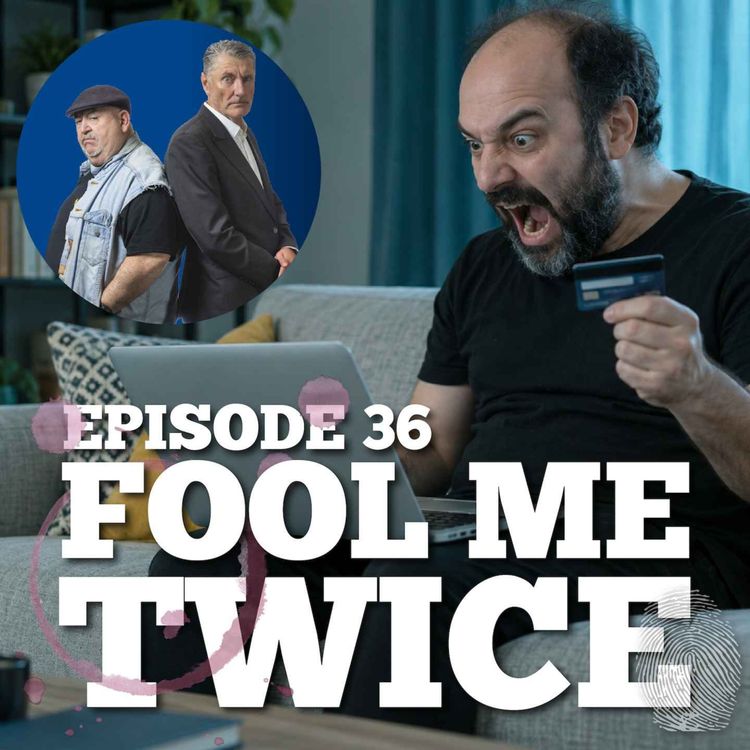
Episode 36: The Anatomy of a Scam
In Episode 36 of Fool Me Twice, former police detective and deception expert Steve Van Aperen joins comedian Bradford Oakes to explore the alarming world of scams, the psychology behind them, and why even intelligent people fall victim.
With Australians reporting $2.18 billion in scam losses in 2025, and more than half a billion dollars lost in the first six months of 2026, Steve and Brad examine an industry that thrives on fear, loneliness, trust and human vulnerability.
From romance scams and fraudulent building invoices to fake PayPal alerts, bogus charities and sophisticated phishing attacks, the pair reveal how scammers exploit everyday situations to steal money. Steve shares real investigations involving victims who lost substantial savings, while Brad recounts his own encounters with suspicious payments, misleading subscriptions and increasingly convincing online fraud.
They explore the psychological techniques behind successful scams: borrowed authority, emotional manipulation, manufactured urgency, love bombing and the gradual grooming of victims. Often, a scam doesn't arrive as an extraordinary opportunity but as an ordinary problem demanding immediate attention.
One particularly disturbing revelation is that approximately one in three scam victims is scammed more than once. Steve explains how embarrassment, denial and shame prevent victims from reporting offences, leaving them exposed to further exploitation, including fraudulent offers to recover stolen money.
The conversation also examines why scammers are so difficult to prosecute, particularly when money moves across international borders and law enforcement agencies face limited resources.
Along the way, Brad's ongoing battles with artificial intelligence provide plenty of comic relief, including his threats against an uncooperative chatbot and a fascinating discussion about AI's potential for deception.
Despite the humour, the message is serious. Steve and Brad offer practical safeguards: independently verify payment requests, scrutinise website addresses, avoid suspicious links, never share verification codes, and seek a second opinion before transferring money. They also discuss using AI as an additional tool for identifying suspicious messages.
Blending dark humour, policing experience and cautionary stories, Episode 36 delivers an entertaining reminder that scammers aren't necessarily smarter than their victims. They're simply skilled at exploiting perfectly normal human emotions.
Book Steve Van Aperen as your next keynote speaker: Click here
Book Brad Oakes for your next event: Click here
Learn stand-up comedy with Brad Oakes: Click here
Learn more about Fool Me Twice by visiting www.foolmetwice.com.au
More episodes
View all episodes

38. Episode 38: Scammers, Phishing and the Art of Deception
45:41||Season 2026, Ep. 38In Episode 38 of Fool Me Twice, comedian Brad Oakes and human lie detector Steve Van Aperen dive into the increasingly sophisticated world of scams, identity theft, phishing and financial fraud. Combining sharp humour, personal experiences and fascinating real-life criminal cases, the pair explore just how vulnerable our personal information has become and why the systems designed to protect us aren't always as secure as they seem.The conversation begins with Brad's frustrating encounter with his energy provider, which demanded he verify his identity despite having called him directly. This raises a fundamental question: why are customers expected to prove who they are when the caller hasn't established their own identity?From convincing text message scams involving supposedly stranded family members to fraudulent banking emails with almost identical website addresses, Brad and Steve reveal how easily criminals exploit trust, technology and human behaviour.Steve explains how confidence tricksters gather personal information, establish credibility and manipulate unsuspecting victims. They examine the dangers of stolen wallets, intercepted bills, social media oversharing and seemingly harmless online quizzes that can reveal answers to security questions.The discussion also uncovers surprising vulnerabilities in everyday technology, including smartphone passcodes, ATM skimming devices and banking verification procedures.Along the way, Steve recounts an extraordinary Australian lottery fraud involving a deliberately destroyed newsagency, while Brad explores the remarkable case of Dan Saunders, the Melbourne bartender who exploited an ATM banking glitch to access approximately $1.6 million and fund an extravagant lifestyle.The pair also reflect on the psychology of dishonesty, questioning whether ordinary people might exploit financial mistakes if they believed they could escape detection. Their entertaining exchange moves between criminal ingenuity, institutional incompetence and the sometimes questionable ethics of everyday life.Despite the serious subject matter, Brad and Steve keep the conversation lively with hilarious tangents about dating, technology, IKEA, Officeworks and the absurdities of modern customer service.LINKSBook Steve Van Aperen as your next keynote speaker: Click hereBook Brad Oakes for your next event: Click hereLearn stand-up comedy with Brad Oakes: Click here
37. Episode 37: Lies, Stolen Hammers & Criminal Confessions
47:45||Season 2026, Ep. 37Are criminals telling the truth, lying outright, or simply telling you what they want you to hear?In Episode 37 of Fool Me Twice, comedian Bradford Oakes and renowned human lie detector, former detective and deception expert Steve Van Aperen explore the fascinating psychology of confessions, partial confessions, withholding information and the art of deception.Drawing on decades of experience in criminal investigations and interviewing, Steve reveals why suspects rarely tell the whole truth, even when they appear to be cooperating. From seasoned burglars offering carefully calculated admissions to suspects revealing more than they intended, Steve explains how investigators navigate the complex world of lies, omissions and half-truths.But here's the big question: Is a partial confession better than no confession at all?Steve shares extraordinary insights from his police career, including lessons learned during specialist FBI interview training, the psychological techniques used to encourage admissions, and the critical importance of avoiding false confessions.The conversation also explores real criminal investigations, including the Andrew Mallard case, and why police sometimes deliberately withhold information from the public to protect an investigation.Meanwhile, Bradford brings his trademark humour and curiosity to the discussion, introducing the unforgettable hypothetical tale of stolen hammers, questioning the difference between theft and deception, and wondering whether successful criminals are simply terrible at knowing when to retire.Together, they examine why criminals brag about their achievements, how silence can become a powerful interviewing technique, and why even experienced investigators must distinguish suspicion from actual evidence.Along the way, the pair tackle everything from frustrating supermarket self-checkouts and scam callers to the disappearance of traditional communication skills, the psychology of human behaviour, and the surprising similarities between professional comedians and accomplished liars.Steve also discusses how changing stories, selective admissions and incomplete explanations can raise questions, while reminding listeners that a confession isn't automatically the truth.With fascinating real-world examples, sharp observations and plenty of laughs, Episode 37 challenges everything you thought you knew about honesty, deception and criminal psychology.Can you recognise when someone is withholding the truth? And if a person confesses to something, how do you know they're telling you everything?Tune in for another revealing, entertaining and thought-provoking conversation where criminal psychology meets comedy, and nothing is ever quite as straightforward as it first appears.Subscribe to Fool Me Twice for more stories, insights and discussions about deception, human behaviour and detecting lies.LINKSBook Steve Van Aperen as your next keynote speaker: Click hereBook Brad Oakes for your next event: Click hereLearn stand-up comedy with Brad Oakes: Click here
35. Episode 35: Fake Doctors, Fake Lawyers and the Art of Deception
47:20||Season 2026, Ep. 35What does it take to convince people you're someone you're not? And how do fraudsters manage to fool intelligent, educated professionals, sometimes for years?In Episode 35 of Fool Me Twice, comedian Bradford Oakes and former police detective and deception expert Steve Van Aperen investigate four extraordinary cases of impersonation, fraud and deception. From fake lawyers arguing cases in court to unqualified doctors working in Australian hospitals, this episode explores the extraordinary confidence, charm and audacity of people who build their lives around lies.In this episode, Bradford and Steve discuss:The Fake Lawyer: Alexander Pinnock, who allegedly posed as a qualified legal practitioner, represented clients and appeared in court despite having no legal qualifications.The Fake Doctor: Shyam Acharya, who assumed another doctor's identity and worked in the NSW hospital system for more than a decade.The Serial Impostor: Samantha, a woman who allegedly created elaborate false identities, including posing as vulnerable teenagers to deceive families and authorities.The Wellness Fraudster: Belle Gibson, the Australian wellness influencer who built a business around false claims that she had cured terminal brain cancer through diet and alternative therapies.Drawing on Steve's years investigating criminals and conducting undercover police operations, the pair examine the psychology of deception. Steve reveals the extraordinary pressures of maintaining a false identity, including a near-disastrous slip while working undercover and the importance of understanding police jargon.Bradford contributes stories from his days working as a university temp, encounters with convincing con artists, and the unsettling experience of almost falling victim to a remarkably believable scam himself.But it's not all serious. The episode opens with Steve recounting a painful golfing accident involving a flying golf ball, prompting Bradford to share his own equally unfortunate encounter on the fairway. There are also conversations about nightmares, lucid dreaming, medical professionals, workplace deception and why some criminals appear so trustworthy.The big question: How can we distinguish an accomplished liar from someone telling the truth, particularly when the consequences involve our money, freedom or health?Join Bradford Oakes and Steve Van Aperen for another entertaining and thought-provoking exploration of human behaviour, criminal psychology and the sometimes astonishing ways people deceive one another.LINKSBook Steve Van Aperen as your next keynote speaker: Click hereBook Brad Oakes for your next event: Click hereLearn stand-up comedy with Brad Oakes: Click here
34. Episode 34: Joke Theft, Lies and the Comedy Business
50:49||Season 2026, Ep. 34When does inspiration become imitation, and when does imitation become theft? In their longest episode yet, comedian and comedy coach Bradford Oakes and Steve Van Aperen tackle plagiarism, joke stealing and the awkward business of telling the truth.The conversation begins with a question every coach faces: how honest should you be with someone who wants to make people laugh? Bradford explains why he believes most people can become funnier, even when progress is slow. Sometimes a comedian needs clearer communication or a different coach, rather than a verdict that they simply are not funny. Steve brings his perspective on lies, honesty and the clues people leave when a story does not ring true.From there, they enter the murky world of borrowed material. Bradford describes the painstaking process of building a routine, often testing jokes over months, and why it stings when someone else delivers the finished work as their own. He recalls returning from a tour to discover that one of his signature jokes had appeared on The Footy Show. The audience had heard it on television first, making his own joke fall flat. He also recounts confronting other performers over material he recognised.The pair discuss Jordan Parris, the Australia’s Got Talent comedian whose routines were reported to closely resemble material by Lee Mack and Jeff Keith. Bradford and Steve examine his response to the controversy, including a later joke about “copy and paste” writers that was itself identified as an existing Jeffrey Ross line. For them, the issue is the impression a stand-up gives an audience when presenting someone else’s words as original material.But not every similarity is deliberate theft. Bradford explains parallel development, where people independently arrive at similar jokes about the same subject, and cryptomnesia, where a forgotten idea can feel new. They range beyond comedy to Men at Work’s “Down Under”, the children’s song “Kookaburra”, the origins of “Waltzing Matilda”, parody songs and bootleg cassette tapes.Along the way, expect detours, some spectacularly bad jokes, and a frank look at how creative work travels. Who owns a punchline? What happens when a writer is hired to create one? And how can comedians protect their livelihood while still sharing a stage? Bradford and Steve have more questions than easy answers, and they would love a copyright lawyer to join the conversation.LINKSBook Steve Van Aperen as your next keynote speaker: Click hereBook Brad Oakes for your next event: Click hereLearn stand-up comedy with Brad Oakes: Click here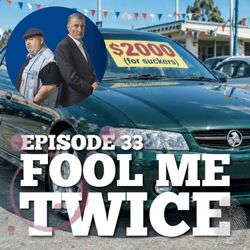
33. Episode 33: Red Flags, Micro-Expressions and $2,000 Cars
44:10||Season 2026, Ep. 33What does a liar look like? Can a fleeting facial expression expose the truth, and are comedians better than most people at faking emotion?In Episode 33, comedian Bradford Oakes joins former police officer, behavioural expert and forensic interviewer Steve Van Aperen for a funny and fascinating exploration of facial expressions, deception, intuition and the signals we send without saying a word.Steve introduces the pioneering work of Professor Paul Ekman, whose research into universal facial expressions helped inspire the television series Lie to Me. He explains the Facial Action Coding System, the emotional states that appear across cultures and the micro-expressions that can flash across a person’s face in a fraction of a second.But can a micro-expression prove someone is lying? Steve separates popular mythology from behavioural science, explaining why a single gesture, facial movement or nervous habit means very little without context. Reliable assessment requires clusters of behaviour, a baseline and an understanding of what was happening before and after the moment in question. Even trained professionals, he notes, are often only slightly better than chance at detecting lies from behaviour alone.Brad brings the comedian’s perspective, revealing why performers must make their faces match their stories and how they recreate surprise after delivering the same joke hundreds of times. He also recalls being dismissed by his personal trainer for being “untrainable”, getting hypnotically close to buying an imaginary car and falling for a suspicious offer involving a near-new Ford Falcon for just $2,000.The conversation also examines genuine and fake smiles, cultural display rules, the body language that can signal an approaching pub fight, the sensory detail found in truthful memories and the reasons intelligent people can still be manipulated by convincing con artists.Naturally, it begins with Brad threatening to punch ChatGPT in the head after an exhausting attempt to build his new website, before admitting he has been secretly cheating on it with Google and Claude.Are you good at reading faces? What red flags or green flags do you notice when meeting someone for the first time? And can you tell when somebody is lying?LINKSBook Steve Van Aperen as your next keynote speaker: Click hereBook Brad Oakes for your next event: Click hereLearn stand-up comedy with Brad Oakes: Click here
32. Episode 32: Cheating, flirting and a model collision
44:39||Season 2026, Ep. 32What happens when love, lies and betrayal collide? In this episode, Bradford Oakes and Steve Van Aperen explore the messy world of cheating, emotional affairs, secret finances, online flirting and the stories people tell when they are caught.Before getting into the serious stuff, Bradford reflects on teaching an MC training course and explains why an event without a host can quickly fall apart. That sparks two workplace confessions: Steve recalls causing a traffic accident while distracted by models during his days directing Melbourne traffic, while Bradford shares an unfortunate encounter with a runaway floor-polishing machine outside a nurses’ cafeteria.Then the conversation turns to deception in relationships. Drawing on his work conducting polygraph and eye-detection tests, Steve shares real cases involving affairs, gambling, drinking, escort agencies, suspicious messages and an uncomfortable love triangle. He explains why one lie often creates several more, how people reveal only what their partner can already prove, and why “trickle truth” can be more damaging than the original betrayal.Bradford and Steve debate whether flirting online counts as cheating, whether checking a partner’s phone is ever justified, and whether someone can love you while repeatedly lying to you. They also examine emotional cheating, financial secrecy and the difference between harmless social lies and deliberate deception designed to conceal damaging behaviour.Along the way, Steve identifies familiar warning signs: deflection instead of a direct denial, gaslighting, changing timelines, contradictions, secret calls, hidden messages and turning the accusation back on the person asking questions. But appearances can also be misleading, as one case involving an accused businessman and a vindictive personal assistant demonstrates.There are stories of a cheating golfer in Thailand, an Ashley Madison discovery, incriminating photos appearing during family dinner, a burglar who dropped his wallet at the crime scene, a comedian short-changed on tour, and a serial cheater whose guilt revealed itself through gifts of jewellery.It is a funny, frank and sobering discussion about trust, motive, privacy and the consequences of believing you will never be caught. Bradford Oakes and Steve Van Aperen bring humour, policing experience and behavioural insight to one of the most complicated subjects in any relationship.Have you caught a partner cheating, spotted a red flag or heard an unforgettable excuse?LINKSBook Steve Van Aperen as your next keynote speaker: Click hereBook Brad Oakes for your next event: Click hereLearn stand-up comedy with Brad Oakes: Click here
31. Episode 31: Stolen Valour, Fraud & the Anatomy of a Liar
46:39||Season 2026, Ep. 31What makes someone lie about serving in the military, and how far will they go to keep the deception alive?In this episode of Fool Me Twice, Brad Oakes and former detective Steve van Aperen dive into the extraordinary world of stolen valour: people who invent, exaggerate or completely fabricate military service, ranks, deployments and medals in order to gain status, respect, employment, money or admiration.The pair examine the astonishing case of former Northamptonshire Police Chief Constable Nick Adderley, whose claimed military history included service in the Falklands War, despite being only 15 when the conflict began. They explore allegations surrounding medals, naval ranks, elite training and how false claims can move beyond embarrassing lies into serious misconduct and fraud.Brad and Steve also look at Australian cases, including people marching in Anzac Day parades wearing medals and uniforms they were never entitled to, as well as the remarkable story of Arthur Rex Crane, who became president of an ex-prisoners of war association while falsely claiming to have been captured and tortured during World War II.But this episode isn’t only about military imposters.Why do people continue lying when the truth can easily be checked? Why do colleagues, friends and witnesses sometimes suspect something is wrong but stay silent? And what happens when a liar becomes so deeply invested in their invented identity that admitting the truth becomes almost impossible?Drawing on Steve’s experience as a detective and Brad’s trademark humour, the discussion explores deception, ego, bravado, impersonation, fraud, investigative questioning and the subtle details that can expose someone whose story simply doesn’t add up.Along the way, expect stories about lost cars, police encounters, fake comedians, camouflage pants, nightclub bravado and the very important question: what exactly does a liar look like?If you’ve ever encountered someone claiming military service, medals, qualifications or experiences you suspected weren’t genuine, we want to hear your story.Leave a comment or send us your questions and experiences for a future episode.LINKSBook Steve Van Aperen as your next keynote speaker: Click hereGet coached in stand-up comedy with Brad Oakes: Click here
30. Episode 30: Polls, Lies and Social Influence
43:41||Season 2026, Ep. 30In Episode 30 of Fool Me Twice, comedian Bradford Oakes and former detective Steve Van Aperen explore how easily people can be influenced, misled, or persuaded by polls, social behaviour and poorly framed questions. The conversation begins lightheartedly, with Steve recovering from having a wisdom tooth removed and the pair exchanging painful and funny dental stories.The discussion then turns to the Australian Logie Awards and comedian Tom Gleeson’s successful campaign to win the Gold Logie. His campaign demonstrated how an apparently democratic voting system could be manipulated when people were able to vote repeatedly. Rather than proving who was genuinely the most popular television personality, the system could simply reward whoever generated the greatest number of votes. This becomes the starting point for a wider discussion about political polling, television ratings and surveys.Bradford and Steve question whether polls are truly representative when the sample sizes, methodology and wording of questions are not always transparent. They discuss political elections in Australia, Britain and the United States where widely reported polling failed to predict the eventual result. Steve emphasises that the way a question is framed can strongly influence an answer, particularly when questions are ambiguous, leading or contain assumptions.One of the episode’s funniest examples is the story about putting out the bins. In Australia, residents commonly put their rubbish bins outside the night before collection. One person puts a bin out, a neighbour sees it and assumes it must be bin night, then several more neighbours copy them. Soon the whole street has bins outside simply because everyone assumes somebody else knows something they do not. Steve describes this as a form of social influence, demonstrating how quickly behaviour can spread without anyone checking the original information.Steve Van Aperen also draws on his experience as an investigator. He explains that good investigators do not simply accuse people or rely on nervous behaviour as proof of guilt. Instead, they ask open questions, gather evidence and examine whether a person’s account remains consistent. Fabricated stories can unravel because liars must continually remember invented details, while genuine memories often contain richer contextual and sensory information.Ultimately, Bradford Oakes and Steve Van Aperen encourage listeners to question polls, statistics and persuasive claims rather than accepting them at face value. Their message is simple: examine the questions, methodology and evidence, and never assume it is bin night just because your neighbour has put the bins out.LINKSBook Steve Van Aperen as your next keynote speaker: Click hereGet coached in stand-up comedy with Brad Oakes: Click here