Fool Me Twice
All Episodes
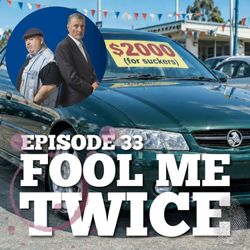
33. Episode 33: Red Flags, Micro-Expressions and $2,000 Cars
44:10||Season 2026, Ep. 33What does a liar look like? Can a fleeting facial expression expose the truth, and are comedians better than most people at faking emotion?In Episode 33, comedian Bradford Oakes joins former police officer, behavioural expert and forensic interviewer Steve Van Aperen for a funny and fascinating exploration of facial expressions, deception, intuition and the signals we send without saying a word.Steve introduces the pioneering work of Professor Paul Ekman, whose research into universal facial expressions helped inspire the television series Lie to Me. He explains the Facial Action Coding System, the emotional states that appear across cultures and the micro-expressions that can flash across a person’s face in a fraction of a second.But can a micro-expression prove someone is lying? Steve separates popular mythology from behavioural science, explaining why a single gesture, facial movement or nervous habit means very little without context. Reliable assessment requires clusters of behaviour, a baseline and an understanding of what was happening before and after the moment in question. Even trained professionals, he notes, are often only slightly better than chance at detecting lies from behaviour alone.Brad brings the comedian’s perspective, revealing why performers must make their faces match their stories and how they recreate surprise after delivering the same joke hundreds of times. He also recalls being dismissed by his personal trainer for being “untrainable”, getting hypnotically close to buying an imaginary car and falling for a suspicious offer involving a near-new Ford Falcon for just $2,000.The conversation also examines genuine and fake smiles, cultural display rules, the body language that can signal an approaching pub fight, the sensory detail found in truthful memories and the reasons intelligent people can still be manipulated by convincing con artists.Naturally, it begins with Brad threatening to punch ChatGPT in the head after an exhausting attempt to build his new website, before admitting he has been secretly cheating on it with Google and Claude.Are you good at reading faces? What red flags or green flags do you notice when meeting someone for the first time? And can you tell when somebody is lying?LINKSBook Steve Van Aperen as your next keynote speaker: Click hereBook Brad Oakes for your next event: Click hereLearn stand-up comedy with Brad Oakes: Click here
32. Episode 32: Cheating, flirting and a model collision
44:39||Season 2026, Ep. 32What happens when love, lies and betrayal collide? In this episode, Bradford Oakes and Steve Van Aperen explore the messy world of cheating, emotional affairs, secret finances, online flirting and the stories people tell when they are caught.Before getting into the serious stuff, Bradford reflects on teaching an MC training course and explains why an event without a host can quickly fall apart. That sparks two workplace confessions: Steve recalls causing a traffic accident while distracted by models during his days directing Melbourne traffic, while Bradford shares an unfortunate encounter with a runaway floor-polishing machine outside a nurses’ cafeteria.Then the conversation turns to deception in relationships. Drawing on his work conducting polygraph and eye-detection tests, Steve shares real cases involving affairs, gambling, drinking, escort agencies, suspicious messages and an uncomfortable love triangle. He explains why one lie often creates several more, how people reveal only what their partner can already prove, and why “trickle truth” can be more damaging than the original betrayal.Bradford and Steve debate whether flirting online counts as cheating, whether checking a partner’s phone is ever justified, and whether someone can love you while repeatedly lying to you. They also examine emotional cheating, financial secrecy and the difference between harmless social lies and deliberate deception designed to conceal damaging behaviour.Along the way, Steve identifies familiar warning signs: deflection instead of a direct denial, gaslighting, changing timelines, contradictions, secret calls, hidden messages and turning the accusation back on the person asking questions. But appearances can also be misleading, as one case involving an accused businessman and a vindictive personal assistant demonstrates.There are stories of a cheating golfer in Thailand, an Ashley Madison discovery, incriminating photos appearing during family dinner, a burglar who dropped his wallet at the crime scene, a comedian short-changed on tour, and a serial cheater whose guilt revealed itself through gifts of jewellery.It is a funny, frank and sobering discussion about trust, motive, privacy and the consequences of believing you will never be caught. Bradford Oakes and Steve Van Aperen bring humour, policing experience and behavioural insight to one of the most complicated subjects in any relationship.Have you caught a partner cheating, spotted a red flag or heard an unforgettable excuse? Share your story in the comments below.
31. Episode 31: Stolen Valour, Fraud & the Anatomy of a Liar
46:39||Season 2026, Ep. 31What makes someone lie about serving in the military, and how far will they go to keep the deception alive?In this episode of Fool Me Twice, Brad Oakes and former detective Steve van Aperen dive into the extraordinary world of stolen valour: people who invent, exaggerate or completely fabricate military service, ranks, deployments and medals in order to gain status, respect, employment, money or admiration.The pair examine the astonishing case of former Northamptonshire Police Chief Constable Nick Adderley, whose claimed military history included service in the Falklands War, despite being only 15 when the conflict began. They explore allegations surrounding medals, naval ranks, elite training and how false claims can move beyond embarrassing lies into serious misconduct and fraud.Brad and Steve also look at Australian cases, including people marching in Anzac Day parades wearing medals and uniforms they were never entitled to, as well as the remarkable story of Arthur Rex Crane, who became president of an ex-prisoners of war association while falsely claiming to have been captured and tortured during World War II.But this episode isn’t only about military imposters.Why do people continue lying when the truth can easily be checked? Why do colleagues, friends and witnesses sometimes suspect something is wrong but stay silent? And what happens when a liar becomes so deeply invested in their invented identity that admitting the truth becomes almost impossible?Drawing on Steve’s experience as a detective and Brad’s trademark humour, the discussion explores deception, ego, bravado, impersonation, fraud, investigative questioning and the subtle details that can expose someone whose story simply doesn’t add up.Along the way, expect stories about lost cars, police encounters, fake comedians, camouflage pants, nightclub bravado and the very important question: what exactly does a liar look like?If you’ve ever encountered someone claiming military service, medals, qualifications or experiences you suspected weren’t genuine, we want to hear your story.Leave a comment or send us your questions and experiences for a future episode.LINKSBook Steve Van Aperen as your next keynote speaker: Click hereGet coached in stand-up comedy with Brad Oakes: Click here
30. Episode 30: Polls, Lies and Social Influence
43:41||Season 2026, Ep. 30In Episode 30 of Fool Me Twice, comedian Bradford Oakes and former detective Steve Van Aperen explore how easily people can be influenced, misled, or persuaded by polls, social behaviour and poorly framed questions. The conversation begins lightheartedly, with Steve recovering from having a wisdom tooth removed and the pair exchanging painful and funny dental stories.The discussion then turns to the Australian Logie Awards and comedian Tom Gleeson’s successful campaign to win the Gold Logie. His campaign demonstrated how an apparently democratic voting system could be manipulated when people were able to vote repeatedly. Rather than proving who was genuinely the most popular television personality, the system could simply reward whoever generated the greatest number of votes. This becomes the starting point for a wider discussion about political polling, television ratings and surveys.Bradford and Steve question whether polls are truly representative when the sample sizes, methodology and wording of questions are not always transparent. They discuss political elections in Australia, Britain and the United States where widely reported polling failed to predict the eventual result. Steve emphasises that the way a question is framed can strongly influence an answer, particularly when questions are ambiguous, leading or contain assumptions.One of the episode’s funniest examples is the story about putting out the bins. In Australia, residents commonly put their rubbish bins outside the night before collection. One person puts a bin out, a neighbour sees it and assumes it must be bin night, then several more neighbours copy them. Soon the whole street has bins outside simply because everyone assumes somebody else knows something they do not. Steve describes this as a form of social influence, demonstrating how quickly behaviour can spread without anyone checking the original information.Steve Van Aperen also draws on his experience as an investigator. He explains that good investigators do not simply accuse people or rely on nervous behaviour as proof of guilt. Instead, they ask open questions, gather evidence and examine whether a person’s account remains consistent. Fabricated stories can unravel because liars must continually remember invented details, while genuine memories often contain richer contextual and sensory information.Ultimately, Bradford Oakes and Steve Van Aperen encourage listeners to question polls, statistics and persuasive claims rather than accepting them at face value. Their message is simple: examine the questions, methodology and evidence, and never assume it is bin night just because your neighbour has put the bins out.LINKSBook Steve Van Aperen as your next keynote speaker: Click hereGet coached in stand-up comedy with Brad Oakes: Click here
29. Episode 29: Confessions, cues and contradictions
46:02||Season 2026, Ep. 29In Episode 29 of Fool Me Twice, Bradford Oakes and Steve Van Aperen explore deception, interviewing techniques, body language, tunnel vision, and the importance of rapport when trying to uncover the truth. The episode begins with some light-hearted conversation about Bradford’s recent country comedy gigs, wildlife on Australian roads, and the differences between metropolitan and regional audiences. Bradford explains that country audiences often share a stronger sense of community, which can make them more relaxed and willing to participate, while Steve reflects on how observation and audience feedback are essential skills in both comedy and investigative work.The discussion then shifts to Steve Van Aperen’s experience as an investigator and his training with the FBI. Steve argues that effective interviewing is not about intimidating or blaming suspects. Instead, investigators should build rapport, listen carefully and make it easier for people to talk. He describes the FBI concept of “theme development,” where responsibility may be framed around circumstances, pressure or mistakes rather than immediately condemning the person being questioned. Steve also recounts interviewing a bikie suspected of involvement in a stabbing. Although the man repeatedly answered “no comment” during the formal interview, an earlier conversation about his estranged son helped establish enough rapport that he secretly left Steve the name of the person police were seeking.Bradford Oakes brings humour and scepticism to the conversation, questioning familiar crime-show conventions such as FBI agents announcing themselves from a distance before suspects inevitably run. Steve responds with real policing stories showing that suspects do sometimes flee, although announcing an arrest too early is not always wise.A major theme is the danger of tunnel vision and confirmation bias. Steve warns that investigators can become attached to a theory and selectively interpret evidence to support it. Bradford compares this with comedy, where people can invent an explanation for almost any situation if they begin with a fixed assumption.The pair also challenge simplistic interpretations of body language. Crossed arms, fidgeting or looking in a particular direction do not automatically indicate deception. Steve stresses the need to establish a behavioural baseline, watch for changes, and examine clusters of verbal and non-verbal cues. Ultimately, the episode argues that detecting deception requires evidence, careful listening, behavioural observation and an open mind, not reliance on stereotypes or single “tells.”LINKSBook Steve Van Aperen as your next keynote speaker: Click hereGet coached in stand-up comedy with Brad Oakes: Click here
28. Episode 28: Deception, false confessions and false memories
45:00||Season 2026, Ep. 28Episode 28 of Fool Me Twice features Bradford Oakes and Steve van Aperen discussing lying, deception, false confessions, false memories and common mistakes people make when trying to read others.The conversation begins with Brad describing his frustration with artificial intelligence after spending hours using large language models that appeared to ignore instructions, apologise repeatedly and provide unreliable information. This leads into a broader discussion about misleading information, misplaced confidence and the difficulty of determining whether something is accurate.Steve draws on his experience as a detective to challenge common assumptions about deception. Nervousness, fidgeting, looking away, blinking, over-explaining or appearing uncomfortable do not automatically indicate guilt. An innocent person may be anxious because they fear not being believed, have never dealt with police, come from a background where authorities are distrusted, or simply feel uncomfortable in an interview setting.Brad and Steve discuss how context can change the meaning of behaviour. Their main point is that stress is not proof of deception and that no single behavioural indicator should be treated as evidence of lying.The discussion then turns to false confessions and unreliable memory. Steve explains that people can confess to crimes they did not commit for a range of reasons, including coercion, threats, exhaustion, a desire to end an interrogation, protecting someone else, seeking attention, or because of cognitive and intellectual vulnerabilities.They also examine the limitations of eyewitness memory and how trauma, neurodivergence and other factors can affect recall. A truthful account may change over time without necessarily indicating deception.Steve emphasises that effective interviewing should focus on establishing what happened rather than forcing an admission or relying on intuition. Statements need to be assessed alongside available evidence and the broader context.Episode 28 also covers bias, profiling, authority and the risk of tunnel vision when interpreting behaviour. Bradford Oakes and Steve van Aperen argue that truthful people can appear nervous, confused or inconsistent, and that detecting deception requires evidence, context and careful questioning rather than stereotypes or assumptions about body language.LINKSBook Steve Van Aperen as your next keynote speaker: Click hereGet coached in stand-up comedy with Brad Oakes: Click here
27. Episode 27: Beauty, Vanity And Clever Deception
40:39||Season 2026, Ep. 27Are we being sold beauty, or being sold insecurity?In this episode of Fool Me Twice, Brad and Stephen take a sharp, funny and sometimes uncomfortable look at the multi billion dollar cosmetics and beauty industry, asking how much of what we’re promised is reality, how much is clever marketing, and how much crosses the line into deception.From products claiming to “reverse the ageing process” to impressive sounding phrases such as “clinically tested”, “natural” and “90% noticed a difference”, the conversation explores the language advertisers use to make products appear more scientific, effective and trustworthy than they may actually be. What was tested? How many people were involved? Was the finished product studied, or just one ingredient? And what does “clinically tested” really tell the consumer?Brad and Stephen also examine the psychology behind beauty marketing. Rather than simply selling a moisturiser, cosmetic or hair treatment, are companies first selling us a problem, wrinkles, ageing, baldness or the fear that we don’t look good enough, and then offering the solution?The discussion moves into social media, filters, celebrity endorsements and influencers, where appearance, authority and trust can become powerful selling tools. Why are we more likely to believe a product when it is promoted by someone we admire? And when temporary visual improvements are presented as something more permanent, where should the line be drawn?The boys also turn their attention to men, hair loss, hair transplants, hair dye, toupees and the extraordinary lengths people can go to hide the ageing process. Brad’s disappearing hair inevitably becomes part of the investigation, along with some stories that prove vanity can produce both deception and comedy.Underneath the laughs is a bigger question: why are human beings so vulnerable to promises about youth, beauty and appearance?Is the beauty industry simply giving consumers what they want, or does successful marketing deliberately create insecurity and then monetise it?Join Brad and Stephen as they unpack the psychology, persuasion, advertising tricks, questionable claims and very human vanity behind the business of looking younger.And tell us in the comments: have you ever bought a beauty, skincare or hair product that promised far more than it delivered?LINKSBook Steve Van Aperen as your next keynote speaker: Click hereGet coached in stand-up comedy with Brad Oakes: Click here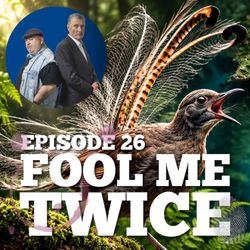
26. Episode 26: Lyrebirds, angelfish and other natural con artists
35:29||Season 2026, Ep. 26Episode 26 of Fool Me Twice sees Bradford Oakes and Steve Van Aperen explore deception across the animal kingdom, mixing behavioural observations, personal stories and comedy. They begin by revisiting whether doctors are justified in softening serious medical news, concluding that compassionate “sugarcoating” can sometimes reduce distress and that outsiders should be cautious about judging professionals who deliver devastating information.The conversation then shifts to animals. Bradford describes research into canine communication, noting that a wagging tail does not simply mean happiness and that dogs and wolves communicate through ears, posture, scent and other nonverbal signals. Wolf cubs’ folded ears are discussed as a possible safeguard against accidentally signalling aggression. The hosts also question whether people wrongly anthropomorphise pets by interpreting canine expressions as human emotions.They broaden deception to include camouflage, concealment, mimicry and bluffing. Octopuses disguise themselves as rocks, spotted cats blend into their surroundings, chameleons disappear against backgrounds, and frill-necked lizards enlarge their appearance to intimidate threats. Such behaviour is presented less as immoral lying than as an evolutionary strategy for survival, hunting or reproduction. Steve links this to a real case in which a woman escaped abductors by pretending to have an epileptic seizure, showing how deception can protect life.Further examples include butterflies with eye-like markings, stick insects, orchid mantises that resemble flowers, and cuckoos that place eggs in other birds’ nests, avoiding the work of incubation and feeding. Freshwater angelfish use compressed bodies and vertical stripes to hide in vegetation before ambushing prey, while peacocks use display as a mating signal.Lyrebirds receive special attention for imitating birds, machinery, human speech and even swearing. Bradford recounts colourful Healesville Sanctuary stories about mimicry and raptors supposedly detecting and stealing toupees. The hosts also joke about cats appearing sociopathic, dogs secretly using forbidden couches, flounders’ unusual eyes, giraffes’ evolutionary adaptation and fish memory.Throughout, Bradford’s comic exaggeration complements Steve’s investigative perspective. Their central conclusion is that animal deception is usually nonverbal, adaptive and morally neutral. It helps creatures avoid predators, catch food, attract mates and survive, while reminding listeners that humans may misunderstand animal behaviour by forcing it into human categories. The episode ultimately treats deception as a continuum, ranging from harmless pet mischief to sophisticated biological adaptations that shape communication, danger, opportunity and trust itself.LINKSBook Steve Van Aperen as your next keynote speaker: Click hereGet coached in stand-up comedy with Brad Oakes: Click here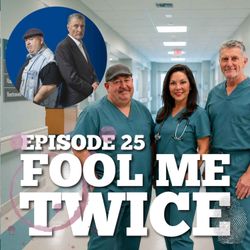
25. Episode 25: Lying in medicine with Dr Nicole Yap
39:30||Season 2026, Ep. 25In episode 25, Steve Van Aperen and Bradford Oakes explore lies, deception and the relationship between doctors and patients, joined by Dr Nicole Yap, an oncoplastic surgeon specialising in breast cancer surgery and reconstruction.The episode begins with the hosts swapping travel and airport stories, from Brad’s Tasmania gig near Devonport to Steve’s shock at Sydney Airport coffee prices. Their banter moves into observations about comedy audiences in Melbourne and Sydney, with Brad suggesting Sydney crowds can be more inclined to heckle while Melbourne audiences are more theatre-oriented.Dr Yap explains her specialised field. After training in plastic surgery and general surgery, she developed expertise in cancer treatment and reconstruction, particularly breast cancer surgery. She describes the possibility of helping patients through a cancer diagnosis while preserving, or even improving, how they feel about their appearance after surgery.Nicole shares an early career story of being unexpectedly left to perform a series of appendectomies after her consultant was delayed by a television appearance. Initially nervous and relying heavily on her notes and an experienced theatre nurse, she successfully completed several procedures, gaining confidence and becoming increasingly focused on the quality of the scars she left behind.The central conversation examines why patients conceal information, even when honesty is essential to their care. Dr Yap discusses patients who deny smoking despite clear evidence, and explains how nicotine can seriously compromise blood supply and surgical outcomes, particularly in reconstructive breast procedures. She also highlights the importance of asking patients specifically about weight-loss medications such as Ozempic, Wegovy and Mounjaro, which can create risks during anaesthesia if undisclosed.Brad shares his experience of being delayed for a procedure after revealing he had recently had COVID-19, despite mentioning it in assessments. The discussion turns to medical staff recognising deception, including “doctor shoppers” seeking drugs and prisoners pretending to have symptoms to leave custody.The episode also considers when doctors may soften the truth. Both Steve and Nicole describe delivering difficult news to grieving families with care and compassion, framing death or serious illness gently to reduce distress. They distinguish these “pro-social lies” from deception used for personal gain.Throughout, the conversation balances humour with insight into human behaviour, confidence and trust. Dr Yap’s stories reveal how doctors navigate skill and treating people at vulnerable moments.LINKSBook Steve Van Aperen as your next keynote speaker: Click hereGet coached in stand-up comedy with Brad Oakes: Click hereLearn more about Dr Nicole Yap: Click here
loading...