Share
F them fish! AuDHD for grownups
Ep. 46 Is Beth Really Dead?
This podcast was created on the lands of the Ngunnawal, Wadawurrung and Dja Dja Wurrung Peoples.
Hello, hello, and welcome to F Them Fish: AuDHD for Grownups with your neurodivergent besties, Callie Elward-Barrett and Jayne Gurton. This is the podcast where we talk about neurodivergence in real adult life: work, relationships, burnout, overwhelm, identity, and all the weird little things that make you think, ‘surely it’s not just me.’ We’re honest, occasionally sweary, and very much not interested in pretending to be polished.
Grab a beverage, or body double some life admin with us in your ears and let's get started!
In this week's episode, Callie and Jayne deep dive the podcast phenomenon 'Beth's Dead' - a limited series true crime podcast, all about parasocial relationships gone wrong.
More importantly, why is this relevant to neurodivergence? We will tell you with the help of some of our listener questions.
00:00 – Producer Callie says Hi
00:50 – Intro
04:33 – Last week’s homework and why Beth’s Dead got assigned
07:29 – What Beth’s Dead is about, plus spoiler warning
08:45 – Full recap of the podcast setup and the Beth storyline
12:18 – What a parasocial relationship actually is
14:20 – Beth was never real
15:04 – First reactions: gripping story or obvious manipulation?
15:55 – Boundaries, emotional emails, and where podcast hosts can get out of their depth
17:14 – The investigation: IP addresses, the professor theory, and the big phone call
19:36 – Callie’s theory: this never happened
21:41 – Jayne’s hesitation, the real expert moment, and why she’s less certain
23:42 – Why Callie still thinks key parts do not ring true
26:52 – Does it actually matter if the story was real, if it was well told?
27:53 – Listener question: when does a parasocial relationship stop being comforting and start being bad for your brain?
33:10 – Listener question: are neurodivergent people more vulnerable to intense online dynamics?
42:38 – Listener conspiracy theory corner
44:19 – Why this whole thing matters for neurodivergence
44:47 – Curiosity, needing receipts, and getting kicked out of class for too many questions
45:45 – Wrap-up, contact details, and next episode tease
https://www.patreon.com/cw/BethsDead - listen to Beth's Dead
https://www.instagram.com/nobodyslisteningright/ - follow Elizabeth and Any on Instagram - tell them we sent you (they won't have a clue who we are!)
https://www.instagram.com/armchairexppod/ - follow Monica Padman's podcast
Find us on YouTube, Instagram and TikTok at F Them Fish: AuDHD for Grownups
Send your stories and questions to FThemFish@gmail.com
AuDHD for grownups: honest, funny conversations about work, relationships, sensory overload, identity, and the stuff nobody explains after diagnosis.
AuDHD for grownups: honest, funny conversations about work, relationships, sensory overload, identity, and the stuff nobody explains after diagnosis.
More episodes
View all episodes
54. Ep. 54 Don't Pick On the Flower, Change the Soil: What Adults Get Wrong About ADHD Kids (with PB)
41:11||Season 2, Ep. 54Hello, hello, and welcome to F Them Fish: AuDHD for Grownups with your neurodivergent besties, Callie Elward-Barrett and Jayne Gurton. This is the podcast where we talk about neurodivergence in real adult life: work, relationships, burnout, overwhelm, identity, and all the weird little things that make you think, ‘surely it’s not just me.’ We’re honest, occasionally sweary, and very much not interested in pretending to be polished.Grab a beverage, or body double some life admin with us in your ears and let’s get started!In this episode, Callie sits down with Twice-Exceptional PB - 11 year-old host of the popular podcast: 'PB's Productions, My ADHD Kids Podcast', that she started when she was only 8 years old!. PB has a lot of insights to share about what it really means to be a kid with ADHD. She talks with an incredible poise and emotional intelligence that most adults would be proud of. There are multiple moments that will make you stop and think a little deeper about the young people in your life, whether you're a parent, teacher, or favourite Aunty. The episode keeps coming back to adults assuming they know, not asking what kids need, and mistaking ADHD challenges for intentional misbehaviour. In a world full of adults explaining ADHD kids, this episode lets an ADHD kid explain it herself. Share this episode with the ADHD kids you know and ask them if they agree, or what they might say differently. And more importantly, share it with any adults who need to hear it. "Try, be you, be kind, and bloom like that sunflower. Bloom bright... Just try, believe in yourself, because you are amazing." PBTimestamps00:15 – Meet PB, ADHD kid podcaster02:05 – “I have a more advanced brain” PB introduces herself as a kid with ADHD, big thoughts, humour and a grown-up way of seeing things.02:44 – If your ADHD brain had a theme song08:19 – PB describes her brain in three words and explains what it is like when funny thoughts arrive at exactly the wrong moment.09:54 – Why PB started her own ADHD podcast and why kids need to hear from other kids, not only adults talking about them.13:56 – ADHD explained by an actual ADHD kid.15:11 – What adults get wrong about ADHD kids17:30 – “I don’t believe you” and “you did it on purpose” two things she wishes adults would stop saying to ADHD kids.19:00 – What is actually cool about ADHD21:07 – ADHD brain control panel24:02 – The ultimate ADHD gadget27:18 – Rapid-fire ADHD would-you-rathers28:58 – The question adults should ask more often “What do you need?” and why that matters.31:18 – The question PB is sick of adults asking and what adults might miss when they judge attention from the outside.34:47 – What to say to ADHD kids who feel too much - a beautiful answer about being the perfect amount for yourself and blooming in your own way.36:40 – ADHD is not about trying harder37:38 – Bloom bright like a sunflower.38:02 – Where to find PB’s podcastConnectFind us on YouTube, Instagram and TikTok at F Them Fish: AuDHD for GrownupsSend your stories and questions to FThemFish@gmail.comAuDHD for grownups: honest, funny conversations about work, relationships, sensory overload, identity, and the stuff nobody explains after diagnosis.This podcast was created on the lands of the Ngunnawal, Ngambri, Wadawurrung and Dja Dja Wurrung Peoples. Always was, always will be Aboriginal Land.
53. Ep. 53 The Importance of Celebrating Tiny Wins
35:59||Season 2, Ep. 53Hello, hello, and welcome to F Them Fish: AuDHD for Grownups with your neurodivergent besties, Callie Elward-Barrett and Jayne Gurton. This is the podcast where we talk about neurodivergence in real adult life: work, relationships, burnout, overwhelm, identity, and all the weird little things that make you think, ‘surely it’s not just me.’ We’re honest, occasionally sweary, and very much not interested in pretending to be polished.Grab a beverage, or body double some life admin with us in your ears and let’s get started!Our topic for today is all about how celebrating tiny wins can get you further towards your bigger goals. And please! It's important to keep those bigger goals! Not to beat yourself with, or berate yourself for not achieving them immediately, but because without them, life feels so much smaller. Callie is feeling the restriction of having lower expectations and how that feels the opposite of liberating - it feels suffocating. As neurodivergent people, we can smash through the limited expectations others may place upon us and do truly amazing things. We don't HAVE to, we GET to. Underestimate us. We dare you.Timestamps00:07 Intro01:08 Callie's best birthday ever? Maybe?01:54 The 'wants vs needs' family hack because everyone wants something all the time!04:58 Feeling seen rather than perceived09:30 The six-minute birthday dance video14:59 Listeners, we want your input! Should episodes start with a quick topic signpost?15:41 Rubbish fidgets and blue moon rituals17:49 Emotional and sensory hangovers 19:04 Main topic begins: Celebrating tiny wins20:14 What celebrating tiny wins means for neurodivergent people21:42 Everyday wins, momentum and using small successes to get started24:26 Tiny wins, gratitude practice and undoing years of negative feedback27:12 Who decides what counts as a win?28:47 Tiny wins are not small dreams: building toward bigger goals32:20 Fibro, health progress and finding hope in tiny improvements33:53 Homework - watch the Room to Move doco on Netflix and share your tiny wins with us!ConnectFind us on YouTube, Instagram and TikTok at F Them Fish: AuDHD for GrownupsSend your stories and questions to FThemFish@gmail.comAuDHD for grownups: honest, funny conversations about work, relationships, sensory overload, identity, and the stuff nobody explains after diagnosis.This podcast was created on the lands of the Ngunnawal, Wadawurrung and Dja Dja Wurrung Peoples. Always was, always will be.
52. Ep. 52 Is It Really Worth Getting An Autism Diagnosis As An Adult?
50:09||Season 2, Ep. 52Hello, hello, and welcome to F Them Fish: AuDHD for Grownups with your neurodivergent besties, Callie Elward-Barrett and Jayne Gurton. This is the podcast where we talk about neurodivergence in real adult life: work, relationships, burnout, overwhelm, identity, and all the weird little things that make you think, ‘surely it’s not just me.’ We’re honest, occasionally sweary, and very much not interested in pretending to be polished.Grab a beverage, or body double some life admin with us in your ears and let’s get started!Callie's brain is unhappy at the fact that she didn't knock off those extra few seconds and make this episode a nice, round 55 minutes! Also... 50 minutes is nowhere near the 30 minutes we keep promising ourselves!In this episode, Callie and Jayne have no technical issues! It's true! That said, Jayne's pod dogs cause a whole other set of issues that lead to Callie singing. Sorry besties, this was a moment we are all going to need to process. We go deep with listener bestie Robbie today, with their question about whether it is really necessary to get an Autism diagnosis as an adult. We're not going to lie, this one feels like a bit of a minefield, but we are committed to having the hard chats and giving you that space you need to talk about these things. Not everyone has a person, or a group of people they can talk with about their neurodivergence or when they feel they are neurodivergent. There are so many reason someone may not have a 'real life' bestie to bounce these things through, so we are honoured when we can be those people for you. We absolutely loved this chat and hopefully, it answers some of your questions about Autism as a grown up.Timestamps00:14 — Welcome, pod dogs, and chaotic bestie energy03:35 — Unexpected moments of connection with strangers can be beautiful05:25 — Teeth brushing and did you know that ADHDers don't form habits?10:15 — Motivation, meds, and mostly practical ADHD systems13:35 — Robbie’s listener email 20:15 — Autism diagnosis and where un/self-diagnosed people fit within the Autism community22:40 — Loneliness29:15 — The weird in-between feeling when you don't have a formal diagnosis31:35 — Imposter feelings and self-doubt34:00 — Is formal diagnosis necessary?39:00 — Practical supports without diagnosis40:55 — When formal diagnosis can matter46:35 — Final thoughts, validation, and listener call-outConnectFind us on YouTube, Instagram and TikTok at F Them Fish: AuDHD for GrownupsSend your stories and questions to FThemFish@gmail.comAuDHD for grownups: honest, funny conversations about work, relationships, sensory overload, identity, and the stuff nobody explains after diagnosis.This podcast was created on the lands of the Ngunnawal, Wadawurrung and Dja Dja Wurrung Peoples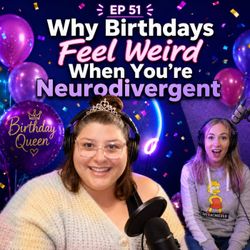
51. Ep. 51 Why Birthdays Feel Weird When You're Neurodivergent
48:58||Season 2, Ep. 51Hello, hello, and welcome to F Them Fish: AuDHD for Grownups with your neurodivergent besties, Callie Elward-Barrett and Jayne Gurton. This is the podcast where we talk about neurodivergence in real adult life: work, relationships, burnout, overwhelm, identity, and all the weird little things that make you think, ‘surely it’s not just me.’ We’re honest, occasionally sweary, and very much not interested in pretending to be polished.Grab a beverage, or body double some life admin with us in your ears and let’s get started!It’s Jayne’s birthday, which means tiaras, deli-meat picnics, crystals, birthday queen energy… and an honest chat about why birthdays can feel so complicated when you’re neurodivergent.In this episode, Callie and Jayne talk about the weird pressure of being celebrated, the discomfort of being perceived, and the difference between loving other people’s birthdays and wanting to crawl into a hole on your own. They unpack the emotional load of responding 'properly', performing the right level of joy, and feeling exposed.The conversation takes a very F Them Fish sidequest into sleep deprivation, business overload, rage buying, and whether a digital notebook can, in fact, save your life. Spoiler: possibly not, but we remain emotionally attached to the dream. You should definitely send this to whoever makes the Remarkable notepad though because Callie spent way too much money and would love some retrospective sponsorship if you please!Timestamps01:00 — Welcome to Jayne’s birthday episode!04:44 — Being Perceived when you're neurodivergent13:06 — Sleep deprivation, work overload and shame14:41 — Rage buying YOU'RE NOT THE BOSS OF ME!31:12 — Interoception and body signals32:03 — Neurodivergent kids and toilet training - it's hard and there is support33:58 — Sensory regulation, music and respecting other people’s joy36:03 — Late diagnosis - unlearning alll that stuff37:00 — Listener question: office gossip40:00 — Listener question: no-one takes me seriously47:00 — Wrap-up, listener love and birthday dinnerConnectFind us on YouTube, Instagram and TikTok at F Them Fish: AuDHD for GrownupsSend your stories and questions to FThemFish@gmail.comAuDHD for grownups: honest, funny conversations about work, relationships, sensory overload, identity, and the stuff nobody explains after diagnosis.This podcast was created on the lands of the Ngunnawal, Wadawurrung and Dja Dja Wurrung Peoples.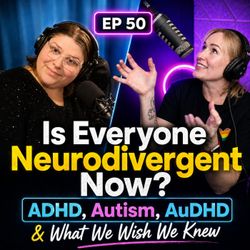
50. Ep. 50! Is Everyone Neurodivergent Now?
58:49||Season 2, Ep. 50AuDHD for grownups: honest, funny, neurodivergent conversations about work, relationships, sensory overload, identity, and the stuff nobody explains after diagnosis.This podcast was created on the lands of the Ngunnawal, Wadawurrung and Dja Dja Wurrung Peoples.Hello, hello, and welcome to F Them Fish: AuDHD for Grownups with your neurodivergent besties, Callie Elward-Barrett and Jayne Gurton. This is the podcast where we talk about neurodivergence in real adult life: work, relationships, burnout, overwhelm, identity, and all the weird little things that make you think, ‘surely it’s not just me.’ We’re honest, occasionally sweary, and very much not interested in pretending to be polished.Grab a beverage, or body double some life admin with us in your ears and let’s get started!It's our 50th Episode! We started with a bit of a rant about Mother's Day, then decided to tackle this pervasive idea that there is an 'overdiagnosis crisis' - spoiler alert, we have opinions!We decided after all of that to run through our '50 Things That...' lists in honour of our milestone. We think you'll find something that not only hits you in the feel bone, validates things you always suspected, and gives you some interesting dinner table chats, but our 50 accommodations list might just change your life. What did we miss? Tell us!ConnectFind us on YouTube, Instagram and TikTok at F Them Fish: AuDHD for GrownupsSend your stories and questions to FThemFish@gmail.comAuDHD for grownups: honest, funny conversations about work, relationships, sensory overload, identity, and the stuff nobody explains after diagnosis.Timestamps00:00 - Intro and Mother's Day Rant - Cancel it!06:49 - Sidequest: That's not alcohol free!09:14 - Everyone is getting diagnosed nowadays11:58 - Understanding Neurodivergence across Generations14:45 - Generational Neurodivergence in the Workforce17:41 - The Spectrum of Neurodivergence21:02 - 50 signs it was probably AuDHD all along28:45 - Don't iron clothes on your body!30:18 - 50 Things We Wish We'd Known Earlier38:09 - 50 Tiny Accommodations That Changed Our Lives46:31 - Contact us if you want to know more about accommodations47:41 - 'Sorry' is the armour we wear to protect ourselves48:52 - 50 Things We No Longer Apologize For56:17 - Reflecting and outro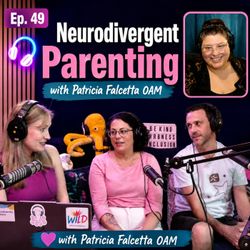
49. Ep. 49 Neurodivergent Parenting with Patricia Falcetta OAM
49:02||Season 2, Ep. 49AuDHD for grownups: honest, funny, neurodivergent conversations about work, relationships, sensory overload, identity, and the stuff nobody explains after diagnosis.This podcast was created on the lands of the Ngunnawal, Wadawurrung and Dja Dja Wurrung Peoples.Hello, hello, and welcome to F Them Fish: AuDHD for Grownups with your neurodivergent besties, Callie Elward-Barrett and Jayne Gurton. This is the podcast where we talk about neurodivergence in real adult life: work, relationships, burnout, overwhelm, identity, and all the weird little things that make you think, ‘surely it’s not just me.’ We’re honest, occasionally sweary, and very much not interested in pretending to be polished.Grab a beverage, or body double some life admin with us in your ears and let’s get started!Are you a neurodivergent parent? Or do you parent neurodivergent kids? The this episode might just be for you. We talk with Patricia Falcetta OAM about her WILD award, the work she has been doing in the neurodiversity space with families and workplaces, and what drove her to do this work...several years before most people were doing it. She even received an Order of Australia Medal for it!You can find Patricia on Instagram: https://www.instagram.com/patricia.falcetta/?hl=en or LinkedIn: https://www.linkedin.com/in/patriciafalcetta/ Her website is https://sociallivingsolutions.com.auTimestamps00:43 — Welcome to WILD Voices01:53 — Patricia’s WILD Award and Autism Awareness Month03:27 — Patricia’s OAM and her family’s diagnosis journey07:16 — Outdated labels, Asperger’s and PDD-NOS08:20 — “Too empathetic to be autistic”10:05 — Parent guilt, school systems and survival12:00 — From parent advocacy to professional support13:48 — Late diagnosis, ADHD and the female experience16:16 — Advocacy, burnout and caring for yourself18:59 — Why parents still feel isolated after diagnosis20:55 — Strengths-based advice for parents24:07 — Supporting exhausted neurodivergent parents25:45 — Regulation strategies that actually work28:19 — Fidgets, sensory tools and oral stims31:18 — Tech, kids and nervous system overload33:03 — Safety shows, spas and brain breaks34:23 — Patricia’s impact in the neuroinclusion space36:28 — Challenging the myth of low empathy36:43 — Double empathy explained40:52 — Jayne’s emotional realisation42:46 — Neurodivergence, spirituality and sensitivity43:56 — Patricia’s fun fact: dance classes44:55 — Where to find Patricia45:47 — WILD links and closingConnectFind us on YouTube, Instagram and TikTok at F Them Fish: AuDHD for GrownupsSend your stories and questions to FThemFish@gmail.com
48. School and Friendship Advice for ADHD Kids from PB
20:57||Season 2, Ep. 48Callie and Jayne are out this week, with Callie MCing the Australian Neurodiversity Summit and at 945pm, the night before the pod is supposed to drop at 5am, she had to admit defeat on being able to edit this week's episode. So you lucky listeners get to listen to an episode from the inimitable PB, all about school and friendship challenges. We had an incredible episode to share with you this week that you'll get to hear next week instead. Enjoy this break from usual programming and we will see you soon next week xxPB is back and she has got a lot to say about the challenges for ADHD kids. This episode has some fantastic advice for kids, parents AND teachers!In this special episode, PB shares what it’s really like to navigate school with ADHD. From fidgets that help with focus, to the importance of having understanding teachers, PB gives us an honest and refreshing perspective on how neurodivergent kids experience the classroom.Whether you’re a child, parent, or educator, PB’s insights remind us that ADHD isn’t about being naughty, it’s about different ways of thinking, learning, and thriving.What You’ll Learn in This Episode:Why ADHD can make school challenging, and what helps.How fidgets aren’t distractions, but powerful focus tools.Why teachers’ understanding of ADHD makes all the difference.The importance of involving children in conversations about their needs.How parents and educators can work together for better outcomes.A reminder that neurodivergent kids see the world differently, and that’s a strength.Sound Bites:It’s not the nicest.Teachers are really busy.Speak out, speak your mind.Chapters:00:00 – Introduction and Personal Updates00:37 – Navigating School with ADHD02:22 – The Role of Fidgets in Learning05:15 – Advice for Teachers and Parents08:21 – Understanding Neurodiversity in the Classroom11:07 – Final Thoughts and EncouragementWho This Episode Is For:Neurodivergent kids who want to feel seen and heard.Parents who want to better support their child’s learning journey.Teachers looking for real insight into what helps students with ADHD thrive.
47. Ep. 47 Should You Quit Your Job to Become an ADHD Entrepreneur?
01:00:50||Season 2, Ep. 47This podcast was created on the lands of the Ngunnawal, Wadawurrung and Dja Dja Wurrung Peoples.Hello, hello, and welcome to F Them Fish: AuDHD for Grownups with your neurodivergent besties, Callie Elward-Barrett and Jayne Gurton. This is the podcast where we talk about neurodivergence in real adult life: work, relationships, burnout, overwhelm, identity, and all the weird little things that make you think, ‘surely it’s not just me.’ We’re honest, occasionally sweary, and very much not interested in pretending to be polished.Grab a beverage, or body double some life admin with us in your ears and let’s get started!What happens when you leave a secure job, build a business around the work you actually care about, and then realise the workplace structure that used to hold you up is gone?This week, Jayne flips the script and interviews Callie about what it’s really like to become a neurodivergent entrepreneur. They talk about the hidden executive functioning cost of working for yourself, why client work gets done while the business-building stuff gets pushed aside, and the strategies Callie is using to stay afloat, including separating what’s critical from what’s merely important, celebrating small wins, and creating somewhere to put the side quests. Timestamps:00:00 Intro03:43 Jayne’s eye emergency and medical dismissal09:39 Neurodivergence, healthcare bias, and the medical passport idea14:11 Productive recovery weekend, and the floordrobe clean-out17:14 TEDx news and neurodivergence in aged care20:02 Should you leave your job to become an entrepreneur?20:53 Why Callie left a secure government role23:00 The real challenge of working for yourself25:06 Why workplace structure matters more than you think27:30 Client work vs business-building29:06 Are ADHDers more suited to entrepreneurship?30:32 Mask switching, family life, and the pressure of doing everything yourself33:24 School holidays34:22 Things that used to work but don’t anymore42:58 Strategies that are helping now51:08 Why it was still worth it59:08 Wrap-upIf you’re an AuDHD or ADHD adult wondering whether to leave your job, build something of your own, or just trying to understand why everything feels harder without external structure, this one is for you.Got a question, story or hot take? Email us at fthemfish@gmail.com.Find us on YouTube, Instagram and TikTok at F Them Fish: AuDHD for GrownupsAuDHD for grownups: honest, funny conversations about work, relationships, sensory overload, identity, and the stuff nobody explains after diagnosis.