Share
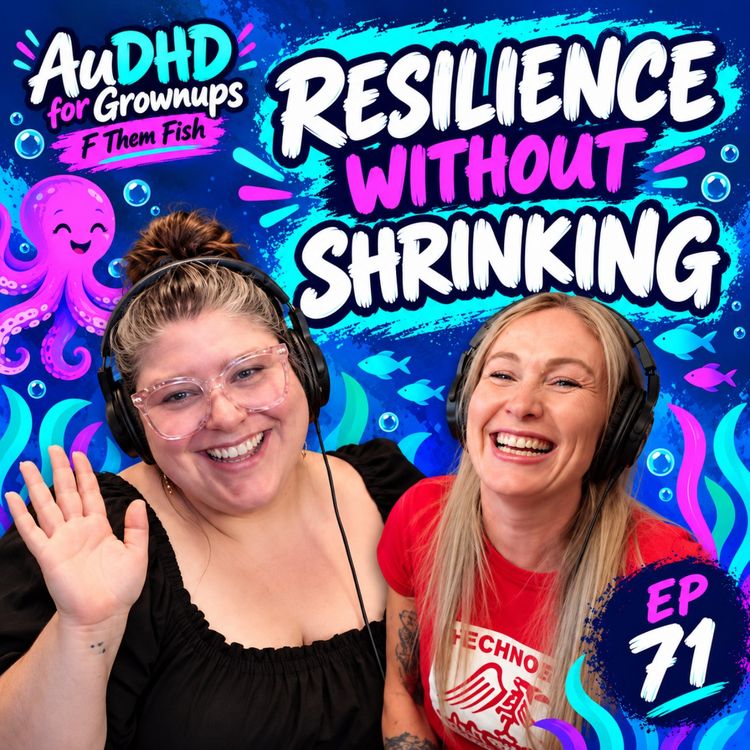
AuDHD Podcast for grownups: F Them Fish!
ADHD in Women: Resilience after a late diagnosis
Welcome to AuDHD for Grownups: F Them Fish. This ADHD Awareness Month episode features late-diagnosed ADHD women Callie Elward-Barrett and Jayne Gurton discussing neurodivergent burnout, self-trust, and resilience when a toxic workplace decides you are the problem.
Do you feel like you went from capable to suddenly being considered the problem without actually changing? What does resilience look like when you can’t simply wait for the difficult bit to end and ‘bounce back’? Callie shares the personal story behind her approach to resilience. As a senior executive, she was supported after her ADHD diagnosis, until a change in leadership brought a very different response.
For Callie, three personal anchors help: feeling that what she does matters, finding joy for its own sake, and choosing to contribute to change. Remember, being harmed doesn’t make fixing the problem your responsibility.
Hello, hello, and welcome! We are your neurodivergent besties, Callie Elward-Barrett and Jayne Gurton. We talk about neurodivergence in real adult life: work, relationships, burnout, identity, and all the things we wish someone had explained earlier. Take us along as your body double while you tackle the washing, go for a walk, or get through that task you’ve been avoiding.
Inside the Episode:
- ADHD disclosure at work: Navigating toxic workplace environments, assumptions about executive dysfunction, and internalised blame.
- Late-diagnosed ADHD in women: Handling midlife transitions, masking, and the intense pressure to keep performing.
- Overcoming ADHD burnout: Why external validation matters when you struggle to trust your own worth.
- Reclaiming self-trust: Finding purpose in small interactions, and experiencing joy without needing to justify it.
- Workplace mistreatment: Choosing a different version of success on your own terms, including leaving an environment that keeps hurting you.
- Plus: Bedazzled ballet flats, celebrant Jayne, neurodiversity conference adventures, and the ‘ADHDacity’ of believing you could absolutely do someone else’s job.
Content note: Swearing, workplace mistreatment, severe emotional distress, references to past dark thoughts, and childhood adversity. The most emotionally intense discussion is around 14:08-22:32. The practical reflection on what helps begins at 27:06.
Timestamps
00:00 Intro and welcome
01:22 Bedazzled ballet flats
04:51 Callie’s ADHD conference adventures
12:39 When the room decides you’re the problem
13:13 What does resilience actually mean?
14:08 ADHD disclosure and a change in workplace support
17:45 Internalised blame and rethinking ‘bouncing back’
20:31 When you’re struggling but can’t talk
22:32 Childhood, ambition, and refusing other people’s limits
27:06 Feeling that you matter: purpose and external validation
31:09 Joy for yourself, and choosing to be part of change
35:49 Letting go of ‘back to normal’
36:53 Your ADHD doesn’t make you the problem
37:52 Keeping your ambition and defining success for yourself
39:40 Listener reflections and staying connected
40:47 Jayne’s Ballarat drag bingo
What helps you feel that you matter? What brings you joy? Email us your stories, questions, or a different perspective - we want to hear it.
Follow the show, share this episode with someone who needs it, and leave a rating or review if our conversations help you feel less alone. We might get better!
Connect with us
Email: fthemfish@gmail.com
Find us on YouTube and Instagram at AuDHD for Grownups: F Them Fish
Website: https://executivefunctioning.com.au/
LinkedIn:
Callie: https://www.linkedin.com/in/callie-elward-barrett-263068142
Jayne: https://www.linkedin.com/in/jayne-gurton-
This podcast was created on the lands of the Ngunnawal, Wadawurrung, and Dja Dja Wurrung Peoples. We acknowledge their continuing connection to Country and pay our respects to Elders past and present.
This episode shares lived experience and personal reflections, not individual medical or psychological advice.
Connect with us:
Email: fthemfish@gmail.com
YouTube and Instagram AuDHD for Grownups: F Them Fish
Callie's Website: https://executivefunctioning.com.au/
More episodes
View all episodes
74. Stop Making Neurodivergent Staff Prove Their Diagnosis
29:41||Season 2, Ep. 74The Risks of AuDHD Disclosure & How to Build a Neuroinclusive Workplace that’s a bit less rubbish.Do you feel you have to explain your adult ADHD or autism before anyone takes your needs at work seriously? Clear expectations, useful feedback, and workplace flexibility shouldn’t depend on disclosing a formal diagnosis.This week on AuDHD for Grownups: F Them Fish, host Callie Elward-Barrett swaps seats to join Bree Gorman on their podcast, DEI Will Not Die. We’re sharing that cross-over conversation here because it offers practical strategies for neurodiversity in the workplace, whether you’re an executive leading a team or a neurodivergent employee trying to be understood.Drawing on her lived experience as an AuDHD senior executive, Callie explores why highly capable people can struggle in one corporate environment and flourish in another, the risks of neurodivergent disclosure for leaders, and how workplace culture changes when managers simply ask how you work best.While quiet rooms and noise-cancelling headphones help, true neuroinclusion happens in everyday conversations about instructions, feedback, energy management, and rewriting the rules of professionalism.In This Episode on Neurodiversity & Workplace Inclusion:The Disclosure Dilemma: Why neurodivergent leaders and senior executives often feel unsafe disclosing autism or ADHD at work.Support Without Proof: How to support neurodivergent staff without demanding formal diagnoses or medical explanations.Beyond Accommodation Stereotypes: Moving past assumptions about what autistic employees or ADHDers actually need.Actionable Communication: Best practices for agreeing on how to communicate tasks, give constructive feedback, and recognise good work.Managing Fluctuating Capacity: Understanding energy burnout and the structural need for workplace brain breaks.The 5Cs Model for Neuroinclusion: A deep dive into Callie’s framework covering Clarity, Capacity, Culture, and Conditions, with Compassion at the centre.Psychological Safety: Making mistakes, repairing professional relationships, and creating room to ask for accommodations.Something to take into your week: What is one thing a manager has done that made work easier for you? Or one change you wish you could ask for? Tell us at fthemfish@gmail.com.Explore the conversation:Originally recorded for Bree Gorman’s DEI Will Not Die.Listen to DEI Will Not Die: https://www.breegorman.com/podcast Connect with Bree on disability and inclusion: https://www.breegorman.com/ Explore Callie’s 5Cs Model for Neuroinclusion: https://executivefunctioning.com.au/5cs-for-neuroinclusion/ Find out about ndWILD: https://ndwild.org/ Disclaimer: This episode shares lived experience and professional perspectives. It is not medical, psychological, or legal advice. Neurodivergent experiences and support needs vary.Follow the show for more honest conversations about adult ADHD, autism, and navigating corporate life with an AuDHD brain.We might get better!We Acknowledge the Ngunnawal, Wadawurrung, and Dja Dja Wurrung peoples, the Traditional Custodians of the lands on which we live, work, and record. We pay our respects to Elders past and present, and extend that respect to all Aboriginal and Torres Strait Islander listeners.
73. Stopping the RSD Spiral: Reframing Rejection in AuDHD
33:01||Season 2, Ep. 73How do you interrupt an ADHD or AuDHD rejection sensitivity (RSD) spiral when your neurodivergent brain has already decided nobody wants you?This week on AuDHD for Grownups: F Them Fish, Callie and Jayne explore practical RSD coping strategies, cognitive restructuring, reframing, and how asking for clarity can stop rejection from shaping what you do next.Besties, knowing something isn’t personal doesn’t always stop it from hurting. After a disappointing Halloween turnout, Jayne arrives feeling raw and ready to never host another party. Together, we work through what might help interrupt that emotional spiral before it decides what happens next.Callie shares her personal experience with neurodivergent reframing and cognitive restructuring, bringing curiosity to the conversation: can you notice what you’re feeling, question the meaning your brain has attached to it, and actively ask for the information you’re missing?We dive deep into adult friendships, masking, and the difference between responding to what actually happened versus responding to the fear of what might happen.In this episode, we break down how to stop an RSD spiral:Noticing the Spiral: Recognizing that you’re experiencing neurodivergent rejection sensitivity before acting on it.Questioning the Story: Am I responding to real-time events, or an anticipated fear?Reframing the Hurt: Making room for alternative explanations without dismissing your genuine feelings.Seeking Clarity: How to navigate unanswered invitations and text messages without guessing.Vulnerability in Friendship: Saying something matters to you and asking for a clear RSVP without guilt or blame.Neurodivergent Support: Reaching out to safe people who can validate you and offer an objective perspective.Regrounding Strategies: Reconnecting with activities and relationships that make you feel safe.We acknowledge the Traditional Custodians of the lands on which we live, work, and record, and pay our respects to Elders past and present. We extend that respect to all Aboriginal and Torres Strait Islander peoples listening.Timestamps: 00:00 Welcome and rejection sensitivity 01:47 Callie’s experience of cognitive restructuring and reframing 05:31 Craft goblin mode and Mardi Gras preparations 06:58 Halloween costumes and trick-or-treating 10:52 The party that brought up feelings of rejection 14:25 When your logical brain knows, but it still hurts 15:57 Asking for validation or another perspective 19:37 When hurt becomes fear of trying again 20:15 What helps Jayne feel loved and grounded 21:48 Rejecting yourself before anyone else can 23:18 Responding to events or anticipating rejection? 24:31 Noticing feelings, reframing, and seeking clarity 25:55 Asking for a response and reaching out for support 27:43 Sharing hurt without blaming friends 28:53 Sour lollies and a side quest 30:31 Journal article news 31:15 Your experiences and closing reflectionsA note on lived experience:We share personal lived experiences of ADHD, autism, and rejection sensitivity. While cognitive restructuring features in our discussion, this episode is not a clinical guide to CBT or a substitute for professional mental health support. Reframing does not require you to deny hurt or treat genuine exclusion as a thinking error.Join the Conversation:What helps you catch an RSD spiral before it takes over? Share your experience, send us a question, and follow the podcast for more honest conversations about neurodivergent adult life.Connect with usEmail: fthemfish@gmail.comYouTube: https://www.youtube.com/@AuDHDForGrownups_FThemFishInstagram: AuDHD for Grownups: F Them FishWebsite: https://executivefunctioning.com.auLinkedIn: Callie Elward-Barrett and Jayne Gurton
72. A Very Neurodivergent Halloween: ADHD, Masking & Belonging
33:24||Season 2, Ep. 72Is Halloween the one night of the year when everyone else puts on a mask, and neurodivergent people finally get to take theirs off? In this Halloween special of AuDHD for Grownups: F Them Fish, Callie Elward-Barrett is joined by a surprise co-host: Troy Heland, affectionately known as Tech Guy! With Jayne unexpectedly unavailable, we're embracing the ADHD chaos and exploring why Halloween can feel so liberating when you've spent a lifetime feeling different.For Callie, Halloween has always been about magic, fantasy, and the freedom to be her weirdest self without judgement. For Troy, it's a chance to turn up the volume on the parts of himself he's always been comfortable embracing.Two ADHD brains. Two very different experiences of fitting in. And one rather interesting question: If putting on a costume makes you feel more like yourself, which version is actually the mask?In this episode:ADHD, autism, and masking: Why Halloween can turn social expectations upside down.Fantasy and escapism: Dragons, Welsh folklore, magical worlds, and finding belonging in imaginary places.Embracing your weird: Why Troy never felt the same pressure to fit in that Callie experienced growing up.Villains and misfits: From the Mad Hatter and Deadpool to Elphaba and Morgana Le Fay, why do we identify with unconventional characters?Authenticity versus unmasking: Does being your authentic self mean expressing everything, everywhere, all the time?Neuroinclusion and shared responsibility: Balancing different sensory needs, boundaries, and everyone's right to feel safe.Privilege, identity, and belonging: How our experiences shape whether being different feels liberating or isolating.And naturally, there's plenty of swearing, side quests, childhood Halloween memories, and a dog who has his own dragon costume.Episode timestamps00:38 – Meet Troy, aka Tech Guy: ADHD flexibility in action03:20 – Why Halloween means so much to Callie08:10 – Childhood memories, trick-or-treating, and freedom10:55 – When everyone else gets to be weird13:30 – The Halloween masking paradox15:45 – Troy's experience: embracing difference and chaotic characters17:15 – Fantasy, outsiders, Elphaba, and Morgana Le Fay20:40 – Authenticity, acceptance, and the limits of unmasking24:20 – Competing sensory needs and shared responsibility25:55 – Why we're drawn to villains, monsters, and misfits28:40 – Maybe Halloween lets us stop pretending to be everyone else31:20 – What have you spent years hiding that you now love?We want to hear from you!What's the weirdest part of yourself you've spent years hiding, only to discover it's something you actually love about yourself?And should Tech Guy come back for another episode?Send us a message, join the conversation on Instagram, or email fthemfish@gmail.com.AuDHD for Grownups: F Them Fish is a podcast about ADHD, autism, neurodivergent adulthood, identity, and everything that happens when we stop trying to fit into boxes that were never designed for us.We acknowledge the Traditional Custodians of the lands, seas, and skies, of this great country, including the Ngunnawal, Ngambri, Wadawurrung, and Dja Dja Wurrung peoples, and pay our respects to Elders past and present.We might get better!
70. ADHD Strengths: What We LOVE About Our ADHD Brains
43:32||Season 2, Ep. 70Do you feel like every conversation about ADHD focuses on what's difficult? For ADHD Awareness Month, we're flipping the script and celebrating what we genuinely love about our ADHD brains.This week we're celebrating ADHD strengths: the joy of tangential conversations, seeing connections others might miss, creative problem-solving, boundless curiosity, empathy, and the audacity to question ‘but we've always done it this way.’Callie celebrates ambition, reinvention and recognising her own capabilities. Jayne brings crowns, crafting, chaos and the joy of exploring new interests. Together, we explore what makes our brains wonderful, without pretending that ADHD is always easy or that every ADHDer experiences it the same way.Hello, hello, and welcome to AuDHD for Grownups: F Them Fish with your neurodivergent besties, Callie Elward-Barrett and Jayne Gurton! We're talking grown-up life, ADHD, autism, relationships, work and everything in between, with honesty, humour and plenty of side quests. Let's get started!In this episodeTangential conversations, ADHD friendships and finding your peoplePattern-spotting, cognitive flexibility and creative problem-solvingEmpathy, diplomacy and understanding different perspectivesCuriosity, hyperfocus, hobbies and finding joyJustice sensitivity and the ADH-Dacity to challenge conventionCareer reinvention, confidence and staying ambitious after diagnosisOur Mardi Gras announcement and upcoming appearancesTimestamps00:00 Welcome, besties! It's ADHD Awareness Month03:00 Getting older, self-acceptance and AuDHDacity05:45 ADHD chaos, crowns and the Diva Den11:45 Could we start a body-doubling community?15:20 Tangential conversations and ADHD friendships18:30 Connecting dots and creative problem-solving19:20 Cognitive flexibility and different perspectives21:35 Empathy, diplomacy and We might get better!23:30 Creativity, curiosity and glorious rabbit holes26:20 Hobbies, experimentation and finding joy28:40 Passion, justice sensitivity and ADH-Dacity32:25 Reinvention, ambition and recognising our strengths37:00 BIG NEWS Announcement!38:30 Where to meet us this October41:00 Never stop exploring or becomingJoin the conversationWhat do you genuinely LOVE about your ADHD brain?We'd love to hear your ADHD joys, strengths and stories.We're also exploring an affordable body-doubling and Q&A community where we can hang out with our besties. Would you be interested? Help us shape the idea!Interested in marching with WILD at Sydney Mardi Gras 2027? Get in touch to find out more.Mentioned in this episodeNSW ADHD Conference – 18 October 2026: Callie's session, Neurodivergent Women: Resilience Without Shrinking. https://www.trybooking.com/au/event/1517967Piano Bar Ballarat – 22 October 2026: Drag Bingo, where Jayne will bring her Mardi Gras sparkle. https://www.pianobarballarat.com.au/whats-onThe NeuroQueer Engineers: Miss Behave (Pride 2026). https://music.amazon.com/albums/B0H664LKD8ADHD Awareness Month workplace sessions: https://executivefunctioning.com.au/Connect with usFollow, rate and share the podcast with someone who needs a little ADHD joy in their life.We acknowledge the Ngunnawal, Wadawurrung and Dja Dja Wurrung peoples, the Traditional Custodians of the lands from which we record, and pay our respects to Elders past and present.Our conversations reflect lived experiences and perspectives, not medical or diagnostic advice.We might get better!
69. ADHD House Hacks Part 2: Chores and Mental Load
38:26||Season 2, Ep. 69Do you feel like managing a household with ADHD means being the one who remembers everything?Callie is back for House Hacks Part 2, with practical home organisation ideas for a neurodivergent house, from visible chore charts to a last-minute gift box. There’s also an honest look at the mental load when you’re the person keeping the systems running.It’s ADHD Awareness Month, the ADHD is ADHDing, and we might get better.Welcome to AuDHD for Grownups: F Them Fish, with your neurodivergent besties, Callie Elward-Barrett and Jayne Gurton. This week, Callie is flying solo, sharing her experience as an AuDHDer, neuroinclusion specialist, and parent in a blended family.In this episodeTiny tasks, endless side quests: When the three-minute Nike rule becomes half an hour of little jobs, and giving yourself permission to stop.Getting everyone involved: Shared shopping lists, reminders, and what happens when people stop using the system.The last-minute gift box: Preparing for the birthday party you remember approximately 30 minutes before it starts.Chore charts with clarity: Making expectations visible and explaining what finished actually means. Apparently, vacuum downstairs needs more detail.Needs versus wants: Making family spending priorities visible, with the adults subject to the same system. Yes, sometimes you will hate your own rules.The hidden mental load: Why a tidy outcome doesn’t necessarily mean the system is working for the person holding it all together.Neuroinclusion at home: Bringing Callie’s 5Cs Model for Neuroinclusion© into family life: Clarity, Capacity, Culture, and Conditions, led by Compassion.These are things we’re trying in an actual house, with actual humans who don’t always want to do chores. Some help a lot. Some need changing. The shoes are still in front of the shoe rack.Start with something that regularly causes friction. Pick one small change, design it with the people who’ll use it, and see how it goes. You’re allowed to adjust it.Pop us on as a body double while you tackle a manageable job, or just keep us company.Catch up on Part 1Episode 65: House Hacks: ADHD Organisation & Reducing Cognitive LoadMentioned in this episodeMy Spirited Mind NSW ADHD Conference: 18 October 2026, Castle Hill RSL.Free Neuroinclusive Facilitation webinar: 21 October 2026, 12–1 pm AEDT, with Callie and Cecilia Jones.Come tell us what works in your houseSend us your house hacks, questions, and the systems that spectacularly failed. We want to hear those too. What helped, what didn’t, and who’s doing the remembering?Email: fthemfish@gmail.comFind us on YouTube and Instagram at AuDHD for Grownups: F Them FishWebsite: https://executivefunctioning.com.au/LinkedIn: Callie Elward-Barrett | Jayne GurtonFollow the show so you don’t miss an episode. If this one sounds like your household, send it to someone who lives there. Ratings and reviews are always appreciated too...5 stars are the only stars! Occasional swearing. We share lived and professional experience. Different households need different things, so use what helps and adapt it to your people.We acknowledge the Ngunnawal, Wadawurrung, and Dja Dja Wurrung peoples, the Traditional Custodians of the lands on which we live, work, and record. We pay our respects to Elders past and present, and extend that respect to Aboriginal and Torres Strait Islander listeners.
68. AuDHD Burnout or Simple Tiredness: Are You Running on Empty?
33:43||Season 2, Ep. 68Do you feel like you’re constantly low on spoons? Are even the things you want to do feeling like effort? Does working out what might help sound like another job you don’t have the energy for? You’re not alone. Hit play to sit with two friends who get it.This week, Callie and Jayne talk about waking up with nothing in the tank, switching between professional and social roles, and making space for recovery when you still don’t feel recovered. From the background radiation of world events to financial stress and information overload, we explore the modern pressures that can leave neurodivergent brains entirely fried.In this episode, you’ll find:We share things we personally find helpful, including noticing what we want less of, and choosing one manageable next stepLow demand comforts, including rediscovering favourite musicBasket date night… Dopamining - salt and vinegar Cheezels, house-system wins, and a particularly inappropriate suggestion for finding lost belongingsAsking for professional and personal support when exhaustion persists.We might get better. But today, we’re starting small.Interested in having Jayne as your wedding celebrant? Email fthemfish@gmail.com, and we’ll connect you.Timestamps00:00 – Theme tune and welcome 02:50 – Do you feel constantly low on energy? 03:35 – Snack fixations and dopamining 05:39 – Can a timer keep us on track? 08:01 – Jayne’s new job, weddings, and the cost of switching roles 11:26 – Making time for recovery but still feeling depleted 13:36 – House systems that work for who you are - we might get better 16:54 – Basket date night: Unf*cking the household clutter together 18:05 – A very inappropriate lost-items strategy from Tom Cardy 19:44 – Feeling underwater and blurred vision 20:49 – When working out what you need feels like another job 22:56 – AuDHD Burnout and invisible effort 24:25 – World events, feeling unsafe, and the cost of living crisis 26:14 – Starting with what you don’t want 28:08 – Sleep, familiar music, and small comforts 29:39 – Finding just one manageable next step 31:16 – Time’s up: staying connected 32:37 – Producer’s note: seeking help and sharing the recovery loadMentioned in this episodeTom Cardy — H.Y.C.Y.BH?: the lost-items song from our side quest. Explicit language.Find our earlier house-systems episode: in your podcast feed.Healthdirect: Fatigue: further information about persistent tiredness and seeking support.Connect with usWe are a 100% independent podcast with no corporate backing or production company. If this episode felt like a warm hug, please follow, rate, or share it with another neurodivergent adult who needs to hear itEmail Us: Send your questions, stories, feedback, and small wins to fthemfish@gmail.com.Socials: Search AuDHD for Grownups: F Them Fish on TikTok, Instagram, or YouTubeCallie’s Info: Explore executive functioning coaching, keynotes, and workshops at Executive Functioning Leadership Callie on LinkedInJayne on LinkedInAcknowledgement of CountryThis podcast was created on the lands of the Ngunnawal, Wadawurrung, and Dja Dja Wurrung Peoples. We pay our respects to Elders past and present, and recognise their continuing connections to Country, culture, and community.Lived-experience noteWe share personal experiences and general discussion, not medical or psychological advice. ‘Low spoons’ describes limited energy or capacity, it is not a diagnosis. Persistent exhaustion, difficulty recovering, or changes in vision deserve professional assessment rather than assumptions about their cause. As Callie’s closing note reminds us, you don’t have to manage recovery alone.Contains occasional explicit language and adult humour.
67. Autistic, Queer, and Doing Life My Way. With Yenn Purkis
55:36||Season 2, Ep. 67Autism, queer identity, ambition, and building a life on your own terms. Author and advocate Yenn Purkis joins us for an honest conversation about their experiences and the expectations they’ve refused to live by.Welcome to AuDHD for Grownups: F Them Fish, with Callie Elward-Barrett and Jayne Gurton, your neurodivergent besties talking adult ADHD, autism, and the stuff nobody explains about grown-up life.This week, Yenn Purkis joins us in the Nook, bringing spectacular rainbow hair, a love of cats, and a remarkable willingness to share the difficult parts of their story alongside the joy.Yenn talks about receiving an autism diagnosis in prison, being misunderstood within mental health services, and finding support that helped them imagine a different future. They describe the steps towards university, a 17-year public service career, writing books, and a home they love, alongside the continuing reality of living with schizophrenia.We get into ambition, the limits other people place on us, and why asking for help can be complicated when independence matters deeply. We also compare our responses to motivational advice and question where protection, challenge, and resilience meet.Then we explore the joy of recognising your identity. Yenn shares their experience of coming out as non-binary and asexual, choosing their name, and finding people who understood. Expect swearing, side quests, and a Podcat determined to join the conversation.Content noteStrong language and discussion of incarceration, bullying, trauma, drug use, psychiatric hospitalisation, schizophrenia, suicide risk, and discrimination.In this episodeAutism diagnosis, misdiagnosis, and Yenn’s experiences of prison and mental health services.Finding hope, accepting support, and taking the next step towards change.Ambition and questioning other people’s assumptions about your capabilities.Support that respects boundaries and autonomy.Our different experiences of motivation, resilience, and discomfort.Non-binary and asexual identity, coming out, and becoming Yenn.Writing for autistic children and discovering how much those books mean to readers.Yenn’s books and websiteYenn Purkis’s biography and websiteYenn’s books at Woodslane HealthYenn also mentions their books with Lived Places Publishing. Contact Yenn through their website or social media to enquire about their newsletter or signed copies.A note from usWe share lived experience, professional perspectives, and personal reflections. This conversation is not individual medical, psychological, or workplace advice. Our ideas about autism, motivation, and resilience are exploratory, not established explanations of how everyone’s brain works. People’s circumstances, barriers, and support needs differ. Expect swearing, disagreement, and ongoing learning.Join the conversationSend your stories, questions, ADHD taxes, guest ideas, and feedback to fthemfish@gmail.com.Find us on YouTube and Instagram at AuDHD for Grownups: F Them FishCallie's Website: https://executivefunctioning.com.au/LinkedIn: Callie: www.linkedin.com/in/callie-elward-barrett-263068142 Jayne: https://www.linkedin.com/in/jayne-gurton-Follow or subscribe so you don’t miss an episode, and leave us a five-star review if the pod makes you feel understood, entertained, or slightly less alone.This podcast was created on the lands of the Ngunnawal, Wadawurrung and Dja Dja Wurrung Peoples. We pay our respects to Elders past and present, and extend that respect to Aboriginal and Torres Strait Islander listeners.
66. ADHD and the Social Media Neuroscience Trap
01:09:25||Season 2, Ep. 66Is internet pop-science lying to you? In this episode of AuDHD for Grownups: F Them Fish, Callie and Jayne dismantle ADHD and the social media neuroscience trap to find out what the research actually says. Does visual clutter actually break the ADHD brain, or is social media overhyping the science? Real scientific studies get twisted into confident, viral social media claims about ADHD, clutter, stress, and working memory. We break down what the research actually measured, where the online interpretations stretch the truth, and how to balance competing sensory needs in shared spaces, because Callie needs a minimalist, clear space to think, while Jayne thrives in a cozy, dopamine-filled environment.Hit follow to join two AuDHD grownups as they debunk pop-neuroscience and figure out whose neurodivergent home wins. In This Episode:Why feeling validated makes us less likely to question internet claims.What visual-processing studies actually tell us about clutter.The real link between uncompleted tasks, stress, and laundry piles.Why useful brain metaphors aren’t empirical proof.How to negotiate shared spaces.Unmasking, mutual consideration, and whose accommodations get prioritised.Timestamps:00:00 Welcome back, Jayne04:38 Your house hacks and the big-light dispute06:04 When a neuroscience post feels almost too validating07:29 Jury duty12:48 British passport rant19:44 The post that started it all23:05 How do we know which neurodivergence content to trust?28:36 Overstating the evidence30:13 Research timelines36:51 Taking laboratory findings into everyday life38:14 Can your brain ignore clutter?40:10 The Yale study42:29 Unfinished tasks and open-tabs analogy44:58 Clutter & cortisol, the 2010 study46:56 The 501-person study48:56 Does visual clutter make working memory shrink?52:18 Validation or pressure54:13 Competing sensory needs and shared spaces58:20 Who gets overlooked in Autism1:02:21 Checking citations1:06:02 Your house hacks Research:These sources give context for our discussion on scientific interpretation and are not interchangeable evidence about ADHD or autistic people.Visual Clutter Study (Yale, 2024): Yale Research Link (Neural activity in macaques, not humans in messy homes).Clutter & Cortisol Study (Saxbe & Repetti, 2010): No Place Like Home Study (Correlated home descriptions with mood, did not establish causation).Home Clutter & Wellbeing (Quinn, 2025): ScienceDirect Link (Survey of 501 adults on perceived clutter and home beauty).Visual Attention Cortex (McMains & Kastner, 2011): JNeurosci Link (Research on visual competition, not working-memory).Unfinished Work Meta-Analysis (Wendsche et al., 2026): PubMed Link (Thoughts about work outside of working hours).Zeigarnik Effect Review (Ghibellini & Meier, 2025): Nature Link (Questions whether unfinished tasks enjoy a memory advantage).Original Instagram CarouselGhibellini and Meier’s 2025 review of the Zeigarnik and Ovsiankina effects adds context to the open-tabs discussion. Join the Conversation:Send us your house hacks, your big-light stance, or a claim you’d like us to investigate!Email: fthemfish@gmail.comSocials: Find us on YouTube and Instagram at AuDHD for Grownups: F Them FishCallie’s Website: https://executivefunctioning.com.au/LinkedIn: Callie: www.linkedin.com/in/callie-elward-barrett-263068142Jayne: https://www.linkedin.com/in/jayne-gurton- If you enjoyed this episode, please follow the show and leave a rating or review to help other neurodivergent grownups find us!Disclaimer & Acknowledgements:We share lived experience, professional perspectives, and our own interpretations of research. This conversation is not medical advice. Expect mild swearing and ongoing learning.We acknowledge the Traditional Custodians of the lands from which we record: the Ngunnawal, Wadawurrung, and Dja Dja Wurrung peoples. We pay our respects to Elders past and present, and extend that respect to all Aboriginal and Torres Strait Islander listeners.