Share
Eat Sleep Work Repeat - better workplace culture
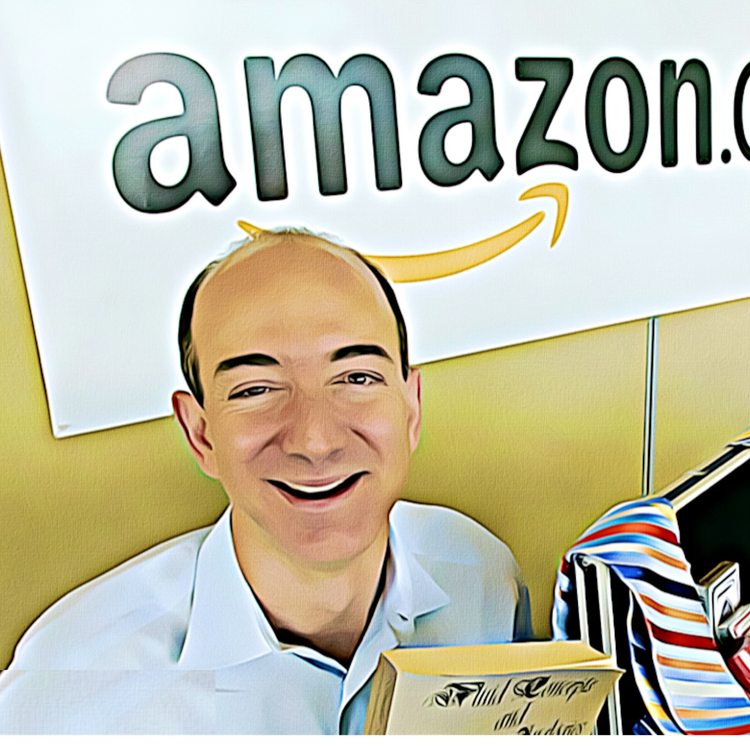
Amazon: creating the 'invention machine' culture
Amazon announced its earnings last week - and saw its share price hit a record high.
Announcing that they’d surpassed 200 million Prime members was just one of the milestones that the company was able to celebrate in a blowout performance. The company’s sales - no doubt helped by a captive audience trapped at home in a pandemic - rose by 44%, a growth clip that would seem impossibly high for a 17 year old firm if we hadn’t seen Apple’s revenue grow by 54% two days previously.
The interesting difference between Amazon and many of the tech brands that we’re surrounded with is that much of their innovation comes from within. For sure we all use multiple products by Google, but the search company bought YouTube, bought Android, bought what became Google Maps, bought Waze, bought Nest, bought their self-driving cars business, bought DoubleClick ads, and also bought lots of things that are now sitting in the where are they now? file like Fitbit and Motorola. Sure we know that Facebook own Instagram (bought in 2012), Whatsapp (bought in 2014) and Oculus (bought in 2014) but their homeground products (remember Poke? Slingshot? Lasso? of course you don’t).
The big question you might ask about these big tech cultures is ‘if they’re so special how come they don’t create any follow-on hits themselves?’ Tech versions of Pixar they are not, they’re the Maroon 5’s of invention, shipping in the clever ideas of other people to keep them bopping in the app charts. It’s not unfair to characterise these companies as bloated bureaucracies propped up by vastly cash generative ad businesses. The commercial real estate expert Dror Poleg commented last week that we sometimes look to the examples set by these big firms as a sign of what the smart brains are doing. Poleg was looking at JP Morgan just about agreeing to some degree of hybrid working. The truth of all of these firms is that, despite the external mystique, they are able to avoid decisions of scarcity by their high margins and often make terrible decisions along the way. I’m often emailed by people who work at big tech firms who tell me that their job is a slow-moving bureaucracy overwhelmed with rules and red-tape, in contrast when people from education or local government contact me they are apologetic for how slow their cultures are to evolve. Little do they know how big tech firms share a lot in common with them.
So how do Amazon do it? This week’s podcast is a discussion with long-time Amazon exec Colin Bryar. Along the way we talk through Amazon’s Leadership Principles, how Amazon created products like Kindle and Prime, their recruitment process, and much more. But there was one thing that really stood out to me and that was the idea of ‘Separable, Single-Threaded Leadership’. As Colin told me Jeff Bezos made a comment one day, ‘The best way to fail at inventing something is by making it somebody’s part-time job’. Bezos realised that the worst part of people’s roles was having to keep dozens (hundreds!) of colleagues in the loop because of co-dependencies. The best way to make people feel empowered by their job was to genuinely empower them - to let them get on with them without having to tell everyone what they were doing all of the time. To that end Bezos decided ‘that if we wanted Amazon to be place where builders can build, we needed to eliminate communication, not encourage it’.
Wow. Think about that. Someone recognising that the worst part of your job is endless video calls and emails stopping you actually doing your job. As Colin puts it, ‘In other words, Jeff’s vision was that we needed to focus on loosely coupled... Sign up to the Make Work Better newsletter or check out the best ever episodes at the website. Eat Sleep Work Repeat is made and hosted by Bruce Daisley.
More episodes
View all episodes

231. Stop talking about culture - deal with behaviours
55:42||Season 12, Ep. 231Proper ding dong this week. I have a fabulously enjoyable back-and-forth with the brilliant Professor Rob Briner.At one stage Rob says: ‘If you tell someone - whose favourite thing is organisational culture - and you tell them it’s not a very useful idea - they don’t like it.’ Well, I felt seen. To be fair I’d already acknowledged that I agreed on what he was saying that behaviours are more important than culture. Also I’m more than a culture fan, I promise.But it’s a sign that it’s an outstanding discussion. Rob’s key point was that the idea of culture is vague and subjective. Rob says that culture is ‘a description. So if you want to change something, you don’t change the description of it, you change the cause of it.’ He says we should be specific about what we're trying to change, not just wave our arms and mouth 'culture'.We discuss if an obsession with scale is the curse of modern business.How to build effective organisations.Why you should focus on being specific about culture.It's worth checking out some of Rob's posts. For example: Does changing culture change behaviour?Rob asked me to share the following bio:Rob Briner is Professor of Organisational Psychology (Queen Mary University of London) and a Research Director at Corporate Research Forum (rob@crforum.co.uk). He has been promoting Evidence-Based Practice in Management, HRM and Work Psychology for almost three decades. His recent research with Corporate Research Forum includes reports on Evidence-Based HR and how HR can more effectively drive organisational performance. He also leads CRF’s Work Psychology Network which has produced reports summarizing the best available and most practical work psychology theory and evidence around a range of topics including motivation and performance, assessing potential and behaviour change in organisations. He has also produced a series of short posts on LinkedIn where he explores various popular ideas about behaviour at work (e.g., learning styles, psychological safety, growth mindset, happy-productive worker) and asks about each: Is that really a thing? That question is answered through a combination of critical thinking and using reviews of scientific evidence. There's a full transcript at the website.
230. What chance do we have versus the machines?
43:13||Season 12, Ep. 230Sarah O'Connor is a journalist for the Financial Times who specialises in writing about work and the evolution of our jobs. Over the last year or so that has meant a lot of reflection about AI job displacement.In her new book, We Are Not Machines, Sarah reflects on how technological change is reshaping the workplace - and the invisible enshittification it often brings with it. Sarah has a strong message: firstly that we should have more belief in the unique strengths of human labour, and secondly that individual agency is the most important differentiator in our favour.It's a brilliant conversation that gives a flavour of her book.
229. Can one bad apple ruin your team?
47:24||Season 12, Ep. 229Kate Murphy is the author a new book called Why We Click. It combines the very latest research into interpersonal synchrony - how we form bonds with others. It's an intriguing read - at times compelling, at times challenging.I chatted to her to understand 'the bad apple effect' and her take on whether we need face-to-face communication at all costs.There's a full transcript on the website.
228. Your colleagues like you more than you realise…
46:38||Season 12, Ep. 228Dr Gillian Sandstrom is a researcher whose work explores her fascination with our conversations with other people - whether colleagues, friends or strangers. She’s just published a fabulous new book ‘Once Upon A Stranger’.Her work says that we often have a ‘liking gap’ when we talk to people - we think they like us less than we like them - even if they are work colleagues. It turns out not to be true - our co-workers like us more than we realise.It's a brilliant discussion - and potentially a prompt for you to change how you live your life.This week's newsletter is about talking to colleagues.
227. Life Reclaimed with Pippa Grange
39:46||Season 12, Ep. 227A return interview with Dr Pippa Grange, a performance ("regenerative") psychologist who has worked with the England men's football team and who has earned the admiration of Brene Brown.I'm always excited to hear from the likes of Pippa, elite practioners who have earned the respect of the most respected high performers in the world.Pippa has a new book out, Life Reclaimed, which is a reflection on burnout, the need for overperformance and how to achieve balance in life. It's partly informed by her work with some of the most talented people in the world and certainly bears the trace of her own experiences with burnout.She also previews the BBC TV adaptation of Dear England featuring a character based on her.
226. We-ness: The secret cause of Psychological Safety
55:06||Season 12, Ep. 226I saw a post by Professor Rob Briner about the enigma of psychological safety, and in the replies it was discussed that in fact PS isn't so much an enigma, there's evidence that it is the output of group identity. It felt important to talk to Katrien Fransen about her work exploring this.This conversation (and the papers that led into it) were real penny drop moments for me.There's a full transcript on the website.Check out more:We spend a lot of time talking about Katrien’s paper: The impact of identity leadership on team functioning and well-being in team sport: Is psychological safety the missing link?We also discuss Unlocking the Power of ‘Us’: Longitudinal Evidence that Identity Leadership Predicts Team 5 Functioning and Athlete Well-BeingHer website focuses on the services that she and her colleagues provide for organisations.Katrien is the co-author (alongside former guest Alex Haslam and Filip Boen) of The New Psychology of Sport and Exercise: The Social Identity ApproachHere's Rob Briner's post about psychological safety being hard to reproduce on demand.More about Professor Katrien FransenI talk about a podcast featuring the boat race, you can check that out here.
225. The more you talk about culture, the less people believe you
47:03||Season 12, Ep. 225Today's conversation is with Professor Benjamin Laker, someone I've long admired for his cutting edge work on the evolution of culture. His article on Meeting Free Days is probably the piece of research I've shared the most in the last 5 years.Laker is Professor of Leadership at Henley Business School, which is part of the University of Reading. As well as writing multiple bestselling books on work like Too Proud to Lead and Job Crafting, he's also published dozens of articles in HBR and MIT Sloan Management Review. He's worked with government helping to develop policy on work and it's evolution.I could have chatted to Benjamin about dozens of things but I specifically wanted to dive into a sensational piece he wrote in Harvard Business Review at the end of last year about changing culture inside of organisations.Full transcript on the website
224. Flourishing at Work
39:11||Season 12, Ep. 224Daniel Coyle returns to reflect on what has changed since we last spoke. He's moved attention to an examination of what contributes to us getting a fulfilling experience from work - and life.We talk attention, community and the way that great teams demonstrate 'group flow'. We also delve into some research by Nick Epley that I've covered on the newsletter, that suggests we're terrible at predicting what will make us happy.If you like this check out the previous episodes with Daniel:Dan Coyle can fix your broken cultureThe Culture Code
223. What makes for the Best Place to Work
22:18||Season 12, Ep. 223I'm joined by Daniel Zhao, chief economist of Glassdoor, who talks me through their new rankings of the best places to work in 2026.It's an intriguing list, is a car wash really better than some of the most famous tech brands in the world?The ranking allows us to explore what we want in a job: culture, connection, progression and autonomy.Bad culture is 7 times more powerful driving quitting than salary: hear Charlie and Donald Sull talk about Glassdoor dataGlassdoor: Top US places to workGlassdoor: Top UK places to workFull transcript on the website