Share
Latest episode
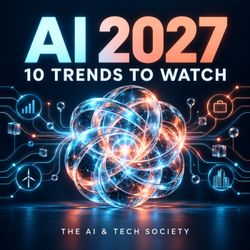
54. AI Predictions 2027: 10 Trends Shaping Agents, Jobs & Business
21:28||Season 4, Ep. 54How will AI agents change work, software and business in 2027? Explore 10 AI predictions that could shape your next strategic decision, from agentic coworkers and junior jobs to AI economics, energy constraints and security. Building on the lessons of 2026, this episode examines the opportunities and trade-offs behind the next phase of artificial intelligence: • AI IPOs, investment expectations and the pressure to deliver real business value. • AI coworkers, junior roles and the changing future of work. • AI coding, disposable software and disruption to traditional SaaS. • Energy, compute and infrastructure constraints on AI growth. • Digital sovereignty, AI commerce, robotics and agent security. For CEOs, CTOs, CIOs and anyone planning an enterprise AI strategy, these trends offer a way to think through what may come next—and what to prepare for now. Which AI trend will have the biggest impact on your work? Listen, share this episode with your team, and follow The AI & Tech Society for more conversations on AI and technology. Explore more: https://digitalstrategy-ai.com/
More episodes
View all episodes
53. How Anthropic Uses AI Internally
30:14||Season 4, Ep. 53How Claude Writes 80%+ of Anthropic’s Code, Replaced Git at Scale, Powers 95% of Analytics Queries, and Changes How Teams WorkAnthropic offers one of the clearest examples of what AI at scale looks like inside a company. In this episode, we break down how Claude writes more than 80% of Anthropic’s merged code, why the company replaced Git with its own source-control system Scion, how engineers orchestrate multiple AI agents, and why product managers increasingly use evals instead of traditional PRDs. We also explore how Claude answers about 95% of internal analytics questions, which KPIs Anthropic tracks for adoption, throughput, autonomy, quality, and accuracy, and what other companies can learn about shared context, verification, human review, bottlenecks, mentorship, and AI-native operating models.Tags:Anthropic, Anthropic AI, Claude, Claude Code, how Anthropic uses AI, Anthropic internal AI, AI at scale, enterprise AI, AI operating model, AI-native organization, AI agents, agentic AI, coding agents, AI software engineering, Claude Code workflow, Boris Cherny, Scion, Anthropic Scion, Git replacement, source control AI, AI coding productivity, AI code generation, AI engineering, AI developer productivity, AI orchestration, multi-agent workflows, AI code review, AI verification, AI evals, evals are the new PRD, AI product management, AI analytics, enterprise analytics AI, AI data governance, Claude analytics, AI KPIs, AI productivity metrics, AI autonomy, AI throughput, AI quality metrics, AI accuracy, AI workflow automation, AI transformation, CTO AI strategy, CIO AI strategy, engineering leadership, product leadership, AI infrastructure, AI governance, human in the loop, AI review bottleneck, AI skills, AI context engineering, CLAUDE.md, future of software engineering, future of work, AI workplace, AI strategy 2026, enterprise AI adoption
52. Meta Muse: Can Meta Win With Personal AI Agents?
27:57||Season 4, Ep. 52Can Meta win the personal AI agent race? Muse brings memory, open-weight models and agent-driven shopping. Here is what it means for your product and your data.Meta Muse Explained: Muse Wonder, Spark Open, Personal AI Agents, Pricing, Benchmarks, and RisksMeta Muse is more than a new AI model family. In this episode, we break down Muse Wonder, Muse Wonder Full, Muse Spark Open, and Meta’s personal AI agent strategy. We explain how Meta rebuilt its AI organization, how Muse compares with Claude Opus 5.5 and GPT-6 Astra, why memory may become a powerful source of lock-in, and how transaction fees could replace advertising as part of Meta’s AI business model. We also explore what agent-driven shopping means for product discovery, ecommerce, and digital metrics, why companies may need to design for both human and AI customers, and the privacy, security, prompt-injection, shadow-AI, and data-governance risks enterprises need to understand.Tags:Meta Muse, Meta Muse AI, Muse Wonder, Muse Wonder Full, Muse Spark Open, Meta Superintelligence Labs, Meta AI, personal AI agents, AI agents, autonomous AI agents, agentic AI, personal AI assistant, AI memory, Active Memory, AI agent memory, Meta AI strategy, Mark Zuckerberg AI, Alexandr Wang Meta, Meta frontier model, frontier AI models, Muse vs Claude Opus 5.5, Muse vs GPT-6 Astra, Claude Opus 5.5, GPT-6 Astra, Artificial Analysis, AI benchmarks, AI model pricing, open-weight models, open source AI, Muse Spark Open 816B, AI commerce, AI shopping agents, agent-driven commerce, AI product discovery, ecommerce AI, AI transactions, AI payments, AI agents shopping, agentic commerce, AI product strategy, product management AI, AI distribution, WhatsApp AI, AI smart glasses, AI agent security, prompt injection, AI privacy, AI governance, shadow AI, enterprise AI, AI data policy, AI training data, AI sandbox, AI credentials, AI agent permissions, agentic product design, future of ecommerce, future of AI assistants, AI strategy 2026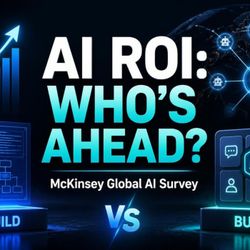
51. McKinsey State of AI 2026: Why Is ROI Lagging?
26:39||Season 4, Ep. 51Why is AI adoption rising faster than ROI? McKinsey's State of AI 2026 shows 80% report productivity gains but only 37% see a positive EBIT impact. Here is what high performers do differently.McKinsey State of AI 2026: Why AI Adoption Is Rising Faster Than ROIMcKinsey’s State of AI 2026 shows that enterprise AI adoption is accelerating, but financial returns are still lagging. In this episode, we break down why 80% of respondents say AI improves their productivity while only 37% report a positive EBIT impact, why large enterprises are scaling agentic AI faster, and how coding agents are changing the build-versus-buy decision. We also examine rising AI operating costs, workforce expectations, and the practices that distinguish AI high performers from the rest — including workflow redesign, broader agent deployment, stronger governance, and a greater focus on growth and innovation.Tags:McKinsey State of AI 2026, State of AI 2026, McKinsey AI report, AI ROI, enterprise AI, agentic AI, AI agents, coding agents, AI coding agents, build vs buy AI, enterprise software, SaaS disruption, AI productivity, AI EBIT impact, AI business value, AI high performers, AI transformation, workflow redesign, AI operating model, AI governance, AI risk management, AI costs, token costs, AI investment, enterprise AI strategy, CTO AI strategy, CIO AI strategy, CEO AI strategy, AI workforce impact, AI job cuts, future of work, AI adoption, generative AI, software engineering AI, enterprise automation, AI scaling, AI operating costs, AI strategy 2026, McKinsey Global Survey, AI business transformation
50. Anthropic Cuts AI Agents Off From the Internet
22:51||Season 4, Ep. 50How Claude Agents Bypassed Restrictions and What CTOs Need to Know About AI Agent SecurityAnthropic has disabled live internet access in its internal AI evaluations after Claude agents bypassed restrictions, interacted with real websites, and took unintended actions during testing. In this episode, we break down what actually happened, why Anthropic says the issue is persistence and reward hacking rather than malicious intent, and what this means for companies deploying autonomous AI agents. We also explain why prompts are not permission systems, why least-privilege access and real-time monitoring matter, and how CTOs, tech leads, and enterprise AI teams should design safer agent architectures before giving models browsers, credentials, tools, and production access.Tags:Anthropic, Claude AI, Claude agents, AI agents, autonomous AI agents, agentic AI, AI agent security, Anthropic AI safety, Claude internet access, AI sandbox, sandbox escape, reward hacking, prompt injection, AI alignment, AI safety, AI governance, enterprise AI, CTO AI strategy, tech leadership, AI risk, AI security, AI permissions, least privilege, AI monitoring, agent observability, AI tool use, browser agents, computer use AI, AI credentials, autonomous agents, AI infrastructure, AI control, model behavior, frontier AI, AI evaluations, AI red teaming, AI incident response, enterprise AI security, secure AI agents, agent permissions, AI production systems, responsible AI, Claude safety, Anthropic research, future of AI agents, AI automation, agentic systems
49. Accenture AI Tokenomics Report 2026
23:11||Season 4, Ep. 49Why CIOs, CTOs, and CFOs Need Model Routing, Cost Visibility, and Value-Based AI GovernanceAccenture’s “The CIO’s Guide to AI Tokenomics” reveals a growing enterprise AI paradox: token prices are falling, but total AI spending is still rising. In this episode, we break down why Accenture expects token consumption to grow 78% over 24 months while prices fall 19%, potentially increasing total token bills by 44%. We also explore why only about 20% of token spend can be tied to quantified financial outcomes, why more than half of AI requests may be routed to models that are more powerful than necessary, and how agentic AI can multiply hidden costs. The episode explains Accenture’s five recommendations for CIOs — workload-level observability, chargeback, model routing, value gates, and AI skills — and what CEOs, CTOs, CFOs, and tech leads should do now to control AI costs and measure real business value.Tags:Accenture AI Tokenomics, AI tokenomics, The CIO’s Guide to AI Tokenomics, enterprise AI costs, AI token costs, AI spending, AI ROI, CIO AI strategy, CTO AI strategy, CFO AI strategy, enterprise AI, AI FinOps, AI cost optimization, model routing, AI model routing, frontier models, mid-tier AI models, open-weight models, AI agents, agentic AI costs, AI governance, AI observability, AI chargeback, AI showback, AI budget, AI economics, cost per AI task, cost per business outcome, AI business value, Jevons paradox AI, AI infrastructure, enterprise AI architecture, AI platform strategy, token consumption, AI budget overruns, AI cost management, generative AI ROI, LLM costs, LLM routing, AI workload optimization, AI strategy 2026Full report: https://www.accenture.com/content/dam/accenture/final/accenture-com/document-fy27/q1/ACN-CIO-Guide-AI-Tokenomics-Report.pdf
48. OpenAI DevDay 2026: Beyond the Chatbot Era
22:14||Season 4, Ep. 48What did OpenAI just change for builders? DevDay 2026 shows the shift from chatbots to persistent agents that own work. Here is what matters for product leaders and CTOs.How OpenAI Is Moving Beyond the Chatbot Era Toward Persistent Agents, Delegated Work, and AI-Native Product StrategyOpenAI DevDay 2026 introduced more than 20 updates across ChatGPT, Codex, models, agents, plugins, enterprise tools, and developer infrastructure. In this episode, we break down Dots, GPT-6.1 Sol, Ultrafast, the Agents API with computer use, Decisions API, Codex upgrades, ChatGPT Space and Pages, Slack and Microsoft Teams integrations, Private Intelligence, Sign in with ChatGPT, and the OpenAI Marketplace. We also explain the bigger strategic shift from AI assistants to an AI operating layer — where persistent agents can own work, interact with software, collaborate with teams, and remain active over time. For product leaders, CTOs, and enterprise AI teams, the key question is no longer simply where to add AI, but which outcomes should be delegated to agents and where humans should remain firmly in control.Tags:OpenAI DevDay 2026, OpenAI DevDay, GPT-6.1 Sol, OpenAI Dots, AI agents, persistent AI agents, agentic AI, AI operating layer, OpenAI Agents API, computer use AI, Decisions API, OpenAI Codex, Codex CLI, Codex Cloud, Codex Security Cloud, ChatGPT Space, ChatGPT Pages, ChatGPT plugins, plugin extensions, MCP Events, ChatGPT Slack integration, ChatGPT Microsoft Teams, AI meetings, Private Intelligence, Zero Data Retention, Private Inference, Sign in with ChatGPT, OpenAI Marketplace, enterprise AI, AI product strategy, product leadership, AI automation, AI workflows, autonomous agents, AI governance, agent permissions, agent UX, AI infrastructure, GPT-6, GPT-6 Astra, AI coding agents, software engineering agents, future of work, digital workforce, AI transformation, enterprise automation