Share

Digital Workplace Impact
Episode 155: Leading digital transformation at Motorola: A community manager's perspective
Are you a technology enthusiast, a business leader or someone who is simply curious about the future of work? If so, sit back and enjoy this episode of Digital Workplace Impact, which is packed with insights and inspiration around responding to rapid technological changes and human factors whilst transforming the digital employee experience (DEX).
Host Nancy Goebel is joined in the studio by Ted Hopton, DWG alum and Manager of the Workplace Technologies Team at Motorola Solutions.
The world of work is changing at pace – and it’s happening in impactful ways inside Motorola. Ted brings to life experiences and approaches that he’s taking in his work to balance the needs of the business with those of employees when making decisions about what's next.
For all this and much more about digital transformation at Motorola Solutions, join Nancy and Ted for this great discussion.
(Show notes, links and transcript for this episode.)
Guest speakers:
Ted Hopton, Manager, Workplace Experience Technologies Team at Motorola Solutions
More episodes
View all episodes

Episode 171: How ING is tackling infobesity in the digital workplace
34:58|Information overload is a challenge facing organizations of every size, yet few have taken the time to understand its true impact on employees. In this episode of Digital Workplace Impact, DWG CEO Nancy Goebel speaks with Aletta van Asperen, Senior Communications Innovation Strategist at ING Group, about the organization's research into what it has termed 'infobesity' – the overwhelming volume of messages, notifications and content competing for employees' attention every day. Drawing on focus groups and employee communication diaries, ING uncovered valuable insights into how information flows through a large, complex organization. The research highlighted two major themes: duplication of communications and the challenge of relevance, with employees reporting that only around half of the communications they receive feel directly relevant to their work. Aletta explains how ING is using these findings to drive a long-term transformation focused on reducing noise, improving communication quality and creating a more streamlined digital workplace experience. The discussion explores collaboration between communications, HR and technology teams, the growing importance of content governance in the age of AI and why communicators must act as advocates for employee experience. Digital workplace leaders and practitioners will gain practical insights into reducing information overload, improving content effectiveness and creating sustainable change that helps employees focus on what matters most. Guest speaker: Aletta van Asperen Senior Communications Innovation Strategist, ING Group
Episode 170: Enter to learn – what the DWG Awards reveal about great digital workplaces
19:33|What does ‘good’ really look like in today’s digital workplace – and how can you tell if your organization is on the right track? In this episode of Digital Workplace Impact, Nancy Goebel is joined by DWG Director of Technology and Operations, Sarah Escott, to explore the DWG 2026 Awards – and what the Awards reveal about how to achieve an excellent digital workplace. Far from requiring perfection, the Awards shine a light on organizations delivering real impact, grounded in practical progress, learning and iteration. The conversation unpacks how the Awards have evolved to reflect today’s fast-moving, resource-constrained environment, including a simplified entry process designed to encourage and facilitate broader participation. Leaders will gain practical advice on crafting a compelling entry, from shaping a strong narrative to using visuals effectively. Beyond recognition, the episode highlights the wider value of entering – from benchmarking your progress and sharpening your storytelling, to connecting with peers and learning from others across the industry. If you’re driving digital workplace change, this episode offers both inspiration and actionable insights. Guest speaker:Sarah Escott,DWG Director of Technology and Operations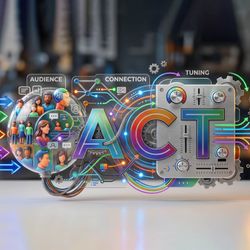
Episode 169: How a former Visa exec’s ACT delivered 98% GenAI adoption
45:44|In this thought-provoking episode, Nancy Goebel is joined by Stacey Taylor, a marketing-led transformation leader and former Visa executive, to explore how a product mindset can unlock breakthrough adoption of generative AI.At the heart of the conversation is Stacey’s ACT approach – Audience, Connection and Tuning – a powerful way to reframe change from a one-off project to an ongoing product experience. For digital workplace leaders navigating relentless waves of transformation, this shift is both timely and practical.Drawing on her experience leading GenAI adoption at Visa – including an impressive 98% uptake – Stacey shares how deep audience insight, role-based value propositions and a strong network of trusted internal influencers can turn change fatigue into genuine pull. She also highlights the often-underestimated role of market-facing teams, who bring an ‘outside-in’ perspective and can accelerate adoption through compelling, real-world use cases.The discussion then moves on from launch to sustained impact. Stacey introduces the ‘tuning’ mindset – continuously listening, adapting and refining based on feedback and data – along with a pragmatic measurement menu, from adoption velocity to repeat usage and engagement signals.This episode will be an inspiring listen for anyone looking to drive meaningful AI adoption at scale. It reframes GenAI not as a tool rollout, but as a human capital transformation, offering a clear, actionable path towards making that shift a success
Episode 168: Hyperadaptive – Rewiring organizations to become AI-native
31:34|What does it really take to make AI work at scale inside large organizations? In this episode of Digital Workplace Impact, DWG Chief Executive Nancy Goebel sits down with Melissa Reeve, author of Hyperadaptive: Rewiring the enterprise to become AI-native, to explore why so many AI initiatives stall – and what leaders must do differently to calm the hype and achieve lasting impact. Drawing on her background in Lean, Agile and DevOps thought leadership, Melissa argues that AI is not just a technology shift but a fundamental rewiring of the operating model. She introduces the concept of the ‘hyperadaptive’ organization – one that can sense and respond in near real time by compressing decision-making, workflows and governance. Crucially, becoming AI-native is as much about people, culture and leadership as it is about tools. The conversation unpacks the difference between being AI-enabled and AI-native, before examining why rushing to automate without strong foundations erodes trust. Melissa shares her practical five-stage Hyperadaptive Model, explains why dynamic governance and AI literacy matter more than pilots, and makes a compelling case for investing in new roles and learning systems such as AI activation hubs. With encouraging job predictions from the World Economic Forum and a real-world example from Moderna, this episode challenges leaders to think systemically and take a deliberate, long-term approach to AI. Guest speaker: Melissa Reeve, Author of ‘Hyperadaptive: Rewiring the enterprise to become AI-native’
Episode 167: The Community‑First Advantage: Turning trust into ROI
40:47|Digital Workplace Group CEO and host of Digital Workplace Impact, Nancy Goebel, is joined by long-time community practitioner and author Chris Catania to explore why community is no longer a ‘nice-to-have’ but a strategic advantage for modern organizations.Drawing on his new book The Community-First Advantage, Chris makes a compelling case for treating community as a system – one that builds trust, drives growth, reduces cost and strengthens loyalty at a time when traditional command-and-control leadership is fast becoming obsolete. Based on 20 years of research and interviews with more than 100 leaders, he introduces two practical frameworks designed for leaders under pressure to deliver results while not contributing to the ‘loneliness epidemic’ that can too easily prevail if workplace change is not handled correctly.The ADAPT model focuses on leadership mindset – authenticity, decision, agility, purpose and trust – and shows why leading with humanity and openness is essential in the age of hybrid work and AI. Chris then translates belief into action through the ‘three E’s’ of experience, enablement and evaluation, offering clear guidance on where to invest in community, how to bring stakeholders with you and how to connect community activity to ROI that stands up to CEO and CFO scrutiny.Citing real examples – from LEGO’s transformation journey to lessons on measuring value beyond metrics alone – this episode is packed with insights for digital workplace leaders looking to build trust-based organizations that can adapt and thrive in the AI era. Guest speaker:Chris Catania, Author of ‘The Community-First Advantage’
Episode 166: Change agility at the speed of disruption
52:44|For this episode of Digital Workplace Impact, DWG consultant and researcher Shimrit Janes joins Nancy Goebel to explore why change agility has become a critical capability for digital workplace teams navigating constant disruption. Drawing on DWG’s latest research, the conversation reframes change from a series of planned events into an ongoing, human experience that requires sensing, responding and adapting in real time. Shimrit introduces a powerful metaphor that runs throughout the episode – traditional change management as classical music, while change agility is jazz. While structured approaches still matter, today’s digital workplace demands the confidence to improvise, experiment and respond together when the pace of change accelerates. From generative AI and organizational restructuring to shifting ways of working, the episode explores how teams can move from reacting under pressure to building sustainable readiness. Listeners are taken through the three dimensions of change agility – personal, relational and strategic – with practical insights into mindset, psychological safety, decisionmaking and governance. The discussion is grounded in realworld examples, including awardwinning case studies from organizations such as Vodafone and EY, showing what change agility looks like in practice at scale. This is a thoughtful, inspiring listen for anyone leading or supporting the digital workplace in this era of constant change. If you are grappling with overlapping change, AI adoption or growing uncertainty, this episode will help you slow down just enough to go faster – and thrive in the process. Guest speaker: Shimrit Janes DWG Consultant and Researcher
Episode 165: The AI-ready digital workplace – a Microsoft MVP’s playbook for success
34:12|In this episode of Digital Workplace Impact, host Nancy Goebel is joined by Suzy Dean, Microsoft MVP, and CEO and Co-Founder of Addin365, for a practical and insight-rich conversation on what it truly means to design and run an AI-ready digital workplace. Drawing on extensive real-world experience across the Microsoft 365 ecosystem, Suzy reflects on how the accelerating pace of technological and organizational change is placing new demands on digital workplace teams. Together, Nancy and Suzy unpack why many digital workplaces struggle with adoption, pointing to familiar challenges such as technology-led rollouts, fragmented governance, outdated content and experiences that fail to support the tasks employees are actually trying to complete. A central theme of the discussion is alignment – between business strategy, employee needs and technology capability. Suzy shares a playbook for success that starts with engaging senior leaders around business outcomes rather than tools, ensuring shared ownership of content and governance, and designing navigation and experiences around work tasks rather than org charts. The conversation reinforces why governance can no longer be deferred in an AI-enabled environment, where tools like Copilot surface everything – good, bad and contradictory. The episode also explores how AI can become a genuine force multiplier for overstretched teams. It highlights emerging Copilot capabilities, such as Knowledge Agents and Researcher, that can automate content reviews, clean-up and research, freeing people from manual, low-value work and enabling greater focus on strategic impact. This episode offers timely actionable guidance for digital workplace leaders navigating AI-enabled ways of working. Guest speaker: Suzy Dean, Microsoft MVP, CEO and Co-Founder, Addin365
Episode 164: Raising your organization’s digital IQ: The path to an AI ready workforce
32:53|In this episode of Digital Workplace Impact, host Nancy Goebel explores AI literacy – one of the hottest topics for organizations right now – with Elizabeth Marsh, DWG Director of Research, and author of DWG’s recent research report ‘Empowering employees for the AI era: A guide to AI upskilling’. As AI becomes increasingly integral to workplace innovation and productivity, understanding the readiness of employees to embrace this technology is paramount. Drawing on her research, Elizabeth highlights the importance of fostering a culture of AI literacy to unlock new value and enhance decision-making capabilities. The discussion delves into the current state of AI readiness across organizations, revealing a significant gap between ambition and actual investment in upskilling employees. Listeners will learn about a model for AI literacy that Elizabeth has developed, which emphasizes the need for a holistic approach to digital skills training. From foundational awareness to advanced application, the model progresses through a sequence of practical strategies for empowering employees and ensuring responsible AI use. Elizabeth also addresses the emotional landscape surrounding AI adoption, underscoring the necessity of building confidence and addressing any fears that may hinder progress. With real‑world examples from Vodafone, Moderna, Danone and others, this episode is packed with actionable insights and real-world examples, making it a must-listen for anyone looking to navigate the complexities of AI in the workplace. Whether you're shaping strategy or levelling up your own AI skills, this conversation will inspire fresh thinking about what it takes to create and be part of an AI‑ready workforce. Guest speaker:Elizabeth Marsh, Director of Research, DWG
Episode 163: How Vodafone is going beyond the WOW factor with AI at scale
38:17|In this episode of Digital Workplace Impact, DWG CEO Nancy Goebel sits down with Carolin Lücker, Principal Manager of Strategy, Design & Architecture at Vodafone, to explore how that organization is delivering AI‑enabled transformation at scale.Fresh from winning DWG’s Digital Workplace of the Year Award for AI Enablement at Scale, Carolin reveals how Vodafone built the foundations for rapid, safe AI adoption across more than 20 markets. She explains how long‑term investment in standardization, compliance and employee experience paved the way for advances such as Copilot‑driven personalization, cross‑system AI integrations and early agentic use cases – from AI‑supported RFP processing to an innovative 'flight school' that helps leaders sharpen prompting skills and model new ways of working. Carolin underscores that AI transformation is ultimately a business transformation, powered by leadership commitment and a culture of curiosity and psychological safety. She also reflects on the ongoing challenges of sustaining adoption, aligning AI with business priorities and orchestrating governance to seize the 'golden windows' for change. This conversation is essential listening for digital workplace leaders and practitioners shaping the future of work through AI‑driven strategy, culture and innovation. (Show notes, links and transcript for this episode.)Guest speaker:Carolin Lücker, Principal Manager of Strategy, Design & Architecture, Vodafone