Latest episode

Episode 174: Digital communications at work: Designing channels people actually use
40:56|Every year organizations pour money and resource into employee communications – launching new apps, newsletters, channels and campaigns. And yet, employees still struggle to find information, feel connected to colleagues, and work out what matters. Maybe the answer isn’t yet another channel but a more coherent communication ecosystem. In this episode of Digital Workplace Impact, DWG CEO Nancy Goebel talks with Sharon O’Dea and Jonathan Phillips, co-authors of the book Digital Communications at Work, about how to optimize digital channels so that people start to use, value and trust them. Sharon and Jonathan introduce their five-layer model – Plan, Collaborate, Publish, Distribute and Discuss – and explain why the process of publishing does not equal communication. They explore how discovery and user needs should shape channel choices, why adoption matters more than launch, and how leaders should move beyond vanity metrics to measuring outcomes and impact. The conversation also examines how AI is reshaping digital communications. From personalization and planning, to analysis and employee feedback, its potential extends far beyond merely generating copy. But realizing that potential requires human judgement, accurate source content, ownership and strong governance. For digital workplace practitioners and leaders, this episode offers a practical way to rethink channel strategy, adoption, measurement and AI governance. Listen for ideas that can help you build a more joined-up communication ecosystem and deliver greater value for employees and the organization. Guest speakers: Sharon O'Dea DWG member alumna, author and co-founder of Lithos Partners Jonathan Phillips Author and co-founder of Lithos Partners Sharon and Jonathan are co-authors of Digital Communications at Work.
More episodes
View all episodes

Episode 173: From output to impact: Lessons from a Coca-Cola data scientist
36:53|How can digital workplace leaders move beyond counting activity to using data to demonstrate real business value? In thisepisode of Digital Workplace Impact, DWG’s Nancy Goebel talks with Data Scientist Felipe Archila about lessons gained whilebuilding digital workplace analytics capability at The Coca-Cola Company, and how those insights are shaping his move intodata and analytics within finance. Felipe explains why gathering data for volumes of email, Teams messages and page views rarely tells the whole story. Effective measurement combines quantitative signals with qualitative feedback, recognizing the needs of employee personas and keeping workplace experience and what people need in order to get their jobs done front and centre. The conversation explores privacy-first workforce analytics, the importance of partnering with legal and privacy teams, andhow measurement must evolve as generative and agentic AI become increasingly embedded in everyday work. Felipeemphasizes the need for curiosity, listening, translation and continuous iteration. For digital workplace leaders seeking to connect digital behaviours with business outcomes, this episode offers practical guidance on choosing meaningful measures, building trust and adapting analytics for an AI-enabled workplace. Guest speaker: Felipe Archila Director, Product Delivery – Data & Analytics The Coca-Cola Company
Episode 172: Why two-way culture beats top-down communications
27:07|In this thought-provoking episode of Digital Workplace Impact, Hannah Soye, Chief People and Culture Officer at Haiilo, joins host Nancy Goebel to explore why genuine dialogue is becoming one of the most valuable ingredients of a successful digital workplace. Together, they examine how organizations can move beyond traditional top-down communications and create a culture where employees actively participate, contribute ideas and, most importantly, feel heard. Drawing on her extensive experience leading people and culture initiatives, Hannah shares practical insights into what builds trust, strengthens engagement and helps organizations create meaningful employee experiences at scale. The conversation looks at the relationship between HR, internal communications and digital workplace teams, highlighting the importance of authenticity, employee voice and well-designed communication ecosystems. A key message from Hannah is to spend less time on crafting the perfect message and instead focus on listening to your audience. The discussion also tackles timely topics such as information overload, problems with AI-generated content and how to reach diverse employee groups through the right channels at the right moments. Full of actionable ideas, this episode offers valuable guidance for digital workplace, communications and people leaders who want to create stronger connections, encourage participation and build more responsive, people-centred organizations. Guest speaker: Hannah Soye Chief People and Culture Officer, Haiilo
Episode 171: How ING is tackling infobesity in the digital workplace
34:58|Information overload is a challenge facing organizations of every size, yet few have taken the time to understand its true impact on employees. In this episode of Digital Workplace Impact, DWG CEO Nancy Goebel speaks with Aletta van Asperen, Senior Communications Innovation Strategist at ING Group, about the organization's research into what it has termed 'infobesity' – the overwhelming volume of messages, notifications and content competing for employees' attention every day. Drawing on focus groups and employee communication diaries, ING uncovered valuable insights into how information flows through a large, complex organization. The research highlighted two major themes: duplication of communications and the challenge of relevance, with employees reporting that only around half of the communications they receive feel directly relevant to their work. Aletta explains how ING is using these findings to drive a long-term transformation focused on reducing noise, improving communication quality and creating a more streamlined digital workplace experience. The discussion explores collaboration between communications, HR and technology teams, the growing importance of content governance in the age of AI and why communicators must act as advocates for employee experience. Digital workplace leaders and practitioners will gain practical insights into reducing information overload, improving content effectiveness and creating sustainable change that helps employees focus on what matters most. Guest speaker: Aletta van Asperen Senior Communications Innovation Strategist, ING Group
Episode 170: Enter to learn – what the DWG Awards reveal about great digital workplaces
19:33|What does ‘good’ really look like in today’s digital workplace – and how can you tell if your organization is on the right track? In this episode of Digital Workplace Impact, Nancy Goebel is joined by DWG Director of Technology and Operations, Sarah Escott, to explore the DWG 2026 Awards – and what the Awards reveal about how to achieve an excellent digital workplace. Far from requiring perfection, the Awards shine a light on organizations delivering real impact, grounded in practical progress, learning and iteration. The conversation unpacks how the Awards have evolved to reflect today’s fast-moving, resource-constrained environment, including a simplified entry process designed to encourage and facilitate broader participation. Leaders will gain practical advice on crafting a compelling entry, from shaping a strong narrative to using visuals effectively. Beyond recognition, the episode highlights the wider value of entering – from benchmarking your progress and sharpening your storytelling, to connecting with peers and learning from others across the industry. If you’re driving digital workplace change, this episode offers both inspiration and actionable insights. Guest speaker:Sarah Escott,DWG Director of Technology and Operations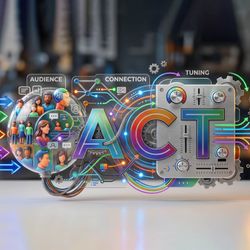
Episode 169: How a former Visa exec’s ACT delivered 98% GenAI adoption
45:44|In this thought-provoking episode, Nancy Goebel is joined by Stacey Taylor, a marketing-led transformation leader and former Visa executive, to explore how a product mindset can unlock breakthrough adoption of generative AI.At the heart of the conversation is Stacey’s ACT approach – Audience, Connection and Tuning – a powerful way to reframe change from a one-off project to an ongoing product experience. For digital workplace leaders navigating relentless waves of transformation, this shift is both timely and practical.Drawing on her experience leading GenAI adoption at Visa – including an impressive 98% uptake – Stacey shares how deep audience insight, role-based value propositions and a strong network of trusted internal influencers can turn change fatigue into genuine pull. She also highlights the often-underestimated role of market-facing teams, who bring an ‘outside-in’ perspective and can accelerate adoption through compelling, real-world use cases.The discussion then moves on from launch to sustained impact. Stacey introduces the ‘tuning’ mindset – continuously listening, adapting and refining based on feedback and data – along with a pragmatic measurement menu, from adoption velocity to repeat usage and engagement signals.This episode will be an inspiring listen for anyone looking to drive meaningful AI adoption at scale. It reframes GenAI not as a tool rollout, but as a human capital transformation, offering a clear, actionable path towards making that shift a success
Episode 168: Hyperadaptive – Rewiring organizations to become AI-native
31:34|What does it really take to make AI work at scale inside large organizations? In this episode of Digital Workplace Impact, DWG Chief Executive Nancy Goebel sits down with Melissa Reeve, author of Hyperadaptive: Rewiring the enterprise to become AI-native, to explore why so many AI initiatives stall – and what leaders must do differently to calm the hype and achieve lasting impact. Drawing on her background in Lean, Agile and DevOps thought leadership, Melissa argues that AI is not just a technology shift but a fundamental rewiring of the operating model. She introduces the concept of the ‘hyperadaptive’ organization – one that can sense and respond in near real time by compressing decision-making, workflows and governance. Crucially, becoming AI-native is as much about people, culture and leadership as it is about tools. The conversation unpacks the difference between being AI-enabled and AI-native, before examining why rushing to automate without strong foundations erodes trust. Melissa shares her practical five-stage Hyperadaptive Model, explains why dynamic governance and AI literacy matter more than pilots, and makes a compelling case for investing in new roles and learning systems such as AI activation hubs. With encouraging job predictions from the World Economic Forum and a real-world example from Moderna, this episode challenges leaders to think systemically and take a deliberate, long-term approach to AI. Guest speaker: Melissa Reeve, Author of ‘Hyperadaptive: Rewiring the enterprise to become AI-native’