Share
![cover art for [Eng] THEA RIOFRANCOS - EXTRACTIVISM, GREEN AND BROWN](https://open-images.acast.com/shows/690ca3b0c1ed8717c5695f92/1765996934897-c35549c6-7cb6-43a4-baad-46cb174f1b9a.jpeg?height=750)
DIAGRAMMES
[Eng] THEA RIOFRANCOS - EXTRACTIVISM, GREEN AND BROWN
This interview was conducted in English
Find this interview and its explanatory dossier on our website.
Duration: 1h52
Thea Riofrancos is an Associate Professor of Political Science at Providence College and a Strategic Co-Director of the Climate and Community Institute. Her research focuses on resource extraction, climate change, the global lithium sector, green technologies, and the Latin American left. She is the author of Extraction: The Frontiers of Green Capitalism and Resource Radicals: From Petro-Nationalism to Post-Extractivism in Ecuador, and the coauthor of A Planet to Win: Why We Need a Green New Deal.
In our conversation, Thea shows how renewable and fossil extractivism is not merely a localized operation of resource removal, but an enduring political and economic regime. She highlights the growing fusion of climate goals, industrial imperatives, and geopolitical strategies. It marks a new phase of green capitalism that displaces the failures of market-based mechanisms with tensions of its own.
This interview reframes contemporary resource politics within the long arc of extractive geoeconomics, from the oil crisis to Biden’s green policies and Trump 2.0.
CHAPTERS:
00:00:00 – Introduction to Extractivism, green and brown
00:05:58 - (Chap.1) What is extractivism?
00:15:27 - (Chap.2) Green and brown mining
00:24:30 - (Chap.3) The Security-Sustainability nexus
00:40:10 - (Chap.4) Green Capitalism
01:03:31 - (Chap.5) History of Geoeconomics
01:15:25 - (Chap.6) Ecomodernism vs Degrowth
01:23:39 - (Chap.7) Trumps’s Energy Emergency
01:28:28 - (Chap.8) Insecurity and unsustainability under Trump 2.0
01:33:10 - (Chap.9) Critical Mineral Deals from Ukraine to Rwanda
01:40:20 - (Chap.10) From Opportunistic Greening to Fossil Fascism
Interviewed by Marius Bickhardt
Directed by Sam Jones
Editing by Thierry Corroyer
Produced by Vladimir Gurewich
Dossier : Marius Bickhardt
Visual Reasearch : Sophie Liner
Music by Laz Lo, Eeryskies, Damiens Simons
Voice : Amanda Bay
Podcast production, editing and mixing : Deborah Le Grand
Subscribe to our monthly newsletter.
To support us, follow and us on social medias:
Youtube @Diagrammes
Instagram : @diagram.me.s
Bluesky : @diagrammes.bsky.social
#TheaRiofrancos #Extractivism #Climate #GreenCapitalism #Diagrammes
More episodes
View all episodes

7. [Fr] ZIAD MAJED - MOYEN-ORIENT, ANNÉE ZÉRO
03:41:19||Season 1, Ep. 7Cet entretien a été mené en Français - This interview was conducted in FrenchRetrouvez cet entretien et son dossier explicatif sur https://www.diagrammes.fr/fr/folders/moyen-orient-annee-zero Duree : 3h40Ziad Majed est un politiste franco-libanais né à Beyrouth en 1970. Professeur à l'Université américaine de Paris, il dirige le programme des études du Moyen-Orient et enseigne la science politique ainsi que les relations internationales. Auteur et chercheur reconnu, il s’est spécialisé dans l'étude des transitions démocratiques, des réformes politiques et du rôle de la société civile au Liban, en Syrie et plus largement au sein du monde arabe. Son engagement l’a amené à contribuer à la fondation du mouvement de la gauche démocratique et à participer au soulèvement de l'indépendance du Liban en 2005. Dans cette vidéo, Ziad Majed examine les transformations qui ont affecté les États et les sociétés du Proche-Orient depuis les Accords d’Abraham jusqu'à la campagne génocidaire menée par Israël après les attaques terroristes du Hamas le 7 Octobre 2023. Il propose une analyse de l’incidence régionale et globale des bouleversements en cours, en portant une attention particulière au Liban et à la Syrie. L’entretien s’attache à évaluer les marges de manœuvre des gouvernements de Beyrouth et de Damas, concurremment confrontés aux conflits internes, aux ambitions des puissances avoisinantes – la Turquie, l’Arabie saoudite, l’Iran, le Qatar, l’Égypte – et à l’expansionnisme israélien - soutenu par les États-Unis. Notre entretien avec Ziad Majed a eu lieu à Paris en deux épisodes: le premier, le 9 mai 2025, alors que Donald Trump s’apprêtait à rencontrer Mohammed Ben Salmane à Riyadh; le second, le 30 août 2025, soit deux mois après les bombardements israéliens et américains sur l’Iran. CHAPITRES:00:00:00 – Introduction à Moyen Orient, année zéro00:06:31 - (Chap.1) Donald Trump et l’Iran, le temps de l’indécision 00:25:53 -.(Chap.2) Israël sur trois fronts 00:37:44 - (Chap.3) Le reste du monde arabe : tétanisation et attentisme 00:47:34 - (Chap.4) Après la chute de la maison Assad : de l’euphorie à l’angoisse01:00:50 - (Chap.5) Les premiers pas d’Ahmed Al-Charaa 01:27:01 - (Chap.6) Les marges de manoeuvre du gouvernement libanais01:48:41 - (Chap.7) La question kurde02:07:08 - (Chap.8) Moments fondateurs du Moyen-Orient contemporain 02:38:46 - (Chap.9) L’Iran après la guerre des douze jours02:54:31 - (Chap.10) La décomposition de “l’axe de la résistance”: Liban, Irak03:11:00 - (Chap.11) L’acharnement israélien en Syrie03:29:51 - (Chap.12) Quel horizon ?Propos recueillis le 9 mai et 30 août 2025Entretien avec Michel FeherRéalisation : Thierry Corroyer (mai) et Jean-Charles Ho Van Cam (septembre)Montage : Thierry CorroyerProduction : Aurélie WindelsDossier : Thomas Gmür, Michel Feher et Tom NovakRecherche visuelle : Sophie LinerMusique : Laz Lo, Eeryskies, Damiens SimonsVoix : Marie-Laure BoggioProduction, montage et mixage du podcast : Deborah Le GrandVoix : Deborah Le GrandFollow and support @DiagrammesWebsite : https://www.diagrammes.fr/fr/folders/year-zero-in-the-middle-eastInstagram : instagram.com/diagram.me.sBluesky : bsky.app/profile/diagrammes.bsky.social
[FR] DIAGRAMMES - ÉPISODE BANDE ANNONCE
02:47||Season 1, Ep. 0Bonjour et bienvenue sur Diagrammes, un média indépendant et bilingue basé à Paris et à New York. Parce que résister à la droitisation du monde impose d’abord d’en prendre la mesure, Diagram[me]s propose toutes les trois semaines, et en accès libre, un ou plusieurs longs entretiens avec des chercheurs, des journalistes et des activistes. Rejoignez-nous !Le monde se droitise à une cadence infernale. Le mouvement qui l’emporte est concurremment imprimé par des bruts qui invoquent la sécurité de leur peuple pour remodeler leur voisinage, des oligarques qui profitent de leur proximité avec le pouvoir pour faire main basse sur les ressources de l’État, et des faiseurs d’opinions payés par les seconds pour légitimer les basses œuvres des premiers. Mais sa trajectoire bénéficie en outre de la complaisance d’acteurs politiques et d’experts censément attachés au droit et à la raison, ainsi que de la perméabilité croissante des électorats aux désirs d’épuration que nourrit le ressentiment. Parce qu’entraver la poursuite d’une telle dérive suppose d’abord de mieux la comprendre, Diagrammes ambitionne de rejoindre le réseau des sites où les composantes de l’actuel « cap au pire » sont inventoriées et analysées. Avec un nouvel épisode diffusé chaque mois, Diagrammes propose des entretiens approfondis avec des universitaires, des journalistes et des militants. Notre objectif est de mettre en lumière des recherches qui éclairent le présent et d'offrir une perspective plus claire sur les lignes de fracture de notre monde en pleine mutation. Vous venez d’écouter Diagrammes.Si vous préférez le format vidéo, vous pouvez retrouver chaque épisode sur notre chaîne YouTube ou sur notre site www.diagrammes.fr, vous y trouverez également des dossiers complémentaires et d’autres ressources spécialement préparées pour vous par l’équipe Diagrammes.Pensez à vous abonner à notre newsletter mensuelle et rejoignez-nous sur Bluesky et Instagram.Merci de votre écoute, et à bientôt, dans le prochain épisode !Musique par Laz LoVoix : Deborah Le GrandProduction, montage et mixage : Deborah Le Grand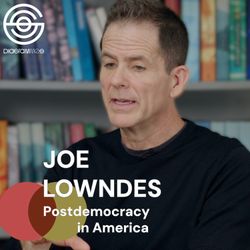
6. [Eng] JOE LOWNDES - POSTDEMOCRACY IN AMERICA
02:01:15||Season 1, Ep. 6This interview was conducted in English.Find this interview and its explanatory dossier at https://www.diagrammes.fr/en/folders/postdemocracy-in-america Duration: 2h01Joe Lowndes is a prominent scholar of American politics, specializing in the study of right-wing movements, populism, and race. He holds a PhD in Political Science from The New School for Social Research and is currently a Visiting Distinguished Lecturer at Hunter College, after having served as Professor of Political Science at the University of Oregon. Lowndes is the author of influential works such as “From the New Deal to the New Right: Race and the Southern Origins of Modern Conservatism” and, with Daniel Martinez HoSang, “Producers, Parasites, Patriots: Race and the New Right-Wing Politics of Precarity”. His ongoing research includes co-editing “The Politics of the Multiracial Right” and writing “Adventures in Post-Democracy”, an ethnographic exploration of the growing authoritarian tendencies within American political culture.In our interview, Joe Lowndes traces the evolution of the American right from the early 1990s to the present, highlighting key moments such as Pat Buchanan’s failed 1992 campaign, the rise of the Tea Party during the Obama years, and the transformation of the Republican Party under Donald Trump. He offers a striking analysis of how events often portrayed as crises—such as the Charlottesville rally, the COVID-19 pandemic, the Black Lives Matter protests, and the January 6th Capitol assault—have, paradoxically, served to radicalize and embolden Trump’s base. Lowndes also examines the emergence of a multiracial far-right, evidenced by increased minority support for Trump and the participation of activists of color in extremist groups, while emphasizing that racism and xenophobia remain central to Trump 2.0. Finally, he reflects on the blind spots and avoidance techniques of both liberals and the left, noting their reluctance to confront the challenges posed by the new configuration of the American political landscape.A profound and indispensable analysis for understanding the ongoing transformations of American democracy—and the political challenges they pose far beyond the United States.CHAPTERS:00:00:00 – Introduction to Revolutionary conservatism00:06:49 - (Chap.1) The paleoconservative challenge00:27:21 - (Chap.2) The tea party Obama’s fixation00:44:43 - (Chap.3) The fear of a majority-minority nation00:53:41 - (Chap.4) From Charlottesville to the capitol - The view from MAGA01:06:07 - (Chap.5) The rise of a multiracial far-right01:29:14 - (Chap.6) The masculinist factor01:43:03 - (Chap.7) The Democrats’ debacle01:50:23 - (Chap.8) Is it fascism?Interview by Michel Feher and William CallisonDirected by Justin Luis Denis and Thierry CorroyerProduced by Vladimir GurewichDossier: Aurélie Windels and Michel FeherVisual Research : Sophie LinerMusic by Laz Lo, Eeryskies, Damiens SimonsVoice : Amanda BayPodcast production : Deborah Le GrandSubscribe to our monthly newsletter.To support us, follow and us on social medias:Youtube @DiagrammesInstagram : instagram.com/diagram.me.sBluesky : bsky.app/profile/diagrammes.bsky.social#Diagrammes #JoeLowndes #PostDemocracyInAmerica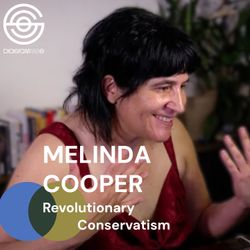
5. [Eng] MELINDA COOPER - REVOLUTIONARY CONSERVATISM
01:56:02||Season 1, Ep. 5This interview was conducted in English.Find this interview and its explanatory dossier at https://www.diagrammes.fr/en/folders/revolutionary-conservatism Duration: 1h56Melinda Cooper is currently professor in the School of Sociology at the Australian National University. She earned her Doctorate from the University of Paris VIII (Vincennes-St-Denis) in 2001. She is the author of Life as Surplus: Biotechnology and Capitalism in the Neoliberal Era (2008), Clinical Labour: Tissue Donors and Research Subjects in the Global Economy (with Catherine Waldby, 2014), Family Values: Between Neoliberalism and the New Social Conservatism (2017) and Counterrevolution: Extravagance and Austerity in Public Finance (2024).Her most recent book Counterrevolution exposes the logic of neoliberal public finance, which mandates crushing austerity for wage earners alongside extravagant fiscal and monetary generosity for asset holders. The book demonstrates how this dual imperative has transformed the DNA of capitalism, turning capital gains into the primary profit form and, by that token, precipitating the advent of a new “gilded age.”In this video, Melinda Cooper’s applies her incisive analysis to the most recent transformations of capitalism. As the neoliberal counterrevolution reaches its limits, what lies ahead is neither a return to Keynesianism nor a break with a capitalism, but a new phase in the mutation of neoliberalism: one marked by the unprecedented concentration of capital in the hands of a new generation of “robber barons.” The multinationals of the past are being replaced by former startups, now publicly traded yet still entirely controlled by their founders.To maintain their unchecked power, these oligarchs rely on the backing of political leaders such as Donald Trump, who are likewise committed to dismantling the counterpowers that define the rule of law. This is what Melinda Cooper calls revolutionary conservatism: a project that blends nostalgia for a mythical past with a cult of the visionary entrepreneur, in pursuit of the final liquidation of democracy.An essential analysis for understanding the political stakes of our time.CHAPTERS:00:00:00 – Introduction to Revolutionary conservatism00:05:32 - (Chap.1) All the President’s men00:13:09 - (Chap.2) Hybrid companies00:35:29 - (Chap.3) On patrimonial capitalism00:49:08 - (Chap.4) Cannibalization of the Republican Party00:57:42 - (Chap.5) The little guy vs the fat cats01:13:30 - (Chap.6) The social neoliberalism of the Democratic party01:26:30 - (Chap.7) Hegemony trouble01:36:28 - (Chap.8) Project 2025 and the destruction of the administrative stateInterview by Michel FeherDirected by Thierry Corroyer and Meredith WilliamsProduced by Florence Mention and Aurélie WindelsDossier: Alexandra BucherVisual Research : Sophie LinerMusic by Laz Lo, Eeryskies, Damiens SimonsVoice : Amanda BayPodcast production : Deborah Le GrandSubscribe to our monthly newsletter.To support us, follow and us on social medias:Youtube @DiagrammesInstagram : instagram.com/diagram.me.sBluesky : bsky.app/profile/diagrammes.bsky.social#Diagrammes #MelindaCooper #RevolutionaryConservatism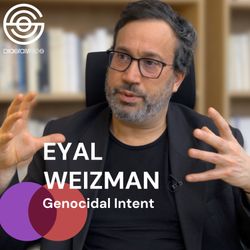
4. [Eng] EYAL WEIZMAN - GENOCIDAL INTENT
02:20:03||Season 1, Ep. 4This interview was conducted in English.Find this interview and its explanatory dossier on our website.Duration: 2h04Eyal Weizman, an Israeli-British architect and professor at Goldsmiths, University of London, is the founder and director of the research collective Forensic Architecture. In this interview, we recount the origins, discuss the methodology and explain the evolution of Forensic Architecture, both the agency and the discipline, until the recent publication of A Cartography of Genocide.We also retrace the longstanding involvement of the collective with the Palestinian cause, shed light on troubling resonances between the ongoing Israeli campaign in Gaza and genocidal precedents in Namibia and Guatemala, and examine the contemporary backlash against movements of solidarity with Palestine.CHAPTERS:00:00:00 – Introduction to Genocidal Intent00:05:47 - (Chap.1) Origins of Forensic Architecture : Emergent Coutercartography of Palestine 00:23:45 -.(Chap.2) Between humanism and science : Testimonies reconsidered 00:37:17 - (Chap.3) Displacing Law : Socialized evidence production 00:48:04 - (Chap.4) “A cartography of genocide” : Medics as new witnesses01:04:12 - (Chap.5) Patterns : Facts on the grounds and guilty minds 01:15:02 - (Chap.6) Genocidal resonnances : Guatemala and Namibia 01:23:54 - (Chap.7) “Conditions of life” : Calculus as a mode of control01:34:21 - (Chap.8) Lebensraum : Deployment of the zionist project 01:51:51 - (Chap.9) Continuous Nakba : Failed depolitization and protracted eradication02:03:52 - (Chap.10) Reception since October 2023 : Escalation of the pushback…This episode addresses Forensic Architecture, Gaza, Palestine and international law.Interviewed by Michel FeherConducted on January 26, 2025Directed by Thierry CorroyerProduced by Florence Mention and Aurélie WindelsDossier: Thomas GmuerVisual Research : Sophie LinerMusic by Laz Lo, Eeryskies, Damiens SimonsVoice : Amanda BayPodcast production, editing and mixing : Deborah Le GrandSubscribe to our monthly newsletter to receive new interviews and stay updated.Follow us on social medias : Youtube : @DiagrammesInstagram : @diagram.me.sBluesky : @diagrammes.bsky.social#EyalWeizman #ForensicArchitecture #Genocide #Gaza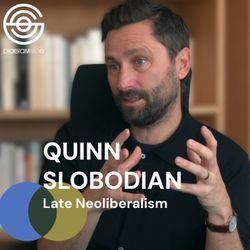
2. [Eng] QUINN SLOBODIAN - LATE NEOLIBERALISM
01:57:34||Season 1, Ep. 2This interview was conducted in EnglishFind this interview and its explanatory dossier at LATE NEOLIBERALISM - DIAGRAMMESDuration: 1h57Quinn Slobodian is a professor of history at Boston University and a specialist in neoliberal thought. He is the author of Globalists.The End of Empire and the Birth of Neoliberalism, Crack-Up Capitalism, Market radicals and the Dream of a World Without Democracy, and Hayek’s Bastards. Race, Gold, IQ, and the Capitalism of the Far Right.Diagram[me]s invited him to trace the genealogy of trumpism. Rather than portraying Trump as a champion of a populist break with the neoliberalism of the late 20th century, Slobodian depicts him as a beneficiary of that doctrine’s transformations. He shows how the libertarian wing of the neoliberal movement came to stake the future of economic liberalism on curbing migration flows, rehabilitating race-based IQ theories, and strengthening the executive branch at the expense of the rule of law.He also shows how the reconfiguration of financial capitalism after the 2008 crisis first allowed tech entrepreneurs to amass enormous fortunes, and then encouraged them to seize the levers of political power.CHAPTERS:00:00:00 – Introduction to Late Neoliberalism00:05:16 - (Chap.1) The Trump administration: Family Portrait00:16:41 - (Chap.2) The neoliberals’ post-cold war blues00:31:11 - (Chap.3) Human capital management: nativism, IQ, natalism00:51:23 - (Chap.4) Movement of goods: The praise for tariffs 01:07:41 - (Chap.5) On warding off inflation: Gold and Cryptocurrencies01:32:42 - (Chap.6) From legislative encasement to executive privilege01:40:24 - (Chap.7) Nostalgia and technofuturism01:50:19 - (Chap.8) Wrestling as allegoryInterview with Michel FeherConducted on February 1st, 2025Directed by: Thierry CorroyerProduced by: Florence Mention and Aurélie WindelsVisual research: Sophie LinerMusic: Laz Lo and Boni (Introduction); Laz Lo, Eeryskies and Damiens Simons (Credits theme)Voice: Amanda BayPodcast production, editing and mixing : Deborah Le GrandSubscribe to our monthly newsletterTo support us, follow us on social medias:Youtube : @DiagrammesInstagram : @diagram.me.sBluesky : @diagrammes.bsky.social#QuinnSlobodian #neoliberalism #trump
1. [Eng] DIAGRAMMES - TRAILER EPISODE
03:10||Season 1, Ep. 1Hello and welcome to Diagrammes, an independent bilingual media based in Paris and New York. Because resisting the world’s rightward drift requires us to take the measure of it, Diagram[me]s offers every three weeks, in free access, one or more in-depth interviews with scholars, journalists, and activists.The world is moving rightwards at a staggering pace. Leading this race to the worst is a breed of rulers who make their countries great again by cracking down on their own cities, brutalizing their neighbors and licensing their favorite oligarchs to plunder the planet. Taken alone, however, the ways of a few strong men and their cronies cannot fully explain our current trajectory. Other enablers include moderate politicians ready to reach across any aisle, reasonable experts who confuse impartiality with complacency, and large constituencies eagerly absorbing the phobias stoked by the entrepreneurs of resentment.To hinder these global trends, the first task at hand is to get a better understanding of them, even as the spaces devoted to the critique of common sense are rapidly being defunded or closed. Diagrams thus seeks to join a resilient network of sites still attempting to diagnose our contemporary condition – one where freedoms are corroded in the name of liberty and inequalities are celebrated in the name of the people.With a new episode released every three weeks, Diagrams features in-depth interviews with scholars, journalists and activists. Our aim is to showcase research that illuminates the present and to gain a more lucid perspective on the fault lines of our brave new world.Join us on all major listening platforms, explore the dossiers on our website, subscribe to our monthly newsletter and follow us on social media :Youtube : @DiagrammesInstagram : @diagram.me.s Bluesky : @diagrammes.bsky.social Production, editing and mixing by Deborah Le Grand