Share
![cover art for [Eng] EYAL WEIZMAN - GENOCIDAL INTENT](https://open-images.acast.com/shows/690ca3b0c1ed8717c5695f92/1766017401149-3dbd373c-ded1-4609-adc8-76849a398c46.jpeg?height=750)
DIAGRAMMES
[Eng] EYAL WEIZMAN - GENOCIDAL INTENT
This interview was conducted in English.
Find this interview and its explanatory dossier at https://www.diagrammes.fr/en/folders/...
Duration: 2h04
Eyal Weizman, an Israeli-British architect and professor at Goldsmiths, University of London, is the founder and director of the research collective Forensic Architecture.
In this interview, we recount the origins, discuss the methodology and explain the evolution of Forensic Architecture, both the agency and the discipline, until the recent publication of “A Cartography of Genocide”.
We also retrace the longstanding involvement of the collective with the Palestinian cause, shed light on troubling resonances between the ongoing Israeli campaign in Gaza and genocidal precedents in Namibia and Guatemala, and examine the contemporary backlash against movements of solidarity with Palestine.
CHAPTERS:
00:00:00 – Introduction to Genocidal Intent
00:05:47 - (Chap.1) Origins of Forensic Architecture : Emergent Countercartography of Palestine
00:23:45 -.(Chap.2) Between humanism and science : Testimonies reconsidered
00:37:17 - (Chap.3) Displacing Law : Socialized evidence production
00:48:04 - (Chap.4) “A cartography of genocide” : Medics as new witnesses
01:04:12 - (Chap.5) Patterns : Facts on the grounds and guilty minds
01:15:02 - (Chap.6) Genocidal resonnances : Guatemala and Namibia
01:23:54 - (Chap.7) “Conditions of life” : Calculus as a mode of control
01:34:21 - (Chap.8) Lebensraum : Deployment of the zionist project
01:51:51 - (Chap.9) Continuous Nakba : Failed depolitization and protracted eradication
02:03:52 - (Chap.10) Reception since October 2023 : Escalation of the pushback
Interview by Michel Feher
Conducted on January 26, 2025
Directed by Thierry Corroyer
Produced by Florence Mention and Aurélie Windels
Music by Laz Lo, Eeryskies, Damiens Simons
Voice by Amanda Bay
Podcast produced by Déborah Le Grand
Podcast voice (Intro and Outro) by Laz Lo
Subscribe to our monthly newsletter: https://www.diagrammes.fr/en/page/newsletter
Follow and support us on social medias:
Youtube: @Diagrammes
Instagram: @diagram.me.s
Bluesky: @diagrammes.bsky.social
#EyalWeizman #ForensicArchitecture #Genocide #Gaza
More episodes
View all episodes
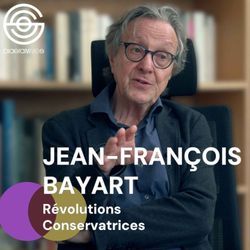
14. [Fr] JEAN-FRANÇOIS BAYART - RÉVOLUTIONS CONSERVATRICES
01:58:51||Season 1, Ep. 14[Fr] JEAN FRANÇOIS BAYART - RÉVOLUTIONS CONSERVATRICESCet entretien a été mené en Français - This interview was conducted in FrenchRetrouvez cet entretien et son dossier explicatif sur https://www.diagrammes.fr/fr/folders/revolutions-conservatrices Durée : 1h58Jean-François Bayart est professeur à l'Institut de Hautes Études Internationales et du Développement (IHEID) de Genève. Ses enseignements portent sur les grandes transformations politiques de la modernité : le passage d'un monde d'empires à un monde d'États-nations, les définitions ethno-religieuses de la citoyenneté qui en ont découlé, et les dynamiques de « révolutions conservatrices » qui les mettent en forme. Ses recherches s'inscrivent à la croisée de la sociologie historique, de la science politique comparée et de l'analyse des phénomènes religieux et identitaires à l'échelle mondiale.Dans cet entretien, Jean-François Bayart revient sur le concept de « révolution conservatrice », depuis ses origines historiques — le discours de Hugo von Hofmannsthal en 1927, la République de Weimar, le futurisme italien — jusqu'à ses manifestations contemporaines à travers le monde. Il en dégage les traits caractéristiques : un imaginaire oxymorique mêlant rupture et restauration, un ressentiment anticolonial ou anti-libéral, un nationalisme ethno-religieux, et le recours aux technologies les plus avancées au service d'un passé souvent réinventé. Il examine les cas de Vladimir Poutine (Russie), Recep Tayyip Erdoğan (Turquie), Narendra Modi (Inde), la révolution islamique iranienne, les régimes militaires du Sahel, ainsi que le trumpisme aux États-Unis. Il montre en quoi ces mouvements, nés du déclin ou de la déception impériale, partagent une même grammaire politique — tout en soulignant les contradictions et les conflits qui peuvent les opposer.CHAPITRES :00:00:00 – Introduction à Révolutions conservatrices 00:06:30 – (chap. 1) Le prototype allemand 00:27:55 – (chap. 2) Mythes et machines00:37:19 – (chap. 3) De l’Empire à la nation00:45:24 – (chap. 4) Du ressentiment01:01:50 – (chap. 5) Résurgences01:25:50 – (chap.6) États-Unis, Israël, IranEntretien avec Michel Feher et Thomas GmürRéalisation : Thierry CorroyerProduction : Florence Mention et Aurélie WindelsDossier : Alexandra Bucher, Michel Feher, Thomas Gmür et Tom Novak Recherche visuelle : Sophie LinerMusique : Laz Lo, Eeryskies, Damiens SimonsVoix : Marie-Laure BoggioProduction, montage et mixage du podcast : Déborah Le GrandVoix Intro et Outro: Déborah Le Grand#RévolutionConservatrice, #SciencePolitique, #GéopolitiqueMondale, #Nationalisme, #HistoireComparée, #EmpireEtNation, #IdentitéPolitique, #Populisme, #Géopolitique, #RelationsInternationales, #PolitiqueComparée, #SociologieHistorique, #IslamPolitique, #AnticolonialismePolítico, #ExtremeDroitePour nous soutenir, suivez Diagrammes : Le site : https://www.diagrammes.fr/fr/ Youtube : @DiagrammesInstagram : @diagram.me.sBluesky : @diagrammes.bsky.social
13. [Fr] PIERRE CHARBONNIER - ÉCOLOGIE DE GUERRE
02:01:32||Season 1, Ep. 13Cet entretien a été mené en Français - This interview was conducted in FrenchRetrouvez cet entretien et son dossier explicatif sur https://www.diagrammes.fr/fr/folders/ecologie-de-guerre Durée : 2h01Pierre Charbonnier est philosophe et chargé de recherche au CNRS, rattaché au Centre d’études européennes et de politique comparée de Sciences Po. Il est spécialiste de philosophie politique et d’histoire environnementale des idées. Ses recherches portent sur l’histoire, l’épistémologie et les formes de pouvoir associées au gouvernement de la nature dans les sociétés modernes. Son travail interroge en particulier les conditions matérielles de l’autonomie politique dans l’Europe moderne et les tensions contemporaines entre développement économique, crise climatique et recomposition de l’ordre international.Dans cet entretien enregistré à Paris le 3 octobre 2025, Pierre Charbonnier revient sur l’inscription de la question environnementale au cœur des rivalités géopolitiques contemporaines. De l’optimisme libéral des théories du « doux commerce » chez Montesquieu et Kant à l’émergence de la pensée géopolitique avec Friedrich Ratzel et Halford Mackinder, il retrace l’oscillation historique entre promesses de prospérité et crainte de conflits sur une planète finie. La conversation aborde également la rivalité sino-américaine autour des technologies vertes, la recomposition d’un ordre international multipolaire et l’idée d’une « guerre froide écologique ». Enfin, Charbonnier propose la perspective d’une « coalition climat », capable d’organiser la sortie des énergies fossiles tout en répondant aux inégalités sociales produites par la transition écologique.Entretien avec Michel Feher et Marius BickhardtRéalisation : Thierry CorroyerProduction : Florence Mention et Aurélie WindelsDossier : Marius BickhardtRecherche visuelle : Sophie LinerMusique : Laz Lo, Eeryskies, Damiens SimonsVoix : Marie-Laure BoggioProduction, montage et mixage du podcast : Déborah Le GrandVoix Intro et Outro: Déborah Le GrandCHAPITRES :00:00:00 – Introduction à Économie de guerre00:06:11 – (chap. 1) L’histoire environnementale des idées et relations internationales00:23:50 – (chap. 2) Ouverture et clôture de la frontière comme métaphore historique00:34:59 – (chap. 3) La signification politique des limites00:44:14 – (chap.4) Paix de carbone et développementalisme fossile01:24:45 – (chap.5) Politiques industrielles à l’ère de la rivalité sino-américaine01:39:55 – (chap.6) La coalition climat entre justice environnementale et climatique01:48:28 – (chap.7) Adieu au prolétariat ? La composition plurielle du sujet écologistePour nous soutenir, suivez Diagrammes : Le site : https://www.diagrammes.fr/fr/ Youtube : @DiagrammesInstagram : @diagram.me.sBluesky : @diagrammes.bsky.social#ÉcologiePolitique, #CriseClimatique, #TransitionÉcologique, #Géopolitique, #OrdreInternational, #ÉcologieDeGuerre, #CoalitionClimat, #IdéesPolitiques, #Multipolarité, #RivalitéSinoAméricaine, #GuerreFroideÉcologique, #JusticeClimatique, #HistoireIntellectuelle, #ÉconomiePolitique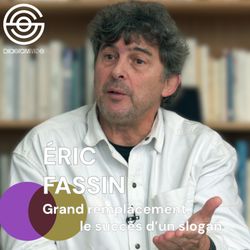
12. [Fr] ERIC FASSIN - GRAND REMPLACEMENT, LE SUCCÈS D’UN SLOGAN
02:06:07||Season 1, Ep. 12Cet entretien a été mené en Français - This interview was conducted in FrenchRetrouvez cet entretien et son dossier explicatif sur https://www.diagrammes.fr/fr/folders/grand-remplacement-le-succes-dun-slogan Durée : 2h06Éric Fassin est professeur de sociologie à l’Université Paris 8 Vincennes–Saint-Denis, au sein du département d’Études de genre et du département de sciences politiques. Ancien élève de l’École normale supérieure et agrégé d’anglais, il a cofondé en 2015 le premier Laboratoire d’études de genre et de sexualité du CNRS (LEGS) et est aujourd’hui rattaché au Sophiapol (Paris Nanterre). Ses travaux portent sur la sexualité, le genre, les questions raciales et les dynamiques démocratiques. Il analyse la politisation des enjeux minoritaires, les débats autour de « l’idéologie du genre », les politiques d’immigration et d’identité nationale, ainsi que les recompositions contemporaines du populisme. À l’intersection de la recherche et de l’intervention publique, il s’intéresse aux usages politiques des représentations culturelles et aux formes actuelles d’anti-intellectualisme.Dans cet entretien enregistré à Paris le 28 novembre 2025, nous revenons avec lui sur l’influence de certains romanciers français dans l’imaginaire de l’extrême droite contemporaine. De Jean Raspail à Renaud Camus et Michel Houellebecq, il décrypte la généalogie du « Grand Remplacement », ses circulations transatlantiques et son appropriation par des acteurs politiques et criminels. Il analyse l’usage stratégique du langage, l’instrumentalisation de l’ironie, l’évolution d’une vision du monde marquée par le ressentiment sexuel et l’islamophobie, ainsi que l’admiration revendiquée pour le modèle israélien. L’entretien interroge enfin les tensions internes aux droites radicales et les imaginaires concurrents qui structurent aujourd’hui le suprémacisme blanc.Entretien avec Michel FeherRéalisation : Thierry CorroyerProduction : Florence Mention et Aurélie WindelsDossier : Clara Beccaro, Alexandra Bucher, Michel Feher, Thomas Gmür et Aurélie Windels Recherche visuelle : Sophie LinerMusique : Laz Lo, Eeryskies, Damiens SimonsVoix : Marie-Laure BoggioProduction, montage et mixage du podcast : Déborah Le GrandVoix Intro et Outro : Déborah Le GrandCHAPITRES :00:00:00 – Introduction à Grand remplacement, le succès d’un slogan00:06:56 – (Chap. 1) L’autre coming out de Renaud Camus00:24:38 – (Chap. 2) Remplacés, remplaçants et remplaceurs01:03:03 – (Chap. 3) Une nouvelle novlangue01:11:39 – (Chap. 4) L’amertume mouvante de Houellebecq01:36:21 – (Chap. 5) La nouvelle jeunesse du “vieil” antisémitismePour nous soutenir, suivez Diagrammes : Le site : https://www.diagrammes.fr/fr/ Youtube : @DiagrammesInstagram : @diagram.me.sBluesky : @diagrammes.bsky.social#ÉricFassin, #GrandRemplacement, #ExtrêmeDroite, #SuprémacismeBlanc, #Populisme, #Islamophobie, #PolitiqueDuGenre, #QuestionsRaciales, #IdentitéNationale, #ThéorieCritique, #AntiIntellectualisme, #IdéologieDuGenre, #LittératureEtPolitique, #DroitesRadicales, #Diagrammes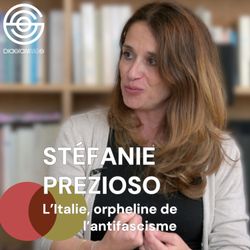
11. [Fr] STÉFANIE PREZIOSO - L'ITALIE, ORPHELINE DE L'ANTIFASCISME
02:28:16||Season 1, Ep. 11Cet entretien a été mené en Français - This interview was conducted in FrenchRetrouvez cet entretien et son dossier explicatif sur https://www.diagrammes.fr/fr/folders/l-italie-orpheline-de-l-antifascismeDurée : 2h28Stefanie Prezioso est une historienne spécialiste de l’Europe du XXe siècle. Docteure en histoire de l'Université de Lausanne depuis 2002, elle y est aujourd’hui professeure d’histoire contemporaine à l'Institut d'études politiques.Les recherches de Prezioso portent sur la Première Guerre mondiale, les processus révolutionnaires dans la première moitié du 20e siècle, la violence politique, l’antifascisme et le fascisme. Elle examine également les usages publics de la mémoire du fascisme - dans les médias contemporains - technologies médiatiques, réseaux sociaux, jeux en ligne et algorithmes de recherche- ainsi que dans les discours politiques. Son savoir apporte un cadre critique d’analyse de la façon dont l'érosion de la vigilance antifasciste peut affaiblir les institutions démocratiques.Dans cet entretien, elle revient sur les mécanismes historiques qui ont rendu possible la normalisation des droites radicales en Italie et, à travers elle, en Europe. Elle analyse les enchaînements qui, depuis la fondation de la Première République, ont sapé la légitimité de l’antifascisme et permis la réhabilitation progressive des héritiers du régime mussolinien. Elle retrace également la manière dont l’effondrement de l’ancien système partisan, les scandales de corruption et la recomposition du champ politique ont préparé l’ascension d’une droite hybride et déjà extrémisée, dont Silvio Berlusconi fut la figure inaugurale.L’entretien met aussi en lumière la continuité et les différences entre les coalitions bâties autour de Forza Italia et la configuration actuelle, dominée par Fratelli d’Italia et dirigée par Giorgia Meloni. Si cette dernière bénéficie de la confiance des partenaires européens de l’Italie, son gouvernement, selon Prezioso, franchit une étape inédite : il ne se contente plus d’effacer la mémoire de l’antifascisme, mais s’emploie désormais à le criminaliser, à la manière de ce que l’on peut observer aux Etats-Unis sous l’ère Trump. Malgré cette dérive inquiétante, Prezioso souligne que la persistance de l’antifascisme comme repoussoir démontre sa force continue : loin d'être un vestige du passé, il demeure une ressource politique essentielle pour comprendre et combattre la droitisation à l'œuvre.Entretien avec Michel FeherPropos recueillis à Paris le 13 Octobre 2025 Réalisation : Thierry CorroyerProduction : Florence Mention et Aurélie WindelsDossier : Alexandra Bucher, Michel Feher, Thomas Gmür, Tom Novak et Aurélie Windels Recherche visuelle : Sophie LinerMusique : Laz Lo, Eeryskies, Damiens SimonsVoix : Marie-Laure BoggioProduction, montage et mixage du podcast : Déborah Le GrandVoix Intro et Outro : Déborah Le GrandCHAPITRES :00:00:00 – Introduction à L'Italie, orpheline de l'antifascisme00:05:55 - (Chap.1) Les militants dans la tourmente 00:23:05 -.(Chap.2) Le poids de l’unité nationale 00:37:11 - (Chap.3) Réveils brutaux 00:47:34 - (Chap.4) Le long automne de la Première République00:59:00 - (Chap.5) Une nouvelle droite clinquante 01:13:45 - (Chap.6) Confusion clownesque01:22:48 - (Chap.7) Les absences de la gauche01:32:43 - (Chap.8) L’Italie en éclaireur 01:53:31 - (Chap.9) Antifascisme aujourd’huiPour nous soutenir, suivez Diagrammes : Le site : https://www.diagrammes.fr/fr/ Youtube : @DiagrammesInstagram : @diagram.me.sBluesky : @diagrammes.bsky.social#Fascisme, #Antifascisme, #Extremedroite, #PolitiqueEuropeenne, #PolitiqueItalienne, #HistoirePolitique, #XXeSiecle, #Démocratie, #MémoireCollective, #Autoritarisme, #HistoireCritique, #StéfaniePrezioso, #EuropeContemporaine, #Diagrammes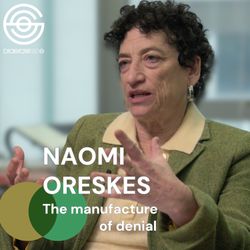
10. [Eng] NAOMI ORESKES - THE MANUFACTURE OF DENIAL
01:03:43||Season 1, Ep. 10This interview was conducted in English.Find this interview and its explanatory dossier at https://www.diagrammes.fr/en/folders/the-manufacture-of-denial Duration: 1h02Naomi Oreskes is an Affiliated Professor of Earth and Planetary Sciences at Harvard University. She is an accomplished earth scientist, historian, and public speaker known for her extensive research on the interplay between science, society, and politics. Her work brings critical insights into how scientific knowledge shapes and is shaped by broader cultural and political forces.Her expertise centers on the role of science in society, the reality of anthropogenic climate change, and the pervasive impact of disinformation campaigns that obstruct climate action.In our video interview, Naomi Oreskes discusses the enduring struggle against climate denialism, tracing its roots from tobacco and acid rain skepticism in the 1980s to the far more aggressive and politicized climate denial tactics witnessed today. She elaborates on how the rise of authoritarianism, notably during Donald Trump’s presidency, has fueled a backlash against environmental progress by empowering actors she calls the “merchants of doubt.” Instead of merely discrediting scientific facts, these actors now seek to dismantle the institutions that produce climate research, threatening efforts to address global warming.Oreskes also highlights the stark power imbalance in the climate crisis: while powerful fossil fuel interests use their proximity to political power to maintain the status quo, vulnerable populations around the world face the gravest consequences of inaction. The deliberate production of ignorance, she argues, has become a highly effective weapon wielded by the far right to stall meaningful climate solutions. Our interview, conducted in Boston in March 2025, delves deeply into these urgent issues, offering a vital perspective on the challenges and stakes of contemporary climate politics.CHAPTERS: 00:00:00 – Introduction to The Manufacture of Denial00:04:40 - (Chap.1) The George C. Marshall Institute: From MAD to Star Wars00:14:53 - (Chap.2) White House Interference in the Acid Rain Report00:20:13 - (Chap.3) The Montreal Protocol, a “backdoor to communism”?00:23:36 - (Chap.4) Revelle, Schelling, Nordhaus: From Outright Denial to Organized Delay00:30:14 - (Chap.5) George H.W. Bush’s “White House Effect”01:40:27 - (Chap.6) The New Quality of Climate Denial01:44:44 - (Chap.7) Trump 2.0: From Denial to Destruction01:52:25 - (Chap.8) Carbon Capture as a New Form of Denial01:56:51 - (Chap.9) Difference, Export, and Convergence of DenialInterviewed by Marius BickhardtConducted on the 24th of March 2025Directed by Adam MikaelianEditing by Thierry CorroyerProduced by Vladimir GurewichDossier : Marius BickhardtVisual Reasearch : Sophie LinerMusic by Laz Lo, Eeryskies, Damiens SimonsVoice : Amanda BayPodcast production : Deborah Le GrandSubscribe to our monthly newsletter.To support us, follow and us on social medias:Youtube @DiagrammesInstagram :@diagram.me.sBluesky : @diagrammes.bsky.social
8. [Eng] VERÓNICA GAGO - THE ARGENTINIAN LABORATORY
02:06:53||Season 1, Ep. 8This interview was conducted in English.Find this interview and its explanatory dossier at https://www.diagrammes.fr/en/folders/le-laboratoire-argentin Duration: 2h07 Verónica Gago is a prominent Argentinian scholar and activist whose work bridges critical political economy, feminist theory, and the study of grassroots movements. A professor at the University of Buenos Aires and UNSAM, and a member of CONICET, she has been involved in major feminist mobilizations across Latin America, including Ni Una Menos, Marea Verde, and the Feminist Strike.From her role in the collective Tinta Limón Ediciones to her coordination of feminist research groups, Veronica Gago challenges the traditional boundaries between academia and activism. Feminism, as she understands it, does not only deal with issues that are specific to women, such as reproductive rights. Instead, it should be treated as a perspective from which we can understand a wide range of economic, social, and political issues. Her collaborative book A Feminist Reading of the Debt exemplifies this approach: examining the deregulation of financial transactions, austerity programs, and even the ascendency of cryptocurrency through a feminist lens. Veronica Gago shows how macropolitical measures affect and are affected by microsocial practices; or, to use her own terms, how neoliberalism from above interacts with “neoliberalism from below” (the title of her 2014 book).In our conversation, Veronica Gago reflects on the advent of Javier Milei, the libertarian president of Argentina.Just as Chile under Augusto Pinochet was a laboratory for the upcoming neoliberal era, Milei’s Argentina plays the role of a pilot experiment vis-à-vis the mutant neoliberal regimes that are currently taking over the world. Striking features of these new formations include the overtly sadistic deployment of cruelty as a mobilizing tool but also the masochistic appeal to sacrifice, in the name of the nation or even of freedom. To ward off bleak political horizon, Veronica Gago bets on the transformative power of feminist organizing, celebrating la potencia feminista as a “desire to change everything.” Her work can truly serve as a remedy against militant depression.CHAPTERS:00:00:00 – Introduction to ARGENTINIAN LABORATORY00:07:44 - (Chap.1) Collective Experiences of Political Formation00:19:18 - (Chap.2) New Neoliberal Subjectivations00:30:03 - (Chap.3) Baroque Entreprenerial Impulses00:42:58 - (Chap.4) Feminist Organization and Resistance From Below00:59:13 - (Chap.5) The (Un)Surprising Rise of Milei 01:10:10 - (Chap.6) Occupying the State to Destroy It01:18:26 - (Chap.7)The Speculative and Sacrificial Generation01:34:17 - (Chap.8) Gender Identifications and Interpellations01:53:44 - (Chap.9) Neofascism from Above and from Below01:58:40 - (Chap.10) Joyful Militancy in Critical ContextInterviewed by Michel Feher and Eric FassinConducted on the 1st of April 2025 in ParisDirected by Jean-Charles Ho Van Cam and Thierry CorroyerProduced by Aurélie WindelsDossier: Alexandra Bucher and Thomas GmuerVisual Research : Sophie LinerMusic by Laz Lo, Eeryskies, Damiens SimonsVoice : Amanda BayPodcast production : Deborah Le GrandSubscribe to our monthly newsletter.To support us, follow and us on social medias:Youtube @DiagrammesInstagram :@diagram.me.sBluesky : @diagrammes.bsky.social#VerónicaGago, #Feminism, #Argentina, #JavierMilei, #Neoliberalism, #SocialMovements, #LatinAmerica, #NiUnaMenos, #FeministStrike,
9. [Eng] DANIELA GABOR - THE WALL STREET CONSENSUS
02:41:49||Season 1, Ep. 9This interview was conducted in English.Find this interview and its explanatory dossier at https://www.diagrammes.fr/en/folders/the-wall-street-consensusDuration: 2h41Daniela Gabor is a heterodox economist and professor at the School of Oriental and African Studies (SOAS) in London, where she has established herself as one of the leading international scholars of macro-finance. She earned her PhD in Banking and Finance from the University of Stirling in 2009 and draws inspiration from post-Keynesian economist Hyman Minsky for her critical approach to the relationship between finance and the State. As an expert consultant for the European Parliament, the G20, the United Nations, and several central banks, she bridges academic research with high-level policy debates. Her forthcoming book, to be published by Norton, will focus on what she calls the “Wall Street Consensus.”Focusing on the current interactions among central banks, repo markets, Treasuries and private investors, Daniela Gabor has developed the concept of the de-risking State to describe the growing role of governments in steering and securing private investment deemed socially or politically desirable, for example in the context of climate transition. She is also the author and co-editor of several key volumes in political economy, including Central Banking at a Crossroads (2014), The Routledge Companion to Banking Regulation and Reform (2017), and Rewriting the Rules of the European Economy (2019), co-authored with Joseph Stiglitz and Isabel Ortiz.In this video, Daniela Gabor offers a critical analysis of the evolution of macro-financial regimes, from Bretton Woods and the Washington Consensus to the current Wall Street Consensus. She shows how shifts in economic governance reflect political struggles over the role of private finance in delivering public goods. She questions whether de-risking strategies represent a genuine break with neoliberal orthodoxy or a rebranded form of greenwashing and privatization of the public sphere. Finally, she examines the uncertain future of the Wall Street Consensus in the face of geopolitical turbulence, pointing to the return of the whining hegemon as a possible omen of impending marco-financial change.CHAPTERS:00:00:00 – Introduction to THE WALL STREET CONSENSUS00:07:40 - (Chap.1) Critical Macro-Finance00:20:32 - (Chap.2) The Formation of a “Consensus”00:25:40 - (Chap.3) The Demise of Postwar Regimes00:43:37 - (Chap.4) Washington Consensus VS Wall Street Consensus00:52:31 - (Chap.5) The investibility pact 01:11:51 - (Chap.6) On Derisking01:22:23 - (Chap.7)Varieties of Partnerships01:31:48 - (Chap.8) Sticks and Carrots?01:47:14 - (Chap.9) Speculations on the Trump factor02:11:25 - (Chap.10) Mutations and Resilience of the Wall Street Consensus02:26:19 - (Chap.11) Toward the Big Green State?Interview by Michel FeherConducted on the 11th of April 2025Directed by Jean-Charles Ho Van CamEdited by Thierry CorroyerProduced by Aurélie WindelsDossier by Alexandra BucherVisual Research by Sophie LinerMusic by Laz Lo, Eeryskies, Damiens SimonsVoice by Amanda BayPodcast production : Deborah Le GrandSubscribe to our monthly newsletter.To support us, follow and us on social medias:Youtube @DiagrammesInstagram :@diagram.me.sBluesky : @diagrammes.bsky.social#Economics, #Finance, #HeterodoxEconomics, #MacroFinance, #DeRiskingState, #WallStreetConsensus, #CentralBanks, #GreenTransition, #EconomicPolicy, #CriticalEconomics, #SustainableDevelopment, #SocialJustice
7. [Fr] ZIAD MAJED - MOYEN-ORIENT, ANNÉE ZÉRO
03:41:19||Season 1, Ep. 7Cet entretien a été mené en Français - This interview was conducted in FrenchRetrouvez cet entretien et son dossier explicatif sur https://www.diagrammes.fr/fr/folders/moyen-orient-annee-zero Durée : 3h40Ziad Majed est un politiste franco-libanais né à Beyrouth en 1970. Professeur à l'Université américaine de Paris, il dirige le programme des études du Moyen-Orient et enseigne la science politique ainsi que les relations internationales. Auteur et chercheur reconnu, il s’est spécialisé dans l'étude des transitions démocratiques, des réformes politiques et du rôle de la société civile au Liban, en Syrie et plus largement au sein du monde arabe. Son engagement l’a amené à contribuer à la fondation du mouvement de la gauche démocratique et à participer au soulèvement de l'indépendance du Liban en 2005. Dans cette vidéo, Ziad Majed examine les transformations qui ont affecté les États et les sociétés du Proche-Orient depuis les Accords d’Abraham jusqu'à la campagne génocidaire menée par Israël après les attaques terroristes du Hamas le 7 Octobre 2023. Il propose une analyse de l’incidence régionale et globale des bouleversements en cours, en portant une attention particulière au Liban et à la Syrie. L’entretien s’attache à évaluer les marges de manœuvre des gouvernements de Beyrouth et de Damas, concurremment confrontés aux conflits internes, aux ambitions des puissances avoisinantes – la Turquie, l’Arabie saoudite, l’Iran, le Qatar, l’Égypte – et à l’expansionnisme israélien - soutenu par les États-Unis. Notre entretien avec Ziad Majed a eu lieu à Paris en deux épisodes: le premier, le 9 mai 2025, alors que Donald Trump s’apprêtait à rencontrer Mohammed Ben Salmane à Riyadh; le second, le 30 août 2025, soit deux mois après les bombardements israéliens et américains sur l’Iran. Propos recueillis le 9 mai et 30 août 2025Entretien avec Michel FeherRéalisation : Thierry Corroyer (mai) et Jean-Charles Ho Van Cam (septembre)Montage : Thierry CorroyerProduction : Aurélie WindelsDossier : Thomas Gmür, Michel Feher et Tom NovakRecherche visuelle : Sophie LinerMusique : Laz Lo, Eeryskies, Damiens SimonsVoix : Marie-Laure BoggioProduction, montage et mixage du podcast : Déborah Le GrandVoix Intro et Outro : Déborah Le GrandCHAPITRES : 00:00:00 – Introduction à Moyen Orient, année zéro00:06:31 - (Chap.1) Donald Trump et l’Iran, le temps de l’indécision 00:25:53 -.(Chap.2) Israël sur trois fronts 00:37:44 - (Chap.3) Le reste du monde arabe : tétanisation et attentisme 00:47:34 - (Chap.4) Après la chute de la maison Assad : de l’euphorie à l’angoisse01:00:50 - (Chap.5) Les premiers pas d’Ahmed Al-Charaa 01:27:01 - (Chap.6) Les marges de manoeuvre du gouvernement libanais01:48:41 - (Chap.7) La question kurde02:07:08 - (Chap.8) Moments fondateurs du Moyen-Orient contemporain 02:38:46 - (Chap.9) L’Iran après la guerre des douze jours02:54:31 - (Chap.10) La décomposition de “l’axe de la résistance”: Liban, Irak03:11:00 - (Chap.11) L’acharnement israélien en Syrie03:29:51 - (Chap.12) Quel horizon ?Pour nous soutenir, suivez Diagrammes : Le site : https://www.diagrammes.fr/fr/ Youtube : @DiagrammesInstagram : @diagram.me.sBluesky : @diagrammes.bsky.social#MoyenOrient, #Palestine, #ConflitIsraeloPalestinien, #Gaza, #Liban, #Syrie, #ZiadMajed, #AnalysePolitique, #Geopolitique, #PolitiqueMoyenOrient, #DroitsHumains, #RelationsInternationales, #Diagrammes
[Fr] DIAGRAMMES - ÉPISODE BANDE ANNONCE
02:47||Season 1, Ep. 0Bonjour et bienvenue sur Diagrammes, un média indépendant et bilingue basé à Paris et à New York. Parce que résister à la droitisation du monde impose d’abord d’en prendre la mesure, Diagram[me]s propose toutes les trois semaines, et en accès libre, un ou plusieurs longs entretiens avec des chercheurs, des journalistes et des activistes. Rejoignez-nous !Le monde se droitise à une cadence infernale. Le mouvement qui l’emporte est concurremment imprimé par des bruts qui invoquent la sécurité de leur peuple pour remodeler leur voisinage, des oligarques qui profitent de leur proximité avec le pouvoir pour faire main basse sur les ressources de l’État, et des faiseurs d’opinions payés par les seconds pour légitimer les basses œuvres des premiers. Mais sa trajectoire bénéficie en outre de la complaisance d’acteurs politiques et d’experts censément attachés au droit et à la raison, ainsi que de la perméabilité croissante des électorats aux désirs d’épuration que nourrit le ressentiment. Parce qu’entraver la poursuite d’une telle dérive suppose d’abord de mieux la comprendre, Diagrammes ambitionne de rejoindre le réseau des sites où les composantes de l’actuel « cap au pire » sont inventoriées et analysées. Avec un nouvel épisode diffusé chaque mois, Diagrammes propose des entretiens approfondis avec des universitaires, des journalistes et des militants. Notre objectif est de mettre en lumière des recherches qui éclairent le présent et d'offrir une perspective plus claire sur les lignes de fracture de notre monde en pleine mutation. Vous venez d’écouter Diagrammes.Si vous préférez le format vidéo, vous pouvez retrouver chaque épisode sur notre chaîne YouTube ou sur notre site www.diagrammes.fr, vous y trouverez également des dossiers complémentaires et d’autres ressources spécialement préparées pour vous par l’équipe Diagrammes.Pensez à vous abonner à notre newsletter mensuelle et rejoignez-nous sur Bluesky et Instagram.Merci de votre écoute, et à bientôt, dans le prochain épisode !Musique par Laz LoVoix : Deborah Le GrandProduction, montage et mixage : Deborah Le Grand