Share
Decoder Ring
A Brief History of Making Out
Kissing—the romantic, sexual, steamy kind—is so ingrained in us that it just seems like a fact of life. Like breathing or eating, we just do it. But what if it’s not like that at all?
In this episode, we’re going to look at passionate kissing, well, dispassionately, not as something instinctual and innate but as a cultural practice. We’re going to backtrack through history in search of the origins of the kiss, with some surprises along the way.
This episode was written by Willa Paskin, who produces Decoder Ring with Katie Shepherd. This episode was edited by Andrea Bruce and Joel Meyer. Derek John is Slate’s executive producer of narrative podcasts. Merritt Jacob is our senior technical director.
Thank you to Marcel Danesi.
If you’re interested in the papers we mentioned, you can read about Justin Garcia and William Jankowiak’s research, Troels Pank Arbøll and Sophie Lund Rasmussen’s essay, Sabrina Imbler’s When Was the First Sexy Kiss? and the herpes study. (Here’s that bronze-age statue, too!)
If you haven’t yet, please subscribe and rate our feed on Spotify, Apple Podcasts or wherever you get your podcasts. And even better, tell your friends.
If you’re a fan of the show and want to support us, consider signing up for Slate Plus. As a member, you’ll get to listen to Decoder Ring without any ads—and your support is crucial to our work. Go to slate.com/decoderplus to join Slate Plus today.
Need to set up your Slate Plus feed? If you subscribed through Slate.com, check out our FAQ at slate.com/podcastfaqs for easy instructions. Members subscribed via Apple Podcasts get automatic access—no setup required.
More episodes
View all episodes
137. Gandhi Never Said “Be the Change”
01:00:42||Ep. 137Few inspirational phrases are quoted more often than Mahatma Gandhi’s “Be the change you want to see in the world.” It shows up on t-shirts, bumper stickers, even tattooed on people’s bodies. Life coaches, leadership trainers, and American presidents constantly cite it. There is one problem with this quotation, however: Gandhi never said it. And the story of how the “be the change” actually came to be—according to its true originator—is stranger, more intricate, and more astounding than you could ever expect.In this episode, Decoder Ring’s Evan Chung speaks with Arleen Lorrance, the former Brooklyn high school teacher who actually brought “be the change” into the world in the 1970s. The surprising tale she has to tell involves grindhouse cinema, cosmic rays of light, and Vice President Al Gore. You’ll also hear from Diane Kennedy Pike, whose marriage to the controversial Bishop James Pike plays a pivotal and unexpected role in turning the quote into the inescapable maxim it is today.This episode was written and produced by Evan Chung, Decoder Ring’s Supervising Producer. It was edited by Willa Paskin and Max Freedman, who also produce the show. Merritt Jacob is Senior Technical Director. Special thanks to Keith Akers.If you have any cultural mysteries you want us to decode, email us at DecoderRing@slate.com or leave a message on our hotline at (347) 460-7281.Get more of Decoder Ring with Slate Plus! Join for exclusive bonus episodes of Decoder Ring and ad-free listening on all your favorite Slate podcasts. Subscribe from the Decoder Ring show page on Apple Podcasts or Spotify. Or, visit slate.com/decoderplus for access wherever you listen.
Preview: Decoder Rings Back | The Second Spice
07:48|One of the many perks of subscribing to Decoder Ring Plus is access to every episode of Decoder Rings Back, our member-exclusive series where host Willa Paskin calls up a listener to answer their question about a cultural mystery directly. This week we’re offering a taste of the latest Decoder Rings Back, where Willa tries to clear up our listener Samantha’s culinary confusion: Why, of all spices in the world, is black pepper always on the dinner table, right there next to salt? It’s a delectable story that involves ancient Rome, Louis XIV, and Salem, Massachusetts. But to hear the whole thing, you’ll have to join Decoder Ring Plus. Now through October 16, you can get 50% off a year’s membership when you visit slate.com/decoderplus and enter the promo code DECODER50 at checkout. If you have any cultural mysteries you want us to decode, email us at DecoderRing@slate.com or leave a message on our hotline at (347) 460-7281.
136. Bridget in the Buff
01:03:33||Ep. 136In the early 1970s, a jigsaw puzzle of a cheerful, young, naked, fat woman known only as “Bridget in the Buff” arrived in stores all over America. It was just the first of countless Bridget-related merchandise that would be sold around the world for the next decade: calendars, playing cards, coloring books, cookbooks, and much more. Bridget was everywhere. But who was she?In this episode of Decoder Ring, the real Bridget reveals all. Her name is Dawn Brooks, and she takes us through the unusual path that led her to pose nude for scores of popular products. How does it feel to be a gag gift—and now, an unlikely icon?Besides Dawn, you’ll hear from her friends Leslie Block Prip, Kathy McDermott, and John Emery; Herb Kavet, whose company created the “Bridget in the Buff” line of products; and Bridget admirers Laura Mazzuca Toops and Ginger Geralamo.Thank you to Brenda Oelbaum, and to Molly Brown and Olivia Dever from the Northeastern University Archives and Special Collections.This episode was written by Willa Paskin and produced by Evan Chung, our Supervising Producer. Decoder Ring is also produced by Max Freedman. Merritt Jacob is Senior Technical Director. If you have any cultural mysteries you want us to decode, email us at DecoderRing@slate.com or leave a message on our hotline at (347) 460-7281.Get more of Decoder Ring with Slate Plus! Join for exclusive bonus episodes of Decoder Ring and ad-free listening on all your favorite Slate podcasts. Subscribe from the Decoder Ring show page on Apple Podcasts or Spotify. Or, visit slate.com/decoderplus for access wherever you listen.
135. What Even Is a “Podcast” Anymore?
59:16||Ep. 135Podcasts are everywhere. They’re more popular and influential than they’ve ever been. But at the same time, what makes a podcast a “podcast” has never been more confusing.Until recently, the definition of “podcast” was clear: audio distributed over the internet. A podcast was something you listened to, not something you watched. But now, almost all of the most popular podcasts have video, too. And most of these podcasts share a video-friendly format: two or three people chatting behind big bulky microphones.You may have noticed that our podcast, Decoder Ring, does not have video, so these developments have given our team, like many other podcast-makers, no shortage of anxiety. In this week’s episode, we’re embracing our inner chatcast: host Willa Paskin and supervising producer Evan Chung trace the history and evolution of podcasting through their own histories with the medium, and wrestle with their complicated feelings about the state of the format in 2026.You can watch video of Willa and Evan’s conversation here:https://youtu.be/JHhQM8IrK7k?si=aOv2BGoSuYhIGF-GThis episode was produced by Max Freedman. Merritt Jacob is Senior Technical Director. Our intern is Phoebe Mulder. Video production by Micah Phillips. Special thanks to Amanda Dobbins, Leon Neyfakh, Nick Quah, Ben Richmond, Amber Robinson, Susan Matthews, Mary Harris, and Mia Lobel.If you have any cultural mysteries you want us to decode, email us at DecoderRing@slate.com or leave a message on our hotline at (347) 460-7281.Sources for This Episode“How YouTube Ate Podcasts and TV,” Galaxy Brain, Dec. 12, 2025.Kang, Jay Caspian. “CNN’s ‘Podcast Look’ and the Slow Death of Cable News,” The New Yorker, March 24, 2026.Quah, Nicholas. “Will Video Kill the Audio Star in 2025?” New York Magazine, Dec. 31, 2024.Testa, Jessica. “It Was Just a Podcast. Now, It’s Kelce Land,” The New York Times, Apr. 24, 2026.Get more of Decoder Ring with Slate Plus! Join for exclusive bonus episodes of Decoder Ring and ad-free listening on all your favorite Slate podcasts. Subscribe from the Decoder Ring show page on Apple Podcasts or Spotify. Or, visit slate.com/decoderplus for access wherever you listen.
McGruff Takes a Bite Out of Crime, Part 2 (Encore)
42:59|McGruff the Crime Dog arrived on the scene at the dawn of the 1980s, just as a firehose of anti-drug PSAs was inundating the youth of America. These messages didn’t always work as intended—but they did work their way into the long term memories of the kids who heard them.In the second episode of our two-part series, originally released in 2022, on the weird world of PSAs and very special episodes, we look at how McGruff’s Smart Kids Album influenced everything from straight edge hardcore to a couple’s wedding playlist. We’ll hear from Sarah Hubbard, Daniel Danger, Joseph Cappella, David Farber, Mike Hawes, Robin Nelson, Daisy Rosario, and Tatiana Peralta.This episode was written by Willa Paskin, and produced by Willa Paskin and Katie Shepherd. It was edited by Jamie York. Decoder Ring is produced by Max Freedman and Evan Chung, our supervising producer. Merritt Jacob is Senior Technical Director. Our intern is Phoebe Mulder.Thank you to Derek John, Ari Merkin, Wendy Melillo, Dan McQuade, Dale Mantley, Larissa Zargeris, Dave Bledsoe, Larre Johnson, Duane Poole, Eric Greenberg, Charles and Karen Rosen, Jennifer Holland, Orla Mejia, Andres Martinez, and everyone else at the Rutgers University Library.You can listen to Daniel Danger’s McGruff cover album in its entirety or purchase it here. If you are interested in hearing the full McGruff educational program or any of Puppet Productions productions, they are available for purchase at puppetsinc.com.If you have any cultural mysteries you want us to decode, email us at DecoderRing@slate.com or leave a message on our hotline at (347) 460-7281.Get more of Decoder Ring with Slate Plus! Join for exclusive bonus episodes of Decoder Ring and ad-free listening on all your favorite Slate podcasts. Subscribe from the Decoder Ring show page on Apple Podcasts or Spotify. Or, visit slate.com/decoderplus for access wherever you listen.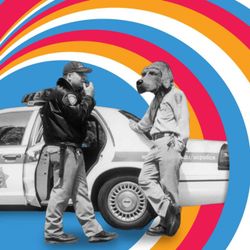
McGruff Takes a Bite Out of Crime, Part 1 (Encore)
33:44|McGruff the Crime Dog arrived on the scene at the dawn of the 1980s, just as a firehose of anti-drug PSAs was inundating the youth of America. These messages didn’t always work as intended—but they did work their way into the long term memories of the kids who heard them.In the first of two episodes, originally released in 2022, we take a look at PSAs and their strange afterlife through the lens of a trench-coat wearing bloodhound and his bizarre, yet catchy anti-drug songs. We’ll talk to Dan Danger, Sherry Nemmers, Joseph Cappella, David Farber, Mike Hawes, and Robin Nelson to discover how the McGruff Smart Kids Album came to exist in the first place.This episode was written by Willa Paskin. It was produced by Willa Paskin and Katie Shepherd. We had production help from Sam Kim. Editing by Jamie York and Derek John. Decoder Ring is produced by Max Freedman and Evan Chung, our supervising producer. Merritt Jacob is Senior Technical Director. Our intern is Phoebe Mulder.Thank you to Wendy Melillo, Dan McQuade, Dale Mantley, Larissa Zargeris, Daisy Rosario, Dave Bledsoe, Larre Johnson, Duane Poole, Ari Merkin, Charles and Karen Rosen, and Eric Greenberg.If you have any cultural mysteries you want us to decode, email us at DecoderRing@slate.com or leave a message on our hotline at (347) 460-7281.Get more of Decoder Ring with Slate Plus! Join for exclusive bonus episodes of Decoder Ring and ad-free listening on all your favorite Slate podcasts. Subscribe from the Decoder Ring show page on Apple Podcasts or Spotify. Or, visit slate.com/decoderplus for access wherever you listen.
134. The Fight Over Sunlight
52:18||Ep. 134The sun has always been a hot topic. For centuries, we’ve flip-flopped over whether our health depends on soaking up its rays—or shielding ourselves from them. The current conventional wisdom is clear: Avoid sunburns at all costs, using shade, hats, long sleeves, and the highest SPF sunscreen your drugstore has to offer.But in a historical sense, that advice is pretty new. Not long ago, doctors told parents to slather babies in oil and let them roast in the afternoon sun. Tanning was once medically prescribed. Though we’ve lived under it for all of human history, we’ve never quite figured out how much sun is actually good for us. So where has the pendulum landed today? And why does it keep swinging in the first place?In this episode of Decoder Ring, Willa talks to Rowan Jacobsen, author of the new book In Defense of Sunlight: The Surprising Science of Sun Exposure, who argues that our current guidelines have gone too far in emphasizing the risks of the sun. She also speaks with Catherine Cocks, the director of the Syracuse University Press and author of Tropical Whites: The Rise of the Tourist South in the Americas, about how race drove our cultural obsession with suntanning.This episode was written by Willa Paskin and our supervising producer, Evan Chung, who also produced this episode. Decoder Ring is also produced by Max Freedman. Merritt Jacob is Senior Technical Director. Our intern is Phoebe Mulder.If you have any cultural mysteries you want us to decode, email us at DecoderRing@slate.com or leave a message on our hotline at (347) 460-7281.Get more of Decoder Ring with Slate Plus! Join for exclusive bonus episodes of Decoder Ring and ad-free listening on all your favorite Slate podcasts. Subscribe from the Decoder Ring show page on Apple Podcasts or Spotify. Or, visit slate.com/decoderplus for access wherever you listen.
133. Weapons of Map Destruction
48:53||Ep. 133Most of us use GPS—the Global Positioning System—on a daily basis: to find our location when we’re driving, running, shopping, dating, and so much more. But GPS is even more important, and more vulnerable, than you think.In the last few years, GPS interference has been reported all over the world, from war zones to shipping routes to public squares. What was once the fanciful plot of a Bond movie—bad guy manipulates GPS to start World War III—is increasingly plausible. How did the world come to rely so heavily on such an unreliable system?In this episode of Decoder Ring, host Willa Paskin talks to journalist Katherine Dunn, author of the new book Little Blue Dot: How GPS Shaped the Modern World. You’ll learn how GPS works, why it was created, how it became so ubiquitous, and why it’s now under attack. You’ll also hear from Dr. Todd Humphreys, an aerospace engineer who manipulated GPS to trick an $85 million superyacht into following his direction—for science, of course.This episode was written and produced by Max Freedman. It was edited by Willa Paskin and Evan Chung, our supervising producer. Merritt Jacob is Senior Technical Director. Our intern is Phoebe Mulder.If you have any cultural mysteries you want us to decode, email us at DecoderRing@slate.com or leave a message on our hotline at (347) 460-7281.Get more of Decoder Ring with Slate Plus! Join for exclusive bonus episodes of Decoder Ring and ad-free listening on all your favorite Slate podcasts. Subscribe from the Decoder Ring show page on Apple Podcasts or Spotify. Or, visit slate.com/decoderplus for access wherever you listen.Sources for This Episode Burgess, Matt. “When a tanker vanishes, all the evidence points to Russia,” WIRED, Sep. 21, 2017.Dunn, Katherine. Little Blue Dot: How GPS Shaped the Modern World, Bloomsbury Publishing, 2026.Dunn, Katherine. “How to Hack a Superyacht,” The Walrus, Jun. 13, 2026.Hopper, Nate. “The Thorny Problem of Keeping the Internet’s Time,” The New Yorker, Sep. 30, 2022.Hopper, Nate. “The Timekeeper of Ukraine,” The Atlantic, Sep. 21, 2024.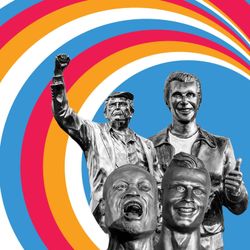
132. We Are Monumentally Bad at Statues
48:50||Ep. 132It seems like the only time you hear about new statues these days is when something goes horribly wrong. Unfortunate bronze renditions of Lucille Ball, Cristiano Ronaldo, Dwayne Wade, and many others are always going viral, becoming a fixture of late-night shows and mocking comment sections. Is the internet too harsh a critic? Or is American statuary a total bust?In this episode of Decoder Ring, host Willa Paskin talks to artist Atalanta Arden-Miller about what’s happened to one of the oldest artistic traditions in the world—why so many contemporary statues turn out off-center, off-kilter, and off-putting. The answer takes us from ancient Greece to Nazi Germany to North Korea.This episode was written by Willa Paskin. It was produced by Max Freedman. It was edited by Josh Levin and Evan Chung, our supervising producer. Merritt Jacob is Senior Technical Director. Our intern is Phoebe Mulder.Special thanks to the Works in Progress Podcast, where we first heard Atalanta talk about the dismal state of statuary today.If you have any cultural mysteries you want us to decode, email us at DecoderRing@slate.com or leave a message on our hotline at (347) 460-7281.Get more of Decoder Ring with Slate Plus! Join for exclusive bonus episodes of Decoder Ring and ad-free listening on all your favorite Slate podcasts. Subscribe from the Decoder Ring show page on Apple Podcasts or Spotify. Or, visit slate.com/decoderplus for access wherever you listen.