Share
Decoder Ring
Was "Eyes Wide Shut" a Warning?
When Eyes Wide Shut opened in the summer of 1999, it was widely considered a disappointment. This final film from legendary director Stanley Kubrick had been sold as an erotic thriller, and potentially even a peek into the real sex lives of its then-married stars, Tom Cruise and Nicole Kidman. But Eyes Wide Shut was stranger than that: a meditative art film whose much-hyped orgy scene is more creepy than sexy, run by a cabal of rich and powerful men who prey on young women.
But Eyes Wide Shut has received a burst of new attention in the last few years, amid constant revelations about a real-life cabal of rich and powerful men who prey on young women. Across the internet, cinema sleuths have been asking: is it possible Eyes Wide Shut was not fictional? Was Stanley Kubrick trying to warn the world about a real conspiracy? And if so… was he murdered for it?
In this episode of Decoder Ring, we follow Lane Brown—a lifelong Kubrick fan and features writer for New York Magazine—as he investigates this conspiracy theory and what it says about how we deal with ugly facts and murky fictions.
This episode was written and produced by Max Freedman and edited by Willa Paskin. Decoder Ring is also produced by Katie Shepherd and Evan Chung, our supervising producer. Merritt Jacob is Senior Technical Director.
If you have any cultural mysteries you want us to decode, email us at DecoderRing@slate.com or leave a message on our hotline at (347) 460-7281.
Sources for This Episode
Barbezat, Michael. “‘Pizzagate’ and the Nocturnal Ritual Fantasy: Imaginary Cults, Fake News, and Real Violence,” The Public Medievalist, May 4, 2017.
Brown, Lane. “The Eyes Wide Shut Conspiracy,” New York Magazine, Dec. 17, 2025.
Ebiri, Bilge. “An Oral History of an Orgy,” New York Magazine, June 27, 2019.
Nicholson, Amy. “The Year Tom Cruise Gave Not One but Two Dangerously Vulnerable Performances,” The New York Times, Aug. 27, 2024.
Raftery, Brian. “Dream Team: Cruise, Kidman, Kubrick, and the making of Eyes Wide Shut,” New York Magazine, Apr. 15, 2019.
Shapiro, Lila. “What I Learned After Watching Eyes Wide Shut 100 Times,” New York Magazine, July 1, 2019.
Get more of Decoder Ring with Slate Plus! Join for exclusive bonus episodes of Decoder Ring and ad-free listening on all your favorite Slate podcasts. Subscribe from the Decoder Ring show page on Apple Podcasts or Spotify. Or, visit slate.com/decoderplus for access wherever you listen.
Need to set up your Slate Plus feed? If you subscribed through Slate.com, check out our FAQ at slate.com/podcastfaqs for easy instructions. Members subscribed via Apple Podcasts get automatic access—no setup required.
More episodes
View all episodes
136. Bridget in the Buff
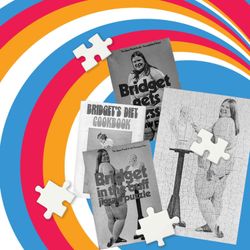
01:03:33||Ep. 136In the early 1970s, a jigsaw puzzle of a cheerful, young, naked, fat woman known only as “Bridget in the Buff” arrived in stores all over America. It was just the first of countless Bridget-related merchandise that would be sold around the world for the next decade: calendars, playing cards, coloring books, cookbooks, and much more. Bridget was everywhere. But who was she?In this episode of Decoder Ring, the real Bridget reveals all. Her name is Dawn Brooks, and she takes us through the unusual path that led her to pose nude for scores of popular products. How does it feel to be a gag gift—and now, an unlikely icon?Besides Dawn, you’ll hear from her friends Leslie Block Prip, Kathy McDermott, and John Emery; Herb Kavet, whose company created the “Bridget in the Buff” line of products; and Bridget admirers Laura Mazzuca Toops and Ginger Geralamo.Thank you to Brenda Oelbaum, and to Molly Brown and Olivia Dever from the Northeastern University Archives and Special Collections.This episode was written by Willa Paskin and produced by Evan Chung, our Supervising Producer. Decoder Ring is also produced by Max Freedman. Merritt Jacob is Senior Technical Director. If you have any cultural mysteries you want us to decode, email us at DecoderRing@slate.com or leave a message on our hotline at (347) 460-7281.Get more of Decoder Ring with Slate Plus! Join for exclusive bonus episodes of Decoder Ring and ad-free listening on all your favorite Slate podcasts. Subscribe from the Decoder Ring show page on Apple Podcasts or Spotify. Or, visit slate.com/decoderplus for access wherever you listen.
135. What Even Is a “Podcast” Anymore?
59:16||Ep. 135Podcasts are everywhere. They’re more popular and influential than they’ve ever been. But at the same time, what makes a podcast a “podcast” has never been more confusing.Until recently, the definition of “podcast” was clear: audio distributed over the internet. A podcast was something you listened to, not something you watched. But now, almost all of the most popular podcasts have video, too. And most of these podcasts share a video-friendly format: two or three people chatting behind big bulky microphones.You may have noticed that our podcast, Decoder Ring, does not have video, so these developments have given our team, like many other podcast-makers, no shortage of anxiety. In this week’s episode, we’re embracing our inner chatcast: host Willa Paskin and supervising producer Evan Chung trace the history and evolution of podcasting through their own histories with the medium, and wrestle with their complicated feelings about the state of the format in 2026.You can watch video of Willa and Evan’s conversation here:https://youtu.be/JHhQM8IrK7k?si=aOv2BGoSuYhIGF-GThis episode was produced by Max Freedman. Merritt Jacob is Senior Technical Director. Our intern is Phoebe Mulder. Video production by Micah Phillips. Special thanks to Amanda Dobbins, Leon Neyfakh, Nick Quah, Ben Richmond, Amber Robinson, Susan Matthews, Mary Harris, and Mia Lobel.If you have any cultural mysteries you want us to decode, email us at DecoderRing@slate.com or leave a message on our hotline at (347) 460-7281.Sources for This Episode“How YouTube Ate Podcasts and TV,” Galaxy Brain, Dec. 12, 2025.Kang, Jay Caspian. “CNN’s ‘Podcast Look’ and the Slow Death of Cable News,” The New Yorker, March 24, 2026.Quah, Nicholas. “Will Video Kill the Audio Star in 2025?” New York Magazine, Dec. 31, 2024.Testa, Jessica. “It Was Just a Podcast. Now, It’s Kelce Land,” The New York Times, Apr. 24, 2026.Get more of Decoder Ring with Slate Plus! Join for exclusive bonus episodes of Decoder Ring and ad-free listening on all your favorite Slate podcasts. Subscribe from the Decoder Ring show page on Apple Podcasts or Spotify. Or, visit slate.com/decoderplus for access wherever you listen.
McGruff Takes a Bite Out of Crime, Part 2 (Encore)
42:59|McGruff the Crime Dog arrived on the scene at the dawn of the 1980s, just as a firehose of anti-drug PSAs was inundating the youth of America. These messages didn’t always work as intended—but they did work their way into the long term memories of the kids who heard them.In the second episode of our two-part series, originally released in 2022, on the weird world of PSAs and very special episodes, we look at how McGruff’s Smart Kids Album influenced everything from straight edge hardcore to a couple’s wedding playlist. We’ll hear from Sarah Hubbard, Daniel Danger, Joseph Cappella, David Farber, Mike Hawes, Robin Nelson, Daisy Rosario, and Tatiana Peralta.This episode was written by Willa Paskin, and produced by Willa Paskin and Katie Shepherd. It was edited by Jamie York. Decoder Ring is produced by Max Freedman and Evan Chung, our supervising producer. Merritt Jacob is Senior Technical Director. Our intern is Phoebe Mulder.Thank you to Derek John, Ari Merkin, Wendy Melillo, Dan McQuade, Dale Mantley, Larissa Zargeris, Dave Bledsoe, Larre Johnson, Duane Poole, Eric Greenberg, Charles and Karen Rosen, Jennifer Holland, Orla Mejia, Andres Martinez, and everyone else at the Rutgers University Library.You can listen to Daniel Danger’s McGruff cover album in its entirety or purchase it here. If you are interested in hearing the full McGruff educational program or any of Puppet Productions productions, they are available for purchase at puppetsinc.com.If you have any cultural mysteries you want us to decode, email us at DecoderRing@slate.com or leave a message on our hotline at (347) 460-7281.Get more of Decoder Ring with Slate Plus! Join for exclusive bonus episodes of Decoder Ring and ad-free listening on all your favorite Slate podcasts. Subscribe from the Decoder Ring show page on Apple Podcasts or Spotify. Or, visit slate.com/decoderplus for access wherever you listen.
McGruff Takes a Bite Out of Crime, Part 1 (Encore)
33:44|McGruff the Crime Dog arrived on the scene at the dawn of the 1980s, just as a firehose of anti-drug PSAs was inundating the youth of America. These messages didn’t always work as intended—but they did work their way into the long term memories of the kids who heard them.In the first of two episodes, originally released in 2022, we take a look at PSAs and their strange afterlife through the lens of a trench-coat wearing bloodhound and his bizarre, yet catchy anti-drug songs. We’ll talk to Dan Danger, Sherry Nemmers, Joseph Cappella, David Farber, Mike Hawes, and Robin Nelson to discover how the McGruff Smart Kids Album came to exist in the first place.This episode was written by Willa Paskin. It was produced by Willa Paskin and Katie Shepherd. We had production help from Sam Kim. Editing by Jamie York and Derek John. Decoder Ring is produced by Max Freedman and Evan Chung, our supervising producer. Merritt Jacob is Senior Technical Director. Our intern is Phoebe Mulder.Thank you to Wendy Melillo, Dan McQuade, Dale Mantley, Larissa Zargeris, Daisy Rosario, Dave Bledsoe, Larre Johnson, Duane Poole, Ari Merkin, Charles and Karen Rosen, and Eric Greenberg.If you have any cultural mysteries you want us to decode, email us at DecoderRing@slate.com or leave a message on our hotline at (347) 460-7281.Get more of Decoder Ring with Slate Plus! Join for exclusive bonus episodes of Decoder Ring and ad-free listening on all your favorite Slate podcasts. Subscribe from the Decoder Ring show page on Apple Podcasts or Spotify. Or, visit slate.com/decoderplus for access wherever you listen.
134. The Fight Over Sunlight
52:18||Ep. 134The sun has always been a hot topic. For centuries, we’ve flip-flopped over whether our health depends on soaking up its rays—or shielding ourselves from them. The current conventional wisdom is clear: Avoid sunburns at all costs, using shade, hats, long sleeves, and the highest SPF sunscreen your drugstore has to offer.But in a historical sense, that advice is pretty new. Not long ago, doctors told parents to slather babies in oil and let them roast in the afternoon sun. Tanning was once medically prescribed. Though we’ve lived under it for all of human history, we’ve never quite figured out how much sun is actually good for us. So where has the pendulum landed today? And why does it keep swinging in the first place?In this episode of Decoder Ring, Willa talks to Rowan Jacobsen, author of the new book In Defense of Sunlight: The Surprising Science of Sun Exposure, who argues that our current guidelines have gone too far in emphasizing the risks of the sun. She also speaks with Catherine Cocks, the director of the Syracuse University Press and author of Tropical Whites: The Rise of the Tourist South in the Americas, about how race drove our cultural obsession with suntanning.This episode was written by Willa Paskin and our supervising producer, Evan Chung, who also produced this episode. Decoder Ring is also produced by Max Freedman. Merritt Jacob is Senior Technical Director. Our intern is Phoebe Mulder.If you have any cultural mysteries you want us to decode, email us at DecoderRing@slate.com or leave a message on our hotline at (347) 460-7281.Get more of Decoder Ring with Slate Plus! Join for exclusive bonus episodes of Decoder Ring and ad-free listening on all your favorite Slate podcasts. Subscribe from the Decoder Ring show page on Apple Podcasts or Spotify. Or, visit slate.com/decoderplus for access wherever you listen.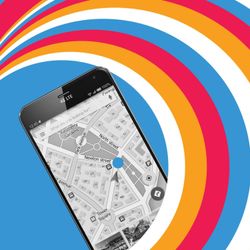
133. Weapons of Map Destruction
48:53||Ep. 133Most of us use GPS—the Global Positioning System—on a daily basis: to find our location when we’re driving, running, shopping, dating, and so much more. But GPS is even more important, and more vulnerable, than you think.In the last few years, GPS interference has been reported all over the world, from war zones to shipping routes to public squares. What was once the fanciful plot of a Bond movie—bad guy manipulates GPS to start World War III—is increasingly plausible. How did the world come to rely so heavily on such an unreliable system?In this episode of Decoder Ring, host Willa Paskin talks to journalist Katherine Dunn, author of the new book Little Blue Dot: How GPS Shaped the Modern World. You’ll learn how GPS works, why it was created, how it became so ubiquitous, and why it’s now under attack. You’ll also hear from Dr. Todd Humphreys, an aerospace engineer who manipulated GPS to trick an $85 million superyacht into following his direction—for science, of course.This episode was written and produced by Max Freedman. It was edited by Willa Paskin and Evan Chung, our supervising producer. Merritt Jacob is Senior Technical Director. Our intern is Phoebe Mulder.If you have any cultural mysteries you want us to decode, email us at DecoderRing@slate.com or leave a message on our hotline at (347) 460-7281.Get more of Decoder Ring with Slate Plus! Join for exclusive bonus episodes of Decoder Ring and ad-free listening on all your favorite Slate podcasts. Subscribe from the Decoder Ring show page on Apple Podcasts or Spotify. Or, visit slate.com/decoderplus for access wherever you listen.Sources for This Episode Burgess, Matt. “When a tanker vanishes, all the evidence points to Russia,” WIRED, Sep. 21, 2017.Dunn, Katherine. Little Blue Dot: How GPS Shaped the Modern World, Bloomsbury Publishing, 2026.Dunn, Katherine. “How to Hack a Superyacht,” The Walrus, Jun. 13, 2026.Hopper, Nate. “The Thorny Problem of Keeping the Internet’s Time,” The New Yorker, Sep. 30, 2022.Hopper, Nate. “The Timekeeper of Ukraine,” The Atlantic, Sep. 21, 2024.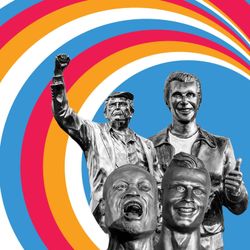
132. We Are Monumentally Bad at Statues
48:50||Ep. 132It seems like the only time you hear about new statues these days is when something goes horribly wrong. Unfortunate bronze renditions of Lucille Ball, Cristiano Ronaldo, Dwayne Wade, and many others are always going viral, becoming a fixture of late-night shows and mocking comment sections. Is the internet too harsh a critic? Or is American statuary a total bust?In this episode of Decoder Ring, host Willa Paskin talks to artist Atalanta Arden-Miller about what’s happened to one of the oldest artistic traditions in the world—why so many contemporary statues turn out off-center, off-kilter, and off-putting. The answer takes us from ancient Greece to Nazi Germany to North Korea.This episode was written by Willa Paskin. It was produced by Max Freedman. It was edited by Josh Levin and Evan Chung, our supervising producer. Merritt Jacob is Senior Technical Director. Our intern is Phoebe Mulder.Special thanks to the Works in Progress Podcast, where we first heard Atalanta talk about the dismal state of statuary today.If you have any cultural mysteries you want us to decode, email us at DecoderRing@slate.com or leave a message on our hotline at (347) 460-7281.Get more of Decoder Ring with Slate Plus! Join for exclusive bonus episodes of Decoder Ring and ad-free listening on all your favorite Slate podcasts. Subscribe from the Decoder Ring show page on Apple Podcasts or Spotify. Or, visit slate.com/decoderplus for access wherever you listen.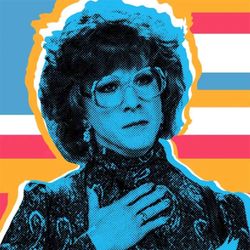
The Tootsie Shot (Encore)
35:59|You know the Tootsie Shot. It’s that image that pops up all the time in movies set in a dense city: a really busy midtown street, everyone going somewhere—and smack in the middle of it all is the protagonist. You can find it in Working Girl, Midnight Cowboy, Wall Street, Heartburn, Elf, Bridget Jones’s Diary, The Devil Wears Prada, The Wolf of Wall Street, and so many more. But while it’s one of the most recognizable camera shots in all of film, it only amounts to a short, transitional moment, often in the middle of a montage, and sometimes lasting for a couple seconds. It is, after all, just someone walking down a crowded street. So why is it so sticky?Some of the voices you’ll hear in this episode include James Sanders, author of Celluloid Skyline: New York and the Movies; cinematographer Adam Holender; producer Anna Wenger; assistant director Joe Reidy, author Christopher Bonanos, media and entertainment lawyer Sam Bayard, and location manager Mara Alcaly. Also thanks to Jason Bailey, Sam Levy, Glenn Kenny, Carlo Mirabella-Davis, J.D. Amato, David Sims, Bill Parker, Doug Brody, Sean Fennessey, and Jody Rosen.This episode was produced by Willa Paskin and Benjamin Frisch. Decoder Ring is also produced by Max Freedman and Evan Chung, our supervising producer. Merritt Jacob is Senior Technical Director.If you have any cultural mysteries you want us to decode, email us at DecoderRing@slate.com or leave a message on our hotline at (347) 460-7281.Get more of Decoder Ring with Slate Plus! Join for exclusive bonus episodes of Decoder Ring and ad-free listening on all your favorite Slate podcasts. Subscribe from the Decoder Ring show page on Apple Podcasts or Spotify. Or, visit slate.com/decoderplus for access wherever you listen.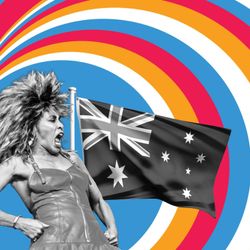
131. Tina Turner and the Dance That Conquered Australia
49:09||Ep. 131In Australia, no wedding or school dance is complete without the Nutbush, Australia’s unofficial national dance. The Nutbush – a simple line dance to the song “Nutbush City Limits,” by Ike and Tina Turner – has become as stereotypically Australian as kangaroos, boomerangs, and Vegemite.And yet, hardly anyone outside of Australia even knows the Nutbush exists. Here at Decoder Ring, we certainly didn’t – until we started getting emails from Australians asking us to investigate its origins. How did an American song become the soundtrack for an Australian national tradition? Who invented the iconic steps, and why does every Australian know them?Our producer Max Freedman put on his dancing shoes to get some answers. The global, century-spanning story of the Nutbush involves Australia, Tennessee, Denmark, primary schools, gay discos, and demonstrates that even the goofiest cultural touchstones can go surprisingly deep.In this episode you’ll hear from culture journalists David Mack and Angus Kidman; Nutbush researchers Panizza Allmark and Jon Stratton; dance historians Erica Okamura and Richard Powers; Dr. Fiona Chatteur, Jeremy Santolin, and Brian Kerr.This episode was written and produced by Max Freedman and edited by Evan Chung, our supervising producer. Merritt Jacob is Senior Technical Director.If you have any cultural mysteries you want us to decode, email us at DecoderRing@slate.com or leave a message on our hotline at (347) 460-7281.Get more of Decoder Ring with Slate Plus! Join for exclusive bonus episodes of Decoder Ring and ad-free listening on all your favorite Slate podcasts. Subscribe from the Decoder Ring show page on Apple Podcasts or Spotify. Or, visit slate.com/decoderplus for access wherever you listen.Further ViewingHow to do ‘The Nutbush’ - Australian Line Dance Dancin’ the Madison on “The Buddy Deane Show” (1960)Alley Cat Tutorial — Spark Physical EducationThe Nutbush on Countdown (December 5, 1976)Tina Turner — Nutbush City Limits, The Midnight Special (1973)Tina Turner — Are You Breaking My Heart, Countdown (1980)Tina Turner: How “The Best” Became Rugby League’s Anthem | ABC NewsTina Turner’s Electrifying 1993 NRL Grand Final PerformanceSources for This EpisodeAllmark, Panizza, and Jon Stratton. “Doing the Nutbush: How Australia Got Its Very Own Line Dance.” Continuum: Journal of Media & Cultural Studies, vol. 39, no. 1, 2025, pp. 79–94.Allmark, Panizza, and Jon Stratton. “The Nutbush Dance Reframed: Further Analysis Related to ‘Doing the Nutbush.’” Continuum: Journal of Media & Cultural Studies, vol. 39, no. 1, 2025, pp. 95–103.Andrews, Shirley. Take Your Partners: Traditional Dancing in Australia. 3rd ed., Hyland House, 1979.Bloomfield, Anne. “Health or Art? The Case for Dance in the Curriculum of British State Schools 1909–1919.” History of Education, vol. 36, no. 6, 2007, pp. 681–696.Bloomfield, Anne. “The Quickening of the National Spirit: Cecil Sharp and the Pioneers of the Folk-Dance Revival in English State Schools (1900–26).” History of Education, vol. 30, no. 1, 2001, pp. 59–75.Gbogbo, Mawunyo. “Tina Turner and Her Australian Connections: How The Best Became Rugby League’s Anthem and Why Is the Nutbush Mandatory at Gatherings?” ABC News, 24 May 2023.Jones, Benjamin T. “Australian Politics Explainer: The White Australia Policy.” The Conversation, 9 Apr. 2017.Kidman, Angus. “Tina Turner: How Australia Saved Her Career.” Angus Kidman, 13 Aug. 2023.Meiners, Jeff. So We Can Dance? In Pursuit of an Inclusive Dance Curriculum for the Primary School Years in Australia. 2017. University of South Australia, Doctor of Education thesis.Spencer, Eliza. “Australia and the Nutbush: The Quest for the Origin of a Cultural Phenomenon Goes On.” The Guardian, 5 May 2024.Ward, Mary. “The Mysterious Allure of the Nutbush and Why the Dance Is Uniquely Australian.” Sydney Morning Herald, 25 May 2023.Zhuang, Yan. “Australia Remembered Tina Turner with a Dance.” New York Times, 25 May 2023.