Share
Marketing Vanguard
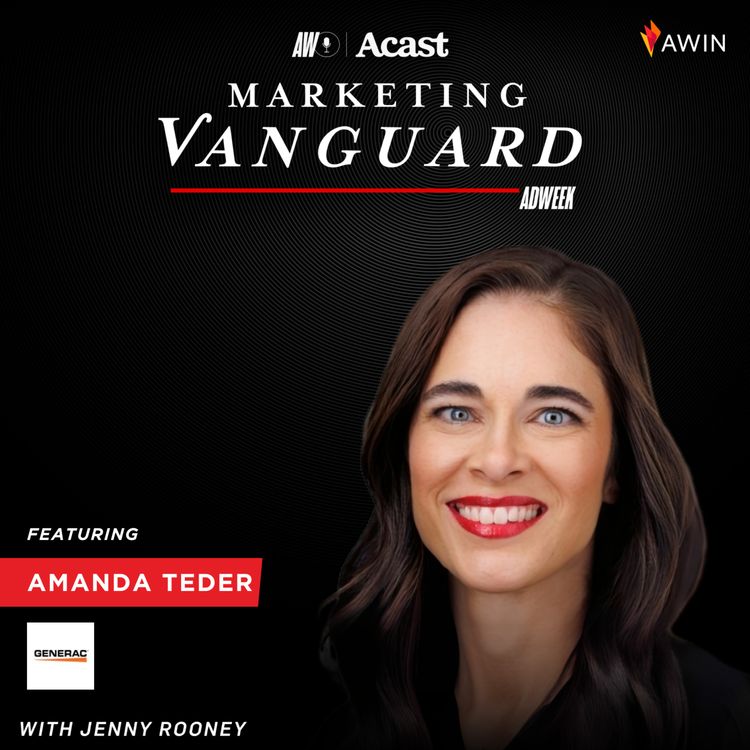
Why 60% of Power Solutions Fail—And How Generac Dominates the Category with Amanda Teder, CMO of Generac Power Systems
Power marketing requires balancing fear-based messaging with positive benefit communication to drive high-stakes purchasing decisions.
In this episode of Marketing Vanguard, host Jenny Rooney sits down with Amanda Teder, CMO of Generac Power Systems, to explore the fascinating world of power solutions marketing. Learn how Generac balances fear-based messaging with benefit-focused communication, navigates both B2B and B2C markets, and transforms customer education into sales. Amanda shares invaluable insights on driving business growth through data-driven marketing, building effective pricing ecosystems, and leading organizational transformation. Whether you're managing discretionary purchases or essential services, this conversation offers practical strategies for connecting marketing initiatives directly to business outcomes.
Unlocking the Creator Economy with Awin
Did you know influencer marketing drives twice as many sales as display advertising, with a 37% higher retention rate?
Awin helps brands harness this potential with tailored influencer management solutions that drive measurable results. Whether you're looking to grow your creator roster, foster long-term relationships, or track full-funnel performance, Awin’s expertise and platform integrations make it easy to scale campaigns and optimize impact.
With partnerships across CreatorIQ, LTK, ShopMy, and more, brands gain access to powerful discovery tools and seamless tracking capabilities, ensuring transparency and efficiency at every stage.
Here’s how brands can maximize their influencer marketing:
- Find the right creators – Access a diverse network of influencers, even in niche markets.
- Track performance with full transparency – Measure impact from awareness to conversions in real time.
- Incentivize influencers effectively – Commission-based rewards through affiliate links and coupon codes keep creators engaged.
- Blend influencer & affiliate marketing seamlessly – Awin’s integrations create a streamlined, results-driven approach
Unlock the full potential of influencer marketing. Visit awin.link/adweek to start building high-impact partnerships today!
More episodes
View all episodes
201. The Art of Using AI as “Power Steering,” Not Autopilot ft. Kathy Collins
24:00||Season 1, Ep. 201Moving from CMO to Chief Revenue Officer changes the questions you ask (and which numbers keep you up at night). In this episode of Marketing Vanguard, Jenny Rooney sits down with Kathy Collins, Senior Vice President and Chief Revenue Officer at Frontdoor, to unpack what happens when a career built in marketing expands into sales, finance and full revenue accountability. Kathy shares how cross-category experience sharpened her ability to find the right audience and make unfamiliar products relevant, why she became “obsessed with numbers” and what leading sales taught her about communication. Plus, her candid thoughts on why curiosity matters more than comfort. Kathy Collins is Senior Vice President and Chief Revenue Officer at Frontdoor, where she started as Chief Marketing Officer. Today, her role brings marketing, sales and revenue thinking much closer together.Her career has spanned several major consumer brands and categories, including Lee Jeans, H&R Block and Massage Envy, before she joined Frontdoor.That current broader scope of her work has also changed how she approaches marketing, from a stronger focus on unit economics and financial accountability to translating strategy across sales, finance and analytics teams.What You'll Learn:Why moving across categories can strengthen, not dilute, a marketing careerWhat changes when a CMO starts owning sales and revenueWhy broader commercial leadership requires getting comfortable with the numbersHow curiosity across sales, finance and analytics can expand a marketer’s impactWhy marketing language does not always translate to salesHow Frontdoor thinks about AI as “power steering,” not autopilotWhy education and entertainment can work together in a misunderstood categoryHow changing homeownership patterns should reshape audience strategy
200. The “Media RFP” Is Quietly Becoming Obsolete ft. Bruce Williams
12:09||Season 1, Ep. 200Media used to be one part of the marketing machine, but this approach became outdated a while ago. In this episode of Marketing Vanguard, Jenny Rooney sits down with Bruce Williams, CEO of dentsu X North America, to examine how media is becoming the connective tissue across creative, commerce, CRM, data and technology. Bruce reveals why standalone media RFPs are disappearing, what it really takes to design connected consumer experiences and why brands need to move from channel-first planning toward operating systems built around outcomes.Bruce Williams is CEO of dentsu X North America. Here, his focus is increasingly on helping brands move beyond isolated media planning toward connected operating models that bring together data, content, technology and consumer experience.With more than 20 years in media, Bruce has spent much of his career working at the intersection of media strategy, integrated marketing, technology and organizational transformation.He also works with clients on AI-enabled transformation, agency interoperability and new ways to turn data into faster decision-making at both global and local levels.What You'll Learn:Why standalone media RFPs are becoming less commonHow integrated briefs are pulling together media, creative, CRM, commerce and loyaltyWhy fragmentation still gets in the way of better consumer experiencesHow “experience planning” changes the traditional channel-first modelWhy brands need to shift from outputs toward real outcomesHow AI strategy can combine long-term infrastructure with practical, local toolsWhy interoperability and optionality matter more in agency relationshipsWhy creator and influencer marketing still needs deeper integration into the brand system
199. The Art, Science and Theater of Modern Marketing ft. Thomas Ranese
27:25||Season 1, Ep. 199What if the best marketing advantage you have is something that cannot be replicated by an algorithm?For Thomas Ranese, CMO of Intuit, it starts with theater, empathy and understanding what people are actually trying to achieve.In this episode of Marketing Vanguard, Jenny Rooney sits down with Thomas to unpack how an unconventional career spanning theater, Google and Uber shaped his approach to marketing leadership. From growing up behind the counter of his father's pasta shop to leading marketing at one of the world's biggest financial technology platforms, Thomas gets into why emotional connection can be just as powerful as performance data, why AI needs human expertise to earn customer trust and why brands should bring more humanity, creativity and purpose into modern marketing.Thomas Ranese is Chief Marketing Officer at Intuit, a global technology platform serving millions of customers worldwide with TurboTax, QuickBooks, Credit Karma and Mailchimp.His career has taken him through some very different worlds, including theater, consulting, government and nonprofit work, Google and Uber. His approach to marketing is rooted in a simple idea: understand what people are trying to achieve, then build brands and experiences that help them get there. He strongly believes in storytelling and using humor to make complex information more relatable.At Intuit, Thomas is helping shape the company's evolution into an integrated, AI-powered financial technology platform, with a focus on combining technology with human expertise to help consumers and businesses prosper.What You'll Learn:How Thomas's background in theater, consulting, and government became an unexpected advantage in marketingWhy marketing is a form of theater that extends beyond advertising into customer experience and retailWhy empathy and emotional connection can make marketers more effective in a performance-driven worldWhy AI and human expertise need to work together, particularly in high-stakes financial servicesWhy brands should position their products as enablers of customer ambitions rather than the end goalHow Intuit connects its mission of powering prosperity with financial literacy and business growthWhy CMOs need to stay hands-on with technology, creative execution, and customer experience as organizations scaleHow to make bold marketing work through humor, creativity, and a better understanding of what customers need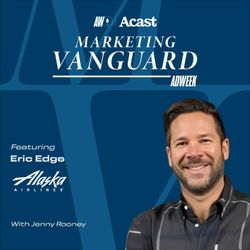
Why Great Leaders “Clear the Runway” ft. Eric Edge
21:18|Transformation gets talked about like it's a reinvention. But Eric Edge, VP of Brand and Marketing at Alaska Airlines, sees it differently.In this episode of Marketing Vanguard, Jenny Rooney welcomes Eric for an unpacking of what it takes to scale two heritage airline brands without flattening what made either one valuable. He explains why Alaska and Hawaiian are operating under one airline group while remaining distinct consumer brands, what gave Alaska the right to expand globally and why the fundamentals matter even more when the stakes get bigger.Eric Edge is VP of Brand and Marketing at Alaska Airlines, where he helps lead the brand strategy behind Alaska and Hawaiian Airlines as the two heritage brands expand their global footprint under one airline group.His career began in the airline industry before moving into advertising and later technology, where he worked across Facebook, Instagram and Pinterest during major periods of digital transformation. Across those chapters, one theme has stayed consistent: strong fundamentals matter, but so does the curiosity to adapt when the rules change.What You'll Learn:Why Alaska and Hawaiian are staying distinct even under one operationHow brand equity should shape post-merger decisionsWhy global expansion has to be earned through strong fundamentalsHow Eric separates what his team can control from what it cannotWhy leaders should remove blockers instead of micromanaging outcomesWhy consistency matters more when the stakes get higherHow AI can free marketers for higher-stakes workWhy curiosity is becoming one of the most valuable skills on a marketing team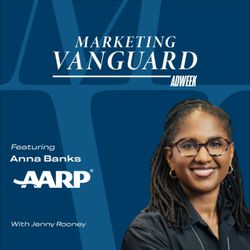
197. The Second Half of Life Is the Most Creative Act ft. Anna Banks of AARP
28:29||Season 1, Ep. 197What if your brand's biggest opportunity was completely hidden within your existing assets?In this episode of Marketing Vanguard, Jenny Rooney sits down with AARP CMO Anna Banks to unpack the challenge of repositioning a brand with more than 125 million Americans aged 50 and over in its sights. Anna gets into why the second half of life deserves a different story, why celebrity partnerships need to lead somewhere meaningful, and why AARP's next chapter depends on connecting the many touchpoints it already owns.Anna also shares how performance marketing translates into a mission-driven organization, what makes a partnership genuinely valuable, and why good leadership starts with listening.Anna Banks is the Chief Marketing Officer at AARP with over 30 years of marketing experience across brand strategy, digital, ecommerce, and performance marketing under her belt.Her career has taken her from Lotus Development Corporation and 15 years on the agency side to Walmart eCommerce, Fairtrade USA, and Sephora. At AARP, she's bringing those experiences together to help reposition a legacy brand and connect more meaningfully with the 125 million Americans aged 50 and over.Her approach brings together consumer insight, brand engagement and performance-driven conversion. In this conversation, she shares how AARP is thinking about relevance, partnerships, technology and the opportunity to change how people think about aging.What You'll Learn:Why AARP is working to move beyond the perception of being a brand for old peopleHow to make the second half of life feel like a new creative opportunityWhy celebrity partnerships can catch attention, but the issues behind them keep people engagedWhy brands need to stop making assumptions about the 50+ audience and its relationship with technologyHow to connect individual channels and content into a more intentional customer experienceWhy every successful partnership should start with consumer insight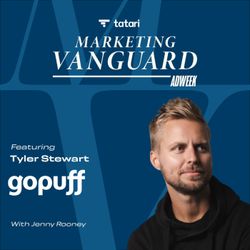
196. Brandweek 2026: “We’d Rather Be Debated Than Ignored” ft. Tyler Stewart
18:09||Season 1, Ep. 196Playing it safe is expensive when nobody notices you.Live from the Marketing Vanguard stage at Brandweek 2026, Jenny Rooney sits down with Tyler Stewart, Head of Marketing at Gopuff, for a play-by-play on how a challenger brand competes in one of the most crowded corners of commerce without trying to outspend everyone else. Tyler gets into why Gopuff’s real edge sits in its first-party logistics, how competitors can also become distribution partners, and why “instant” means more than shaving minutes off a delivery.Tyler Stewart is Head of Marketing at Gopuff, where he leads marketing across the business as the company continues to expand what instant commerce can look like.His career started in sports entertainment and talent representation before moving through media and integrated marketing roles at GQ, The Players’ Tribune and Bleacher Report.That mix of sports, media, entertainment and startup experience now shapes how he approaches Gopuff: find where the brand can create attention, build partnerships people actually care about and turn the company’s operational strengths into something culturally relevant.What You'll Learn:Why Gopuff’s proprietary logistics are central to its competitive positionHow competitors can also become valuable distribution partnersWhy instant commerce is about convenience and access, not speed aloneWhy dense urban markets matter more than rapid geographic expansionHow Gopuff uses partnerships to create unexpected customer experiencesWhy challenger brands have to be more resourceful when they cannot win on spendWhy Tyler would rather have Gopuff debated than ignoredWhy fewer, deeper creator partnerships can beat a stream of one-off postsThis episode is part of a special vidcast series that was recorded live during Brandweek 2026 and presented in partnership with Tatari.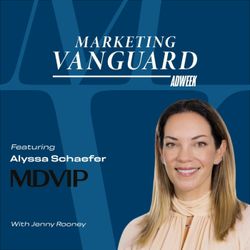
195. The Brand Isn’t Always the Star ft. Alyssa Schaefer of MDVIP
28:42||Season 1, Ep. 195Most CMOs are trained to make the brand the loudest thing on the block. But what if the brand isn’t supposed to be the star?In this episode of Marketing Vanguard, Jenny Rooney sits down with MDVIP CMO Alyssa Schaefer to unpack what marketing looks like when trust sits in the relationship between a doctor and a patient. She breaks down the strategy that built 33% unaided awareness from an imperfect starting point at Laurel Road, why MDVIP’s doctors and patients are unusually aligned and how she balances hyperlocal physician marketing with broader brand investment.Alyssa Schaefer is Chief Marketing Officer at MDVIP.Before joining MDVIP, Alyssa served as the first CMO of Laurel Road, where she helped rebrand the company for a national audience and built strong awareness among physicians. Her career spans American Express, fintech and healthcare, with experience across brand, product, partnerships, direct marketing and general management.At MDVIP, she now leads marketing across two connected audiences - doctors and patients. Her focus is on growing the business without losing sight of the human relationship at the center of the model.What You'll Learn:Why a strong brand can be built even from imperfect starting conditionsHow Laurel Road reached 33% unaided awareness among its target doctor segmentWhy aligned incentives between doctors, patients and the business matterWhy MDVIP deliberately keeps physicians at the center of the customer experienceHow hyperlocal and national marketing work together in MDVIP’s growth strategyWhy performance marketing alone may not be enough for the company’s next phaseHow cultural health trends influence messaging without dictating clinical decisionsWhy AI needs experienced operators in both marketing and medicine
194. Brandweek 2026: The “Why Us? Why This Brand?” Test Behind Mars’ Boldest Ideas ft. Rankin Carroll
17:55||Season 1, Ep. 194The best creative risks should make you a little nervous. But they should never make you ask why your brand is taking them.Live from the Marketing Vanguard stage at Brandweek 2026, Jenny Rooney sits down with Rankin Carroll, Chief Brand Officer of Mars Snacking, to unpack how brands like M&M’s, Snickers and Skittles stay culturally relevant without treating boldness as an excuse for chaos. Rankin takes us behind the scenes of the 2023 Snickers AI experiment that felt “potentially crazy” at the time, and gets candid about Mars’ creator learning curve and the responsibility marketers have to the next generation.Rankin Carroll is Chief Brand Officer of Mars Snacking, where he works across some of the company’s most recognizable brands, including M&M’s, Snickers and Skittles. He has spent more than 20 years at Mars across marketing, advertising, general management and global and regional leadership roles. His career has taken him from Toronto to the UK and at one point, included running an ice cream business along the way.Today, Rankin focuses on what he describes as the stewardship of distinctive, iconic brands: protect what makes them valuable, make them stronger than when you received them, and still create enough tension to keep them culturally relevant.What You'll Learn:How Mars pressure-tests risky ideas before putting iconic brands on the lineWhy the 2023 Snickers AI experiment required legal, security and agency teams to take the risk togetherHow “Why us? Why this brand?” separates bold creative from stuntsWhy brands have to earn the credibility to participate authentically in cultureWhy Rankin believes transformation now has no end stateHow Mars is learning to loosen control in creator-led marketingWhy marketing leaders need to rethink how the next generation is trained for an AI-shaped industryWhy CMOs need to own the AI agenda instead of leaving it to scattered pilotsThis episode is part of a special vidcast series that was recorded live during Brandweek 2026 and presented in partnership with Tatari.
193. Brandweek 2026: Can Too Much Attribution Make Marketing Worse? ft. Amanda Teder
16:33||Season 1, Ep. 193Attribution’s a tricky thing. It can help marketers make better decisions while simultaneously making their strategy worse. Live from the Marketing Vanguard stage at Brandweek 2026, Jenny Rooney sits down with Amanda Teder, CMO of Generac, to unpack what happens when marketing gets too focused on what is easiest to measure. Amanda breaks down the full-funnel operating model she has built at Generac, why demand generation is only the opening move in a high-consideration category and why some purchase journeys need nurturing for months or even years.Amanda Teder is Chief Marketing Officer at Generac, an energy solutions company serving both residential and industrial customers. Before joining Generac, Amanda spent roughly 20 years at Procter & Gamble, where she worked across brands including Oral-B and Febreze, before moving to Michelin.Across those very different categories, one theme has stayed consistent: understand what actually drives the business, then build the systems that can turn customer insight into repeatable growth. And, at Generac, that has meant connecting demand generation, nurture, sales enablement and post-purchase support into a more complete customer journey.What You'll Learn:Why Generac treats marketing as a connected operating systemWhy high-consideration categories cannot stop at demand generationWhy email still matters when a purchase cycle can last months or yearsHow Amanda applies lessons from P&G across very different categoriesWhy B2B and B2C marketing share more strategic DNA than most people assumeWhy strategy should come before deciding what AI should automateHow attribution can push teams too far down the funnelWhy Amanda’s “builder” mindset shapes the roles and brands she choosesThis episode is part of a special vidcast series that was recorded live during Brandweek 2026 and presented in partnership with Tatari.