Share
Marketing Vanguard
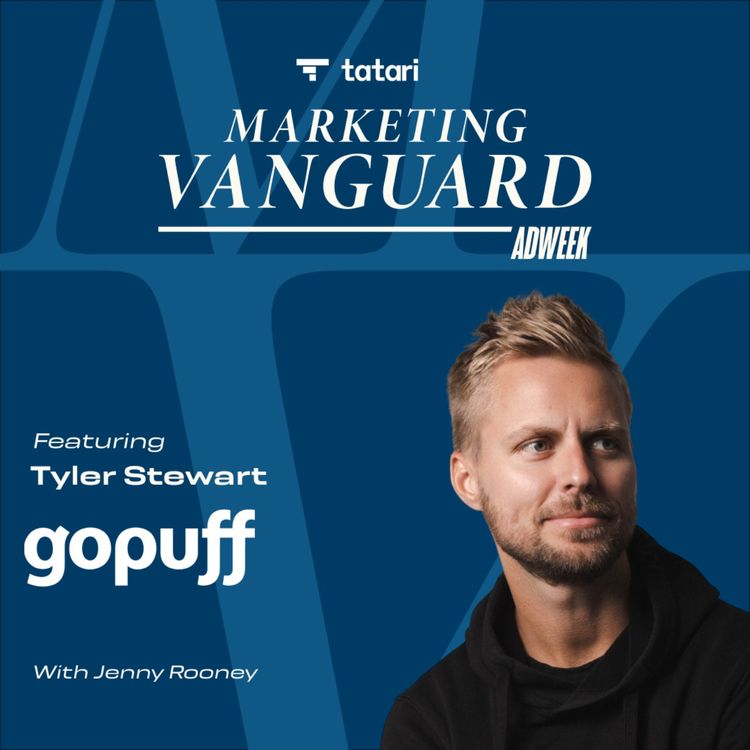
Brandweek 2026: “We’d Rather Be Debated Than Ignored” ft. Tyler Stewart
Playing it safe is expensive when nobody notices you.
Live from the Marketing Vanguard stage at Brandweek 2026, Jenny Rooney sits down with Tyler Stewart, Head of Marketing at Gopuff, for a play-by-play on how a challenger brand competes in one of the most crowded corners of commerce without trying to outspend everyone else. Tyler gets into why Gopuff’s real edge sits in its first-party logistics, how competitors can also become distribution partners, and why “instant” means more than shaving minutes off a delivery.
Tyler Stewart is Head of Marketing at Gopuff, where he leads marketing across the business as the company continues to expand what instant commerce can look like.
His career started in sports entertainment and talent representation before moving through media and integrated marketing roles at GQ, The Players’ Tribune and Bleacher Report.
That mix of sports, media, entertainment and startup experience now shapes how he approaches Gopuff: find where the brand can create attention, build partnerships people actually care about and turn the company’s operational strengths into something culturally relevant.
What You'll Learn:
- Why Gopuff’s proprietary logistics are central to its competitive position
- How competitors can also become valuable distribution partners
- Why instant commerce is about convenience and access, not speed alone
- Why dense urban markets matter more than rapid geographic expansion
- How Gopuff uses partnerships to create unexpected customer experiences
- Why challenger brands have to be more resourceful when they cannot win on spend
- Why Tyler would rather have Gopuff debated than ignored
- Why fewer, deeper creator partnerships can beat a stream of one-off posts
This episode is part of a special vidcast series that was recorded live during Brandweek 2026 and presented in partnership with Tatari.
More episodes
View all episodes
197. The Second Half of Life Is the Most Creative Act ft. Anna Banks of AARP
28:29||Season 1, Ep. 197What if your brand's biggest opportunity was completely hidden within your existing assets?In this episode of Marketing Vanguard, Jenny Rooney sits down with AARP CMO Anna Banks to unpack the challenge of repositioning a brand with more than 125 million Americans aged 50 and over in its sights. Anna gets into why the second half of life deserves a different story, why celebrity partnerships need to lead somewhere meaningful, and why AARP's next chapter depends on connecting the many touchpoints it already owns.Anna also shares how performance marketing translates into a mission-driven organization, what makes a partnership genuinely valuable, and why good leadership starts with listening.Anna Banks is the Chief Marketing Officer at AARP with over 30 years of marketing experience across brand strategy, digital, ecommerce, and performance marketing under her belt.Her career has taken her from Lotus Development Corporation and 15 years on the agency side to Walmart eCommerce, Fairtrade USA, and Sephora. At AARP, she's bringing those experiences together to help reposition a legacy brand and connect more meaningfully with the 125 million Americans aged 50 and over.Her approach brings together consumer insight, brand engagement and performance-driven conversion. In this conversation, she shares how AARP is thinking about relevance, partnerships, technology and the opportunity to change how people think about aging.What You'll Learn:Why AARP is working to move beyond the perception of being a brand for old peopleHow to make the second half of life feel like a new creative opportunityWhy celebrity partnerships can catch attention, but the issues behind them keep people engagedWhy brands need to stop making assumptions about the 50+ audience and its relationship with technologyHow to connect individual channels and content into a more intentional customer experienceWhy every successful partnership should start with consumer insight
195. The Brand Isn’t Always the Star ft. Alyssa Schaefer of MDVIP
28:42||Season 1, Ep. 195Most CMOs are trained to make the brand the loudest thing on the block. But what if the brand isn’t supposed to be the star?In this episode of Marketing Vanguard, Jenny Rooney sits down with MDVIP CMO Alyssa Schaefer to unpack what marketing looks like when trust sits in the relationship between a doctor and a patient. She breaks down the strategy that built 33% unaided awareness from an imperfect starting point at Laurel Road, why MDVIP’s doctors and patients are unusually aligned and how she balances hyperlocal physician marketing with broader brand investment.Alyssa Schaefer is Chief Marketing Officer at MDVIP.Before joining MDVIP, Alyssa served as the first CMO of Laurel Road, where she helped rebrand the company for a national audience and built strong awareness among physicians. Her career spans American Express, fintech and healthcare, with experience across brand, product, partnerships, direct marketing and general management.At MDVIP, she now leads marketing across two connected audiences - doctors and patients. Her focus is on growing the business without losing sight of the human relationship at the center of the model.What You'll Learn:Why a strong brand can be built even from imperfect starting conditionsHow Laurel Road reached 33% unaided awareness among its target doctor segmentWhy aligned incentives between doctors, patients and the business matterWhy MDVIP deliberately keeps physicians at the center of the customer experienceHow hyperlocal and national marketing work together in MDVIP’s growth strategyWhy performance marketing alone may not be enough for the company’s next phaseHow cultural health trends influence messaging without dictating clinical decisionsWhy AI needs experienced operators in both marketing and medicine
194. Brandweek 2026: The “Why Us? Why This Brand?” Test Behind Mars’ Boldest Ideas ft. Rankin Carroll
17:55||Season 1, Ep. 194The best creative risks should make you a little nervous. But they should never make you ask why your brand is taking them.Live from the Marketing Vanguard stage at Brandweek 2026, Jenny Rooney sits down with Rankin Carroll, Chief Brand Officer of Mars Snacking, to unpack how brands like M&M’s, Snickers and Skittles stay culturally relevant without treating boldness as an excuse for chaos. Rankin takes us behind the scenes of the 2023 Snickers AI experiment that felt “potentially crazy” at the time, and gets candid about Mars’ creator learning curve and the responsibility marketers have to the next generation.Rankin Carroll is Chief Brand Officer of Mars Snacking, where he works across some of the company’s most recognizable brands, including M&M’s, Snickers and Skittles. He has spent more than 20 years at Mars across marketing, advertising, general management and global and regional leadership roles. His career has taken him from Toronto to the UK and at one point, included running an ice cream business along the way.Today, Rankin focuses on what he describes as the stewardship of distinctive, iconic brands: protect what makes them valuable, make them stronger than when you received them, and still create enough tension to keep them culturally relevant.What You'll Learn:How Mars pressure-tests risky ideas before putting iconic brands on the lineWhy the 2023 Snickers AI experiment required legal, security and agency teams to take the risk togetherHow “Why us? Why this brand?” separates bold creative from stuntsWhy brands have to earn the credibility to participate authentically in cultureWhy Rankin believes transformation now has no end stateHow Mars is learning to loosen control in creator-led marketingWhy marketing leaders need to rethink how the next generation is trained for an AI-shaped industryWhy CMOs need to own the AI agenda instead of leaving it to scattered pilotsThis episode is part of a special vidcast series that was recorded live during Brandweek 2026 and presented in partnership with Tatari.
193. Brandweek 2026: Can Too Much Attribution Make Marketing Worse? ft. Amanda Teder
16:33||Season 1, Ep. 193Attribution’s a tricky thing. It can help marketers make better decisions while simultaneously making their strategy worse. Live from the Marketing Vanguard stage at Brandweek 2026, Jenny Rooney sits down with Amanda Teder, CMO of Generac, to unpack what happens when marketing gets too focused on what is easiest to measure. Amanda breaks down the full-funnel operating model she has built at Generac, why demand generation is only the opening move in a high-consideration category and why some purchase journeys need nurturing for months or even years.Amanda Teder is Chief Marketing Officer at Generac, an energy solutions company serving both residential and industrial customers. Before joining Generac, Amanda spent roughly 20 years at Procter & Gamble, where she worked across brands including Oral-B and Febreze, before moving to Michelin.Across those very different categories, one theme has stayed consistent: understand what actually drives the business, then build the systems that can turn customer insight into repeatable growth. And, at Generac, that has meant connecting demand generation, nurture, sales enablement and post-purchase support into a more complete customer journey.What You'll Learn:Why Generac treats marketing as a connected operating systemWhy high-consideration categories cannot stop at demand generationWhy email still matters when a purchase cycle can last months or yearsHow Amanda applies lessons from P&G across very different categoriesWhy B2B and B2C marketing share more strategic DNA than most people assumeWhy strategy should come before deciding what AI should automateHow attribution can push teams too far down the funnelWhy Amanda’s “builder” mindset shapes the roles and brands she choosesThis episode is part of a special vidcast series that was recorded live during Brandweek 2026 and presented in partnership with Tatari.
192. Brandweek 2026: Why Marketing Belongs in Product, Finance AND Tech
19:11||Season 1, Ep. 192In the age of AI, marketers still have to answer one big question: “Why should anyone choose you?”Live from the Marketing Vanguard stage at Brandweek 2026, Jenny Rooney sits down with Ameetess Dira, CMO of Petzey, for a conversation about the decisions that become even more important as marketing gets easier to automate. Ameetess breaks down why purpose alignment is a non-negotiable in her career, why she deliberately pushes marketing into product, technology, and finance conversations and why some of her strongest brand partnerships looked strange on paper.Ameetess Dira is Chief Marketing Officer at Petzey, an on-demand pet telehealth app with more than 1,000 pet professionals across the U.S.Her path into marketing has crossed broadcasting, radio, print, agency leadership, technology, and international market expansion across Asia and the United States.Her move into pet health was deeply personal. After losing her senior dog, Ameetess deliberately sought out work that could improve access to care for animals and the people who love them. That purpose now shapes how she thinks about everything from partnerships and crisis response to the role marketing should play inside the wider business.What You'll Learn:Why purpose alignment is a non-negotiable for Ameetess when choosing where to workWhy underserved problems can create stronger brand opportunities than obvious onesHow unexpected partnerships can work when the underlying values make senseWhy marketing should be embedded in product, technology and finance conversationsWhy AI may make storytelling more valuable, not lessWhy long-term brand trust can matter more than short-term revenueHow CEO trust gives CMOs more room to take meaningful risksWhy leadership has to change depending on the people and market involvedThis episode is part of a special vidcast series that was recorded live during Brandweek 2026 and presented in partnership with Tatari.
191. Your Marketing Playbook Expired Last Week ft. Erin Oles of Salesforce
25:56||Season 1, Ep. 191If you’re wondering why your good ol’ marketing playbook no longer works, the answer probably lies in the funnel you’re targeting. Turns out, the buyer changed the route.Recorded live at Advertising Week New York, this episode of Marketing Vanguard features Jenny Rooney in conversation with Salesforce CMO Erin Oles to unpack what happens when customer behavior moves faster than the funnel marketers built around it. Erin gets into why traditional attribution assumptions are starting to crack, why marketers need to understand how their brand appears inside LLMs and why AI should be given real problems instead of vague “use cases.”Erin Oles is Chief Marketing Officer at Salesforce.Her path into marketing began in sales, an experience she credits with teaching her how quickly you can tell whether a message actually resonates with a real person. Today, her approach to AI is similarly practical. Rather than treating new technology as something marketers need to master in theory, Erin argues for learning by doing, staying anchored to customer problems and handing repetitive work to AI when human judgment can be better spent elsewhere. At Salesforce, that means rethinking everything from AI search visibility and customer discovery to conversational agents and real-time campaign optimization.What You'll Learn:Why Erin thinks the idea of a fixed marketing “playbook” is becoming an oxymoronWhy buyer behavior is making the traditional nurture funnel feel increasingly artificialWhy yesterday’s attribution models may not explain tomorrow’s customer journeyWhy AEO is not simply SEO with a new acronymHow owned content can quietly work against your brand inside LLM resultsWhy AI works best when you start with a problem instead of a toolWhy context becomes more valuable as access to intelligence becomes more universalHow AI-driven discovery could push marketers beyond the traditional boundaries of marketing
190. Brandweek 2026: Democratized Marketing Won’t Differentiate Your Brand. ft. Cheryl Guerin of Mastercard
18:15||Season 1, Ep. 190AI gives every marketer access to similar tools. So, how’s that going to help your brand stand out? Live from the Marketing Vanguard stage at Brandweek 2026, Jenny Rooney sits down with MasterCard’s Executive Vice President of Global Brand Strategy and Innovation, Cheryl Guerin, to talk about how brands can differentiate themselves when technology becomes table stakes. Cheryl gets into how MasterCard uses AI to eliminate routine brand work and free its people for higher-order thinking, why Priceless has survived nearly three decades of cultural change, and why real agility sometimes looks like saying no.Cheryl Guerin is Executive Vice President, Global Brand Strategy and Innovation at MasterCard.She has spent nearly 26 years at the company across a wide range of roles, including regional marketing leadership, products and services, P&L responsibility and global credit before returning to the area she describes as her heart: marketing.Over that time, Cheryl has helped evolve the Priceless platform through major shifts in culture, technology and the business itself, leading initiatives such as the True Name card and Touch Card. Her perspective is grounded in a simple challenge: keep the brand relevant as the world changes without losing the human truth that made it matter in the first place.What You'll Learn:How MasterCard uses automation to free brand experts for higher-order creative workWhy Priceless has remained relevant across nearly three decades of cultural changeWhy saying no is becoming a critical part of brand agilityHow “passions experts” help MasterCard identify cultural opportunities earlierWhy emerging talent can create different economics and stronger relationships than obvious superstar betsWhy purpose-driven work has to connect brand ethos, constituent needs and business impactThis episode is part of a special vidcast series that was recorded live during Brandweek 2026 and presented in partnership with Tatari.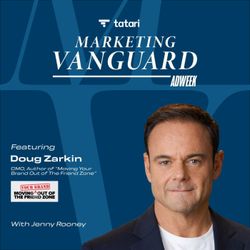
189. Brandweek 2026: Is Retention the Real Problem Marketers Should Look At? ft. Doug Zarkin
15:42||Season 1, Ep. 189Marketers love acquisition. But Doug Zarkin thinks that obsession is helping brands ignore the much more expensive problem sitting underneath it: retention (or the lack of it). Live from the Marketing Vanguard stage at Brandweek 2026, Jenny Rooney sits down with the CMO and author of “Moving Your Brand Out of the Friend Zone” to unpack why being liked is not the same as being loved, why retention deserves the same energy as acquisition and why some of the problems blamed on marketing actually belong to the entire business. Plus, a breakdown of his “Think Human” philosophy and the leadership lesson he has landed on after decades in the business: being effective matters a lot more than being the smartest person in the room. Doug Zarkin is CMO and author of “Moving Your Brand Out of the Friend Zone”.His career has taken him from the agency world into brand leadership across Avon, Victoria’s Secret and Pearle Vision, where he spent more than 11 years leading marketing. This decade-long role gave him the opportunity to take a big-picture view of brand transformation, customer loyalty and how positioning moves beyond advertising into operations and experience.Across his work, Doug has developed a simple philosophy: brands win when they stop treating customers as transactions and start building the trust, relevance and experience that gives people a reason to choose them again.What You'll Learn:Why brands often overestimate how strong their customer relationships really areWhy retention deserves the same energy, budget, and attention as acquisitionWhy customer churn can signal an operations problem rather than a marketing problemHow the “Think Human” philosophy changes the way brands approach customer experienceWhy AI works best as a mirror and an assistant rather than a substitute for judgmentWhy marketers should enter new environments with a notebook instead of a playbookThis episode is part of a special vidcast series that was recorded live during Brandweek 2026 and presented in partnership with Tatari.