Share
Best of the Spectator
The Edition: soul suckers of private equity, Douglas Murray on Epstein & are literary sequels ‘lazy’?
The soul suckers of private equity, Douglas Murray on Epstein and MAGA & are literary sequels ‘lazy’?
First up: how private equity is ruining Britain
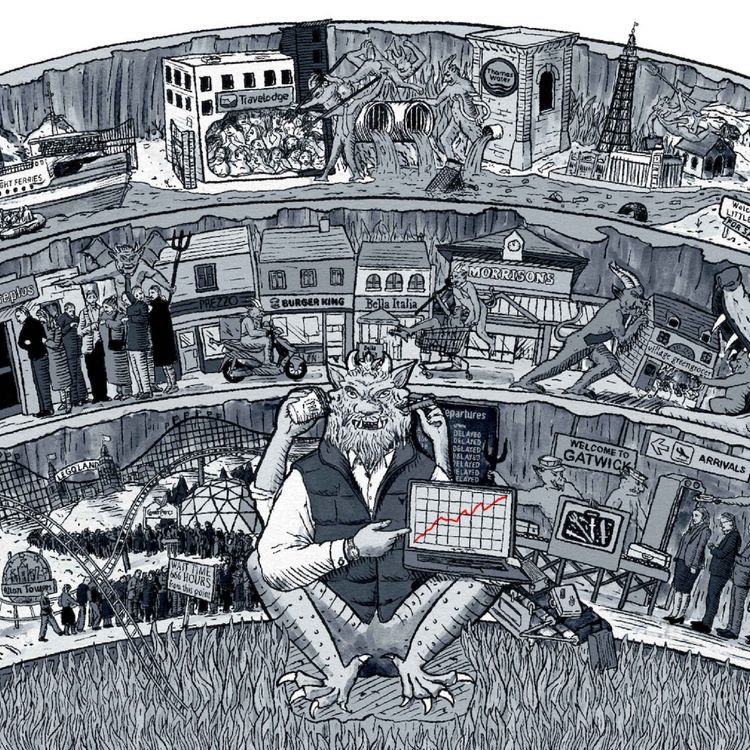
Gus Carter writes in the magazine this week about how foreign private equity (PE) is hollowing out Britain – PE now owns everything from a Pret a Manger to a Dorset village, and even the number of children’s homes owned by PE has doubled in the last five years. This ‘gives capitalism a bad name’, he writes. Perhaps the most symbolic example is in the water industry, with water firms now squeezed for money and saddled with debt. British water firms now have a debt-to-equity ratio of 70%, compared to just 4% in 1991. Britain’s desperation for foreign money has, quite literally, left Britain ‘in the shit’.
Gus joined the podcast to discuss further, alongside the journalist Megan Greenwell, author of Bad Company: Private Equity and the Death of the American Dream. (00:46)
Next: why is MAGA so incensed over Jeffrey Epstein?
Six years after he died, the Jeffrey Epstein scandal is still haunting Donald Trump. Trump had vowed to release all files on various cases that attract conspiracy theorists – from JFK to Martin Luther King Jr. What makes the Epstein case different, as Douglas Murray writes in the magazine this week, is that the case was so recent and Epstein’s ties with the elites, many of whom are still in power. Trump appeared to backtrack on releasing files relating to Epstein, prompting ire from the MAGA world, and there is now mounting cross-party pressure to uncover who knew what. Mike Johnson, the House speaker, sent representatives home early for summer, and there is even talk of Ghislaine Maxwell testifying.
Why is the Epstein scandal such a lightning rod for MAGA rage? Douglas Murray joined the Spectator to discuss. The full interview can be found on Spectator TV. (15:49)
And finally: are literary sequels ‘lazy’?
It’s ‘sod’s law’, says the Spectator’s literary editor Sam Leith, that when a friend’s book is due to be reviewed in the pages of the books section that you edit, the review will be bad. Mike Cormack reviews Men In Love by Irvine Welsh this week, calling the decision by Welsh to pen another sequel to Trainspotting ‘lazy’. At the Spectator this made us ponder whether this is true of all literary sequels, and what motivates authors to stick with characters and stories that they know.
Sam joined us to discuss further alongside Lucy Thynne, the Telegraph’s deputy literary editor. (33:59)
Hosted by William Moore and Lara Prendergast.
Produced by Patrick Gibbons and Megan McElroy.
More episodes
View all episodes

Quite right!: Simon Schama Interview
49:50|Michael Gove is joined by historian Simon Schama to discuss the resurgence of antisemitism in Britain, why many British Jews increasingly feel unsafe, and what history can teach us about the war in Gaza.Simon argues that the language of genocide is being misapplied to Gaza and warns that historical ignorance, social media and political polarisation are fuelling a new strain of antisemitism on both left and right.They also discuss Holocaust education, Donald Trump and the politics of truth, the treatment of Jewish students in Britain, and what the rise of antisemitism tells us about the health of liberal democracy.Produced by Oscar Edmondson and Henry Lloyd
Book Club: Shaun Bythell – Return of the Bookseller Diarist
31:15|For this week’s Book Club, Sam Leith, the Spectator’s literary editor, is joined by Shaun Bythell, proprietor of The Book Shop in Wigtown, Scotland, and author of The Diary of a Bookseller series, to discuss the fourth instalment, The Return of the Bookseller’s Diary.They discuss the strange characters who wander into second-hand bookshops, the customers who haggle over £2 books, and how Bythell’s shop helped turn Wigtown into Scotland’s unlikely book town.They also explore the changing world of bookselling, from the rise of online marketplaces to the 18th-century bookseller James Lackington, whose ‘buy cheap, sell cheap’ philosophy has more than a little in common with Amazon.Plus, Bythell reveals how keeping a diary has changed the way he sees his customers, the unexpected consequences of becoming a published author, and why the Covid-19 pandemic proved surprisingly good for business.Produced by Abigail Brierley.
Quite right! LIVE: Nick Timothy on Islamist extremism
37:37|Michael Gove is joined by shadow justice secretary Nick Timothy, live at Conservative party conference in Birmingham, to discuss prisons, policing and the fight against Islamist extremism. Nick reflects on swapping life as a Downing Street adviser for the Commons and makes the case that prison works, before turning to the Tories’ plan for 50,000 new prison places. Britain, he argues, must ‘come down like a ton of bricks’ on extremists – but why did 14 years of Conservative government fail to draw that line?Plus: West Midlands Police’s ban on Maccabi Tel Aviv fans, the Trafalgar Square iftar, and why Nick changed his mind on legalising cannabis.Produced by Oscar Edmondson and Henry Lloyd.
Spectator Out Loud: Prue Leith, John Connolly, Flora Watkins & Lloyd Evans
25:14|On this week’s Spectator Out Loud: Prue Leith covers her foray into fashion and her life post-Bake Off; John Connolly explores Manchester's close links with the UAE; Flora Watkins asks whatever happened to the midlife crisis; and Lloyd Evans observes a far-right march. Produced and presented by Abigail Brierley.
Holy Smoke: Charles Owen on hearing God through Liszt
26:06|Franz Liszt is remembered as one of the great showmen of the 19th century: a dazzling virtuoso, breaker of pianos and notorious womaniser who inspired a frenzy among his admirers. But a profound Catholic faith ran through his life, which found an increasingly powerful expression in his music. For this Holy Smoke episode, Damian Thompson is joined by the award-winning British pianist Charles Owen, whose new album De Profundis explores the sacred music of both Liszt and César Franck. Owen explains how Liszt translated the stories of saints, scripture and even birdsong into what he argues is some of the most extraordinary music ever written for the piano.Produced by Patrick Gibbons.
Reality Check LIVE: Why aren't Britain's young people working? | with Laura Trott
39:02|For this special edition of Reality Check, economics editor Michael Simmons hosts a panel from Conservative Party conference on Britain’s growing NEETs crisis: the hundreds of thousands of young people not in education, employment or training. He is joined by shadow education secretary Laura Trott, the CBI’s Megan Bulford, Spectator commissioning editor Lara Brown and the CPS's Daniel Herring.Why are so many young people struggling to enter the labour market, and is the problem education, welfare, the cost of hiring or something deeper? The panel debate the value of university compared with apprenticeships, whether tax and employment regulation are shutting younger workers out, and whether Britain’s welfare system is making it too easy for young people to fall out of work altogether. Plus: are rising anxiety and poor mental health driving the crisis or are they symptoms of a labour market that is failing the young?Produced by Patrick Gibbons and Oscar Edmondson.
The Edition: Why is antisemitism rising in Britain? – with Andrew Roberts & Peter Hitchens
46:14|For this week’s Edition, Lara Prendergast is joined by the Spectator’s commissioning editor Tali Fraser, Mail on Sunday columnist Peter Hitchens and the historian and Conservative peer Andrew Roberts.This week: why is antisemitism rising on both the left and right of British politics? On the third anniversary of 7 October, Tali writes in this week’s cover story about what she sees as a growing antisemitic convergence between Zack Polanski's Green Party and Rupert Lowe's Restore Britain. The panel discuss the Green Party’s ‘Zionism is racism’ motion – passed this week at their conference in Brighton – and the increasingly blurred line between anti-Zionism and antisemitism. Is this simply history repeating itself or has something changed in British politics since 7 October? Is the American right helping to normalise some of these ideas? And what does it mean for British Jews, many of whom now face extraordinary security measures simply to attend synagogue?Plus: did Kemi Badenoch have a good Conservative party conference? Andrew argues that she has finally set out the ideological battle lines, while Peter remains sceptical that the Tory recovery is real – and warns that Reform could still do serious damage.And finally: Andrew discusses his new book Napoleon and His Marshals, Peter makes the case for paying to visit Britain’s cathedrals, and the panel ask what’s happened to the midlife crisis.Produced by Patrick Gibbons.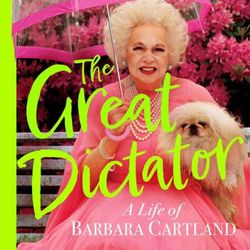
Book Club: Matthew Sweet – The Great Dictator
44:50|In this week’s Book Club podcast, Sam Leith is joined by author Matthew Sweet to discuss his new biography, The Great Dictator, about the bestselling novelist Barbara Cartland.They explore the extraordinary life behind Barbara Cartland’s instantly recognisable image – from her beginnings in the aftermath of the First World War to her career as one of the bestselling authors of all time.They discuss why Cartland was so often dismissed as a joke by literary critics, and how her novels offered generations of women stories of romance, aspiration and consolation. They delve into the political side of her life, including her opposition to appeasement, her campaigning on behalf of Romani travellers and her close relationship with her brother, MP Ronald Cartland.
Quite right! LIVE: Are the Tories back?
30:07|Kemi Badenoch has opened Conservative party conference 2026 with statement on her political philosophy, and Michael and Maddie are in Birmingham to go through it. Michael is struck by how much of it disavows the government that he served in, from net zero to the Liz Truss mini-Budget, while Maddie welcomes a leader prepared to argue for incentives over optics. Will backing higher earners revive the 'nasty party' charge – and can Kemi see off Reform's pitch to highly productive workers?They also put the triple lock to a show of hands, with surprising results, and ask whether Shabana Mahmood has been left exposed by Andy Burnham in cabinet.Also: the Greens have voted to describe Zionism as racism. What does that mean for the voters who backed them over rivers and recycling?News clip credit: X.com / Sky NewsProduced by Oscar Edmondson and Henry Lloyd