Share
Best of the Spectator
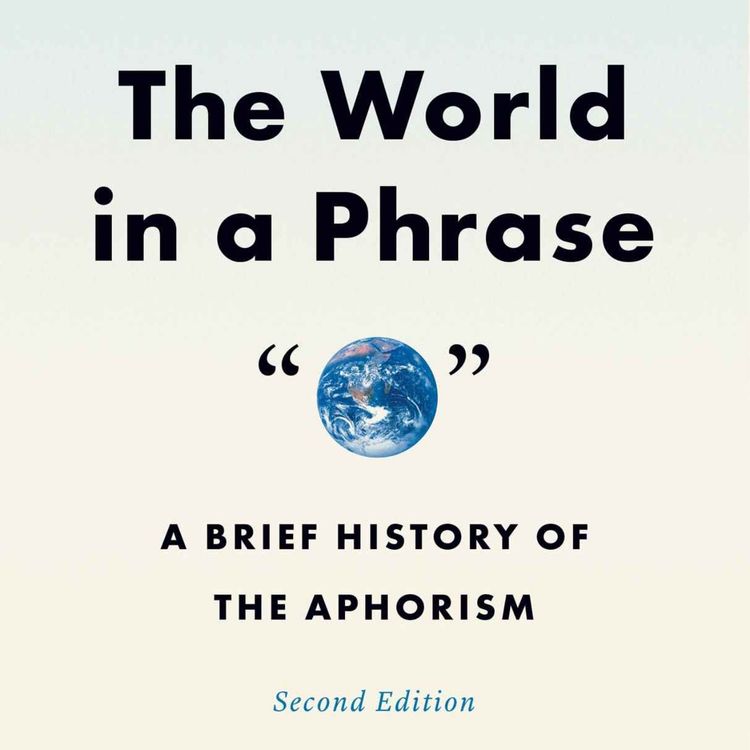
The Book Club: A Brief History of the Aphorism
•
My guest in this week’s Book Club podcast is James Geary, talking about the new edition of his classic The World in a Phrase: A Brief History of the Aphorism. He tells me about what separates an aphorism from a proverb, a maxim or a quip; about the long history of the form and his own lifelong infatuation with it; and about whether – given our dwindling attention span and appetite for zingers on social media – we can expect to be living through a new golden age of aphorism.
More episodes
View all episodes

Holy Smoke: Catholic Burnham barred – should the law change?
14:43|Andy Burnham has announced his intention to change a law which bars him from advising the King on appointments to the Church of England. The Victorian-era law explicitly bars Catholics like Burnham, as well as Jews – but doesn't prevent those of other Christian denominations, other faiths – like Hindu Rishi Sunak, or atheists like Keir Starmer. So, if the law is going to be changed to address this anomaly, should it allow all Prime Ministers of any faith to provide advice – or should all non-Anglicans be barred? And what does Burnham's interest in the power tell us about his relationship with his faith – and his approach to the job?The Spectator's James Heale and William Moore join Damian Thompson to discuss.Produced by Patrick Gibbons.
The Edition: Will Andy drill deep for oil & gas – and is Bayeux in Britain as good as it gets?
35:44|William Moore is joined by The Spectator's economics editor Michael Simmons, The Spectator's commissioning editor and writer at large Tali Fraser, and the Deputy Leader of the Conservative Party Alex Burghart MP.This week: has Labour stopped just stopping oil? Michael reveals that ministers are expected to approve the Jackdaw gas field within days, while Rosebank is held back until after the by-election in Keir Starmer's old seat – and asks whether a party whose last energy secretary called the project 'climate vandalism' has really changed its mind, or has just found a half measure it can live with.Also: is Britain about to get a new social order? Tali examines the socio-economic duty, a dormant clause of the Equality Act that Labour now plans to switch on, requiring public bodies to weigh social background in every decision they make. The panel discuss what that would mean for school admissions, NHS waiting lists and potholes. Is this equality of outcome by the back door – or simply a charter for lawyers?Plus: after 900 years, is the Bayeux Tapestry worth the wait?Produced by Henry Lloyd.
Reality Check: Arthur Laffer vs Aaron Bastani | LIVE
32:58|Arthur Laffer, the economist, former adviser to Ronald Reagan and architect of the Laffer Curve, goes head-to-head with journalist and left-wing author Aaron Bastani over one question: should Britain introduce a wealth tax?Chaired by The Spectator’s economics editor and host of the Reality Check podcast, Michael Simmons, they debate whether a wealth tax could raise significant revenue, or simply drive wealth and investment out of the UK.Spectator subscribers can watch the full debate at spectator.com/wealthtax.
The Book Club: Hannah Richell
33:26|In this week’s Book Club podcast, Sam Leith is joined by bestselling novelist Hannah Richell to discuss her new memoir, An Ocean and a Day.When Hannah’s husband died in a surfing accident, her life in Australia was shattered. Suddenly, she was a single mother to two young children, navigating a grief she could never have imagined. Her memoir traces that journey from the moment of the accident, but, more uniquely, looks beyond those first years of loss – to what grief looks like with the benefit of time, distance and reflection.Sam and Hannah discuss the shame and embarrassment that can accompany grief, the physical effects of loss, how her experience has shaped her fiction, and what makes memoirs so powerful - to both writer and reader.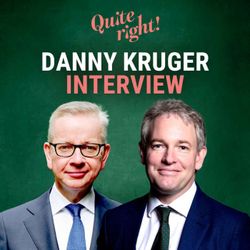
Quite right!: Danny Kruger interview | LIVE at Reform Conference
39:27|Michael Gove is joined by Reform UK MP Danny Kruger to discuss the party’s plans for government and why he believes Britain is in a ‘revolutionary moment’.Kruger sets out how Reform would overhaul Whitehall, including replacing the Cabinet Secretary, reforming the civil service and taking a ‘torch’ to parts of the quango state. He also argues for major changes to the way judges are appointed and says Parliament must ultimately remain sovereign over the courts.They also discuss immigration, welfare and the NHS, as Kruger explains why Reform wants to accelerate deportations, cut benefit entitlements for those who could work and introduce more private-sector discipline into public services.And turning to the future of the right, Kruger argues that the Conservative party can no longer win, says Britain risks ‘falling apart’ without radical change, and predicts that one day conservatives will be united under the leadership of Nigel Farage.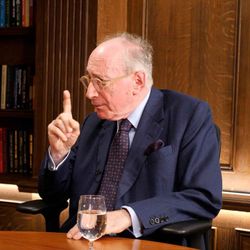
Coffee House Shots: Malcolm Rifkind on Farage, Kemi and Burnham's gift to the Tories
29:52|ir Malcolm Rifkind joins Tim Shipman and James Heale to discuss the future of the conservatism and tells The Spectator why Kemi Badenoch is the person to bring the Conservative Party back from the brink.He explains why he thinks Reform is already losing momentum, why Nigel Farage is ‘not fit to govern’, and why Andy Burnham could actually help the Conservatives at the next election.He also reflects on Britain’s relationship with Israel and the United States, criticises Labour’s approach to sanctions on Israel, and gives his verdict on Donald Trump second term.Produced by Oscar Edmondson and Abigail Brierley.
Spectator Out Loud: Noa Hoffman, Robert Hardman, Patrick Galbraith, & Matthew Reisz
33:11|On this week’s Spectator Out Loud: Noa Hoffman explains why Keir Starmer’s empty seat could become a Green Party battleground; Robert Hardman tells us how the death of Norway’s King Harald could reshape the royal family; Patrick Galbraith says it has been a disastrous year for British farming; and Matthew Reisz explores the unique relationship between artist Paula Rego and her model, Anthony Rudolf.Produced and presented by Abigail Brierley.
Quite right!: Francis Fukuyama interview
53:05|Michael Gove is joined by political scientist Francis Fukuyama to discuss liberalism, populism and the future of democracy in an increasingly unstable world.Francis reflects on The End of History and why its argument was so often misunderstood, before turning to the transformation of the American right under Donald Trump. Why have traditional conservative ideas lost their hold – and what explains the rise of populism across the West?They also discuss Brexit, which Francis argues Britain should reconsider, the importance of patriotism and national identity, and why liberals have too often neglected both.And looking to the future, Francis warns about the impact of artificial intelligence on work and democracy, explains why universal basic income will not solve the problem, and offers one piece of advice to young people: don’t learn how to code.Produced by Oscar Edmondson.
The Edition: has Reform UK lost its magic? | with Quentin Letts
34:01|Lara Prendergast is joined by The Spectator’s political editor Tim Shipman, columnist and journalist Melanie McDonagh, and the Daily Mail’s parliamentary sketchwriter Quentin Letts.This week: has Reform UK lost its magic? Ahead of the party’s conference, Tim reveals its plans for the first 100 days of a Reform government – and asks whether Nigel Farage can persuade voters that his party is ready to govern after a turbulent summer.Also: what is happening in Middlesbrough? The panel discuss rising gang violence, the decline of visible policing and a generation of young men who appear increasingly indifferent to the law. Is social breakdown to blame – or has Britain simply lost its respect for authority?Plus: what can Britain learn from Norway’s royals? Produced by Henry Lloyd and Oscar Edmondson.