Share

Best of the Spectator
Quite right!: where does Islamism come from?
Michael Gove and Madeline Grant confront the horror of the Bondi Beach massacre and ask why anti-Semitic violence now provokes despair rather than shock. As Jewish communities are once again targeted on holy days, they examine the roots of Islamist ideology and the failure of political leaders to name it. Why has anti-Semitism metastasised across the radical left, the Islamist world, and the far right – and why does the West seem so reluctant to grapple with its causes?
Then, on the 250th anniversary of Jane Austen’s birth, Michael and Maddie ask why Austen is endlessly repurposed, politicised and rewritten by modern adaptors? Was she an abolitionist, a moralist, or something far subtler – and why do her novels continue to resist ideological shoehorning two centuries on?
And finally: what makes the perfect whodunit? From Agatha Christie and Dorothy L. Sayers to Midsomer Murders and modern television crime, the pair explore puzzles, red herrings, atmosphere – and why readers feel cheated when justice doesn’t quite add up.
Produced by Oscar Edmondson.
To submit your urgent questions to Michael and Maddie, visit spectator.co.uk/quiteright.
More episodes
View all episodes
Holy Smoke: are you having a 'nun girl summer'?
20:09|Why are young women suddenly fascinated by nuns? From ‘nun girl summer’ on TikTok to a wider ‘quiet revival’ of Christianity among Generation Z, the religious life appears to be enjoying an unexpected cultural moment. But is the attraction genuinely spiritual – or are young women simply drawn to the aesthetics, certainty and tranquillity of convent life?This week on Holy Smoke, Damian Thompson is joined by the Spectator's US assistant editor Margaret Mitchell and the Daily Mail’s Mimi Yates to discuss the unlikely appeal of nuns to Gen Z. They explore the joy and ‘slow living’ of convent life, the exhaustion of the attention economy and whether retreating into an all-female religious community offers an escape from modern dating and the 'manosphere'. Are young people merely borrowing the Catholic aesthetic or is there something deeper behind this trend?Produced by Patrick Gibbons.
Coffee House Shots: why I quit government | Al Carns
14:47|Former veterans minister Al Carns joins James Heale to discuss the government’s handling of Northern Ireland legacy cases – and why the issue helped drive him to resign.Writing in The Spectator this week, Al attacks the ‘two-track approach’ to legacy cases, which he says could cost taxpayers billions, and warns against allowing the history of the Troubles to be ‘rewritten through the courts’. He argues that Labour failed to listen properly to veterans before changing the law and sets out what more should be done to protect those who served in Northern Ireland.What was it like fighting the issue from inside government? Did Keir Starmer understand the strength of feeling – and will Andy Burnham take a different approach?Produced by Oscar Edmondson.
The Edition: how the blob broke teaching | with Francis Foster
41:02|Lara Prendergast is joined by The Spectator’s economics editor Michael Simmons, author and critic Philip Hensher, and comedian and co-host if the Triggernometry podcast Frances Foster.This week: are good teachers under siege? The panel discuss Michael Gove’s cover story on the education establishment, from collapsing classroom discipline to the ‘pathetically low ambition’ of those training Britain’s teachers. Also: have accusations of bullying become a weapon against demanding ministers? Michael Simmons comes to the defence of his former teacher, Scotland’s Deputy First Minister Jenny Gilruth, while Philip asks whether the real problem is that civil servants are simply too difficult to sack.Plus: Harry and Meghan are back in Britain. Has the public’s fascination with the Sussexes ever really gone away – and do they deserve a chance at redemption?Produced by Henry Lloyd, Patrick Gibbons and Oscar Edmondson.
Reality Check: the ADHD debate we’re not allowed to have
14:56|The backlash to Channel 4’s The Great ADHD Myth has reignited a fierce debate over how we diagnose ADHD – and whether that debate itself is becoming impossible to have.Michael Simmons looks at the extraordinary rise in diagnoses, the gap between recorded cases and underlying prevalence, and asks whether we are increasingly medicalising normal variations in behaviour.Is Britain finally recognising a vast amount of unmet need – or has diagnosis begun to serve a social as well as a medical function?This episode is brought to you by Artemis Fund Managers, for more information on our fund range please click here https://www.artemisfunds.com/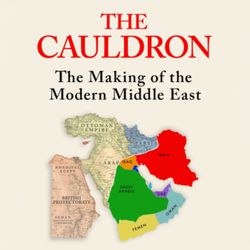
The Book Club: Simon Sebag Montefiore – The Cauldron
39:22|My guest on this week’s Book Club podcast is Simon Sebag Montefiore, the author of a number of fantastic books, including The Cauldron, which released this week. Simon and I talk about the making of the modern middle east, and how we forget some of the most fundamental groups who shaped this part of the world into the region that we know of today.
Americano: Just how bad are polls for the Republicans?
28:26|Freddy Gray is joined by James Johnson, co-founder of JL Partners, on why the midterms are looking increasingly grim for the Republicans. Trump's approval is trending down, the war is dragging on it, and James expects differential turnout to hand the Democrats the House, possibly with more than 230 seats.Freddy and James discuss why a Senate map that should have been safe for Republicans is now a toss-up, which six states will decide it, why prediction markets are not the answer, and why Michigan and its DSA-aligned candidate may be the one seat that saves Trump's majority.Learn how to earn yield on gold, paid in gold, at Monetary-Metals.com/AmericanoProduced by Henry Lloyd
Spectator Out Loud: Madeline Grant, Harry Mount, Freddie Heffer & Toby Young
19:40|On this week’s Spectator Out Loud: Madeline Grant argues that the debate about the direction of James Bond mirrors Britain’s decline; Harry Mount makes the case for scrapping dinner parties; Freddie Heffer provides his notes on mulberries; and finally, Toby Young says that friendly fire hurts the most, as he reflects on the fallout from the Jason Arday scandal. Produced and presented by Patrick Gibbons.
Holy Smoke: why Quentin Letts fears for the parish church
16:51|Is the Church of England slowly abolishing the parish priest? A new model of ‘oversight ministry’ promises team-based leadership and a greater role for lay volunteers – but critics fear it will leave priests increasingly invisible in the communities they serve. Meanwhile, those volunteers face an expanding regime of training, safeguarding requirements and diocesan bureaucracy. This week on Holy Smoke, Damian Thompson is joined by Daily Mail sketchwriter Quentin Letts, who has written a provocative piece for The Spectator on what he calls the rise of ‘plastic parsons’. They discuss the Church’s shortage of priests, whether safeguarding has become a vehicle for bureaucratic overreach, the money spent on central initiatives rather than struggling parishes – and whether the sight of a vicar in a dog collar could soon become as unusual as an old-fashioned policeman on the beat.Produced by Patrick Gibbons.
Coffee House Shots: Andy's report card | with Baroness Debbonaire
25:27|One month on from Andy Burnham entering Downing Street and a lot has changed at the top of government. Starmer's old guard have been reshuffled or replaced, and Burnham's government have announced dozens of new projects, but the big challenges that he faces are largely the same. Noa Hoffman is joined by Baroness Thangam Debbonaire, the former shadow culture secretary, to review Andy's report card.Produced by Henry Lloyd.