Share

Berkeley Talks
Top Biden official calls for unity, ‘moral courage’ in public service
The United States is in a moment like no other in recent history, says Deb Haaland, former President Joe Biden's secretary of the Interior Department from 2021 to 2025. Every day, she says, it seems a new pillar of the American government is under attack. But what makes this moment unique aren’t these crises themselves, but the attack on the idea that problems can be solved at all.
“We face a creeping cynicism that suggests that our real enemy is our desire to make a difference,” she said during the keynote address at the Goldman School of Public Policy’s Annual Conference and Alumni Gathering in September. “We face attacks on the very idea of wanting to make things better. That's why the Goldman School of Public Policy is so vital. Without places like this, without people like those in this room today, America wouldn't have a prayer of meeting this moment.”
In this Berkeley Talks episode, Haaland discusses how policy — not politics — is the only path to real change, and why we need a unified effort grounded in moral courage and diverse perspectives to meet the challenges facing the country.
“Part of the reason I wanted to join you today is to speak to the importance of faith in the possibility of what we can do together,” she says. “And I use the word ‘faith’ deliberately. Especially in times like these, it takes belief, moral courage and determination in the face of despair to keep going. We have to find it inside ourselves, nurture that flame and keep it lit.”
More about the speaker:
Haaland is a member of the Laguna Pueblo tribe in New Mexico and the first Native American to serve as a U.S. Cabinet secretary. Before that, she was the U.S. representative for New Mexico's 1st Congressional District from 2019 to 2021, one of the first two Native American women elected to Congress. She is running for governor of New Mexico in the 2026 election.
Watch a video of Haaland’s keynote, followed by a conversation with Goldman School of Public Policy Dean David Wilson.
Listen to the episode and read the transcript on UC Berkeley News (news.berkeley.edu/podcasts/berkeley-talks).
U.S. House Office of Photography photo by Franmarie Metzler.
More episodes
View all episodes

253. What punk subcultures can teach us about resisting hate
01:12:02||Ep. 253Across the American West Coast in the 1980s, the burgeoning punk rock and skinhead scenes were much more than just raw music and counterculture fashion — they quickly became contested ground in an ideological battle against white supremacy. Neo-Nazi groups actively targeted these subcultures to recruit alienated kids, and anti-racist punks were forced to step up in response, organizing grassroots community defense networks, confronting extremist infiltration and building alternative spaces rooted in inclusion.Those strategies — forged in clubs, at shows and within tight-knit local scenes — offer a vital, real-world blueprint for confronting today’s mainstream political crises, according to a recent panel discussion at UC Berkeley.The May 3 event, which headlined the second annual Jewish Arts and Book Fest hosted by the Magnes Collection of Jewish Art and Life, began with a screening of We've Been Here Before, a 2023 documentary short chronicling these subcultural struggles. Following the film, the program brought together the film's director, Jacob Kornbluth, and anti-racist activists Eric Ward, who's featured in the film, and Dion Garcia to explore how lessons from that fringe resistance can help heal a fractured modern society.For Ward and Garcia, the history of that resistance is deeply personal. In their youth, protecting music scenes from infiltration meant building solidarity and making sure marginalized voices were not pushed out. Yet Garcia said that looking back on the intensity of that era, he also remembers its emotional toll.“Hate is a horrible word and it's a horrible thing to carry,” Garcia said. “I don't like carrying that.”The speakers argued that the same divisive tactics that targeted 1980s youth have now mutated into mainstream public discourse. Ward, a leading expert on organized hate, explained that modern antisemitism functions on the far right as a "racialized other,” scapegoating Jewish communities as “puppet masters” of social grievances. Today, Ward warned, society is trapped in a dangerous "sectarian moment" where nuance is erased in favor of absolute polarization, particularly surrounding global conflicts."No one wants nuance," Ward said, critiquing how people today build political identities out of distant tragedies. He noted that such political theater often comes "at the expense of the most actual vulnerable, Israelis and Palestinians, who still have to live in the real world each and every day."Ultimately, the talk underscored that the path forward requires looking past ideological purity and reclaiming the cultural spaces where lonely or alienated individuals seek community. True resistance to racism and antisemitism, the speakers concluded, lies in a shared commitment to contesting these complicated spaces, finding "strange allies" across different backgrounds and strengthening the foundation of an inclusive democracy."I would argue this alliance between those of us who identify in the mainstream and empathy for people who are existing in these kind of fringe subcultures is something that I think we could all work on," said Kornbluth. "I think it's something new to a lot of folks who are thinking about where and how to fight back ... but I think it's a little piece to how we can heal ourselves." This event was sponsored by the Magnes Collection of Jewish Art and Life at Berkeley.Listen to the episode and read the transcript on UC Berkeley News (news.berkeley.edu/podcasts/berkeley-talks).Music by by HoliznaCC0.Image courtesy of Reboot Studios/7th Art Releasing.
252. Musician Lara Downes celebrates the sound of America
29:43||Ep. 252It was the morning after the 2016 U.S. presidential election, and pianist Lara Downes was catching a flight from California to Kentucky, where she was set to perform later in the evening. “It was a very weird day to be anywhere,” she recalls.That night, she performed songs from her album America Again in Louisville, a city that mirrored the country's own jagged political divide. Coming from California, Downes expected Louisville to feel tense after the election.Instead, she found that the music — curated to explore the “American Dream” through the lens of diverse composers like Florence Price and Morton Gould — created a shared space of mourning and hope that transcended the maps on the news. As she played pieces like Price’s “Fantasie Nègre” and Gould's “American Caprice,” Downes had a profound realization."I think I learned in that moment how much all of the emotions that we feel about being American — the affection and the nostalgia and the confusion and the sadness and the anger — all of it really is expressed in the music,” she says. That idea — music as a shared emotional language — continues to shape Downes’ work today. In May, she brought an all-star cast of musicians to UC Berkeley’s Zellerbach Hall to join her on her newest project, This Land: Reflections on America. Alongside folk icon Judy Collins, poet Tarriona "Tank" Ball, the Austin-based string and bluegrass quartet Invoke, and the Oakland Interfaith Gospel Choir, she performed songs like the traditional African American spiritual “This Little Light Of Mine,” Paul Simon’s “America” and Stephen Foster’s “Hard Times Come Again No More.”The performance reflects Downes’ ongoing effort to explore what it means to be American through music — a question that also led her to create The Declaration Project, a national initiative tied to the upcoming 250th anniversary of the United States. For the project, Downes spent two years traveling the country to ask Americans from all backgrounds what “life, liberty and the pursuit of happiness” means to them today.In this episode of Berkeley Talks, Downes joins NPR’s Chloe Veltman in a pre-concert talk to discuss how music isn’t just a performance, but a common language to explore the American experience.The May 9 performance and pre-concert talk were part of Cal Performances’ Illuminations: Exile and Sanctuary series and marked the final performance of the season. Learn more about Cal Performances’ upcoming 2026-27 programming.The musical selections featured in this episode are from This Land: Reflections on America, performed by Lara Downes and guest artists. All music was used with permission. Listen to the episode and read the transcript on UC Berkeley News (news.berkeley.edu/podcasts/berkeley-talks).Photo by Brittany Hosea-Small.Intro music by by HoliznaCC0.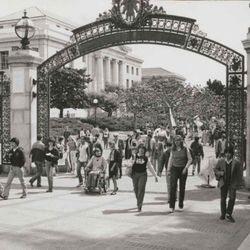
251. How the American university’s success led to its modern challenges
01:04:01||Ep. 251While preparing his lectures for UC Berkeley, Princeton University President Christopher Eisgruber spent hours poring over the memoirs and writings of former University of California President Clark Kerr, seeking wisdom from the architect of California’s 1960 Master Plan for Higher Education.Reflecting on this research, Eisgruber notes that he found more than just strategy; he found a personal connection. "I have been impressed by Kerr's wit, wisdom and decency,” he says, “and I have come to feel not only admiration but affection for him.”In his first of two lectures at Berkeley in February, Eisgruber draws on Kerr’s 1963 “hinge of history” idea to explain why American research universities are especially vulnerable to political and social attacks today.Kerr believed there was a turning point in the mid-20th century where the role of universities shifted from the periphery of society to its center as primary engines of economic and social growth. Eisgruber contends that this newfound prominence made them higher-stakes targets for public and political frustration. He points to three post-1960s shifts — rising student debt, accelerating competition and universities’ high profile in national debates over racial justice — as forces that have "compromised the political base that can help to protect higher education in moments of crisis.”Still, Eisgruber remains optimistic about the resilience of the American research university. He highlights the sector's ability to drive global recovery during the pandemic and its success in broadening its reach to include talent from all walks of life as proof of its enduring strength. While its shift to the center of national life has invited new pressures, he argues that the intense public focus on these institutions confirms their role as vital spaces for a diverse democracy to do its most important thinking.He suggests that the path forward lies in universities embracing this central, if contested, role by sustaining the vision Kerr championed: "a truly American university, an institution unique in world history, an institution not looking to other models but serving as a model for universities in other parts of the globe.”This talk was one of two lectures that Eisgruber gave on Feb. 24 and Feb. 26 as part of the Clark Kerr Lecture Series, co-sponsored by the Center for Studies in Higher Education, the Goldman School of Public Policy and Berkeley Law.Watch videos of both of Eisgruber’s lectures.Listen to the episode and read the transcript on UC Berkeley News (news.berkeley.edu/podcasts/berkeley-talks).Music by HoliznaCC0.Photo via The Bancroft Library archive.
250. Alison Gopnik on why AI is no match for a 4-year-old
01:24:50||Ep. 250Over her decadeslong career as a developmental psychologist, Alison Gopnik has observed a striking phenomenon: When children are given a new toy without an obvious use, they often outperform high‑achieving college students in figuring out how it works. While adults tend to test the most likely possibilities and quickly get stuck, children respond with playful experimentation. "What children are doing is exactly the kind of open-ended, non-utilitarian, exploratory learning that allows you to find out things about the world that you would never find out any other way,” says Gopnik, a UC Berkeley professor of psychology. In this Berkeley Talks episode, Gopnik argues that human intelligence is not a single, general capacity, but a collection of distinct cognitive modes — exploration, exploitation and care — that are distributed across different stages of a person’s life. Childhood, she says, is evolution’s way of creating a dedicated “explorer” phase, made possible by a specialized care system provided by adults."The reason why we can have these big brains," she explains, "is because we have this period of childhood where we're protected ... and we have those older people who are there to provide the resources.” Gopnik contrasts this biological model with current artificial intelligence, noting that while large language models excel at using existing data to predict patterns, it lacks the embodied, curiosity‑driven learning of a child. To create truly intelligent systems, she suggests that we need to focus on the “intelligence of care.”“A system that develops, that changes over time, and in particular, a system that's cared for by humans or cared for by other intelligent agents — that's the secret of human intelligence,” she says. “That's the kind of system you'd need if you wanted a system that had the same kind of intelligence as humans.” This lecture took place on Nov. 5, 2025, as part of the Berkeley Distinguished Faculty Lectures in the Social Sciences.Listen to the episode and read the transcript on UC Berkeley News (news.berkeley.edu/podcasts/berkeley-talks).Music by HoliznaCC0.UC Berkeley photo.
249. Hany Farid on the erosion of shared reality in the age of deepfakes
51:21||Ep. 249Two decades ago, when Hany Farid first began studying digital misinformation and manipulated media, fake content was easier to detect. Today, that landscape has shifted with a speed that he describes as “breathtaking.” In just the last year or two, he says, we’ve moved from an era where a computer takes seconds or minutes to produce a static file to "full-blown interactive deepfakes" that can hold a live conversation in real time.In this Berkeley Talks episode, Farid, a digital forensics expert and professor at UC Berkeley’s School of Information, discusses the rapidly accelerating landscape of generative AI and the unique threat it poses to our collective understanding of the world.Farid notes that tools once reserved for governments or well-funded organizations are now freely available, radically expanding the threat landscape. “We have taken a mechanism that was in the hands of state-sponsored actors and bad actors and given it to 8 billion people in the world," he says. This democratization of powerful technology makes it much easier to create convincing false images, audio and video — and much harder to trust what we see online.And he explains that human perception is no longer a reliable defense, as his research shows people are only slightly better than chance at identifying AI-generated content.To reduce the damage to our shared sense of reality, Farid suggests solutions should focus on the systems that profit from harmful content, including platforms and ad networks that help it spread. He also gives a warning about news consumption: “Stop getting your news from social media. That’s not what it was designed for.Despite the rise of deepfakes and online deception, Farid says he rejects the idea that there is no truth or fact. He believes that, although it takes effort, people can still work together to understand what is happening in the world.This lecture, which took place on March 13, was part of LNS 110: Brilliance of Berkeley, a course featuring distinguished researchers working on the world’s most pressing issues.Watch Farid's lecture (with slides) on YouTube.Listen to the episode and read the transcript on UC Berkeley News (news.berkeley.edu/podcasts/berkeley-talks).Music by HoliznaCC0.Screenshot from lecture.
248. First a plague, then a fire: How a changing city rebuilt the modern stage
44:01||Ep. 248When William Shakespeare wrote Hamlet around 1600, the power of London’s theater lived almost entirely in language. The stage was mostly bare and the scenery imagined. To mark a shift in setting, an actor might simply declare, “This is the Forest of Arden.”But by the mid-17th century, this mode of performance began to change. Following decades of civil war and Puritan rule, King Charles II’s 1660 restoration of the monarchy reopened public theaters that had been closed for nearly two decades. It marked the beginning of the Restoration era, when movable scenery debuted — massive painted flats slid along wooden grooves, transforming the stage in seconds — and women, immigrants, servants and enslaved people first moved across it as performers and stagehands. The English stage became a space of motion, a vivid counterpart to a London rebuilt after the 1665 plague and the Great Fire of 1666.In this Berkeley Talks episode, UC Berkeley Professor Julia Fawcett discusses her 2025 book Moveable Londons: Performance and the Modern City, which traces how this mechanical innovation echoed a deeper cultural one. It was, she says, a “revolution in English performance” that redefined movement, agency and belonging in a rapidly changing city.And that revolution, she contends, provided the template not only for modern theater’s moving sets, star actresses and illusionistic stages, but also for ways of moving through — and belonging in — the modern city.Fawcett’s talk, which took place on Feb. 11, 2025, was part of a Berkeley Book Chats event hosted by the Townsend Center for the Humanities. She was in conversation with Joshua Gang, an associate professor of English at Berkeley.Listen to the episode and read the transcript on UC Berkeley News (news.berkeley.edu/podcasts/berkeley-talks).Music by HoliznaCC0.Image from Moveable Londons book cover.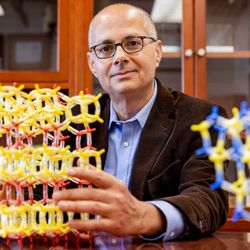
247. Nobel laureate Omar Yaghi on turning air into water for all
55:32||Ep. 247At age 10, Omar Yaghi walked into a school library in Amman, Jordan, and opened a book that changed his life. He saw molecular drawings — complex structures he didn’t yet understand, but which immediately captivated him. "I thought I discovered something that nobody had ever seen before," Yaghi recalls. Yaghi, now a professor of chemistry at UC Berkeley, shared this story during a recent Brilliance of Berkeley lecture to illustrate how a life defined by scarcity can be transformed through the pursuit of science. Growing up in a family of 10 children, Yaghi lived in a single room that lacked electricity and running water. The family shared their living quarters with cattle, separated from the animals only by sacks of feed. Education was the family's singular priority; his parents spent everything they earned to keep their children in school to ensure they had a path toward a different future.In 2025, Yaghi was awarded the Nobel Prize in Chemistry for the development of metal-organic frameworks, or MOFs — porous materials that act like "molecular sponges" capable of capturing carbon dioxide from the air and harvesting water from desert humidity.In this Berkeley Talks episode, Yaghi describes how his childhood as a refugee and his early days as an immigrant in the U.S. shaped his relentless work ethic. He recounts the "failure" of a yearlong graduate school experiment that actually resulted in his first major discovery: a ball-shaped molecule that paved the way for his career. Today, his research on reticular chemistry continues to push toward real-world solutions to the climate crisis.For Yaghi, science is not only about discovery, but about transforming access to life’s most basic resource. “My dream,” he says, is “for everyone to have water independence — where your water is yours, independent of everything else.”This lecture, which took place on Jan. 23, was part of LNS 110: Brilliance of Berkeley, a course featuring distinguished researchers working on the world’s most pressing issues.Listen to the episode and read the transcript on UC Berkeley News (news.berkeley.edu/podcasts/berkeley-talks).Music by HoliznaCC0.Photo by Brittany Hosea-Small for UC Berkeley.
246. The rule of law depends on the courage of judges
58:12||Ep. 246In 1957, 6-year-old Bernice Bouie Donald started first grade in rural DeSoto County, Mississippi. Although the U.S. Supreme Court had struck down school segregation three years earlier in Brown v. Board of Education, the young girl’s educational reality remained unchanged: Her all-Black school was a two-room cinderblock building with no indoor plumbing, and her books were hand-me-downs discarded by white students.Donald went on to have a decadeslong career as a federal judge, and at a recent UC Berkeley Law event, she shared her personal memories to highlight a sobering truth: The rule of law is not self-executing. For the promise of Brown to reach her classroom, Donald explained, it required "extreme moral courage" from judges who faced bombings, social ostracization and death threats to enforce the law. Without that bravery, she warned, the law is "simply words on a piece of paper."This ongoing challenge was at the heart of a Dec. 5, 2025, panel discussion featuring Donald and a group of legal experts. Together, the panelists discussed the rising tide of personal and political threats facing the judiciary, exploring how modern pressures — from social media harassment to political tribalism — threaten the independence necessary for a fair society.The event was part of “Conversations in Civil Justice,” a webinar series presented by UC Berkeley Law’s Civil Justice Research Initiative and co-sponsored by the Berkeley Judicial Institute. The series is supported by a gift from the American Association for Justice’s Robert L. Habush Endowment.The panelists include:Bernice Bouie Donald, a retired judge from the U.S. Court of Appeals for the Sixth Circuit. Philip Pro, a retired federal judge from the District of Nevada.Amrit Singh, a professor of professional practice and faculty director of the Rule of Law Lab at New York University School of Law. Jeremy Fogel (moderator), executive director of the Berkeley Judicial Institute and a retired federal judge from the Northern District of California.Richard Jolly (moderator), professor at Southwestern Law School and senior fellow at the Civil Justice Research Initiative.Watch a video of the discussion.Listen to the episode and read the transcript on UC Berkeley News (news.berkeley.edu/podcasts/berkeley-talks).Music by HoliznaCC0.Photo via Unsplash.
245. An evolutionary biologist makes the case for pausing AI
51:35||Ep. 245In the early 20th century, factory workers — later known as the “Radium Girls” — were hired to paint watch and instrument dials with radium‑based luminous paint. They were instructed to keep their brushes sharp by shaping them with their lips. In the following years, many of these workers developed devastating illnesses, including severe bone and jaw damage, anemia and cancer, that were ultimately traced to chronic radium exposure.For Holly Elmore, an evolutionary biologist and executive director of PauseAI US — an organization that seeks a global pause to advanced AI development — this tragedy is a stark warning for our current era. In a talk she gave Dec. 9 for the Berkeley AI Risk Speaker Series, Elmore argues that we’re repeating this mistake with artificial intelligence by assuming we can safely play with a technology we don't fully understand. “The expectation of many people in AI safety, for many years, has been that when we got to this point, the AI, once it was aligned, would figure out the answers for us,” she says. But Elmore warns that this approach is like clearing a minefield by walking through it. As AI capabilities grow, she says, the probability of accidents increases — and unlike minor software glitches, these could be "one-shot" events that we cannot recover from. She points to risks ranging from the automated assembly of bioweapons to the unpredictable disruption of the social and environmental systems we depend on for survival. Instead of waiting for a machine to solve its own safety problems, she contends that experiments with such high-stakes technology are too costly to continue without a pause.“The scale of the danger really could cripple civilization or cause extinction,” she says, “and the possibility of this alone is reason enough to pursue pausing frontier AI development.”Watch a video of Elmore’s talk.Listen to the episode and read the transcript on UC Berkeley News (news.berkeley.edu/podcasts/berkeley-talks).Music by HoliznaCC0.Photo courtesy of PauseAI.