Share
Latest episode
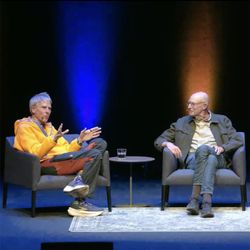
261. Michael Pollan and Christof Koch talk psychedelics and consciousness
01:09:42||Ep. 261During a psychedelic experience in his garden, Michael Pollan became convinced that the plants around him were conscious. They seemed to be returning his gaze, he said — benevolent and perhaps grateful for his gardening. Back in ordinary consciousness, the author and UC Berkeley journalism professor emeritus faced a harder question: What should he do with that conviction? Was it an insight into reality, or simply an effect of the drug?In this episode of Berkeley Talks, Pollan joins Christof Koch, a leading researcher on the neuroscience of consciousness, and moderator Shayla Love, a science journalist, for a conversation about consciousness and what psychedelics can — and cannot — reveal about it. Presented by Cal Performances in partnership with the UC Berkeley Center for the Science of Psychedelics, the Oct. 13 discussion draws on neuroscience, philosophy and the speakers’ own experiences with altered states.For Pollan, whose 2026 book is A World Appears: A Journey into Consciousness, researching psychedelics made something familiar suddenly strange. Consciousness ordinarily works like a transparent windshield, he says: We look through it without noticing it. Psychedelics smudge the glass, making us notice — and question — the consciousness we ordinarily take for granted.“You start wondering, there’s a windshield, what is that about?” he said. “And why is it that way and not this way?”The group went on to discuss consciousness not just as a problem to solve, but as something to cultivate — by spending time in nature, meditating or simply allowing ourselves to be bored instead of reaching for a phone.Watch the conversation, listen to the episode and read the transcript on UC Berkeley News (news.berkeley.edu/podcasts/berkeley-talks).Music by by HoliznaCC0.Screenshot from UC Berkeley video.
More episodes
View all episodes
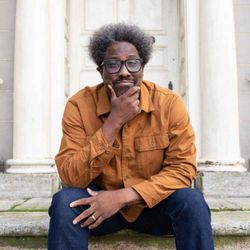
260. W. Kamau Bell on AI, creativity and resisting the pull of automation
01:05:32||Ep. 260When W. Kamau Bell was a child, his mother bought the family a Commodore VIC-20, a popular home computer of the early 1980s. He also had Pong, a ColecoVision and, later, a MiniDisc player. Today, he is still the person his family calls when the TV stops working — and the father who sees technology’s potential to connect his introverted 11-year-old with cousins over FaceTime. “I am not a technophobe,” Bell said at a recent UC Berkeley Journalism event. “If you say, ‘We’re going there, there’s no Wi-Fi,’ I’m not going there.”But Bell — a comedian, filmmaker and author known for using humor to examine race and American culture — also said technology’s growing presence does not mean people should unquestioningly hand over their language or creativity to artificial intelligence. Bell was joined by UC Berkeley Journalism Dean Michael D. Bolden on Aug. 26 for a conversation at the AI, Journalism and Public Trust Symposium, sponsored by UC Berkeley Journalism and the Pulitzer Center. During the discussion, Bell described the subtle ways that AI already shapes everyday communication, like Gmail or Google Docs suggestions that, rather than merely fixing typos, end up standardizing a person’s style. For Bell, whose comedic voice often relies on vernacular and intentionally unconventional grammar, that raises a deeper concern: “You want us all to sound like the same person.”AI, he said, should not be treated as an inevitable, neutral force. It is a tool, but one being developed and deployed within systems that prioritize corporate profit and centralized power — often at the expense of communities that are already bearing the costs of technological development. He pointed to data centers placed near Black, rural and low-income communities, as well as the danger of automated systems built from historically biased information. “Once you feed in bad information, bad outputs come out of there,” he said.Rather than trying to halt technological progress altogether, Bell urged people to maintain and invest in forms of connection and creativity that resist automation’s pull. After all, the value of art comes from wrestling with our lived experiences. “Wasn’t AI supposed to do all the work so we could make art?” Bell said, quoting comedian Stavros Halkias. “Why did we flip it?” The response to AI cannot rest solely on individual consumer choices or the assurances of technology companies, he said. It requires people to challenge the systems shaping the technology around them. “I am down for a future of AI that doesn’t exist under American capitalism,” he said.Watch the conversation, listen to the episode and read the transcript on UC Berkeley News (news.berkeley.edu/podcasts/berkeley-talks).Music by by HoliznaCC0.Photo courtesy of United Shades of America.
259. Leaping robots, AI companies and a NASA mission
53:00||Ep. 259When Aravind Srinivas arrived at UC Berkeley in 2020 hoping to join Pieter Abbeel’s robotics lab, he encountered an immediate obstacle: The lab was already full.Undeterred, Srinivas proposed that he and Abeel work together for six months so he could prove himself. What followed was such a prolific stretch of research that Abbeel found himself repeatedly asking about his new student’s well-being.“Honestly, the only big advice I ever had to give Aravind was the question, ‘Did you sleep?’” Abbeel recalls. He says Srinivas replied, “I cannot afford to sleep until I’m officially in your lab.” After joining Abbeel’s lab and being persuaded to rest, Srinivas completed what Abbeel calls “a really amazing Ph.D.,” went on to work at OpenAI and later founded Perplexity, the AI company built around answering questions with source-grounded responses.In this Berkeley Talks episode, Srinivas’ determination is one of several stories Abbeel, a professor of electrical engineering and computer sciences at Berkeley, shares about former students and postdoctoral researchers who went on to help found AI and robotics companies, contribute to influential research advances and, in one case, become a NASA astronaut. That astronaut, Woody Hoburg, came to Berkeley from MIT in 2011. At the time, he told Abeel that he knew the likelihood of becoming an astronaut was “effectively zero,” but was determined to try: “If I can make it from 0.1 to 1 by giving it my all, that’s what I’m going to do.” Hoburg went on to earn a Ph.D. in electrical engineering and computer sciences at Berkeley, join NASA’s 2017 astronaut class and, in 2023, serve as the pilot of NASA’s SpaceX Crew-6 mission aboard the Crew Dragon spacecraft, spending 186 days in space.For Abbeel, the common thread among his former students is not only brilliance but also generosity. “All of them (are) super nice,” he says. “And what I mean with that is it’s easy to be nice to your boss, you have to be. But they’re super nice to all their peers, everybody around them, new talent that wants to join. I’m really proud.”Abbeel’s lecture took place on April 17, 2026, as part of Berkeley’s “Brilliance of Berkeley” speaker series.Listen to the episode, read the transcript and watch the lecture on UC Berkeley News (news.berkeley.edu/podcasts/berkeley-talks)Music by by HoliznaCC0.Photo by Elena Zhukova.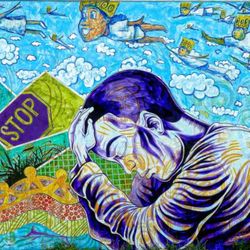
258. How we've long misread gun violence (and ways to prevent it)
01:28:17||Ep. 258In the early hours of November 2007, Amadou Cisse, a 29-year-old University of Chicago chemistry graduate student, was walking home when Demetrius Warren, then 17, and Benjamin Williams, 21, approached him. According to trial testimony, Warren pointed a gun at Cisse while Williams attempted to grab his backpack. A struggle ensued, and Warren shot Cisse in the chest. Cisse died from the wound.“Behind every news headline and every statistic, there is a mom who has just lost the most important person in their life,” says Jens Ludwig, a University of Chicago economics professor and director of its Crime Lab. “And in this particular case … Warren is currently spending 150 years downstate in the Illinois Department of Corrections. So in this case, two moms lost the most important people in their lives.”Delivering the 2026 Wildavsky Lecture in Public Policy at UC Berkeley’s Goldman School of Public Policy this past April, Ludwig, author of Unforgiving Places: The Unexpected Origins of American Gun Violence, argues that both major political parties misdiagnose gun violence as a deliberate, rational choice, when in fact it’s almost always an impulsive one."Both sides of that debate implicitly think that before anybody ever pulls a trigger, they're engaging in some sort of deliberate, rational weighing of pros and cons,” he says. But in reality, he contends, roughly 80% of gun homicides stem from everyday arguments that rapidly escalate in brief, uncalculated moments. Drawing on insights from behavioral economics, Ludwig says there are several low-cost, scalable tools — from youth programs and de-escalation training for police to simple urban fixes like greening vacant lots — that deliver meaningful public-safety gains. He points to “Becoming a Man,” a school-based group counseling program that helps teenage boys slow down their thinking in high-stakes situations. Randomized research trials found that it reduced participants’ violent-crime arrests by up to 50% — evidence, he argues, that communities don’t need to wait for sweeping political overhauls to make real progress.Listen to the episode, read the transcript and watch a video of the lecture on UC Berkeley News (news.berkeley.edu/podcasts/berkeley-talks).Music by by HoliznaCC0.Detail of a mural by Kyle Holbrook and local youth in Miami, Florida. (Photo by Terence Faircloth via Flickr)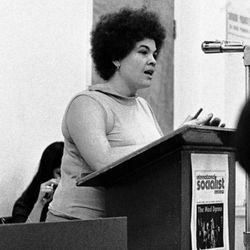
257. The making of pioneering Black feminist Frances M. Beal
43:15||Ep. 257In 1957, a terrified 17-year-old girl lay on a Harlem kitchen table undergoing an illegal, backstreet abortion. Nearly dying from complications, she was rushed to a hospital ward where nurses badgered her and demanded to know what she had done. That teenager was Frances M. Beal.Long before she would write the seminal 1969 manifesto "Double Jeopardy: To Be Black and Female" or co-found the Third World Women's Alliance, Beal was navigating the violent realities of being young, Black and female in America. In this episode of Berkeley Talks, Ula Taylor, a UC Berkeley professor and chair of African American studies, presents her latest book project, which reconstructs Beal’s political radicalization brick by brick. Blending first- and third-person narrative, Taylor explores how Beal’s life — from the pressures and policing of her early years to unappreciated domestic labor and single motherhood — helped shape her pioneering work in social justice feminism.“Black feminism for Fran was not a politic that came from one experience or one moment in her life,” Taylor says. “It was a culmination of the brick of girlhood frustrations, the brick of early adolescent battles, the brick of teenage gendered expectation, the brick of abortions, the brick of sexual pleasure, the brick of housework and the brick of single motherhood. All and so many other theoretical and practical life bricks informed the construction of her Black feminist house grounded in social justice feminism.” Taylor’s lecture, which took place on Feb. 19, was hosted by Berkeley’s Social Science Matrix and co-sponsored by the Department of Gender and Women's Studies and the Department of African American Studies.Watch the lecture, listen to the episode and read the transcript on UC Berkeley News (news.berkeley.edu/podcasts/berkeley-talks).Music by by HoliznaCC0.Photo by Howard Petrick/The Militant.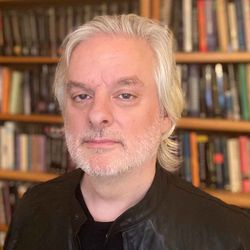
256. When we talk to AI, what are we talking to?
01:50:41||Ep. 256In the early days of personal computing, people imagined artificial intelligence as a single, self-contained system — a kind of digital brain with a fixed identity. Talking to AI meant asking questions to a clearly defined machine.That picture no longer holds, says David Chalmers, a professor of philosophy and neural science at New York University. Today’s large language models, or LLMs, run on distributed cloud infrastructure, so they don’t behave like a single fixed machine with one clear physical boundary.While LLMs likely lack consciousness, he says, they are not merely passive tools. Instead, they’re “quasi-agents” that exhibit goal-directed behavior shaped by context. Each back-and-forth between the user and the agent holds together as a coherent exchange, but it only exists for the duration of that interaction. If this thread is the real unit of interaction, he says, then agency isn’t something the system permanently processes. Rather, it emerges during use.In this Berkeley Talks episode, Chalmers asks: When we’re interacting with AI, what exactly are we interacting with? If these short-lived “selves” exhibit beliefs and goals within a conversation, do they warrant any ethical consideration?Chalmers’ talk took place at UC Berkeley’s International House on May 7. It was the inaugural Sarah Douglas Lecture on Philosophy and Artificial Intelligence, sponsored by Berkeley’s Department of Philosophy.Watch the lecture, listen to the episode and read the transcript on UC Berkeley News (news.berkeley.edu/podcasts/berkeley-talks).Music by by HoliznaCC0.New York University photo.
255. Philosopher Mark Johnston asks, 'Is this our only life?'
01:27:21||Ep. 255When Princeton University Professor Mark Johnston's daughter was 18 months old, she stood on a beach with what he describes as a "quizzical philosophical look on her face, as if she was thinking, 'Is this my only life?'"That question is the heart of Johnston’s talk at UC Berkeley this past March, where he revisits a topic he wrote about two decades ago. Back then, he believed that the hope for an afterlife was impossible. But now, he has changed his mind. "Today, I want to show why I was wrong," says Johnston, author of the 2010 book Surviving Death. "That decent and comprehensible hope is not dashed by such ontological considerations. Even if we are essentially embodied somehow or other, our present embodiments may not be our only embodiments.”In this Berkeley Talks episode, Johnston explores through a secular lens how near-death experiences fail to provide decisive proof of a detached soul, how reductive materialism — the view that everything about the mind can ultimately be explained in physical terms — creates absurd ethical contradictions, and how viewing ourselves as "embodied wills" leaves open the possibility of a life to come.This talk took place on March 11, and was part of the Foerster Lectures on the Immortality of the Soul sponsored by Berkeley Graduate Lectures. Watch a video of the lecture.Listen to the episode and read the transcript on UC Berkeley News (news.berkeley.edu/podcasts/berkeley-talks).Music by by HoliznaCC0.Photo by Frank van Hulst via Unsplash. [Image of a person in a patterned sweater sits looking out at the ocean during sunset]