Share
b future - Der Podcast
How to Foster Constructive Journalism
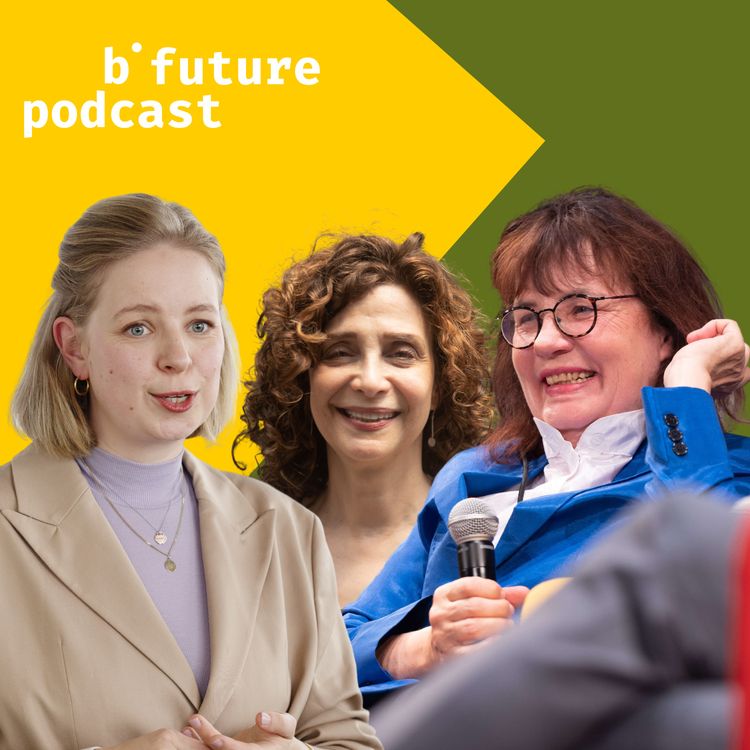
Better user engagement, more public trust, happier journalists – constructive journalism can offer all this and even more. While that may sound like a dream for many media organizations, it is already the reality at others. Both Tina Rosenberg and Manuela Kasper-Claridge have helped spur such constructive transformation, and they're sharing their experiences, insights and advice in this episode of the b° future podcast – your podcast for journalism and constructive dialogue, brought to you by the Bonn Institute.
Tina Rosenberg is a Pulitzer Prize and National Book Award-winning journalist and the co-founder of the Solutions Journalism Network. The organization has helped more than 600 newsrooms adopt a solutions-oriented approach defined by rigorous and compelling reporting on possible solutions to social problems.
Manuela Kasper-Claridge is the editor-in-chief of Deutsche Welle, Germany’s international public broadcaster. Manuela has focused on upholding high editorial standards and increasing diversity in reporting. In 2023, she oversaw the launch of the first-ever in-house constructive journalism fellowship, undertaken in partnership with the Bonn Institute.
The talk is moderated by Lisa Urlbauer, head of journalism training at the Bonn Institute. Lisa previously worked at the Solutions Journalism Network and is a tireless advocate for solutions-oriented journalism in Europe.
More information about the b° future festival can be found here: https://www.b-future.org/
The non-profit Bonn Institute addresses the media industry's growing need for networking and knowledge exchange on constructive and user-centered approaches to journalism. Through applied research, publications, events and training, the institute aims to further develop journalism by placing people’s interests at the heart of our work, which is especially important in light of societal challenges.
You can subscribe to the Bonn Institute newsletter here: https://www.bonn-institute.org/en/newsletter
Credits:
Editors: Mirella Murri (Bonn Institute)
Host: Cristina Burack (Bonn Institute)
Producer: AudiotexTour
Director: Ellen Heinrichs (Bonn Institute)
Contact: hello@bonn-institute.org
© 2024 Bonn Institute
More episodes
View all episodes
12. Facebook & Co: Should I Stay or Should I Go?
50:44||Season 3, Ep. 12In dieser Folge des b° future Podcast geht es um Facebook, Instagram & Co.: Plattformen, die für viele lange unverzichtbar waren – beruflich wie privat. Doch immer mehr Menschen und Redaktionen stellen sich die Frage: Sollte ich bleiben oder gehen? Was bedeutet es, sich aus großen Sozialen Netzwerken zurückzuziehen? Welche Alternativen gibt es? Und welche Verantwortung tragen Medienhäuser im Umgang mit Social Media? Darüber diskutieren Gavin Karlmeier, freiberuflicher Journalist und Digitalberater, und Markus Beckedahl, Gründer des Zentrums für Digitalrechte und Demokratie und Co-Kurator des b° future festival.Die Session wurde auf dem b° future festival 2025 aufgezeichnet. Das nächste b° future festival findet vom 1.–3. Oktober 2026 in der Bonner Innenstadt statt und wird vom gemeinnützigen Bonn institute ausgerichtet. Mehr Infos über das b° future festival. Mit anwendungsbezogener Forschung, Veröffentlichungen, Veranstaltungen und Fortbildungen trägt das Bonn Institute dem gestiegenen Bedarf der Medienbranche nach Vernetzung und Wissensaustausch im Hinblick auf konstruktive und nutzerzentrierte Ansätze im Journalismus Rechnung. Ziel ist es, den Journalismus so weiterzuentwickeln, dass er die Interessen der Menschen in den Mittelpunkt stellt – gerade vor dem Hintergrund wachsender gesellschaftlicher Herausforderungen. Den Newsletter des Bonn Institute kannst du hier abonnieren. Credits: Redaktion: Cristina Burack, Mirella Murri (Bonn Institute)Host: Paula Rösler (Bonn Institute) Produktion: Hannes Kappler (Bonn Institute)Leitung: Ellen Heinrichs (Bonn Institute) Kontakt: hello@bonn-institute.org
11. Where Art Meets Truth: An In-Depth Study of Artistic Journalism
51:42||Season 3, Ep. 11What role do the arts play in journalism when cultural coverage regularly gets the axe due to budget constraints and anyone can be a film critic on TikTok? A surprisingly large one, according to Jakub Górnicki – and one where the arts are not just reported on but instead redefine how journalism is undertaken and presented. He calls it “artistic journalism.” Jakub is an award-winning journalist and the cofounder of the Polish outlet Outriders, and his work sits at the intersection of art, journalism and technology. He sees artistic journalism as an effective way to engage audiences emotionally as well as intellectually. He wants them to not just consume the news, but to feel in a way that fosters understanding, empathy and retention. The episode was recorded live at the b° future festival on October 3, 2025. More information about the b° future festival can be found here: https://www.b-future.org/ The non-profit Bonn Institute addresses the media industry's growing need for networking and knowledge exchange on user-centered approaches to journalism. Through applied research, publications, events and training, the institute aims to further develop journalism by placing people’s interests at the heart of our work, which is especially important in light of societal challenges. The Bonn Institute publishes a monthly international newsletter – sign up here. https://www.bonn-institute.org/en/newsletter Credits: Editor: Paula Rösler (Bonn Institute) Host: Cristina Burack (Bonn Institute) Producer: Hannes Kappler (Bonn Institute) Director: Ellen Heinrichs (Bonn Institute) Contact: hello@bonn-institute.org © 2026 Bonn Institute
10. Ein Streitgespräch? Frag junge Medienschaffende alles über TikTok
42:42||Season 3, Ep. 10TikTok polarisiert: Für die einen ist die Plattform ein kreativer Raum für Austausch mit Peergroups, für andere vor allem ein Zeitfresser – oder sogar ein Risiko in Sachen Datenschutz und Jugendschutz. Ist die App eine unterschätzte Chance für Medien, Bildung und gesellschaftlichen Diskurs? Oder bestätigt sich der Vorwurf, sie „verblöde“ eine ganze Generation? In dieser Folge diskutieren vier junge Journalistinnen und Journalisten die großen Fragen rund um TikTok. Mit dabei sind Chiara Pas, Social Media Redakteurin bei RTL News, Manon Glathe, Leiterin des 1LIVE TikTok-Accounts, Maximilian Pichlmeier, Host der „News-WG“ vom Bayerischen Rundfunk und Simon Pycha, freier Journalist und Medien-Analyst.Die Session wurde auf dem b° future festival 2025 aufgezeichnet. Das nächste b° future festival findet vom 1.–3. Oktober 2026 in der Bonner Innenstadt statt und wird vom gemeinnützigen Bonn institute ausgerichtet. Mehr Infos über das b° future festival. Mit anwendungsbezogener Forschung, Veröffentlichungen, Veranstaltungen und Fortbildungen trägt das Bonn Institute dem gestiegenen Bedarf der Medienbranche nach Vernetzung und Wissensaustausch im Hinblick auf konstruktive und nutzerzentrierte Ansätze im Journalismus Rechnung. Ziel ist es, den Journalismus so weiterzuentwickeln, dass er die Interessen der Menschen in den Mittelpunkt stellt – gerade vor dem Hintergrund wachsender gesellschaftlicher Herausforderungen. Den Newsletter des Bonn Institute kannst du hier abonnieren. Credits: Redaktion: Cristina Burack, Mirella Murri (Bonn Institute)Host: Paula Rösler (Bonn Institute) Produktion: Hannes Kappler (Bonn Institute)Leitung: Ellen Heinrichs (Bonn Institute) Kontakt: hello@bonn-institute.org
9. Women of Color in Leadership
52:16||Season 3, Ep. 9In the current anti-DEI atmosphere, what are the very real risks to trust, truth-telling and under-reported stories? And in an industry that is still largely behind on diversity (i.e. still largely male and white dominated sector) how can we make sure that we keep inclusivity on the editorial agenda? The women of color we’ll hear from in this episode don’t have all the answers, but they do have some key ones, shaped by yearslong experience working in and leading media organizations. They talk about how things have improved in terms of diversity over the span of their careers, where they have stalled or even receded, and how diversity can nonetheless still be successfully anchored in organizations and reporting. The speakers are: Vivienne Francis, director and CEO of One World Media • Debarati Guha, director of programs for Asia at Deutsche Welle • Katie Mark, deputy editor at the Bureau of Investigative Journalism. The episode was recorded live at the b° future festival on October 3, 2025. More information about the b° future festival can be found here: https://www.b-future.org/ The non-profit Bonn Institute addresses the media industry's growing need for networking and knowledge exchange on user-centered approaches to journalism. Through applied research, publications, events and training, the institute aims to further develop journalism by placing people’s interests at the heart of our work, which is especially important in light of societal challenges. The Bonn Institute publishes a monthly international newsletter – sign up here: https://www.bonn-institute.org/en/newsletter Credits: Editor: Paula Rösler (Bonn Institute) Host: Cristina Burack (Bonn Institute) Producer: Hannes Kappler (Bonn Institute)Director: Ellen Heinrichs (Bonn Institute) Contact: hello@bonn-institute.org © 2026 Bonn Institute
7. Embracing Influencers: A New Era for Newsrooms
44:07||Season 3, Ep. 7We live in an age when 42% of Europeans aged 16 to 30 and 37% of U.S. adults aged 18 to 29 primarily access news through social media platforms. So how must traditional media organizations evolve to meet these changing consumption patterns and best meet these audiences where they are? One way is by working with news influencers – and this is where Adriana Lacy comes in. She’s a journalist, educator and digital consultant who helps publishers grow their digital audiences by facilitating partnerships with news influencers in a way that combines the reach and personal connection of influencers with the standards and credibility of journalism. She shares her experience and expertise on everything from how to find the right type of influencer to legal considerations to control over editorial steps. The episode was recorded live at the b° future festival on October 3, 2025. More information about the b° future festival can be found here: https://www.b-future.org/ The non-profit Bonn Institute addresses the media industry's growing need for networking and knowledge exchange on user-centered approaches to journalism. Through applied research, publications, events and training, the institute aims to further develop journalism by placing people’s interests at the heart of our work, which is especially important in light of societal challenges. The Bonn Institute publishes a monthly international newsletter – sign up here. https://www.bonn-institute.org/en/newsletter Credits: Editor: Paula Rösler (Bonn Institute) Host: Cristina Burack (Bonn Institute) Producer: Hannes Kappler (Bonn Institute)Director: Ellen Heinrichs (Bonn Institute) Contact: hello@bonn-institute.org © 2026 Bonn Institute
6. Game over, Democracy? Wie wir uns das Netz zurückholen
53:59||Season 3, Ep. 6In dieser Folge des b° future Podcast geht es um Big Tech: Martin Andree, Autor und Professor für Medienwissenschaften an der Uni Köln, spricht darüber, wie große Tech-Unternehmen demokratiefeindliche Medienstrukturen aufgebaut haben, wie sie diese selbst kontrollieren – und wie sie damit Einfluss nehmen auf unsere politische Öffentlichkeit. Martin Andree bringt aber auch fünf konkrete Ideen mit, wie wir uns als Gesellschaft das Internet zurückholen können.Das nächste b° future festival findet vom 1.–3. Oktober 2026 in der Bonner Innenstadt statt und wird vom gemeinnützigen Bonn institute ausgerichtet. Mehr Infos über das b° future festival. Mit anwendungsbezogener Forschung, Veröffentlichungen, Veranstaltungen und Fortbildungen trägt das Bonn Institute dem gestiegenen Bedarf der Medienbranche nach Vernetzung und Wissensaustausch im Hinblick auf konstruktive und nutzerzentrierte Ansätze im Journalismus Rechnung. Ziel ist es, den Journalismus so weiterzuentwickeln, dass er die Interessen der Menschen in den Mittelpunkt stellt – gerade vor dem Hintergrund wachsender gesellschaftlicher Herausforderungen. Den Newsletter des Bonn Institute kannst du hier abonnieren. Credits: Redaktion: Cristina Burack, Mirella Murri (Bonn Institute)Host: Paula Rösler (Bonn Institute) Produktion: Hannes Kappler (Bonn Institute)Leitung: Ellen Heinrichs (Bonn Institute) Kontakt: hello@bonn-institute.org © 2025 Bonn Institute
5. What Does the Public Think of Generative AI (in the News)?
43:49||Season 3, Ep. 5Many news and media organizations have jumped on the AI bandwagon, using it in a range of production processes. But they have largely failed to look at, let alone factor in, how audiences perceive the technology in the context of journalism. How do people think AI is being used in journalism compared to how it is actually being used? What are people comfortable with and what not? And how does its use – or perceived use – affect trust in the media? Felix Simon answers all these questions and more in this episode. A communication researcher at the Reuters Institute for the Study of Journalism and a research associate at the Oxford Internet Institute, Simon has long focused his research on AI in news and public reception. He was a lead author of the Reuters Institute’s Generative AI and News Report 2025, and he presented the key findings at the 2025 b° future festival ahead of the report’s release. The episode was recorded live at the b° future festival on October 3, 2025. More information about the b° future festival can be found here: https://www.b-future.org/ The non-profit Bonn Institute addresses the media industry's growing need for networking and knowledge exchange on user-centered approaches to journalism. Through applied research, publications, events and training, the institute aims to further develop journalism by placing people’s interests at the heart of our work, which is especially important in light of societal challenges. The Bonn Institute publishes a monthly international newsletter – sign up here. https://www.bonn-institute.org/en/newsletter Credits: Editor: Paula Rösler (Bonn Institute) Host: Cristina Burack (Bonn Institute) Producer: Hannes Kappler (Bonn Institute)Director: Ellen Heinrichs (Bonn Institute) Contact: hello@bonn-institute.org © 2026 Bonn Institute (cmb/xx)
4. Fakten, Fake und Verantwortung: Wie gehen wir mit Desinformation um?
30:23||Season 3, Ep. 4In dieser Folge geht es um ein ernstes Thema: Deepfakes. Denn Desinformation ist längst mehr als nur ein Schlagwort. Sie beeinflusst Debatten, gefährdet Vertrauen in Institutionen und stellt Politik wie Gesellschaft vor große Herausforderungen. Doch wer steckt eigentlich hinter gezielten Falschinformationen – und mit welchen Interessen? Welche Verantwortung tragen Plattformen, Medien und Politik? Und wie kann eine kluge Medien- und Digitalpolitik dazu beitragen, die Gesellschaft widerstandsfähiger zu machen? Eckart v. Hirschhausen, Wissenschaftsjournalist, Autor und Gründer der Stiftung "Gesunde Erde – Gesunde Menschen", diskutiert mit NRW-Medien- und Europaminister sowie Chef der Staatskanzlei, Nathanael Liminski, und dem Gründer des Zentrums für Digitalrechte und Demokratie sowie Co-Kurator des b° future festival, Markus Beckedahl.Das nächste b° future festival findet vom 1.–3. Oktober 2026 in der Bonner Innenstadt statt und wird vom gemeinnützigen Bonn institute ausgerichtet. Mehr Infos über das b° future festival. Mit anwendungsbezogener Forschung, Veröffentlichungen, Veranstaltungen und Fortbildungen trägt das Bonn Institute dem gestiegenen Bedarf der Medienbranche nach Vernetzung und Wissensaustausch im Hinblick auf konstruktive und nutzerzentrierte Ansätze im Journalismus Rechnung. Ziel ist es, den Journalismus so weiterzuentwickeln, dass er die Interessen der Menschen in den Mittelpunkt stellt – gerade vor dem Hintergrund wachsender gesellschaftlicher Herausforderungen. Den Newsletter des Bonn Institute kannst du hier abonnieren. Credits: Redaktion: Cristina Burack, Mirella Murri (Bonn Institute)Host: Paula Rösler (Bonn Institute) Produktion: Hannes Kappler (Bonn Institute)Leitung: Ellen Heinrichs (Bonn Institute) Kontakt: hello@bonn-institute.org © 2025 Bonn Institute
3. America's Free Press in Shackles
46:21||Season 3, Ep. 3Independent media in the US is not doing well. Between a hostile administration targeting “biased” news organizations, a highly polarized public and distribution dominated by algorithms, America’s free press is facing unprecedented challenges. The world is watching, one international report after another. But what is going on beyond the headlines? How are media professionals on the ground concretely affected, and what are they doing to preserve the existence of a free press? In this episode, guests from all walks of journalism – from local news to media philanthropy to legal defense – examine the state of US media. They provide a firsthand look not just at where things are, but also how they reached this point and what can – and is being done to ensure the continued existence of a free press and democracy. The speakers are: - Keri Mitchell, founder and executive director of the Dallas Free Press- Kimberly Spencer, director of the Colorado Media Project- Thomas S. Leatherbury, law professor and director of the First Amendment Clinic at Southern Methodist University- Moritz Döbler, editor-in-chief of the Rheinische Post- Astrid Maier, deputy editor-in-chief and head of strategy at the German Press Agency (dpa)The episode was recorded live at the b° future festival on October 3, 2025. More information about the b° future festival can be found here: https://www.b-future.org/ The non-profit Bonn Institute addresses the media industry's growing need for networking and knowledge exchange on user-centered approaches to journalism. Through applied research, publications, events and training, the institute aims to further develop journalism by placing people’s interests at the heart of our work, which is especially important in light of societal challenges. The Bonn Institute publishes a monthly international newsletter – sign up here. https://www.bonn-institute.org/en/newsletter Credits: Editor: Paula Rösler (Bonn Institute) Host: Cristina Burack (Bonn Institute) Producer: Hannes Kappler Director: Ellen Heinrichs (Bonn Institute) Contact: hello@bonn-institute.org © 2026 Bonn Institute