Share
Autistic Culture Presents...
The Neurodivergent Experience: My Parents Hid My Autism Diagnosis for 15 Years | Reddit Stories
In this week's Reddit Stories episode, Jordan and Simon dive into three stories about autism, relationships, diagnosis and what happens when understanding neurodivergence collides with the expectations of the people around us.
First, an autistic man asks how he can explain to his girlfriend that his autism isn't something he can simply change. As the story unfolds through its updates, Jordan and Simon discuss masking, communication, compromise in relationships and the difference between asking a partner to work on their behaviour and expecting them to fundamentally change who they are.
Next, a 29-year-old woman says she's divorcing her husband because he has autism and wants to know how she can do it respectfully. Jordan and Simon unpack what's really behind that statement, the realities of neurodivergent relationships, compatibility, communication and why sometimes a relationship ending isn't necessarily about autism itself.
Finally, an 18-year-old discovers that her parents withheld an autism diagnosis from her for 15 years after rejecting the original assessment she received as a child. Jordan and Simon discuss parents seeking second opinions, growing up without answers, the impact of discovering a diagnosis years later and why knowing you're autistic can provide important context for a lifetime of feeling different.
The stories discussed in this episode are public Reddit posts. Titles may be shortened for readability, and all opinions expressed are those of the original posters.
- How Do I Explain to My Girlfriend That My Autism Isn't Something I Can Change?
- I'm Divorcing My Husband Because He Has Autism. How Can I Do It Respectfully?
- My Parents Withheld a Diagnosis From Me for 15 Years
Our Sponsors:
🧘♀️ Ashley Dupuy – Integrative Coaching, Breathwork & Hypnotherapy & https://insighttimer.com/AshleyDupuy
🤝 Sophie James - Neurodivergent Mentoring: sophiejamesndmentoring.com
🎧 The Neurodivergent Experience is available on Spotify, Apple Podcasts, and all major platforms.
🌈 Celebrate autistic voices with early access, ad-free listening, and our full archive at AutisticCulturePlus.com
🌐 Visit www.autisticculturepodcast.com
🎙️ Executive Producers: Amy Burns, Anamaria B Call, Andrew Banner, Anna Goodson, Ashley Apelzin, Audrea Volker, Ben Coulson, Brian Churcek, Cappy Hamper, Carley Biblin, Charlene Deva, Chloe Cross, Clay Duhigg, Clayton Oliver, Danny Dunn, Daria Brown, David Garrido, Emily Burgess, Eric Crane, Erik Stenerud, Fiona Baker, Grace Norman, Helen Shaddock, Jaimie Collins, Jason Killian, Jen Unruh, Jennifer Carpenter, Julia Tretter, Kathie Watson-Gray, Kenneth Knowles, Kira Cotter, Kristine Lang, Kyle Raney, Llew P Williams, Laura Alvarado, Laura De Vito, Laura Provonsha, Lily George, Nelly Darmi, Nigel Rogers, Rachel Miller, Tim Scott, Tyler Kunz, Victoria Steed, Yanina Wood.
🎧 Producers: AJ Knight, Bobby Simon, Da Kovac, Eleanor Collins, Emily Griffiths, Hannah Hughes, Jennifer Kemp, Jonas Fløde, Kate F, Katie N Benitez, Kendra Murphy, Lisa Dennys, Logan Wall, Louise Lomas, Melissa Nance, Nicola Owen, Rebecka Johansson, Sam Morris, Sarah Hannah Morris.
More episodes
View all episodes
28. Mindful Mondays With Ashley Dupuy: Touch, Movement & the Neurodivergent Nervous System
36:47||Ep. 28In this episode of Mindful Mondays, we continue our exploration of the senses by turning toward something deeply personal and often overlooked: touch and movement.For many neurodivergent and highly sensitive people, the body can feel confusing, overwhelming, or even unsafe at times. And yet, movement and touch are not optional extras - they are fundamental ways the nervous system orients, regulates, and makes sense of the world.In this episode, Ashley explores:* How touch can regulate the nervous system - from weighted blankets to co-regulation* Why movement is one of the most powerful (and underrated) forms of medicine* The reality of sensory sensitivities - from textures and hugs to proprioception and coordination* The overlap between neurodivergence and chronic conditions like hypermobility and Ehlers–Danlos Syndrome* Why “clumsiness,” rushing, and discomfort in the body are not personal failings - but nervous system information* How small, gentle movements can help shift both physical and emotional stucknessThis episode also includes a guided practice to help you reconnect with your body through tiny, accessible movements and gentle awareness, meeting yourself with curiosity rather than pressure.Movement doesn’t have to be intense to be meaningful.Touch doesn’t have to be complicated to be regulating.Sometimes, the smallest shift is enough to remind your system:You are here. You exist. You belong to this moment.If you’d like to explore this work more deeply, Ashley is currently accepting expressions of interest for a final round of one-to-one journeys (May–July), as well as upcoming group coaching programmes.📩 integrativeiom@gmail.comMore details will be available soon at:🌐 www.integrativeiom.co.ukIf you enjoyed this episode, please follow, share, and leave a review — it helps this work reach more people who need it.And remember…We’re all just walking each other home.Our Sponsors:🧘♀️ Ashley Dupuy – Integrative Coaching, Breathwork & Hypnotherapy & https://insighttimer.com/AshleyDupuy🤝 Sophie James - Neurodivergent Mentoring: sophiejamesndmentoring.com🎧 The Neurodivergent Experience is available on Spotify, Apple Podcasts, and all major platforms.🌈 Celebrate autistic voices with early access, ad-free listening, and our full archive at AutisticCulturePlus.com🌐 Visit www.autisticculturepodcast.com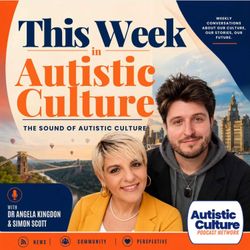
17. This Week in Autistic Culture #17 | The Neurodiversity Language Debate | Is Dune Autistic Culture?
01:32:51||Ep. 17This week, Angela and Simon dive into a growing debate about neurodiversity language. Are terms like neurodivergent, neurodiverse and Autistic becoming blurred together — and does that matter? Responding to new research questioning how broadly neurodiversity terminology is used, they explore why umbrella terms can be incredibly useful, where specificity still matters, and what we lose when very different neurotypes and experiences are treated as interchangeable.For our second excavation into the Autistic Culture Archive, Simon is taking Angela to Arrakis. Using the Ten Pillars of Autistic Culture as their guide, they dig into Frank Herbert’s Dune, uncovering extraordinary world-building, systems within systems, pattern-matching, passionate superfanning and a fictional universe that rewards you for wanting to know absolutely everything about it. By the end, there’s only one question left: is Dune Autistic culture?And if our trip to Arrakis leaves you wanting to dig even deeper, you can explore the full Dune Field Report in the Autistic Culture Archive, where Simon brings together the research, evidence, rabbit holes and connections to the Ten Pillars that couldn’t fit into the show — and, as always, you can add your own field notes, because the archive is never finished!As always, we’ll take you through everything coming up across the Autistic Culture Podcast Network this week!🌐 Subscribe to our newsletter and read our Autistic Culture Archive Field Reports: www.autisticculturepodcast.com🎧 Listen: This Week in Autistic Culture is available on Spotify, Apple Podcasts and all major podcast platforms.🌈 Become a Culture Builder: Get early access, ad-free listening and our full podcast archive at AutisticCulturePlus📲 Follow us on Instagram: @autisticculturepodcast
Autistic Culture Podcast Rewind - Cats are Autistic
01:04:36|In this episode of The Autistic Culture Podcast, hosts Dr. Angela Kingdon and Matt Lowry, LPP draw connections between the behaviors and traits exhibited by cats and the common experiences of autistic individuals.🎧 What You’ll LearnComparing feline quirks—like sensory preferences, strong routines, and communication styles—with autistic traits.Why cats’ particular needs for predictability and clear communication mirror autistic desires for understandable, safe environments.An exploration of famous autistic-coded cat characters in media: Garfield, Hello Kitty, the Cat in the Hat, and Hobbes from Calvin and Hobbes.Using examples of cat behavior to critique ABA (Applied Behavior Analysis) therapy, arguing for acceptance and accommodation rather than forced conformity.Celebrating cats as powerful symbols of neurodiversity—embracing feline tendencies as an emblem of the autistic experience.Resources:Kathy Hoopmann’s websiteVideo: How I Taught My Cat to Talk | Beginner TutorialVideo: Cat Kicks Boyfriend out of the HouseVideo: Where Dad? Billi SpeaksRelated Episodes:Peanuts is AutisticAnimation is Autistic🌟 Connect With Us📱 Follow us on Instagram🎧 Find us on Apple Podcasts and Spotify🛍️Our Autism-affirming merch shop🌐 Learn more at www.autisticculturepodcast.com
9. The Neurocomplex Creative: Lucy Lane's Story
41:17||Season 11, Ep. 9She was born on Sunset Boulevard and has had an agent since she was four — but if you ask her, she hasn't done much in Hollywood. And that's kind of funny.In this episode of The Neurocomplex Creative, Vicki Peterson sits down with her daughter, Lucy Lane, a young actor, singer and musical theatre performer beginning her professional career in New York City.Lucy reflects on growing up as a child actor in Hollywood, discovering acting techniques that helped her feel more grounded, and what she's learning about building a creative life around a brain and body that don't always work like everyone else's. She and Vicki discuss EDS, dysautonomia, advocating for invisible needs and navigating the physical demands of professional performance without allowing a medical record to define what's possible.They also explore Lucy's relationship with music, why singing can make her ADHD brain feel quiet, and how performing offers a way to express emotions that aren't always accessible through words alone. It's a warm conversation between mother and daughter about creativity, self-advocacy, autistic joy and finding the thing that allows your whole nervous system to rest.📲 Follow Lucy on Instagram: @the_lucylane📝 Go deeper on Substack:https://ahatonahatonahat.substack.com/☕ Support the show:https://buymeacoffee.com/vickipetersonProduced for the Autistic Culture Podcast Network.🎧 The Neurocomplex Creative is available on Spotify, Apple Podcasts, and all major platforms.🌈 Celebrate autistic voices with early access, ad-free listening, and our full archive at AutisticCulturePlus.com🌐 Visit www.autisticculturepodcastnetwork.com📲 Follow us on Instagram: @autisticculturepodcast
7. Clinical Misfits: What If Your Neurological Symptoms Can’t Be Explained? | Functional Neurological Disorder
23:11||Season 9, Ep. 7What happens when you're experiencing very real neurological symptoms, but medicine can't explain what's causing them?In this episode of Clinical Misfits, Dr Mary explores functional neurological disorder (FND), a term used to describe neurological symptoms that can include changes in sensation, speech and movement, paralysis and seizure-like episodes. She questions the language historically used to describe these experiences and what happens when unexplained symptoms are too readily dismissed as psychological or “all in your head.”Dr Mary considers the relationship between these symptoms, the autonomic nervous system and trauma, particularly for neurodivergent people whose lives may include experiences of bullying, rejection, chronic illness, pain and other forms of trauma. She also discusses approaches used to manage symptoms, from medication and trauma therapies to sensory regulation, movement and other forms of self-care.Throughout the episode, Dr Mary returns to a simple principle: when medicine doesn't yet have an explanation for someone's neurological symptoms, that uncertainty shouldn't become a reason to blame or disbelieve the person experiencing them.Produced for the Autistic Culture Podcast Network.🎧 Clinical Misfits is available on Spotify, Apple Podcasts, and all major platforms.🌈 Celebrate autistic voices with early access, ad-free listening, and our full archive at AutisticCulturePlus.com🌐 Visit www.autisticculturepodcastnetwork.com📲 Follow us on Instagram: @autisticculturepodcast
4. Autistic Standpoint Theory: Autism, Identity & the Science of Being Seen
01:03:00||Season 24, Ep. 4In the final episode of Autistic Standpoint Theory, Isha Snow is joined by psychometrician, mixed-methods researcher and autistic self-advocate Scott Frasard, PhD, to explore what happens when an autistic researcher turns the tools of measurement back towards the systems attempting to measure autistic people.Scott discusses how being autistic shapes the way he approaches research, including his ability to recognise patterns, contradictions and assumptions that others may overlook. Together, he and Isha explore psychometrics, research methodology, autistic participation in research and why lived experience matters when deciding what questions get asked in the first place.The conversation also turns to Scott's critique of Applied Behavior Analysis (ABA), including the arguments behind his book Burning the Behaviorist Blueprint: Exposing and Dismantling the ABA Empire. Scott challenges approaches he believes prioritise compliance and conformity, while considering what genuinely autistic-led research and support could look like instead.Finally, Scott introduces his idea of the “neuro-existentialist philosopher”, bringing the series back to questions of identity, autonomy and knowledge: who gets to define autistic experience, whose expertise is valued, and what becomes possible when autistic people are not simply studied, but recognised as people capable of producing knowledge about themselves?Autistic Standpoint Theory is part of the Autistic Culture Podcast Network.🎧 Autistic Standpoint Theory is available on Spotify, Apple Podcasts, and all major platforms.🌈 Celebrate autistic voices with early access, ad-free listening, and our full archive at AutisticCulturePlus.com🌐 Visit www.autisticculturepodcastnetwork.com📲 Follow us on Instagram: @autisticculturepodcast
6. The Still Growing Up Film Club: How to Be You and Find Your People with Matilda
33:27||Season 23, Ep. 6What happens when the people around you don't understand you — and how do you find the people who do?In the Season One finale of The Still Growing Up Film Club, Cece Fanning revisits the beloved 1996 film Matilda to explore belonging, justice, community and the families we find for ourselves.Growing up in a family that neither understands nor appreciates her, Matilda learns to rely on herself from an extraordinarily young age. But through books, school, friendship and eventually Miss Honey, she begins to discover something different: there are people in the world who will value you precisely for the things that make you different.Cece reflects on why Matilda's story can resonate so strongly through a neurodivergent lens, from feeling like everyone else was given an instruction manual for socialising to finding comfort in books, developing fierce self-reliance and possessing an intense sense of fairness. She explores the difference between being nice and being kind, why the traits we're taught to see as weaknesses can sometimes become strengths, and why having power matters far less than what we choose to do with it.Along the way, there are libraries, chocolate cakes, terrible parents, terrifying headteachers, telekinetic powers and seven more rules for growing up.Because sometimes family isn't simply the people we're born to. It's the people who see us, choose us, support us and allow us to be entirely ourselves.Follow Cece:📸 Instagram: https://www.instagram.com/thenotoriouscece📱 TikTok: https://www.tiktok.com/@thenotoriouscece✍️ Blog: https://cecewhatimean.com/🛍️ Store: https://stillgrowinguppodcast.dashery.com/Produced for the Autistic Culture Podcast Network.🎧 The Still Growing Up Film Club is available on Spotify, Apple Podcasts, and all major platforms.🌈 Celebrate autistic voices with early access, ad-free listening, and our full archive at AutisticCulturePlus.com🌐 Visit www.autisticculturepodcastnetwork.com📲 Follow us on Instagram: @autisticculturepodcast
27. Mindful Mondays With Ashley Dupuy: The Light of Your Life – The Biology and Meaning of Light
37:29||Season 7, Ep. 27In this episode of Mindful Mondays, Ashley explores something we live within every day, yet rarely stop to consider: light.Light shapes far more than our ability to see. It influences our sleep, mood, hormones, nervous system regulation, and overall wellbeing. For neurodivergent people especially, light can sometimes feel overwhelming or dysregulating - but when we understand how it works, it can also become a powerful ally for health and balance.In this episode we explore:* How light affects the nervous system and circadian rhythms* Why neurodivergent brains often experience light differently* The difference between nourishing light and overstimulating light* Simple ways to work with light to support sleep, mood and sensory balance* A guided meditation to reconnect with the light within youLight isn’t just something that happens to us - it’s something we can learn to notice, shape, and work with in ways that support our bodies and our lives.If you’d like to learn more about Ashley’s work or enquire about her upcoming programmes, you can get in touch at:integrativeiom@gmail.comMore details about Ashley’s work will also be appearing soon on her website. www.integrativeiom.co.ukIf you enjoyed this episode, please consider following the podcast and sharing it with someone who might benefit from a moment of calm.And remember…We’re all just walking each other home.Our Sponsors:🧘♀️ Ashley Dupuy – Integrative Coaching, Breathwork & Hypnotherapy & https://insighttimer.com/AshleyDupuy🤝 Sophie James - Neurodivergent Mentoring: sophiejamesndmentoring.com🎧 The Neurodivergent Experience is available on Spotify, Apple Podcasts, and all major platforms.🌈 Celebrate autistic voices with early access, ad-free listening, and our full archive at AutisticCulturePlus.com🌐 Visit www.autisticculturepodcast.com