Share
AuDHD Flourishing
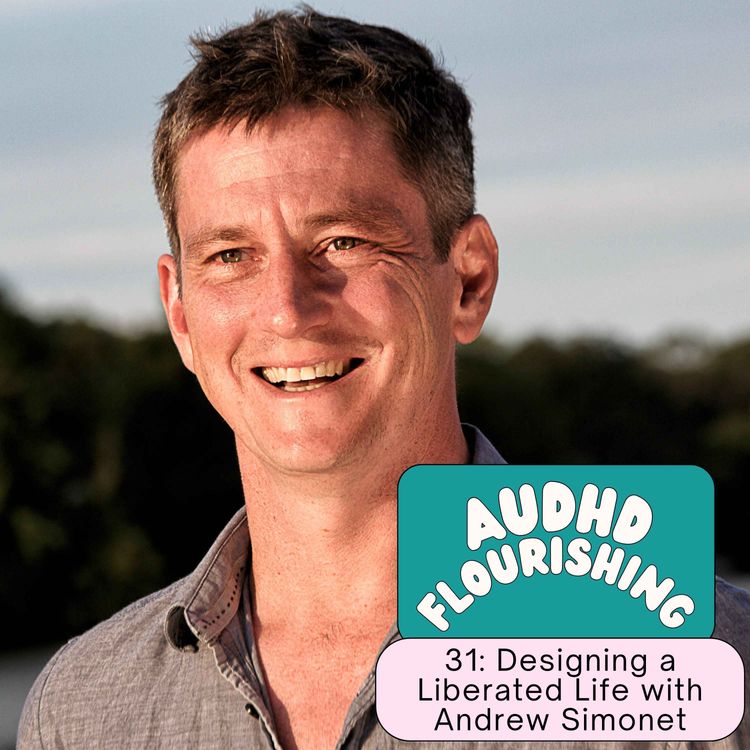
31 Designing a Liberated Life with Andrew Simonet
Andrew Simonet is a Philadelphia-based dancer/choreographer and now novelist who has been massively influential in my own life. His Artist's U and book/workbook Making Your Life As An Artist helped me build the foundations of the business side of my music career.
We talk about
- the design problems in our lives
- how many things are blamed on character flaws that are actually design issues
- the liberatory nature of not only the artist's life, but a well-designed life
- how designing your life to meet your own needs liberates you
After we spoke, Andrew wanted to add:
"However you have worked out your ability to create, to make things, to get things done, to get through your day, know that there are a lot of other artists and creatives out there who might benefit from hearing your solutions. Not only are your tools and rhythms and strategies valid, they’re hugely valuable. All of us are figuring out how to nourish our spirits and bodies and minds in this strange techno-capitalist world, and we could learn a lot from hearing how you do it."And in the extended full interview (we talked for another 20 minutes) here, Andrew asked about how my partner and I navigate our relationship since they do so much for me. He also asked about spaces for AuDHD teens, and personally I don't know of any that are BOTH youth-led/accepting AND have very accurate info. (TikTok for example has the former but a good amount of misinformation.) If you have recommendations for AuDHD teen spaces, let me know at mattia@mattiamauree.com!
Andrew's links:
- Artist's U: Making Your Life As An Artist
- Andrew's amazing email list (one of my faves)
- Andrew's novels: Wilder, and A Night Twice as Long (the one we talked about in the episode)
- AndrewSimonet.com
Resources:
More episodes
View all episodes

An Emmy winner's trick for ADHD idea overload, from The ADHD Channel for Women
29:36|AuDHDer Cate Osborn (Catieosaurus) interviews Adam Reid about idea overload... relevant whether or not you're a creative professional or writer like Adam! Thanks to The ADHD Channel for Women from Understood.org for letting me post this episode. You can find all of their episodes here. (And Sep 22 2026 they put out an episode on ADHD & PMDD, which is a thing people ask me about a lot!)AuDHD Flourishing resources:Transcript Doc (often a few weeks behind, but we do catch up!)Mattia's NewsletterLike Your Brain community space (Patreon/Discord)
158 Communicating With Truth-Haters
13:10|Many AuDHDers have shared stories with me about some version of the following: There is a problem staring them in the facePeople in power don't want to hear about it This comes up a lot at work. The more subtle version is trying to get someone to give a straight answer about exactly what needs to be done, or how. And they act like it's somehow an affront to their authority... so confusing! If you struggle with communicating with someone who seems resistant to the truth, this episode offers the big picture understanding of what might be going on. AuDHD Flourishing resources:Transcript Doc (often a few weeks behind, but we do catch up!)Mattia's NewsletterLike Your Brain community space (Patreon/Discord)157 Your Brain Learns Fast
18:04|Part of what hyperneuroplasticity means is that your brain learns quickly on many fronts... including from negative data. This has some obvious downsides!The good news is that what might feel like excruciatingly slow learning in other areas (8-18 repetitions) is actually normal. Your brain just learns fast sometimes ;)The other good news is that 2 data points does NOT equal a predictive pattern yet, no matter how much your brain may want it to.Join me in person at BloomCon 2026! (Online options too)AuDHD Flourishing resources:Transcript Doc (often a few weeks behind, but we do catch up!)Mattia's NewsletterLike Your Brain community space (Patreon/Discord)
156 Hyperneuroplasticity with Dr Patty Gently
01:00:38|Dr. Patty Gently is one of the most important researchers and voices in the gifted neurodivergence space. Her free online community, Bloomers, has a few thousand mostly 2e members.And her research around hyperneuroplasticity is filling in some gaps in the literature to explain some of our experiences!Love Your Brain course (and the Sep/Oct 2026 live round info) - starts Sep 8Connect with Patty:Aphantasia, Alexithymia, Autobiographical Memory, and the HNP Mind, post from her free SubstackThe Gentle Heretic, Dr. Gently's website where you can also reach outBright Insight Support Networkfree Facebook group, BloomersJoin both of us at BloomCon 2026!AuDHD Flourishing resources:Transcript Doc (often a few weeks behind, but we do catch up!)Mattia's NewsletterLike Your Brain community space (Patreon/Discord)
How to Make Projects Happen - Repost
43:24|AuDHD brains face many challenges when it comes to projects. It's something I've put a great deal of time and learning into, both personally and professionally. This episode covers many ideas and approaches that tend to work for us.Key Takeaways:We usually learn to use what I call the Adrenaline-Anxiety Approach. While effective short-term, it can lead to burnout and other issues.A monotropic approach is more sustainable and individualized... and it can feel slow at first.Experimentation as a core toolCreating just enough structure and safety to get going, without getting bogged down (loose planning)Working with the brain states you haveManaging interruptions, inputs, and daily lifeFinding the balance that works for youThe episode also walks through the Love Your Brain course, designed to help AuDHDers understand their mind-body system, work with brain states, and navigate project challenges. The course emphasizes self-compassion, experimentation, and building processes tailored to individual needs.Repost - originally posted July 12th 2024Links mentioned:Devon Price's Laziness Does Not Exist article, and a PDF if you're not on MediumThe transcript may be especially useful for this episode! (It'll take a few seconds for the link to fully load to this episode)Love Your Brain course (and the Sep/Oct 2026 live round info)155 Making & Keeping Friends
27:41|Making friends is hard. Developing and keeping those friendships is hard. It's literally work! Today I talk about my friendship journey, more to give examples and share what I've learned rather than to teach. Because this is a deeply personal topic that's affected by your current capacity!Mentioned upcoming live round of Love Your Brain course (Sep-Oct 2026)AuDHD Flourishing resources:Transcript Doc (often a few weeks behind, but we do catch up!)Mattia's NewsletterLike Your Brain community space (Patreon/Discord)
154 Friendship Skills with Caroline Maguire
01:06:10|Caroline Maguire is passionate about learning how to bring your whole neurodivergent self to friendships... and not scaring people off!Her book, Friendship Skills for Neurodivergent Adults, includes not only skills but red and green flags, and info on masking vs adapting (which we also talk about in the episode).Mentioned in episode: next week's workshop with Grace BezaireConnect with Caroline:Book Friendship Skills for Neurodivergent Adults (affiliate link)Website https://carolinemaguireauthor.com/Instagram @authorcarolinemYouTube channelPodcast The ADHD Social PlaybookAuDHD Flourishing resources:Transcript Doc (often a few weeks behind, but we do catch up!)Mattia's NewsletterLike Your Brain community space (Patreon/Discord)153 Polyamory & Community Bonds
29:44|Thanks for the great topic suggestion from the community: polyamory & strengthening community bonds. Those are quite intertwined for me, since I've been out as poly/RA and exclusively in open relationships for almost 20 years now.This is a collection of thoughts on what I've noticed while being poly, and how it overlaps with community building and relationship maintenance in general.AuDHD Flourishing resources:Transcript Doc (often a few weeks behind, but we do catch up!)Mattia's NewsletterLike Your Brain community space (Patreon/Discord)
152 You Can't Trick a Nervous System
35:14|My cats Mac & Cheese (see episode pic) have been having a hard time. I've learned a lot observing their reactive nervous systems because it's so easy to feel compassion for them.This episode uses that extended metaphor to also talk about when AuDHD nervous systems feel reactive, including with meltdowns that can include anger or violence. Depending on how much reactivity is affecting your life, it may require professional help.No matter what, you deserve compassion <3Content note: episode mentions violence and medicationcat UPDATE for the curiousResources for anger and reactive nervous systems:Autistic anger (including therapy suggestions)Resource for non-autistic folks to understand meltdownsAuDHD emotional regulation (mentions RSD, justice sensitivity, alexithymia)ADHD rage & anger (note: I didn't find many AuDHD-specific resources on this topic - plz share if you have good ones!)Crisis Resources:USA-based anonymous crisis chatInternational crisis linesVarious types of crisis resources in about 10 countriesAuDHD Flourishing resources:Transcript Doc (often a few weeks behind, but we do catch up!)Mattia's NewsletterLike Your Brain community space (Patreon/Discord)