Share
Americano
Operation Rising: will Trump get dragged into the Israel-Iran conflict?
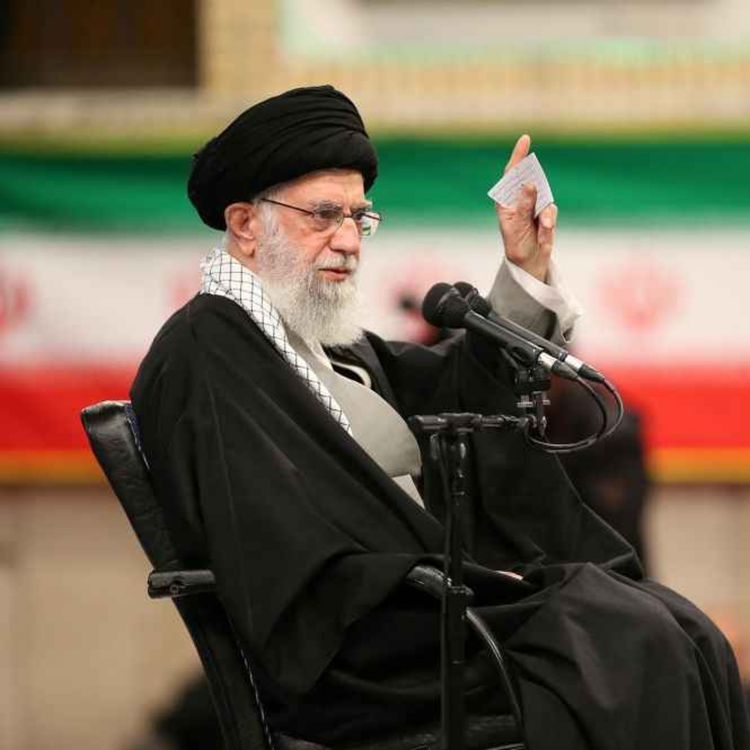
Relations between Iran and Israel are deteriorating rapidly, with comparisons being drawn to Israel’s 1981 strike on Iraq’s Osirak nuclear reactor. Israeli Prime Minister Benjamin Netanyahu appears to be advocating for regime change in Tehran, reportedly encouraging the United States to take military action. Donald Trump, who previously came close to authorising a strike, is now said to be more cautious – mindful of the risks of exposing American forces abroad and being drawn into another protracted conflict, contrary to the non-interventionist platform on which he was elected. The Iranian regime, built on a foundation of resistance, is responding to Israel’s attacks while also expanding its network of regional proxies, which now extends as far as South America and east Africa. Iran is believed to be only weeks away from producing weapons-grade uranium, meaning that failure to institute regime change may lead Tehran to accelerate its nuclear ambitions – particularly if tensions are eased while the current regime remains in power.
Russia, meanwhile, has positioned itself as a strategic disruptor. By maintaining dialogue with both Tehran and Jerusalem, Moscow retains influence over developments without aligning itself fully with either side. Although it has refrained from supplying Iran with its most advanced military technology, its ambiguous stance offers it significant leverage. While global energy prices have thus far remained stable, the possibility of disruption cannot be discounted. Cautious but alert, the Gulf states are keen to avoid direct involvement. The broader question now facing the international community is whether diplomacy can contain the crisis – or whether the region is edging closer to a far more serious and destabilising confrontation.
To discuss the conflict, Freddy Gray speaks to Owen Matthews and Charlie Gammell.
Become a Spectator subscriber today to access this podcast without adverts. Go to spectator.co.uk/adfree to find out more.
For more Spectator podcasts, go to spectator.co.uk/podcasts.
Contact us: podcast@spectator.co.uk
More episodes
View all episodes
Why did the CIA director fly to Moscow?
17:15|Gus Carter is joined by Owen Matthews, the Spectator's Russia writer, to discuss John Ratcliffe's unannounced trip to Moscow, where the CIA director met Russia's foreign intelligence chief but not Putin.Owen runs through the possible reasons: Iran, a suspected Russian provocation against NATO, and the stalled peace process. They also discuss the sabotage campaign across Europe and the sanctions bill that could hurt Russia more than anything Trump has tried.Learn how to earn yield on gold, paid in gold, at Monetary-Metals.com/AmericanoProduced by Henry Lloyd
Just how bad are the polls for the Republicans ?
28:26|Freddy Gray is joined by James Johnson, co-founder of JL Partners, on why the midterms are looking increasingly grim for the Republicans. Trump's approval is trending down, the war is dragging on it, and James expects differential turnout to hand the Democrats the House, possibly with more than 230 seats.Freddy and James discuss why a Senate map that should have been safe for Republicans is now a toss-up, which six states will decide it, why prediction markets are not the answer, and why Michigan and its DSA-aligned candidate may be the one seat that saves Trump's majority.Learn how to earn yield on gold, paid in gold, at Monetary-Metals.com/AmericanoProduced by Henry Lloyd
Have aircraft carriers had their day?
19:08|Freddy Gray is joined by Andrew Cockburn, Washington editor of Harper's Magazine, to discuss the state of the US Navy as the USS George Washington arrives in the Arabian Sea to replace the USS Abraham Lincoln, whose crew have sent home photographs of blocked lavatories, rotting rations and sailors who have lost a stone or more.Freddy and Andrew examine why the Iranian strike on the Navy's supply base in Bahrain has left the fleet resupplying from Diego Garcia, why Trump has ordered $50 billion of new launch systems ripped out and steam catapults put back, and whether Trump is now trapped in a war he can never admit he has not won.Learn how to earn yield on gold, paid in gold, at Monetary-Metals.com/AmericanoProduced by Henry Lloyd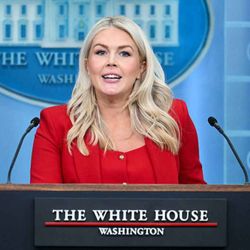
What really happened to Karoline Leavitt?
29:11|Freddy Gray is joined by Jacob Heilbrunn, editor of The National Interest and a senior fellow at the Atlantic Council, for a tour around the houses of Trumpworld. Karoline Leavitt has resigned as White House press secretary, officially to spend more time with her young family, and Washington is busy deciding whether to believe it.Freddy and Jacob discuss who might replace her and what the exit says about the mood inside the West Wing; why Trump's approval rating has sunk to a level last seen under Nixon in 1974; whether the wars in Ukraine and Iran are edging the world towards something larger; and why Jacob thinks a presidency that broke every rule about who can reach the White House may end up clearing the path for AOC.Learn how to earn yield on gold, paid in gold, at Monetary-Metals.com/AmericanoProduced by Henry Lloyd
Is America ready for the new realities of war? | with Steve Hsu
30:11|Freddy Gray speaks to physicist and Spectator contributor Steve Hsu about the uncomfortable realities of modern warfare. Why are cheap missiles and drones so difficult and expensive to intercept? Freddy asks Steve about just how depleted are America’s missile stocks, and can the West rebuild its defence industry quickly enough? They also discuss China’s dominance of critical supply chains, the vulnerability of energy infrastructure and shipping, the strategic threat posed to Taiwan, Japan and South Korea, and why missile defence may be losing its long-standing race against missile technology. Learn how to earn yield on gold, paid in gold, at Monetary-Metals.com/Americano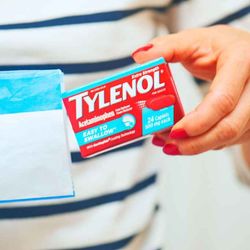
What's the truth about Tylenol?
16:28|Freddy Gray is joined by Amanda Hunt, a partner at Keller Postman LLC, who are leading the Tylenol autism litigation. Trump brought the case to the worlds attention when he raised the alarm over usage – especially for pregnant women. Freddy and Amanda discuss the latest developments with the case and why this isn't solely a Conservative or Trump issue. Learn how to earn yield on gold, paid in gold, at Monetary-Metals.com/Americano
Has Abdul El-Sayed just saved Trump?
22:59|The left-wing insurgent Abdul El-Sayed is slightly ahead of the establishment-backed congresswoman, Haley Stevens, with more than 90% of the votes counted in the Michigan primaries. Freddy Gray speaks to Alex Castellanos who has written a piece for Spectator World explaining why the DSA's success could be a triumph for Trump, how they reflect a similar political outcome to Trump's populist split in the Republican party and what today's result could mean for the primaries ahead.
How did Hollywood fall so far?
21:45|Gus Carter is joined by Peachy Keenan to talk about the end of Hollywood as we know it. They discuss how the traditional Hollywood business model is faltering, overtaken by the rise of streaming giants. They also highlight how these platforms, initially seen as the new frontier for film, are now grappling with their own economic challenges. Gus and Peachy also talk about how these challenging times are offering opportunity to new upstarts and directors looking to make their mark on the film industry.Learn how to earn yield on gold, paid in gold, at Monetary-Metals.com/AmericanoProduced by Henry Lloyd
Is China winning the AI race now?
24:25|Gus Carter is joined by Geoffrey Cain to speak about the ongoing developments in Chinese AI, and how it stacks up to its American rivals. Gus and Geoffrey talk about the emergence of Kimi K3, and how Chinese models will become inherently more competitive to global audiences, not just those the United States. They also discuss the OpenAI model that went rogue, and how other US models refused to undertake research to prevent the same from happening again.Learn how to earn yield on gold, paid in gold, at Monetary-Metals.com/AmericanoProduced by Henry Lloyd